

The several forts found in Telangana are powerful reminders of the region’s rich political and cultural history. They were built centuries ago by different ruling dynasties that governed the region, and they showcase the remarkable architecture, handy military strategies, and strong religious sentiments that were hallmarks of each ruling power. Whether built by the Kakatiyas, the Qutub Shahis, the Mughals, or the Asaf Jahis, the indelible architectural marks that have been left on these structures are a testament to the ruling dynasties’ strong interest in the monumental.
Bhongir Fort:
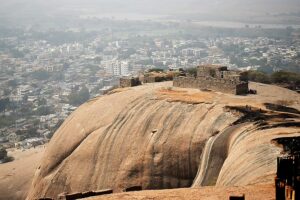 Originally known as Tribhuvanagiri, Bhongir Fort was built in the 10th century by the Chalukya ruler Tribhuvanamalla Vikramaditya VI. The fort is perched atop a massive, monolithic rock at a height of 500 feet (150 m). It spans an area of nearly 50 acres and features a moat, underground chambers, and a secret passage that is believed to connect the fort to Golconda Fort, located about 50 km away. Bhongir Fort was very important back in the day during the reign of Queen Rudramadevi and King Prataparudra.
Devarakonda Fort
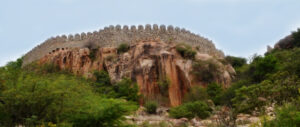 The Devarakonda Fort was a power hub in the 13th and 14th centuries and remained so until 1482. Built by the Padma Nayaka Veluma Rajas, the fort was turned into a cultural landmark by Maada Naidu after he conquered it. Lords Rama and Shiva have temples within the fort. A unique stairway that leads to Patala Ganga in Srisailam is also a part of the fort’s architecture. After Maada Naidu, the fort and kingdom were under the control of his warrior son Pedha Vedagiri Naidu, who ruled for 26 years and remained in power alongside strong structures.
Domakonda Fort
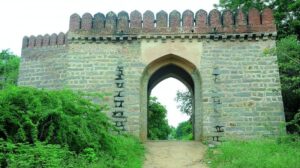 Also known as “Gadi Domakonda” or “Killa Domakonda,” this fort shelters a palatial mahal called “Addhala Meda” (Glass House). The fort combines Mughal and Western architectural styles. Its ground floor features exquisitely worked stucco, while the first floor has round pillars and a flat ceiling. The fort also houses a Shiva temple built by the Kakatiya rulers. One hundred kilometers from Hyderabad, Domakonda Fort is an important heritage site.
Elgandal Fort
Elgandal Fort, which occupies a picturesque hill overlooking the Manair River, has been under the dominion of five major dynasties—the Kakatiyas, Bahmanis, Qutub Shahis, Mughals, and Nizams. Even though the fort now stands in ruins, its main entrance gate and the fort’s overall good site continue to draw tourists, who come to view the fort and gain some small inkling of its past. So tuck that little tidbit in your hat for later: Elgandal Fort was once under the jurisdiction of five major dynasties.
Gadwal Fort
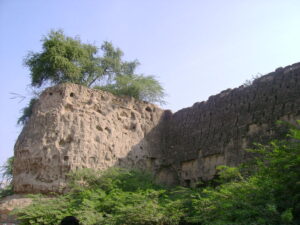 Constructed in the 17th century under the directive of Peda Soma Bhupaludu (Somanadri), the fort at Gadwal is famed for its formidable stone walls and profound moats. Within its precincts lie the temples of Sri Chennakesava Swamy, Sri Ramalayam, and Sri Venugopala Swamy. There is also a 32-foot-long cannon (artillery piece, obviously) that was captured from the Nawab of Kurnool and is now on public display at the fort. The fort, not very far from the town of Gadwal (16 kilometers to be precise) and just adjacent to a major highway, is a significant cultural and historical site.
Golconda Fort
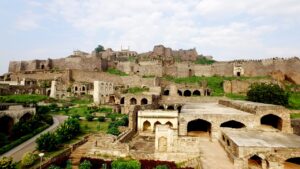 Golconda Fort, which the Kakatiyas built in 1143 AD as a fort of mud, was later turned into a massive fortress of granite that spanned 5 km in circumference by the Bahamani Sultans and Qutub Shahis. The fort became the capital of the Qutub Shahi dynasty in the 16th century and was famous for its diamond trade (including the legendary Koh-i-Noor diamond). It has palaces, mosques, mounted cannons, and secret tunnels. The Fateh Darwaza (Victory Gate) is an engineering marvel: “The entrance to the Golconda Fort has a sound-effect type of construction, such that a hand clap just inside the entrance will reverberate 1 kilometer away at the hilltop pavilion.” Aurangzeb captured the fort in 1687 and left it in ruins. Today it is one of India’s celebrated heritage sites.
Khammam Fort
Constructed by the Kakatiyas in 950 AD, Khammam Fort was expanded by the Velama Rulers, Musunuri Nayaks, and Qutub Shahis. The fort is a unique blend of Hindu, Muslim, and Kakatiya architecture and an important landmark in the region, located atop its namesake hill.
Medak Fort
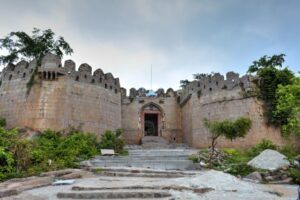 Constructed 800 years ago by the Kakatiyas, Medak Fort underwent renovations by the Qutub Shahis. The fort sprawls over 100 acres, rises to a height of 90 meters, and boasts the emblem of the Vijayanagara Empire, the Ganda Bherunda, on its third gate. Inside the fort, one can find a barrack, a lake, and a storehouse, which makes it one of Medak’s most intriguing historical attractions.
Nagnur Fort
 The fort in Nagnur, built under the Kakatiya dynasty, was a significant political and religious center. It contains an array of temples—Vaishnava, Shiva, Trikuta, and Ramalingala Gudi—that date back to the 12th and 13th centuries. The Kalyana and Kakatiya periods are well represented at the site in terms of significant ruins. This is an important archaeological site.
Warangal Fort
Built in the 12th century by Prola Raja of the Kakatiya dynasty, Warangal Fort remains one of the most iconic heritage sites of Telangana. The rulers of the Kakatiya dynasty (who were fond of architecture) built several architectural wonders in and around Warangal during their long reign (from the 12th to the 14th centuries) and left behind an amazing legacy. Among the wonders constructed by the Kakatiyas are:
1. Swayambhu Temple (AWADHANA)
2. Kakatiya Toranas (massive stone gateways)
3. Warangal Fort itself (enlarged in the 13th century by King Ganapati Deva)
