
Medak Cathedral Church
 The second-largest church in Asia, the Medak Cathedral Church, boasts stunning Gothic-style architecture. Work on the church started in 1914, directed by Charles Walker Posnett, an evangelist whose vision for the church offered locals a means of subsistence during a severe famine induced by World War I. Posnett’s plans embraced a food-for-work methodology that allowed many hands to contribute to the construction of a monumental structure whose soaring beauty and imperturbable solidity promised normalcy in a desperately abnormal time.
This structure, rising 173 feet high, was designed by architect Thomas Edward Harding. The church can accommodate at least 5,000 worshippers at one time, making it one of India’s largest churches. The mosaic tiles used in its construction were imported from Britain, so they too are a part of the church’s aesthetic and historical significance.
Medak Fort
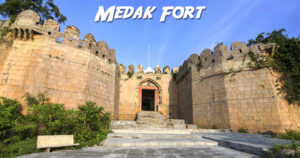 Originally called “Methuku Durgam,” Medak Fort is an imposing construction attributed to the Kakatiya dynasty. It has three grand entrances:
Main Entrance:
- Pradhana Dwaram
- Lion Gate (Simha Dwaram)
- Gaja Dwaram (Elephant Gate)
An important aspect of the primary portal is the representation of the double-headed Gandabherundam, a legendary avian creature and the Kakatiya dynasty’s official symbol. This fortress testifies to the Kakatiya rulers’ stunning architectural prowess and continues to be a favored site of historical interest in Medak district.
