
Factors and Causes
The Telangana Movement of 1969 was a reaction to the dominance of Andhra leaders and economic exploitation in Telangana following the formation of Andhra Pradesh in 1956. The people of Telangana had not initially supported linguistic-based states, but due to political developments and pressure from Andhra leaders, Vishalandhra was formed, merging Telangana with Andhra. However, post-merger, discrimination, economic disparities, and violations of agreements fueled discontent, leading to a strong demand for a separate Telangana state.
Failure of Gentlemen’s Agreement
The Gentlemen’s Agreement of 1956 was meant to provide safeguards for Telangana’s economic and political interests, including job security, educational opportunities, and a separate regional committee. However, these provisions were systematically ignored or suppressed by leaders from Seemandhra, leading to economic exploitation and growing resentment among Telangana people. The failure of the agreement became one of the key causes of the Telangana movement.
Committees on Telangana Surplus Grants
The Brahmananda Reddy Government appointed Kumar Lalit, a CAG official, in January 1969 to investigate the surplus funds issue. The committee reviewed financial allocations between 1956 and 1968 and found that Telangana had a revenue surplus of ₹102 crores, out of which ₹63.92 crores was net surplus. However, only ₹34.10 crores was spent on Telangana, leading to demands for the proper utilization of Telangana’s revenue.
Further investigations were conducted by the Bhargava Committee (April 22, 1969), which reported that ₹28.34 crores of Telangana’s revenue was not spent on the region. The committee recommended that additional measures be taken to ensure justice for Telangana’s financial rights.
The Wanchoo Committee (1969) was appointed to examine the implementation of Mulki rules and recommended constitutional amendments. However, the committee concluded that no power could enforce separate rules for different regions, and the Mulki regulations were not being implemented properly. This further fueled the discontent among Telangana people.
Dissatisfaction Among Telangana Employees
During the Indo-Pak War, budgetary constraints led to job cuts across government departments, disproportionately affecting Telangana employees. Unemployment among Telangana engineers and youth increased, while new recruitments favored candidates from Andhra region, violating Mulki rules. By 1967, over 4,000 Andhra teachers had been appointed in Telangana schools, despite qualified local candidates being available. The systematic exclusion of Telangana employees from government jobs led to massive dissatisfaction and increased support for the Telangana Movement.
Large-Scale Migration of Andhra People
Post-merger, large numbers of Andhra people migrated to Telangana and acquired vast tracts of agricultural land, particularly in Nizamabad, Warangal, Khammam, and Adilabad. 60–80% of the fertile lands in the Godavari basin were taken over by Andhra landlords. Lands under major irrigation projects like Nagarjuna Sagar, Nizam Sagar, and Alampur were also acquired by Andhra settlers. Andhra migrants even established colonies with Andhra names, such as Gunturpalle, Bandarpalle, Andhra Colony, Ashok Nagar, and Shanti Nagar, reinforcing the perception that Telangana was being colonized.
Discrimination Against Telangana Ministers
Telangana ministers were routinely sidelined in governance. Important portfolios such as Home, Finance, and Revenue were given to Andhra leaders, while Telangana ministers were assigned less significant roles. Former Hyderabad State Chief Minister Burgula Ramakrishna Rao was denied state honors at his funeral, in contrast to former Andhra Chief Minister Prakasam Pantulu, who received full state honors. This blatant discrimination deepened the anger and resentment among Telangana political leaders and the public.
Discrimination in Employment at Thermal Power Station
The Thermal Power Station in Khammam was constructed using Telangana’s coal and Godavari water, yet most of its staff were recruited from Andhra. In response, a hunger strike was launched on July 10, 1969, led by Sri Ramdas from Illendu and Ravindranath, a student from Palvancha.
The protest gained momentum, with students and unemployed youth forming the Telangana Rakshana Samithi to demand job reservations for Telangana locals. Protesters marched across Khammam, chanting slogans such as “Non-Mulki Go Back” and “Idli Sambar Go Back”, reflecting their anger against Andhra officials dominating Telangana’s resources.
Key Political Leaders of the 1969 Telangana Movement
The 1969 Telangana Movement was shaped by dynamic political leaders, student activists, intellectuals, and civil society members who played a crucial role in mobilizing public support and articulating the demand for a separate Telangana state. Their leadership galvanized protests, influenced public opinion, and pressured the government to address the grievances of Telangana’s people.
Political Leaders and Their Role
Dr. Marri Chenna Reddy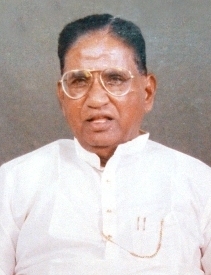
Dr. Marri Chenna Reddy was the most prominent leader of the movement. He played a decisive role in the formation of the Telangana Praja Samithi (TPS), which spearheaded the agitation. He actively organized protests, mobilized public support, and raised awareness about the injustices faced by Telangana. His leadership unified various factions and strengthened the movement’s demands for a separate state.
Konda Laxman Bapuji
A veteran Telangana activist, Konda Laxman Bapuji was among the first to resign from his ministerial position in protest against the injustice and discrimination faced by Telangana in the united Andhra Pradesh. His resignation brought national attention to the movement, earning him the title of the ‘Father of Telangana’. His unwavering commitment to the cause inspired many activists to join the struggle.
Makhdoom Mohiuddin
A renowned poet and Communist Party of India (CPI) leader, Makhdoom Mohiuddin used his literary and political influence to articulate the socio-economic injustices faced by Telangana’s people. His poetry and speeches mobilized the masses and intellectuals, giving a cultural dimension to the movement.
Acharya Konda Lakshman Bapuji
A close associate of Dr. Marri Chenna Reddy, he resigned from his cabinet position to protest the continued marginalization of Telangana. His activism further strengthened the moral and political legitimacy of the movement and put pressure on the government to address Telangana’s concerns.
Student Leaders and Their Role
M. V. Ranga Reddy
One of the most influential student leaders, Ranga Reddy played a critical role in organizing protests, rallies, and demonstrations, particularly in Osmania University. His leadership was instrumental in channeling student activism into a coordinated mass movement, ensuring that the demands of the students and youth were heard.
Mallikarjun
A student leader who coordinated protests, strikes, and sit-ins, Mallikarjun was a key figure in maintaining the momentum of student activism. His efforts helped amplify the voices of Telangana youth, making student participation a powerful force in the movement.
Civil Society and Intellectuals
B. J. Ranga Reddy
An influential intellectual and social activist, B. J. Ranga Reddy played a vital role in shaping public discourse around the Telangana issue. Through writings, public discussions, and advocacy, he brought the movement’s grievances to a broader audience.
P. V. Narasimha Rao
Though he later became the Prime Minister of India, during the 1969 Telangana Movement, P. V. Narasimha Rao played a mediatory role. His deep understanding of Telangana’s historical and economic issues allowed him to act as a bridge between the movement and the central government.
Women Activists and Their Contribution
Mandalapu Ramadevi
A prominent women’s rights activist, Mandalapu Ramadevi was instrumental in mobilizing women’s participation in the movement. She ensured that the voices of Telangana’s women were heard and contributed significantly to strengthening the mass movement.
Key Events and Their Leaders
Formation of Telangana Praja Samithi (TPS)
- Leaders Involved: Dr. Marri Chenna Reddy, Konda Laxman Bapuji
- Significance: The TPS became the main political platform for Telangana agitation. It organized protests, rallies, and negotiations, making the demand for a separate state a formal political agenda.
Student Protests
- Leaders Involved: M. V. Ranga Reddy, Mallikarjun
- Significance: Students played a crucial role in intensifying the movement. Osmania University and other educational institutions became epicenters of protests, forcing the government to take the Telangana issue seriously.
Mass Rallies and Strikes
- Leaders Involved: Dr. Marri Chenna Reddy, Konda Laxman Bapuji, student leaders
- Significance: Widespread strikes and rallies demonstrated the deep-rooted support for Telangana’s statehood. These protests created political pressure on the Andhra Pradesh government and the central leadership.
Resignation of MLAs
- Leaders Involved: Konda Laxman Bapuji and other Telangana legislators
- Significance: Several Telangana MLAs resigned in protest, showing the intensity of regional discontent and proving that the movement had significant political backing.
Q. Discuss the roles and contributions of key political leaders and activists in the 1969 Telangana Movement, highlighting their impact on the agitation.
| Introduction | The 1969 Telangana Movement, demanding a separate state for the Telugu-speaking region of Telangana, was a pivotal moment in Indian politics. The movement’s success hinged on the tireless efforts of key political leaders and activists who mobilized public support and kept the flame of agitation burning. |
| Body | Political Leaders:
· Dr. Marri Chenna Reddy: As the founder of Telangana Praja Samithi, he led numerous protests that drew national attention to Telangana’s plight. · Konda Laxman Bapuji: His resignation from his ministerial post symbolized the seriousness of the region’s grievances, earning him the title ‘Father of Telangana’. · Makhdoom Mohiuddin: The poet and CPI leader used his writings to highlight the socio-economic injustices in Telangana. · Acharya Konda Lakshman Bapuji: Resigned to protest against the neglect of Telangana, amplifying the movement’s visibility and impact. Student Leaders: · M. V. Ranga Reddy: A key figure at Osmania University, his leadership was crucial in organizing student protests. · Mallikarjun: Played a pivotal role in coordinating student activities, maintaining the momentum of the agitation. Civil Society and Intellectuals: · B. J. Ranga Reddy: Influenced public opinion through his intellectual contributions towards statehood. · P. V. Narasimha Rao: Although his role was initially subdued, his later political significance underscored his mediation efforts during the movement. Women Activists: · Mandalapu Ramadevi: Her efforts to mobilize women significantly broadened the movement’s demographic and impact. |
| Conclusion | The 1969 Telangana Movement showcased not just political agitation but a broad-based leadership effort that significantly steered the movement’s direction. These leaders’ dedication set the stage for future campaigns, ultimately leading to the establishment of Telangana state in 2014. |
