
Soil and Its Types in India
Soil is a critical component of the Earth’s ecosystem, providing a medium for plant growth and influencing various environmental processes. It is a dynamic and complex substance formed from the weathering of rocks and the decay of organic matter. The composition and characteristics of soil are influenced by factors such as parent material, climate, vegetation, relief, life forms, and time.
What is Soil?
Soil is the top layer of the Earth’s surface, consisting of mineral particles, organic materials like humus, water, air, and various living organisms.It supports plant life and is fundamental to agriculture, ecology, and environmental health.
Components of Soil:
- Inorganic or Mineral Fractions: Derived from the weathering of parent rocks.
- Organic Matter: Includes decayed and decomposed plant and animal material.
- Air: Spaces between soil particles contain air necessary for root respiration.
- Water: Soil holds water that plants use for growth.
Soil Formation Process:
Soil formation, or pedogenesis, is influenced by several natural conditions.It entails the formation of soil horizons or layers, each characterized by unique properties.
Soil Profile
A soil profile is a vertical section through the soil, showing different layers, known as horizons.
- Horizon A (Topsoil): The uppermost layer, rich in organic material mixed with minerals, essential for plant growth.
- Horizon B (Subsoil):Contains minerals leached from above and less organic matter
- Horizon C (Parent Material): Consists of weathered rock or partially disintegrated rock material from which the soil is formed.
- Bedrock: The layer beneath the soil profile, which is the source of the parent material.
Types of Soil in India
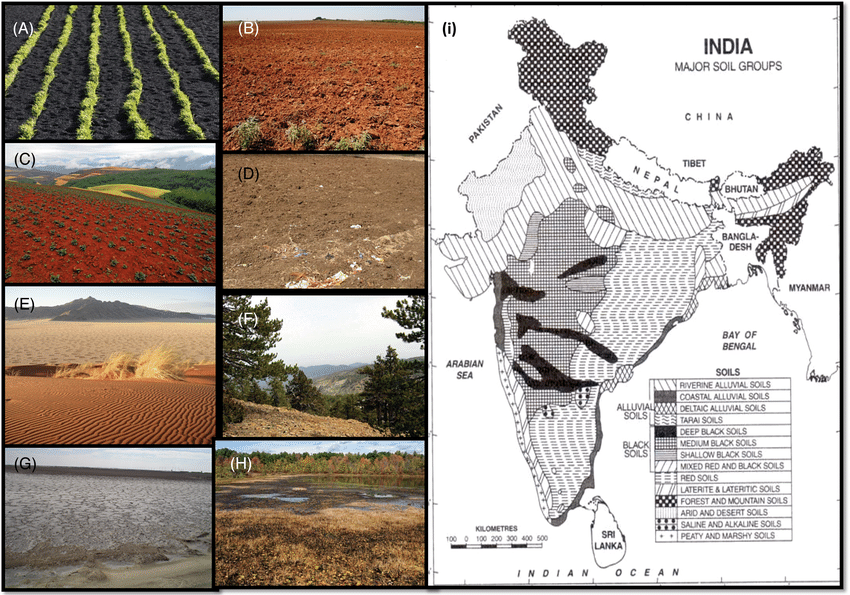
India’s diverse climate and geography result in a wide range of soil types. The Indian Council of Agricultural Research (ICAR) classifies Indian soils into the following categories:
1) Alluvial Soil
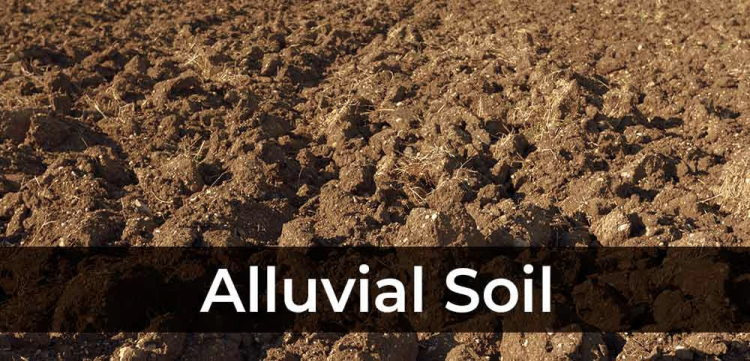
- Location: Northern plains and river valleys; deltas of the east coast; Peninsular river valleys.
- Characteristics: Light grey to ash grey; texture ranges from sandy loam to clay; rich in potash but poor in phosphorus.
- Subtypes: Khadar (new alluvium) and Bhangar (old alluvium).
- Uses: Well-suited for cultivating crops such as wheat, maize, sugarcane, pulses, and oilseeds.
2) Red & Yellow Soil
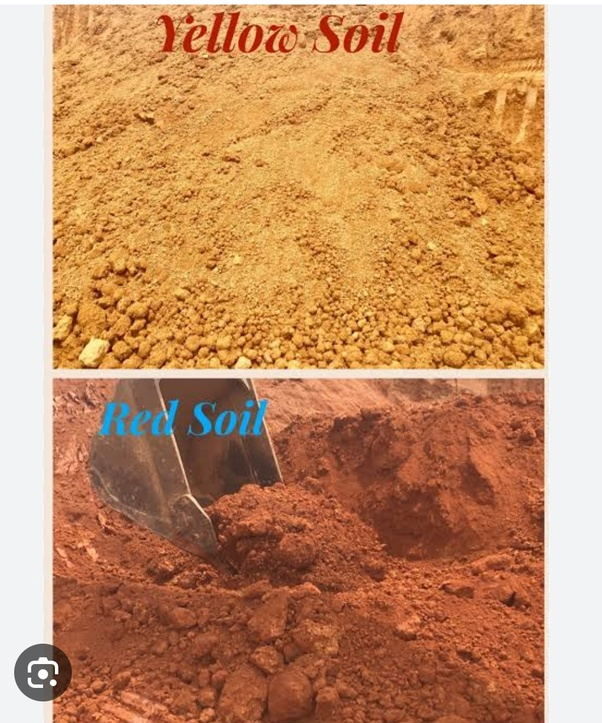
- Location: Eastern and southern parts of the Deccan Plateau; parts of Odisha,Chhattisgarh, and southern Ganga Plain.
- Characteristics: Red due to iron oxide; yellow when hydrated; generally low innitrogen, phosphorus, and humus.
- Uses: Suitable for wheat, cotton, oilseeds, millets, tobacco, and pulses.
3) Black Soil
- Location: Deccan Plateau, parts of Maharashtra, Madhya Pradesh, Gujarat, Andhra Pradesh, and Tamil Nadu.
- Characteristics: Deep, clayey, and sticky when wet; cracks when dry; rich in iron, lime, aluminum, magnesium, and potassium; deficient in nitrogen and phosphorus.
- Uses: Ideal for cotton, pulses, millets, castor, tobacco, sugarcane, and citrus fruits.

4) Desert Soil
- Location: Western Rajasthan.
- Characteristics: Sandy to gravelly; low moisture content; saline; may have ‘kankar’ layers.
- Uses: Suitable for drought-resistant crops; salt-resistant crops can be cultivated after reclamation.

5) Laterite Soil
- Location: Karnataka, Tamil Nadu, Kerala, Madhya Pradesh, Assam, and Odisha.
- Characteristics: Rich in iron oxide and aluminum; leached of lime and silica; low in organic matter, nitrogen, and phosphate; responds well to fertilizers.
- Uses: Suited for tree crops like cashew nuts; used as building material due to its hardening property.

6) Mountain Soil
- Location: Himalayan region and other forested mountainous areas.
- Characteristics: Coarse-grained in upper slopes; loamy and silty in valleys; acidic in snowbound areas.
- Uses: Supports diverse vegetation; fertile in lower valleys.

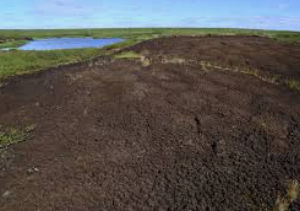
7) Peaty and Marshy Soil
- Location: Southern Uttarakhand, northern Bihar, coastal areas of West Bengal, Odisha, and Tamil Nadu.
- Characteristics: Rich in humus and organic matter; heavy, black, and often alkaline.
- Uses: Suitable for vegetation growth in high rainfall and humidity areas.
8) Saline and Alkaline Soil
Location: Western Gujarat, deltas of the eastern coast, Sundarban areas of West Bengal.
- Characteristics: High in sodium, magnesium, potassium; poor drainage; may have crusty salt deposits.
- Uses: Reclamation required; suitable for salt-resistant crops like berseem and dhaincha.