Indian Monsoon
Monsoon Mechanism
Geographical Influence:
- Monsoons occur in the tropical region between 20°N and 20°S.
Key Factors:
-
- Differential Heating: Land heats up and cools down faster than water, creating pressure differences. Winds move from high to low pressure.
 ITCZ Position: The Inter-Tropical Convergence Zone (ITCZ) shifts over the Ganga Plain in summer (about 5°N of the equator) and is known as the monsoon trough.
- High-Pressure Area: Located east of Madagascar (about 20°S) in the Indian Ocean, influencing the Indian monsoon.
- Tibetan Plateau: Heats up intensely in summer, creating a low-pressure area at about 9 km above sea level and strong vertical air currents.
- Jet Streams: The movement of westerly and tropical easterly jet streams affects the monsoon.
Southern Oscillations and El Niño
Southern Oscillations (SO):
-
- Definition: Periodic changes in pressure conditions over the southern oceans.
- Pressure Reversal: Normally, the tropical eastern Pacific Ocean has high pressure while the tropical eastern Indian Ocean has low pressure. Reversal causes high pressure in the Indian Ocean and low pressure in the Pacific.
- Prediction: Pressure difference between Tahiti (Pacific Ocean) and Darwin (Australia) indicates monsoon intensity. Negative differences signal weak and delayed monsoons.
El Niño:
-
- Definition: A warm ocean current in the eastern Pacific Ocean, replacing the cold Peruvian current.
- Impact: Increases sea surface temperatures and weakens trade winds, affecting monsoon patterns.
- Forecasting: Used to predict long-range monsoon rainfall. For example, the 1990-91 El Niño event caused a delay in the southwest monsoon by 5-12 days.
Monsoon Onset and Withdrawal
Onset:
-
- April-May: Intense heating of landmass north of the Indian Ocean creates a low-pressure area in northwestern India.
- Pressure Difference: High pressure over the Indian Ocean attracts southeast trade winds from the southern hemisphere, leading to the southwest monsoon.
- ITCZ Shift: Moves northward, enhancing the southwest monsoon.
Branches:
-
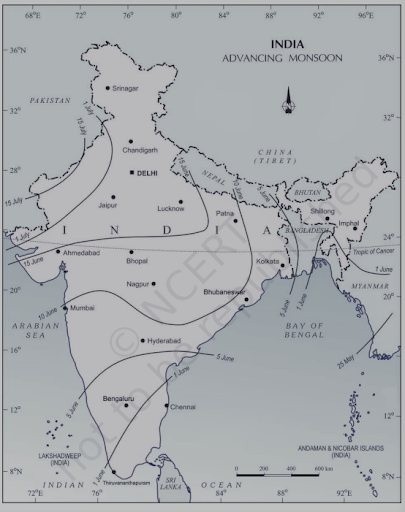
- Arabian Branch: Reaches Mumbai around June 10.
- Bay of Bengal Branch: Arrives in Assam in the first week of June.
Progression:
-
- Mid-June: Arabian Sea branch arrives over Saurashtra-Kachchh and central India.
- End of June: Delhi receives monsoon showers.
- July: Monsoon spreads to western Uttar Pradesh, Haryana, Punjab, and eastern Rajasthan.
- Mid-July: Reaches Himachal Pradesh and the rest of the country.
Breaks in the Monsoon:
- Definition: Periods with no rain during the monsoon season.
- Northern India: Breaks occur if rain-bearing winds are infrequent along the ITCZ.
- West Coast: Dry spells happen when winds blow parallel to the coast.
Retreating Monsoon:
-
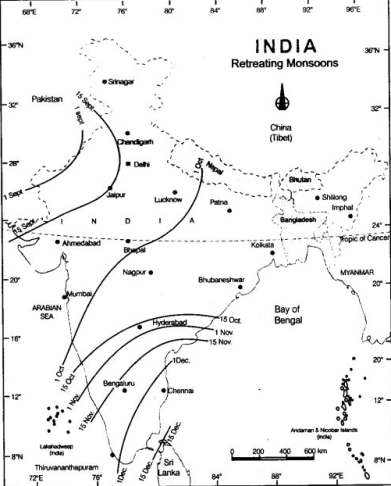
- September: Monsoon withdraws from northwestern India.
- Mid-October: Complete withdrawal from northern India.
- Early December: Monsoon withdraws from the southern half of the peninsula and the rest of the country.