
- Human Health &Diseases
- Fundamentals of Health and Nutrition
- Understanding Diseases and Pathogens
- Major Communicable Diseases
- Major Non-Communicable and Genetic Diseases
- Emerging Diseases and Public Health Threats
- The Human Immune System
- Vaccination and Vaccine Technologies
- History of Diseases in India: From Ancient Times to the Modern Era
- Diseases Prelims Previous Year Questions
Genetic Disorders: Thalassemia
While the nutritional anaemia discussed in the previous section is caused by a lack of dietary iron or vitamins, some blood disorders are present from birth due to defective genes. The most prominent example of such a genetic blood disorder is Thalassemia
What is Thalassemia?
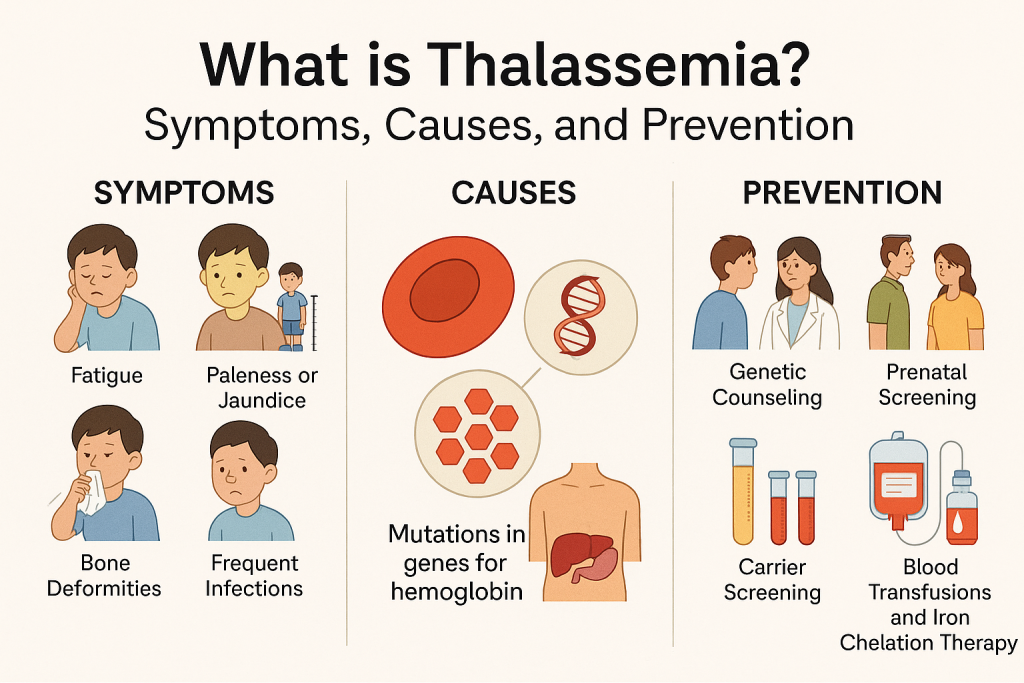
Thalassemia is an inherited (genetic) blood disorder that reduces the body’s ability to produce normal haemoglobin.
As we learned earlier, haemoglobin is the protein in red blood cells that carries oxygen. Normal haemoglobin is made up of two types of protein chains: Alpha chains and Beta chains. In a person with thalassemia, there is a genetic mutation that prevents the body from making enough of either the alpha or the beta chains.
Because the haemoglobin is improperly formed, the red blood cells are highly fragile and get destroyed by the body at a very rapid rate. This rapid destruction of red blood cells is called hemolysis, which leads to severe, chronic anemia.
Types of Thalassemia
Based on which protein chain is affected by the genetic defect, the disease is primarily classified into two types:
- Alpha Thalassemia: Occurs when there is a defect in the genes responsible for producing the alpha protein chains.
- Beta Thalassemia: Occurs when the defect affects the production of the beta protein chains. This is the most common and severe form of thalassemia found in India.
How does it spread?
Thalassemia is an autosomal recessive genetic disorder. This means it is not an infection and cannot be passed by physical contact. It is strictly passed down from parents to their children through genes.
To understand its transmission, we must look at the carrier state:
1)Thalassemia Minor (Carrier):
- A person who inherits one defective gene and one normal gene is called a “carrier.”
- They are generally completely healthy, live a normal life, and do not show any severe symptoms of anaemia.
2) Thalassemia Major (Affected):
- If both parents are carriers (Thalassemia Minor), there is a 25% chance in every pregnancy that the child will inherit the defective gene from both the mother and the father.
- This child will be born with Thalassemia Major, the severe, life-threatening form of the disease.
Symptoms
Because infants are born with a special type of “fatal haemoglobin,” babies with Thalassemia Major usually appear healthy at birth. The severe symptoms typically begin to show between 6 months to 2 years of age.
- Severe anaemia causing extreme paleness, weakness, and fatigue.
- Delayed physical growth and poor development.
- Enlargement of the spleen and liver (as the body tries to clear out the rapidly dying red blood cells).
- Bone deformities, particularly in the facial bones, as the bone marrow expands to overcompensate for the lack of red blood cells.
Treatment and Medical Management
Unlike nutritional anaemia, Thalassemia Major cannot be cured with a good diet or iron tablets. In fact, giving iron tablets to a thalassemia patient is highly dangerous.
Lifelong Blood Transfusions:
- The primary survival treatment is regular blood transfusions, often required every two to three weeks, to replenish the patient’s healthy red blood cell count.
Iron Chelation Therapy:
- The human body does not have a natural mechanism to excrete excess iron.
- Repeated blood transfusions over the years cause a massive buildup of iron in the blood.
- This toxic “iron overload” can fatally damage the heart and liver.
- To prevent this, patients must take specialized medicines (chelating agents) that bind to the excess iron and safely remove it through urine.
Bone Marrow Transplantation:
- This is currently the only definitive medical cure for the disease.
- It involves replacing the patient’s defective bone marrow with healthy bone marrow stem cells from a closely matched donor (usually a sibling).
Public Health Perspective and Government Initiatives
India has the largest number of children with Thalassemia Major in the world. Preventing the birth of affected children through mandatory genetic screening of parents is the most effective public health strategy.
Thalassemia Bal Sewa Yojana:
- This is a major initiative launched by the Ministry of Health and Family Welfare, funded under the Corporate Social Responsibility (CSR) initiative of Coal India Limited. The scheme provides financial assistance to cover the massive cost of Bone Marrow Transplants for underprivileged children suffering from Thalassemia and Aplastic Anaemia.
Blood Transfusion Services:
- Under the National Health Mission, the government provides free blood transfusions and free iron chelation medicines for thalassemia patients at designated district hospitals and medical colleges.
