
Diseases
- Human Health &Diseases
- Fundamentals of Health and Nutrition
- Understanding Diseases and Pathogens
- Major Communicable Diseases
- Major Non-Communicable and Genetic Diseases
- Emerging Diseases and Public Health Threats
- The Human Immune System
- Vaccination and Vaccine Technologies
- History of Diseases in India: From Ancient Times to the Modern Era
- Diseases Prelims Previous Year Questions
Nipah Virus (NiV)
What is Nipah Virus?
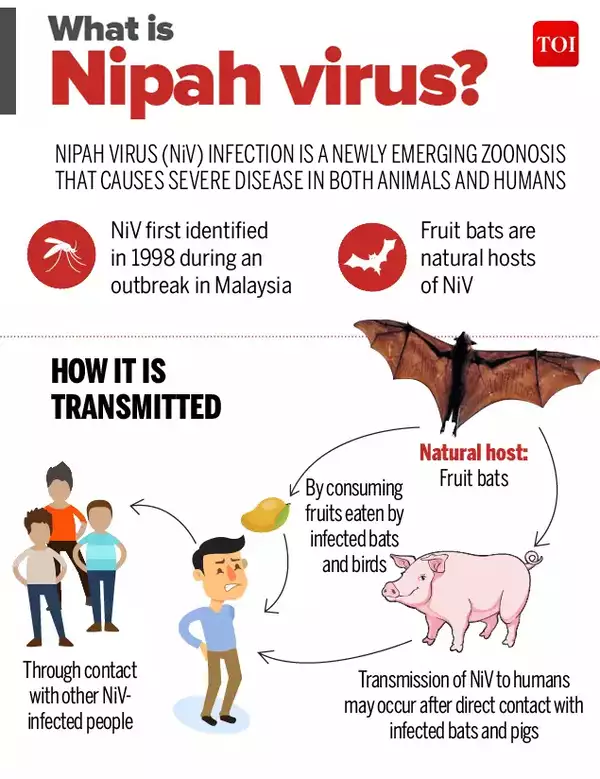
Nipah virus (NiV) is a highly pathogenic zoonotic virus (a disease that spreads from animals to humans). It belongs to the genus Henipavirus. The virus was first identified in 1998 during a massive outbreak among pig farmers in Kampung Sungai Nipah, Malaysia.
Natural Reservoir and Transmission
Natural Host:
- The primary, natural reservoir for the Nipah virus is the fruit bat (commonly known as “flying foxes” of the Pteropus genus). The bats carry the virus but do not get sick from it.
Animal-to-Human Spillover:
- Humans are primarily infected by consuming food or beverages contaminated by infected bats.
- A common route is drinking raw date palm sap or eating fruits that have been bitten or contaminated with bat saliva or urine.
- Pigs can also act as intermediate hosts.
Human-to-Human Spread:
- Once a human is infected, the virus can spread directly to other humans through close contact with respiratory secretions or bodily fluids (blood, urine, saliva). This makes it highly dangerous for families and healthcare workers.
Symptoms and Severity
- Clinical Presentation: Infection ranges from asymptomatic (no symptoms) to acute respiratory distress (severe breathing problems).
- Encephalitis: The most defining, dangerous, and fatal characteristic of NiV is acute encephalitis (severe, rapid swelling of the brain). This can plunge a patient into a coma within 24 to 48 hours.
- Fatality Rate: Nipah is one of the deadliest known human pathogens. The World Health Organization (WHO) estimates its case fatality rate is exceptionally high, ranging from 40% to 75%, depending on the local epidemiological response.
Treatment and Public Health Response
- No Cure or Vaccine: Currently, there are no specific antiviral drugs or vaccines approved for Nipah virus infection in humans.
- Medical Management: Treatment is strictly limited to intensive supportive care (managing fever, neurological symptoms, and providing ventilator support for breathing).
- Global Priority: Because of its extreme mortality rate, airborne transmission potential, and lack of medical countermeasures, the WHO has listed NiV as a priority disease under its R&D Blueprint, recognizing it as a severe epidemic threat.
The Indian Context
India is particularly vulnerable to Nipah virus due to the widespread natural habitat of fruit bats across the subcontinent.
- Historical Outbreaks: The earliest Indian outbreaks occurred in West Bengal (Siliguri in 2001, and Nadia in 2007).
- Recent Outbreaks: In recent years, the state of Kerala (particularly the Kozhikode district) has emerged as a hotspot, experiencing multiple, recurring localized outbreaks. State health authorities have had to rely on aggressive contact tracing, strict quarantine protocols, and localized lockdowns to successfully contain the virus and prevent a national spread.
