
- Energy Resources
- Non-Conventional Sources of Energy
- Solar Energy
- Hydro energy
- Wind power
- Biogas
- Tidal Energy
- Geo Thermal Energy
- Nuclear or Atomic Energy
- Radioactivity
- Nuclear mechanism- Fusion & Fission
- Nuclear Reactor
- Fuelling a Nuclear Reactor
- Types of Nuclear Reactors
- Nuclear Energy in India
- India’s Three Stage Nuclear Program
- Innovative and Advanced Reactor Technologies in India
- Nuclear Fuel Cycle Facilities & Nuclear Waste Management
- Government Initiatives for Enhancing India’s Nuclear Capacity
- Advanced Energy Technologies & Storage
- Hydrogen Energy and Hydrogen Technology
- Fuel Cell
- Energy Storage Technologies
- Waste to Energy Plants
- Energy Security, Policies, and Government Initiatives
- Broader Energy Management & Grid Initiatives
- National Green Hydrogen Mission (NGHM)
- Green Energy Corridor
- Smart Meter National Programme (SMNP)
- Advanced Metering Infrastructure (AMI)
- Net Metering
- Pradhan Mantri Janjati Adivasi Nyaya Maha Abhiyaan (PM-JANMAN)
- Pradhan Mantri Sahaj Bijli Har Ghar Yojana (SAUBHAGYA)
- Production Linked Incentive (PLI) Scheme
- World Energy Investment Report 2025
- Electric Mobility Transition (FAME-1 &FAME-2)
- ENERGY RESOURCES Prelims Previous Year Questions
- Mains Previous Year Questions –ENERGY RESOURCES
Natural gas extraction: how is natural gas collected?
- First, a test well confirms that the deposit has enough natural gas and extracting it can be cost-effective. Then new production wells will be drilled.
- Oil extraction often comes with natural gas extraction. There are also examples of natural gas being pumped back into the well for future extraction. After drilling the well, a concrete and metal casing is installed into the hole, and a collection pump is built above this.
- Depending on the types of natural gas, collecting this fossil material can be different. Methods:
- Vertical drilling
- Horizontal drilling
- Hydraulic Fracturing / Fracking
- Acidizing
Vertical drilling: the most common method
- This natural gas extraction process was the first and only type of natural gas production until 1980. Vertical drilling is efficient when natural gas is close below the surface, so it is efficient in the freeing of conventional natural gas.
- The average depth of vertical wells is only 300-800 meters, then they reach the natural gas deposit and the gas can start flowing to the surface. Vertical drilling is therefore limited to the gas reserves it encounters from above, thus it can be the perfect solution in some cases.
Horizontal drilling
Horizontal drilling is a flexible and cost-effective solution to broaden the possibilities of drilling. This way drilling companies can install less drilling sites because after reaching the required depth, the drill can change its way horizontally. With the steerable drill bit, it becomes more productive and can go horizontally through the natural gas deposits.
Hydraulic fracturing / Fracking
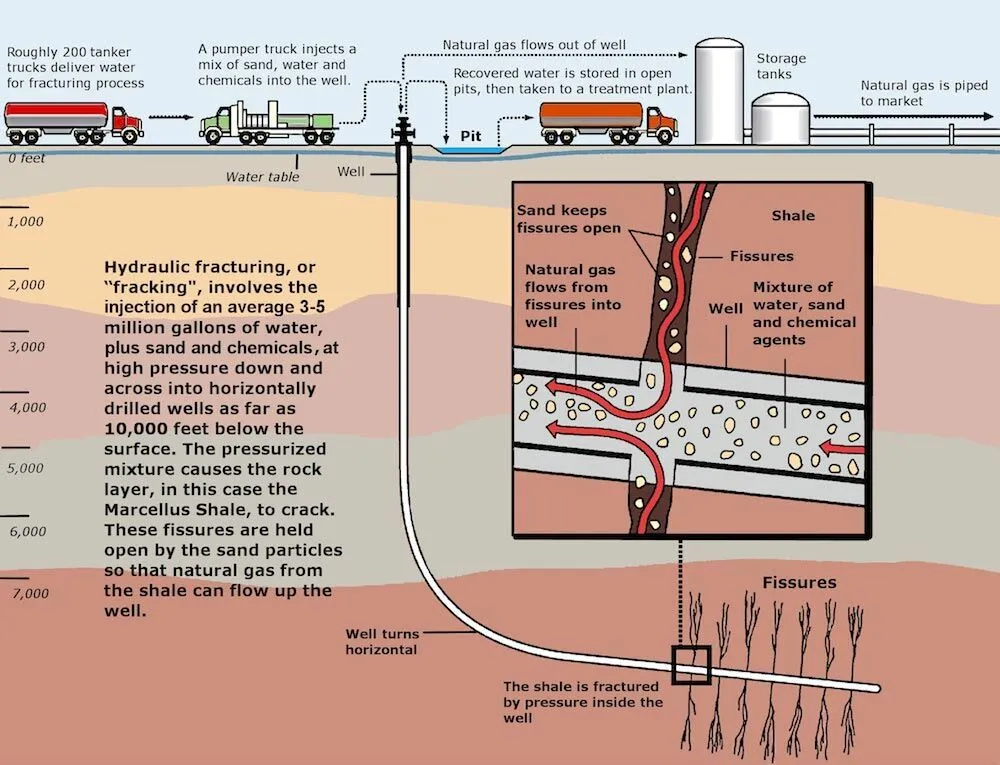
Hydraulic fracturing is the exciting side of gas production. This way drilling starts with a generated ‘micro-earthquake’. With high-pressure streams of water, sand, and chemicals it breaks up the formation of rocks. After that, natural gas can flow up to gathering gas pipelines and wells on the surface.
However, this method is banned in some places, because:
- It needs huge quantities of water, which can overwhelm the environment
- Has heavily toxic or even radioactive wastewater which can affect nature if mismanaged.
Hydraulic fracturing or fracking is used to extract unconventional natural gas.
Acidizing
- It is a side-operation to any drilling methods, but mainly to fracking. With acid dissolving the rocks that may be on the way of the natural gas, it can flow up to the well.
Key issues associated with natural gas extraction
1. Environmental Impact:
- Water Contamination: Hydraulic fracturing, commonly known as fracking, involves injecting large volumes of water, sand, and chemicals into the ground to release natural gas. There have been concerns about the potential contamination of groundwater due to the chemicals used in this process.
- Air Pollution: The extraction, processing, and transportation of natural gas can release pollutants into the air, including methane, a potent greenhouse gas. Methane leaks during production contribute to climate change.
2. Land Use and Habitat Disruption:
- Drilling Footprint: Extracting natural gas requires well pads, roads, and other infrastructure, leading to habitat disruption and fragmentation. This can impact local ecosystems and wildlife.
- Deforestation: Clearing land for drilling sites can result in deforestation, further affecting biodiversity.
2. Land Use and Habitat Disruption:
- Drilling Footprint: Extracting natural gas requires well pads, roads, and other infrastructure, leading to habitat disruption and fragmentation. This can impact local ecosystems and wildlife.
- Deforestation: Clearing land for drilling sites can result in deforestation, further affecting biodiversity.
3. Induced Seismicity:
- Earthquakes: Injection of wastewater into disposal wells, a byproduct of natural gas extraction, has been linked to induced seismicity (human-induced earthquakes). The disposal of wastewater into deep wells can alter subsurface pressures and trigger seismic events.
4. Water Usage:
- High Water Consumption: Hydraulic fracturing requires large amounts of water, which can strain local water supplies, particularly in water-scarce regions.
5. Community and Social Concerns:
- Community Disruption: Local communities near extraction sites may experience disruptions due to increased traffic, noise, and changes in the local landscape. Some communities also report adverse health effects they attribute to nearby natural gas operations.
- Economic Dependency: Regions heavily reliant on natural gas extraction may face economic challenges when gas prices fluctuate or when resources are depleted.
6. Regulatory and Oversight Challenges:
- Regulatory Gaps: In some cases, there may be regulatory gaps or lax enforcement, leading to inadequate oversight of natural gas extraction operations. Strong regulatory frameworks are essential to mitigate environmental and social impacts.
7. Methane Emissions:
- Methane Leakage: Methane, the primary component of natural gas, is a potent greenhouse gas. Methane leakage during extraction, transportation, and processing contributes to global warming.
8. Waste Management:
- Wastewater Treatment: Managing and treating wastewater generated during the extraction process is a significant challenge. Disposal methods, including injection into disposal wells, can have environmental implications.
Year End Review 2024 - Ministry of Petroleum and Natural Gas
- 33 crore connections released under PMUY
- of LPG connections increases from 14.52 crores in 2014 to 32.83 crores in 2024, a growth of above 100 %
- Length of operational Natural Gas Pipeline in the country increases from 15,340 Km in 2014 to 24,945 Kms in 2024
- E20 petrol being dispensed at more than 17,400 retail outlets across the country
