
- Energy Resources
- Non-Conventional Sources of Energy
- Solar Energy
- Hydro energy
- Wind power
- Biogas
- Tidal Energy
- Geo Thermal Energy
- Nuclear or Atomic Energy
- Radioactivity
- Nuclear mechanism- Fusion & Fission
- Nuclear Reactor
- Fuelling a Nuclear Reactor
- Types of Nuclear Reactors
- Nuclear Energy in India
- India’s Three Stage Nuclear Program
- Innovative and Advanced Reactor Technologies in India
- Nuclear Fuel Cycle Facilities & Nuclear Waste Management
- Government Initiatives for Enhancing India’s Nuclear Capacity
- Advanced Energy Technologies & Storage
- Hydrogen Energy and Hydrogen Technology
- Fuel Cell
- Energy Storage Technologies
- Waste to Energy Plants
- Energy Security, Policies, and Government Initiatives
- Broader Energy Management & Grid Initiatives
- National Green Hydrogen Mission (NGHM)
- Green Energy Corridor
- Smart Meter National Programme (SMNP)
- Advanced Metering Infrastructure (AMI)
- Net Metering
- Pradhan Mantri Janjati Adivasi Nyaya Maha Abhiyaan (PM-JANMAN)
- Pradhan Mantri Sahaj Bijli Har Ghar Yojana (SAUBHAGYA)
- Production Linked Incentive (PLI) Scheme
- World Energy Investment Report 2025
- Electric Mobility Transition (FAME-1 &FAME-2)
- ENERGY RESOURCES Prelims Previous Year Questions
- Mains Previous Year Questions –ENERGY RESOURCES
India’s Petroleum Industry
India’s petroleum industry is a crucial part of the country’s energy sector. It includes all stages of the petroleum supply chain, including exploration, production, refining, distribution, and marketing of petroleum and its by-products. The industry can be divided into three main segments:
- Upstream activities involve exploring and extracting crude oil and natural gas from beneath the Earth’s surface.
- Midstream activities include transporting and storing crude oil and petroleum products through pipelines, ships, and storage terminals.
- Downstream activities cover refining crude oil into useful fuels such as petrol, diesel, LPG (liquefied petroleum gas), and kerosene, along with their distribution and retail marketing.
This industry plays an important role in ensuring India’s energy security. It supports various sectors of the economy, including transport, industry, agriculture, and households.
Refining Capacity in India
India has a well-developed refining sector that supports both domestic consumption and exports. As of April 2024, the country has:
- 19 Public Sector Undertaking (PSU) refineries,
- 3 Private Sector refineries, and
- 1 Joint Venture refinery.
India’s total refining capacity increased from 215.066 Million Metric Tons per Annum (MMTPA) in April 2014 to 256.816 MMTPA in April 2024.
Origin and Development
The origin of India’s petroleum industry dates back to 1867, when the first oil well was drilled at Digboi in Assam. This event marked the beginning of oil exploration in the country
A significant milestone in the development of the petroleum sector was the formation of the Indian Oil Corporation (IOC) in 1959, which provided a structured approach to refining and fuel distribution.
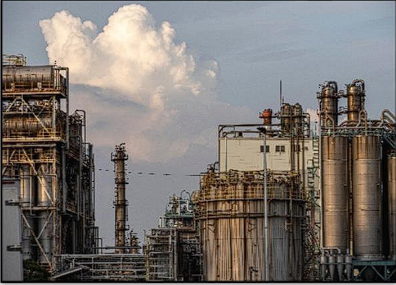
- Over the years, the industry has expanded steadily. From a handful of small refineries, India has built a strong and diversified network of refineries. Today, it not only meets the domestic demand for fuels but also exports refined petroleum products.
- The Indian petroleum industry is a symbol of resilience and innovation. It continues to evolve in response to changing energy needs and global challenges such as environmental sustainability and energy transition.
Industry Development and Evolution
The Indian petroleum industry has witnessed remarkable growth and transformation over the years. This progress has been driven by a combination of technological advancements, policy reforms, and increased investments.
The 1990s marked a turning point in the evolution of the petroleum sector. With the introduction of economic liberalization, India opened its economy to private and foreign investments. This led to greater competition, efficiency, and modernization in the petroleum sector.
- Many Public Sector Undertakings (PSUs), such as Oil and Natural Gas Corporation (ONGC) and Indian Oil Corporation (IOC), played a vital role in expanding oil exploration and refining capacity.
- The private sector also emerged as a major contributor, establishing world-class refineries and marketing networks.
Modern Refining Infrastructure
One of the major achievements of this period was the establishment of state-of-the-art refineries. A key example is:
- The Jamnagar Refinery in Gujarat, set up by Reliance Industries, which is one of the largest refining complexes in the world.
- This development helped India become a refining hub in Asia, capable of meeting both domestic demand and exporting refined products to other countries.
Policy Reforms and Exploration Boost
To attract investments in exploration, the government introduced the New Exploration Licensing Policy (NELP) in 1999. This allowed both Indian and foreign companies to explore oil and gas in India’s sedimentary basins through a transparent bidding system.
These reforms aimed to:
- Increase domestic production of crude oil and natural gas.
- Reduce dependence on energy imports.
- Encourage use of advanced technology in exploration and drilling.
India’s Hydrocarbon Reserves
India has vast hydrocarbon resources distributed across its sedimentary basins.
- As per current estimates, the country has about 651.8 million metric tons of recoverable crude oil reserves.
- It also has 1,138.6 billion cubic meters of recoverable natural gas reserves.
- These reserves offer significant potential for energy self-reliance if explored and utilized effectively.
Some recent updates in India’s petroleum industry
- India is on track to increase its exploration acreage to 1million square kilometers by 2030, with a 16% increase expected in 2025.
- The price of a domestic LPG cylinder in India is among the lowest worldwide, with costs as low as Rs. 803 per 14.2 Kg cylinder. For PMUY households, after a targeted subsidy of Rs 300 per cylinder, the effective price is Rs 503/ cylinder.
- The approval process for exploration and production activities in the petroleum industry has now been simplified, reducing 37 approval processes to just 18, of which nine are now available for self-certification.
- Introducing the Oilfields (Regulation and Development) Amendment Bill in 2024 ensures policy stability for oil and gas producers, and enables single license for all hydrocarbons. This bill was recently passed by the Rajya Sabha on December 3, 2024.
