
Banking
 Finance is the lifeblood of all economic activities such as trade, commerce, agriculture, and industry. Among financial institutions, the bank plays a central role. A bank is generally understood as an institution that:
- Accepts deposits from the public, and
- Lends loans to individuals, businesses, and governments.
The banking sector is considered the backbone of the modern economy, as it ensures financial stability and promotes development. Because of its importance, banking activities are highly regulated in most countries.
Historical Development of Banking
- The first finance-lending bank in the world was the Bank of Venice (1157).
- The Riksbank of Sweden, founded in 1656, is the oldest central bank in the world. It acquired the sole right to issue notes in 1897.
- The Bank of England, established in 1694, became a model for modern central banking. It played a key role in developing the fundamentals of banking.
Between 1921 and 1954, many central banks were established following the resolution of the International Finance Conference held at Brussels (1920). Examples include:
- Reserve Bank of South Africa (1921)
- Central Bank of China (1928)
- Reserve Bank of New Zealand (1934)
- Reserve Bank of India (1935)
- Central Bank of Ceylon (1950)
- Bank of Israel (1954)
Nationalization of Banks in India
The nationalization of banks in India marked a turning point in the country’s financial history. On 19 July 1969, Prime Minister Indira Gandhi’s government nationalized 14 major commercial banks, an event often described as the most significant economic policy decision since independence. Many economists even consider its impact greater than the 1991 economic reforms. While several Asian nations embraced market-oriented policies, India at that time chose to deepen its socialist approach.
Today, amid a looming banking crisis and discussions on privatization, the question arises: Was bank nationalization a boon or a burden?
Historical Background
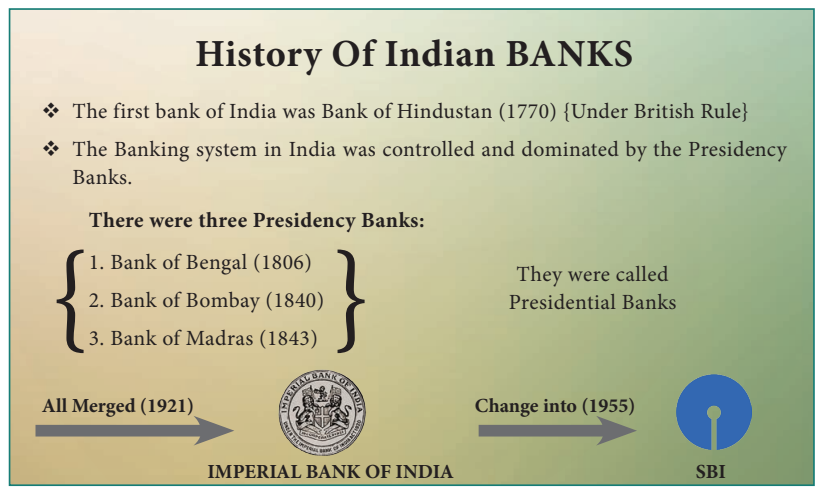
- 1955: The Imperial Bank of India was nationalized to form the State Bank of India (SBI), tasked with expanding banking services, particularly in rural and semi-urban areas, and acting as the principal agent of the RBI.
- 1969: The government nationalized 14 large commercial banks.
- 1980: A second wave of nationalization brought six more banks under government control.
- Together, these steps brought nearly 80% of India’s banking sector under public ownership.
Factors Behind Nationalization
- Planned Development: Post-independence, India adopted a socialist development model; nationalization aligned with this vision.
- Economic & Political Shocks: The 1960s witnessed wars with China (1962) and Pakistan (1965), food shortages from successive droughts, and a “plan holiday” that reduced public investment. Growth stagnated while population surged.
- Skewed Credit Flow: Between 1951–1968, industry’s share of bank credit rose from 34% to 68%, while agriculture received less than 2%. With the Green Revolution underway, agriculture urgently needed capital infusion.
- Broader Objectives:
- Promote social welfare and curb private monopolies.
- Expand banking to rural and backward areas to reduce regional imbalance.
- Ensure priority sector lending in agriculture and allied activities.
- Mobilize public savings for productive use.
Benefits of Nationalization
- Banking Expansion: Branches of public sector banks grew rapidly; deposits increased nearly 800%, while advances surged by 11,000%.
- Public Confidence: State ownership reassured people of the safety of their savings.
- Rural Penetration: Banking spread beyond cities, supporting the Green Revolution and rural development.
- Inclusive Growth: Agriculture, small industries, exports, and new entrepreneurs benefited from targeted lending.
- Resource Mobilization: Public deposits were efficiently pooled for development projects, strengthening economic growth.
Criticisms and Drawbacks
- NPA Crisis: Political interference in lending fostered a credit bubble, later contributing to the Non-Performing Asset (NPA) problem.
- Complex Interest Rate Structure: RBI managed hundreds of interest rates, making lending inefficient.
- Lack of Competition: Nationalization reduced banking competition, fostering bureaucracy, delays, and inefficiency.
- Risky Lending: Loans to agriculture and small-scale industries were often non-remunerative, weakening financial stability.
- Governance Issues: Absence of proper audits and accountability led to misallocation of funds and weak performance monitoring.
- Unviable Branches: Many rural branches operated at a loss, burdening the system.
Nationalization vs. Privatization Debate
- While nationalization democratized credit access and fueled rural development, it also sowed seeds of inefficiency and political misuse.
- Post-1991 liberalization attempted to introduce competition, but political control over lending persisted.
- Since 2012, mounting NPAs and inefficiencies have revived calls for privatization.
However, privatization is not a silver bullet. India must first address governance issues, strengthen regulatory oversight, resolve NPAs, and ensure fair competition before moving towards full privatization.
