Table of Contents
Relevance: UPSC: GS Paper III – Indian Economy, Maritime Trade, Ports, Infrastructure, Disaster Preparedness.
For Prelims:
- Salaya Port, Gulf of Kutch, Mechanised Sailing Vessels, MSVs, Strait of Hormuz, Immigration Check Post, Porbandar ICP, Bureau of Immigration, Indian Sailing Vessels Association, Merchant Shipping Act.
For Mains:
- Maritime Trade, Coastal Economy, Monsoon Risk, Port Infrastructure, Regulatory Flexibility, Small Vessel Trade, Gulf Trade, Immigration Governance, Maritime Safety.
Why in News?
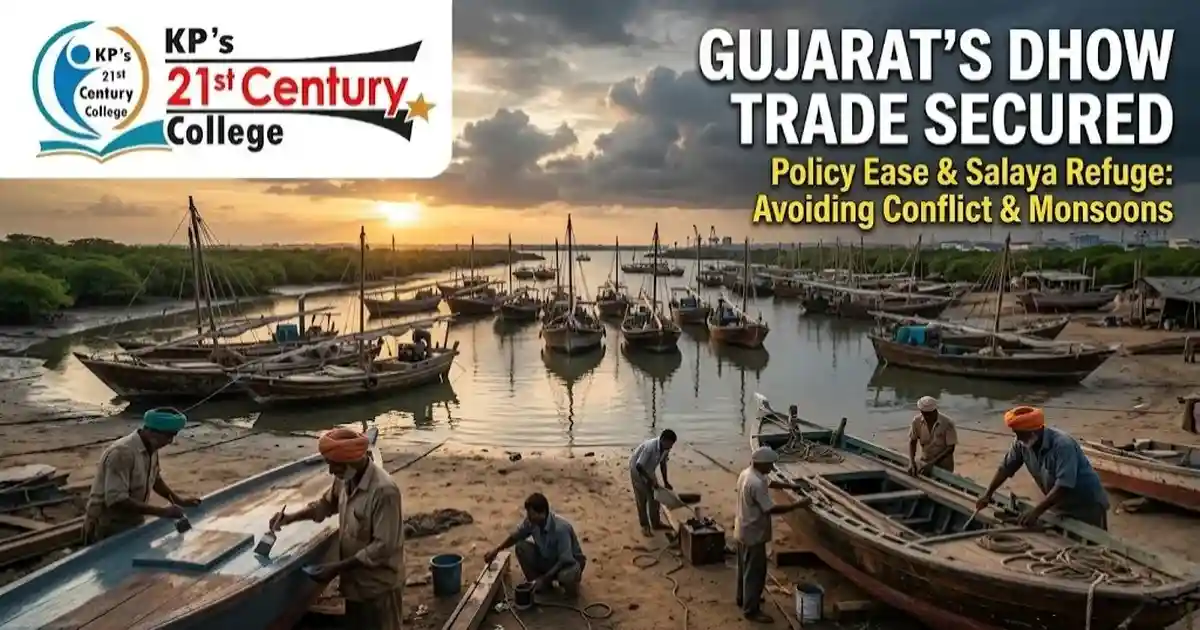
A regulatory change has allowed mechanised sailing vessels belonging to Salaya and Okha ports in Gujarat to complete crew sign-on and sign-off formalities at the Porbandar Immigration Check Post.
This change has helped many Indian-flagged sailing vessels return safely to Gujarat before the rough monsoon season. It has also helped avoid a possible maritime trade crisis at a time when vessels were facing risks due to conflict in West Asia and insecurity near the Strait of Hormuz.
What are Mechanised Sailing Vessels?
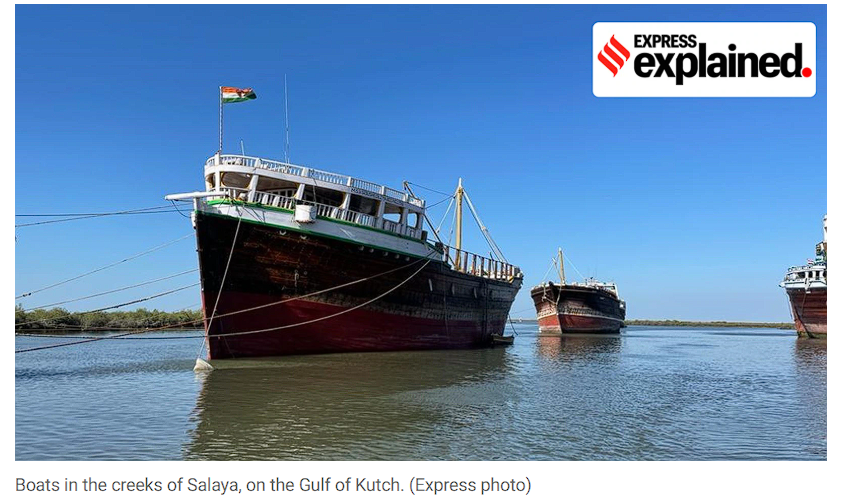
- Mechanised Sailing Vessels, or MSVs, are small merchant cargo vessels.
- They are often called traditional dhows.
- They carry goods between India and countries in:
- Gulf region
- Middle East
- Indian Ocean region
- East Africa
- These vessels usually run on diesel.
- Their carrying capacity ranges from around 200 MT to 3,000 MT.
- Most such vessels carry around 1,000 MT of cargo.
Port is Important
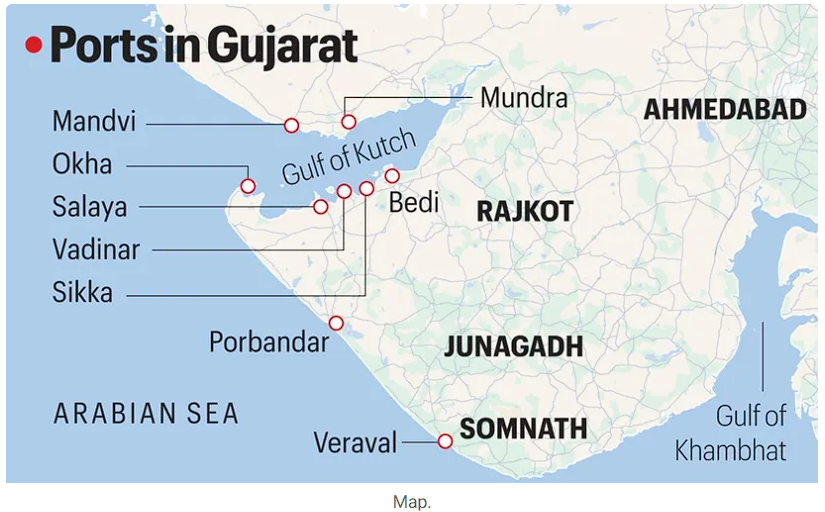
- Salaya is located in the Gulf of Kutch in Gujarat.
- It is one of the most important home ports for Indian-flagged MSVs.
- Salaya is a tidal port with creeks and mangroves.
- These natural features protect vessels from rough sea conditions.
- It can accommodate and beach a large number of boats during the monsoon season.
- It is also known for:
- Boat repair
- Painting
- Cleaning
- Dry-dock work
- Seaworthiness inspection
- Repair costs are also lower at Salaya compared to many other ports.
Immigration Rule Change
- Earlier, many MSVs faced problems because their home ports were not notified for immigration.
- Crew members must complete immigration formalities at a notified Immigration Check Post.
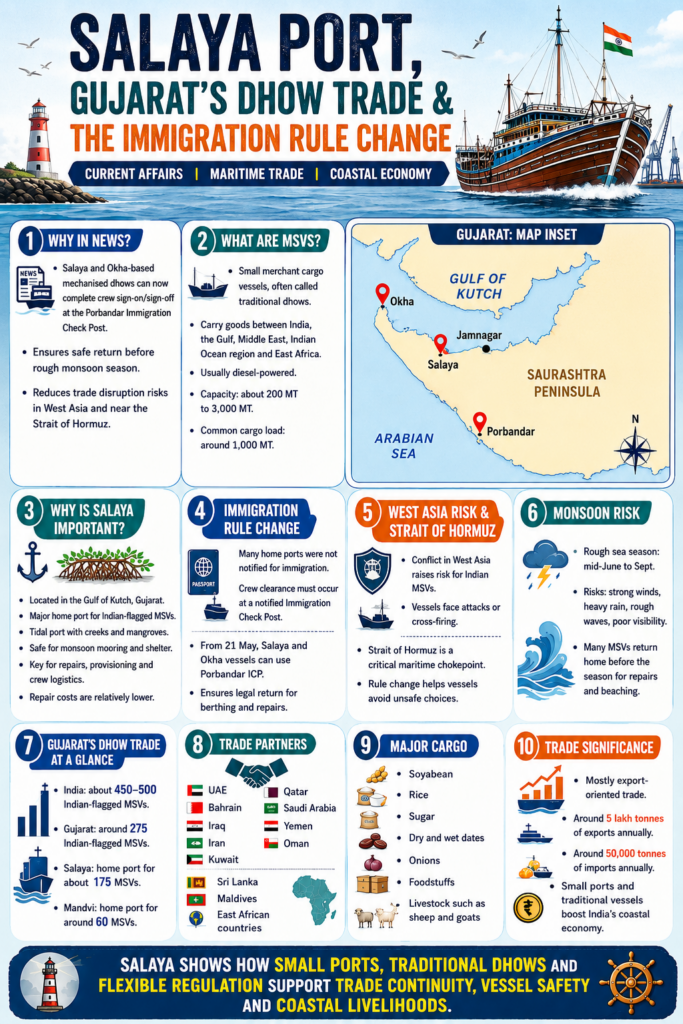
- From May 21, MSVs whose home ports are Salaya and Okha were allowed to complete crew sign-on and sign-off at Porbandar ICP.
- This helped vessels legally return to Salaya and Okha for berthing and repairs.
- Police and immigration authorities can now process the crew at Porbandar while the vessels berth at their home ports.
Link with Iran War and Strait of Hormuz
- The conflict in West Asia created safety concerns for Indian MSVs operating in Gulf waters.
- Some vessels were reportedly hit or caught in cross-firing.
- The Strait of Hormuz is a critical maritime chokepoint connecting the Gulf region with global sea routes.
- For small Indian vessels, sailing through conflict zones became risky.
- The rule change allowed vessels to avoid unsafe choices and return to Gujarat before the monsoon.
Monsoon and Rough Sea Risk
- The rough sea season generally lasts from mid-June to September.
- During this period, small vessels are at high risk due to:
- Strong winds
- Heavy rainfall
- Rough waves
- Poor visibility
- Under maritime practice, many MSVs return to home ports for beaching and repairs before the rough season.
- If they had been forced to dock at crowded or exposed ports, they could have suffered major damage.
Gujarat’s Dhow Trade
- India has around 450–500 Indian-flagged MSVs.
- Around 275 Indian-flagged MSVs are based in Gujarat.
- Salaya is the home port for around 175 MSVs.
- Mandvi is the home port for around 60 MSVs.
- MSVs trade with UAE, Bahrain, Iraq, Iran, Kuwait, Qatar, Saudi Arabia, Yemen, Oman, Sri Lanka, Maldives
- East African countries
- Major cargo includes:
- Soyabean
- Rice
- Sugar
- Dry and wet dates
- Onions
- Foodstuffs
- Livestock such as sheep and goats
- The trade is mostly export-oriented.
- Indian MSVs carry around 5 lakh tonnes of exports and about 50,000 tonnes of imports annually.
Significance
- Protects small Indian merchant vessels during the monsoon season.
- Supports Gujarat’s traditional maritime economy.
- Helps avoid damage to vessels during rough sea conditions.
- Provides regulatory flexibility during emergency conditions.
- Supports export trade with Gulf, Indian Ocean and East African regions.
- Reduces pressure on crowded ports such as Porbandar, Okha, Sikka and Mundra.
- Shows the importance of smaller ports in India’s maritime trade.
- Strengthens coastal livelihood security for vessel owners, crews and repair workers.
Challenges
- Many traditional home ports do not have notified immigration facilities.
- Sudden legal changes can disrupt maritime trade.
- Small vessels are vulnerable to geopolitical risks in Gulf waters.
- Monsoon conditions create serious safety risks.
- Crowded and exposed ports may not provide enough protection.
- Docking at foreign ports is costly for small vessel owners.
- Regulatory delays can create uncertainty for crew and traders.
- Port infrastructure for small vessels remains limited.
Way Forward
- Notify more traditional sailing vessel ports for immigration facilities.
- Create permanent digital immigration support for MSVs.
- Improve coordination between the Bureau of Immigration, DG Shipping, port authorities and vessel associations.
- Develop Salaya and other traditional ports with better repair and safety facilities.
- Prepare a standard emergency protocol for vessels affected by war, weather or maritime insecurity.
- Strengthen maritime safety advisories for small vessels operating near conflict zones.
- Support traditional dhow trade as part of India’s coastal and export economy.
- Improve insurance, tracking and communication systems for MSVs.
Conclusion
The temporary immigration facility at Porbandar for vessels headed to Salaya and Okha helped prevent a possible maritime crisis. It allowed several Indian MSVs to return safely before the rough monsoon season and avoid dangerous routes near conflict-affected Gulf waters.
Salaya’s creeks, mangroves and repair facilities make it critical for Gujarat’s dhow trade. The episode shows that small ports and traditional vessels remain important to India’s maritime economy. A balanced policy must combine security, immigration control, port infrastructure and protection of coastal livelihoods.
CARE MCQ
Q. With reference to Salaya port, consider the following statements:
- It is located in the Gulf of Kutch.
- It is important for mechanised sailing vessels.
- It is known for sheltering vessels during the monsoon season.
Which of the above statements are correct?
A. 1 and 2 only
B. 2 and 3 only
C. 1 and 3 only
D. 1, 2 and 3
Answer: D
Explanation:
- Statement 1 is correct: Salaya is located in the Gulf of Kutch in Gujarat.
- Statement 2 is correct: It is a major home port for mechanised sailing vessels.
- Statement 3 is correct: Its creeks and mangroves help shelter vessels during rough sea conditions.
FAQs
1. Where is Salaya port located?
Salaya port is located in the Gulf of Kutch in Gujarat.
2. Why is Salaya important?
It is important because it provides shelter, repair and beaching facilities for mechanised sailing vessels during the monsoon season.
3. What are MSVs?
MSVs are Mechanised Sailing Vessels, small merchant cargo vessels used for trade with Gulf, Indian Ocean and East African countries.
4. What regulatory change helped MSVs?
MSVs belonging to Salaya and Okha were allowed to complete crew sign-on and sign-off at the Porbandar Immigration Check Post.
5. Why was this change needed?
It was needed because many home ports did not have notified immigration facilities, and vessels had to return safely before the monsoon.
6. How did the Iran war affect these vessels?
The conflict in West Asia increased risks for vessels operating near Gulf waters and the Strait of Hormuz.
7. What goods do Indian MSVs carry?
They carry goods such as rice, sugar, soyabean, dates, onions, foodstuffs and livestock.
8. Why are mangroves important at Salaya?
Mangroves and creeks help absorb wave energy and protect vessels from rough sea conditions.