NTR District to be Model for Natural Farming
Table of Contents
Relevance (UPSC)
Mains: GS Paper III: Agriculture, Sustainable Farming, Food Security, Agro-ecology, Waste Management.
For Prelims:
- Natural Farming, Organic Manure, Traceability System (QR code-based), Regenerative Agriculture, Waste Processing Centres
For Mains:
- Sustainable Agriculture, Zero Budget Natural Farming (ZBNF), Circular Economy in Agriculture, Farmer Producer Ecosystems, Transparency in Agri Supply Chain
Why in News?
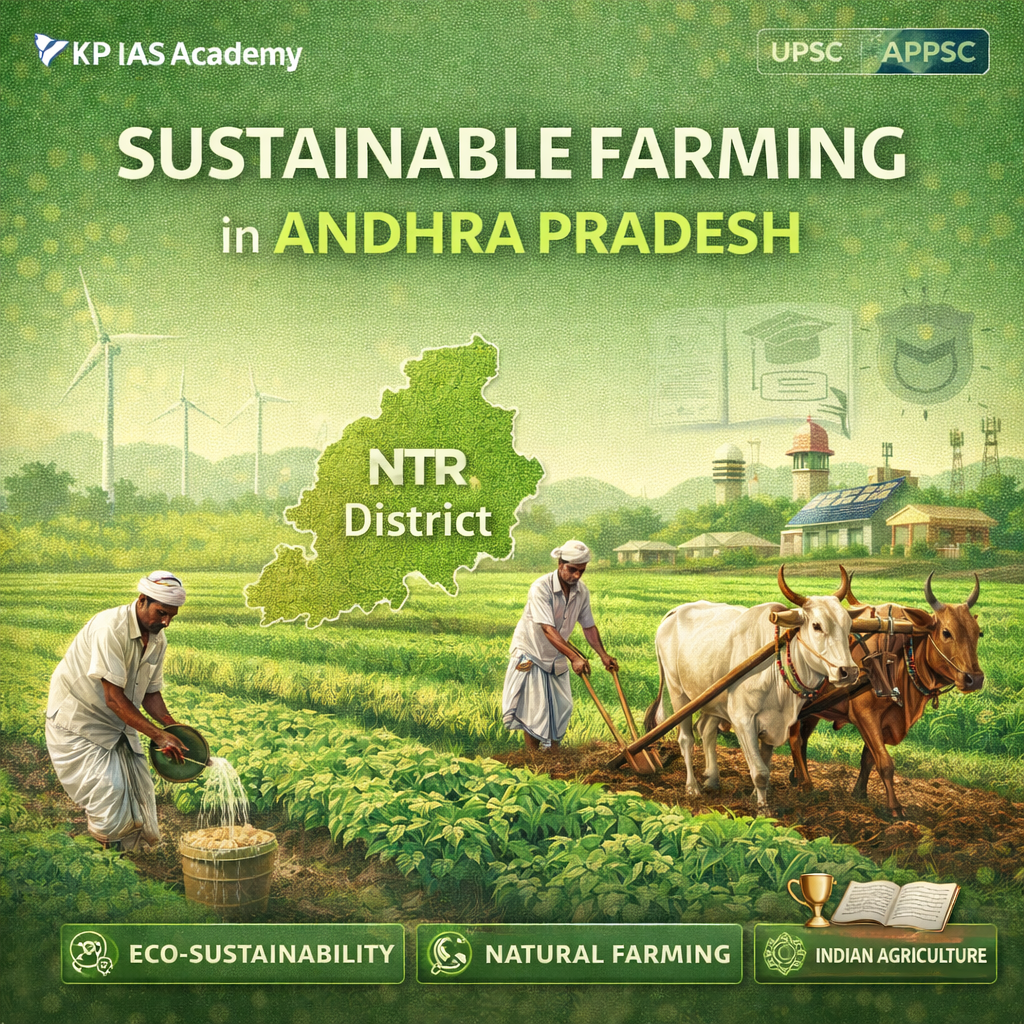
- Vijayawada MP announced efforts to make NTR district a model district for natural farming.
- 225-day seminars planned to promote organic cultivation in every mandal.
- QR-based traceability system introduced for transparency in organic produce.

Background


- Natural farming promotes chemical-free cultivation, use of indigenous cow-based inputs, and regenerative practices.
- Andhra Pradesh has been a frontrunner in promoting community-based natural farming through Rythu Sadhikara Samstha.
- Growing consumer demand for safe and certified organic products has increased focus on traceability and transparency.
Key Highlights
- District-Level Natural Farming Mission
- Aim to ensure all farmers in NTR district adopt natural farming.
- Mandal-level awareness seminars for 225 days.
- Urban Participation
- Promotion of terrace gardening in cities.
- Waste to Wealth Initiative
- 107 waste processing centres to produce 1,500 metric tonnes of organic manure daily.
- Organic manure to be supplied at subsidised prices.
- QR-Based Traceability System
- Enables consumers to track produce from seed to sale.
- Enhances consumer trust and certification transparency.
- Community & Institutional Involvement
- District administration, farmer societies, and civil society collaboration.
- Promotion of indigenous seeds and regenerative practices.
Significance
1. Sustainable Agriculture
- Reduces dependence on chemical fertilizers and pesticides.
- Improves soil health and biodiversity.
2. Climate Resilience
- Regenerative practices enhance carbon sequestration.
- Promotes low-input, climate-adaptive farming.
3. Circular Economy Model
- Waste processing centres convert urban waste into organic manure.
- Integrates waste management with agriculture.
4. Farmer Income Enhancement
- Reduced input costs.
- Premium pricing for certified organic produce.
5. Consumer Confidence
- QR-based traceability ensures transparency and food safety.
Challenges
- Yield transition concerns during shift from chemical farming.
- Need for scientific validation and extension support.
- Certification and market access barriers.
- Behavioural resistance among farmers.
- Ensuring authenticity of organic claims.
Way Forward
- Strengthen farmer training and extension services.
- Integrate natural farming with e-NAM and digital marketplaces.
- Provide transition incentives and crop insurance support.
- Promote Farmer Producer Organisations (FPOs).
- Establish strict quality certification and monitoring frameworks.
Conclusion
The initiative to make NTR district a model for natural farming reflects a shift towards sustainable and technology-enabled agriculture. If successfully implemented, it can serve as a replicable template balancing environmental sustainability, farmer welfare, and consumer trust.
CARE MCQ
Q. With reference to Natural Farming initiatives in India, consider the following statements:
- Natural farming discourages the use of synthetic chemical fertilizers and pesticides.
- QR-based traceability systems enhance transparency in agricultural supply chains.
- Waste processing centres producing organic manure promote circular economy principles.
Which of the statements given above is/are correct?
A. 1 and 2 only
B. 2 and 3 only
C. 1, 2 and 3
D. 1 onlyAnswer: C
Explanation
Statement 1 is Correct. Natural farming promotes chemical-free cultivation using bio-inputs and indigenous practices.
Statement 2 is Correct. QR-based traceability allows consumers to track produce details, improving transparency and trust.
Statement 3 is Correct. Converting waste into organic manure reflects circular economy principles by recycling resources.