
Why in News?
The Centre recently defended the use of E20 petrol, which involves blending 20% ethanol with petrol. It clarified that there is no proposal at present to raise ethanol blending beyond 20%. Any future increase will depend on scientific studies and consultations with automobile manufacturers, oil companies and research institutions. For Telangana, the E20 push is significant because ethanol production and farm-linked demand are expected to expand in districts such as Medak, Sangareddy, Nizamabad and Peddapalli.
What is E20 Petrol?
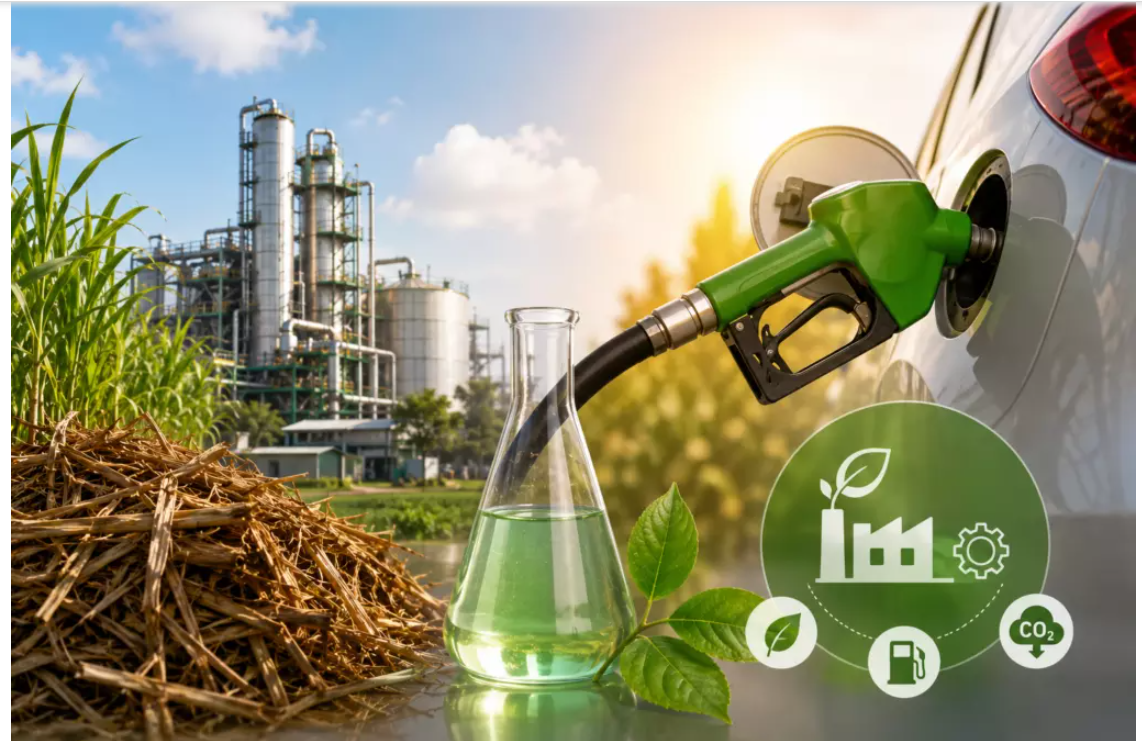
- E20 petrol refers to petrol blended with 20% ethanol. Ethanol is a biofuel that can be produced from agricultural feedstock such as maize, damaged grain and other biomass-based inputs.
- The objective of ethanol blending is to reduce dependence on conventional fossil fuel, promote cleaner combustion and support domestic biofuel production.
- The government has stated that E20 is a tested and safer fuel. It also offers higher octane, cleaner combustion and lower emissions.
Telangana’s Opportunity from E20
For Telangana, the E20 programme is not only an energy policy but also a potential rural-industrial development opportunity.
Ethanol production activity is already visible in parts of:
- Medak
- Sangareddy
- Nizamabad
- Peddapalli
These areas have grain-based distilleries and allied processing units that are becoming part of the biofuel supply chain.
If ethanol demand remains steady, these districts can benefit through:
- expansion of distillery capacity
- stronger demand for local agricultural produce
- better market linkages for farmers
- growth of storage and logistics services
- employment in agro-processing and transport
Thus, the E20 shift can create a link between energy security, agriculture and rural industry.
Industrial and Rural Linkages
1. Benefit to Ethanol Units
Grain-based distilleries and allied processing units can benefit from assured demand for ethanol. This can encourage new investment and capacity expansion in Telangana’s biofuel sector.
2. Farm-Linked Demand
Farmers supplying maize, damaged grain and other feedstock may gain from a stronger local market. This is especially relevant in regions where agriculture and agro-processing are already linked.
3. Support to Rural Economy
The policy can support rural income if procurement systems are efficient and payments are timely. Farmers can benefit only when the supply chain is transparent, predictable and remunerative.
4. Growth of Allied Services
Ethanol blending requires a supporting ecosystem. This can generate demand for:
- transporters
- storage operators
- quality-testing facilities
- logistics firms
- fuel movement and blending services
5. Biofuel Hub Potential
With proper coordination between feedstock procurement, distillery capacity and logistics, Telangana can emerge as an important biofuel hub.
Benefits of the E20 Push
1. Cleaner Fuel Transition
E20 supports cleaner combustion and can help reduce emissions compared to conventional petrol.
2. Reduced Crude Oil Dependence
Blending ethanol with petrol can reduce crude oil imports and save foreign exchange.
3. Support to Farmers
Ethanol demand creates an additional market for agricultural produce and damaged grains, improving farm-linked income opportunities.
4. Rural Industrialisation
Biofuel production can encourage decentralised industrial activity in non-metro districts.
5. Employment Generation
The ethanol value chain can create jobs in farming, procurement, distillation, testing, transport, storage and blending.
6. Value Addition in Agriculture
Instead of depending only on traditional crop markets, farmers can connect with industrial demand through biofuel feedstock.
Conclusion
The E20 push has opened a new opportunity for Telangana by connecting clean fuel policy with rural industrial growth. While consumer concerns about mileage and vehicle compatibility need clear communication, the policy can benefit ethanol producers, farmers, transporters and allied service providers. If implemented with efficient procurement, timely payments and scientific regulation, E20 can become a meaningful development lever for Telangana’s agriculture-linked industrial economy.
Why in News?
A recent analysis of glacial lakes in the Mago Chu Basin in Tawang district, Arunachal Pradesh, found that four out of five examined glacial lakes expanded between 2016 and 2026. This includes lakes categorised as high risk and very high risk, raising concerns over the growing threat of Glacial Lake Outburst Floods (GLOFs) in the Himalayas.
What are Glacial Lakes?
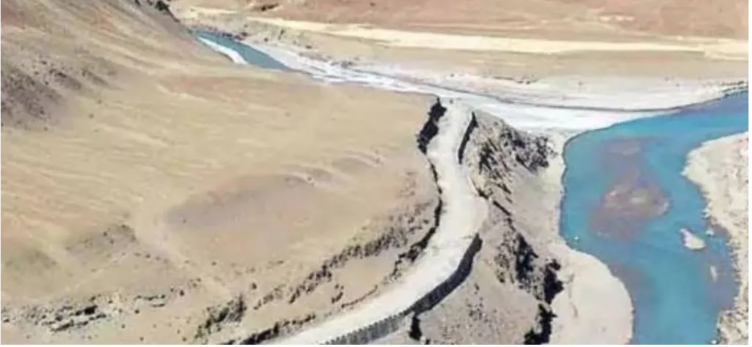
Glacial lakes are water bodies formed in high mountain regions when depressions created by glacier erosion are filled with meltwater from seasonal snow and glacier ice.
Their formation depends on:
- local and regional climate
- glacier erosion and deposition
- valley-floor and slope conditions
- type of glacial debris
- snowmelt and local topography
Glaciers are highly sensitive to temperature changes. As warming accelerates glacier retreat, meltwater increases, leading to the expansion of glacial lakes.
Types of Glacial Lakes
According to the ICIMOD classification, glacial lakes can be broadly grouped into five categories.
1. Glacial Erosion Lakes
- Formed in depressions created by glacier erosion and abrasion.
- Examples include cirque lakes and glacial valley lakes.
2. Moraine-Dammed Lakes
- Formed when water accumulates behind loose rock and debris left by retreating glaciers.
- These are among the most vulnerable to GLOFs because moraines are unstable and may collapse suddenly.
- Examples include Samudra Tapu and Gepang Gath in Himachal Pradesh.
3. Ice-Blocked Lakes
- Formed when an advancing or detached glacier blocks meltwater.
- These are mostly found in the upper Indus and Yarkand basins of the Karakoram region.
4. Supraglacial Lakes
- Formed on the surface of glaciers, usually in the ablation zone of debris-covered glaciers.
- Examples are found on Barashigri Glacier in Himachal Pradesh and Rongbuk Glacier near Mount Everest.
5. Subglacial Lakes
- Formed within or beneath glaciers or ice sheets.
- They cannot be identified through remote sensing alone and require tools such as Ground Penetrating Radar.
Distribution of Glacial Lakes in the Indian Himalayas
The Glacial Lake Atlas 2023 prepared by the National Remote Sensing Centre under ISRO identified a large number of glacial lakes in Indian Himalayan river basins.
Key patterns include:
- The Brahmaputra basin has the highest concentration of glacial lakes.
- The Indus basin and Ganga basin also have significant numbers.
- Among Indian regions, Arunachal Pradesh, Sikkim, Himachal Pradesh and Uttarakhand are important glacial lake zones.
- Many large lakes are located in the Brahmaputra basin and in the Union Territories of Jammu & Kashmir and Ladakh.
This distribution matters because expanding glacial lakes in high mountain basins can threaten downstream settlements, roads, bridges, hydropower projects and river valleys.
What are Glacial Lake Outburst Floods?
A Glacial Lake Outburst Flood (GLOF) occurs when the natural dam holding a glacial lake suddenly breaches, releasing a huge volume of water downstream.
Glacial lakes are often dammed by:
- ice
- moraines
- loose glacial debris
These natural dams are weak compared to engineered structures.
Major Triggers of GLOFs
- snow avalanches
- rockfalls
- earthquakes
- rapid meltwater increase
- heavy rainfall
- collapse of unstable moraine dams
Once breached, the sudden flood can generate extreme discharge, strong erosion and heavy sediment transport.
Why GLOF Risk is Increasing
1. Climate Change and Glacier Retreat
Rising temperatures are causing Himalayan glaciers to retreat, creating more meltwater and expanding glacial lakes.
2. Elevation-Dependent Warming
High mountain regions are warming faster than lower elevations. This phenomenon is called elevation-dependent warming, and it accelerates glacier melt and lake growth.
3. Expansion of High-Risk Lakes
The Mago Chu Basin example shows that even already classified high-risk lakes are continuing to expand.
4. Fragile Natural Dams
Moraine-dammed lakes are especially dangerous because they are formed by loose, unconsolidated debris.
5. Downstream Exposure
Hydropower projects, roads, settlements and local communities are increasingly located in vulnerable Himalayan valleys.
Recent GLOF Events
India and the Himalayan region have already experienced destructive GLOF-linked disasters.
1. Kedarnath Region, 2013
A compound disaster involving the Chorabari glacial lake, cloudbursts and landslides caused massive loss of life and infrastructure damage.
2. South Lhonak Lake, Sikkim, 2023
A GLOF from South Lhonak Lake caused deaths, injuries and severe downstream damage.
3. Nepal Himalayas
Recent GLOF events in Nepal show that even smaller and short-lived glacial lakes can cause major destruction.
India’s Mitigation Strategy
1. NDMA Guidelines, 2020
The National Disaster Management Authority issued guidelines to improve awareness, administrative response, early warning systems and risk reduction measures.
2. Standard Operating Procedure
A national SOP has been developed in coordination with ministries and departments such as MHA, DST and Ministry of Jal Shakti.
3. CWC Risk Indexing
The Central Water Commission has finalised criteria for risk indexing of glacial lakes and is ranking vulnerable lakes based on likelihood of failure and possible damage.
4. Guidelines for Dams
CWC has issued guidelines for structural measures to reduce adverse GLOF impacts on dams and to integrate GLOF risk into infrastructure planning.
5. National GLOF Risk Mitigation Project
The National Glacial Lake Outburst Flood Risk Mitigation Project was launched in 2025 for selected Himalayan states, including Arunachal Pradesh, Himachal Pradesh, Sikkim and Uttarakhand. It focuses on monitoring, early warning and risk reduction.
Challenges
1. Sparse Field Data
Rugged terrain and harsh climate make field-based glaciological and climate data collection difficult.
2. Remote Sensing Limitations
Most studies depend on satellite data, but resolution and seasonal availability can affect accuracy.
3. Monitoring of Supraglacial Lakes
Supraglacial and short-lived lakes can change quickly, making them difficult to track through static inventories.
4. Transboundary Nature of Risk
Many Himalayan river basins cross national borders, requiring cooperation among countries of the Hindu Kush Himalayan region.
5. Infrastructure Vulnerability
Hydropower projects and roads in narrow valleys are highly exposed to sudden floods and debris flow.
Way Forward
India needs dynamic glacial lake inventories with regular seasonal monitoring. Potentially dangerous glacial lakes should be tracked through remote sensing, field surveys, drones and ground-based instruments. Early warning systems must be connected with local administration and downstream communities.
Infrastructure planning in Himalayan states should include GLOF hazard mapping, dam safety measures and climate-risk screening. In the long term, countries of the Hindu Kush Himalayan region need a transboundary mechanism for real-time data sharing, joint monitoring and early warning.
Conclusion
The expansion of glacial lakes in the Himalayas is a visible indicator of climate change and a growing disaster risk. The Mago Chu Basin findings show that even classified high-risk lakes continue to expand. India’s response must move from event-based disaster management to continuous monitoring, early warning, risk-informed infrastructure and regional cooperation. GLOF preparedness is now central to Himalayan climate resilience.
Why in News?
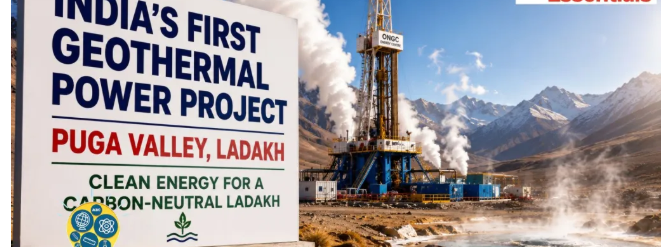
India’s first and deepest geothermal wells have become operational at Puga Valley in Ladakh. The wells are around 1,000 metres deep and are critical for the proposed 1 MW pilot geothermal power project, which is expected to become India’s first demonstration-scale geothermal power project.
The project is being executed by the ONGC Energy Centre and is linked to the broader goal of developing Carbon-Neutral Ladakh and expanding India’s clean energy basket.
What is Geothermal Energy?
- Geothermal energy is the heat energy obtained from the interior of the Earth.
- The Earth becomes progressively hotter with increasing depth. This rise in temperature with depth is called the geothermal gradient. In areas where the geothermal gradient is high, usable heat can be found at relatively shallow depths.
- When groundwater comes into contact with hot rocks underground, it absorbs heat and may turn into hot water or steam. This steam or hot fluid can be used to rotate turbines and generate electricity.
- Geothermal energy is a site-specific renewable energy source, especially useful for remote and interior areas where grid connectivity and conventional fuel supply may be difficult.
Why Puga Valley is Important
Puga Valley in Ladakh is one of India’s most important geothermal sites.
Its importance lies in four points:
1. India’s First Geothermal Wells
The operational wells at Puga mark the beginning of India’s practical geothermal power journey.
2. Demonstration-Scale Project
The wells will support a 1 MW pilot project, making it India’s first demonstration-scale geothermal power project.
3. Remote-Area Energy Access
Ladakh’s terrain and climate make decentralised renewable energy important. Geothermal energy can provide stable power in such regions.
4. Carbon-Neutral Ladakh Vision
The project supports India’s clean energy transition and the goal of reducing fossil-fuel dependence in ecologically sensitive regions.
How Geothermal Power Works
The process is simple:
- Heat from the Earth warms underground water.
- Hot water or steam is brought to the surface through wells.
- Steam or vapour drives a turbine.
- The turbine generates electricity.
- The remaining fluid may be reinjected underground in some systems.
Unlike solar and wind, geothermal energy is not dependent on sunlight or wind speed. This makes it useful for round-the-clock electricity generation.
Types of Geothermal Power Plants
1. Dry Steam Plants
- Use steam directly from underground fractures.
- The steam directly drives the turbine.
2. Flash Plants
- Bring high-pressure hot water from deep underground to lower pressure.
- The sudden pressure drop produces steam, which drives the turbine.
3. Binary Plants
- Hot geothermal water transfers heat to a secondary fluid with a lower boiling point.
- The secondary fluid vaporises and drives the turbine.
Binary plants are important because they can operate even where geothermal temperatures are moderate.
National Policy on Geothermal Energy
The Ministry of New and Renewable Energy released the National Policy on Geothermal Energy, 2025 after a task force on geothermal energy was formed in 2024.
The policy aims to:
- establish geothermal energy as a pillar of India’s renewable energy mix
- support India’s 2070 Net Zero goal
- strengthen energy security
- encourage exploration and technology development
- promote cooperation with States, research institutions and energy companies
This policy gives institutional direction to geothermal energy development in India.
India’s Geothermal Potential
- India has several geothermal sites, especially in Himalayan and tectonically active regions.
- The Geological Survey of India has mapped several hot springs across the country. India’s estimated geothermal potential is around 10.6 GW, and it may increase with further exploration.
Important Geothermal Regions in India
- Ladakh: Puga, Chumathang, Demchok, Nubra
- Himachal Pradesh: Manikaran, Kasol, Tattapani
- Uttarakhand: Tapoban, Joshimath, Yamunotri, Ganganani
- Arunachal Pradesh: Tawang region
- Sikkim: Yumesamdong
- Gujarat: Dholera, Tuwa, Tulsishyam
- Telangana: Manuguru
- Andaman and Nicobar Islands: geothermal potential zones
The Himalayan Geothermal Province, the Cambay Graben in Gujarat, and the Andaman and Nicobar Islands are important from the exploration perspective.
Advantages of Geothermal Energy
1. Round-the-Clock Renewable Power
Geothermal energy can generate power continuously, unlike solar and wind which depend on weather conditions.
2. Energy Security
It can reduce dependence on imported fossil fuels and support domestic clean energy production.
3. Suitable for Remote Areas
It is useful for remote Himalayan and interior regions where power supply is difficult.
4. Low Land Footprint
Geothermal plants usually require less surface land compared to many other renewable projects.
5. Supports Climate Goals
It can contribute to India’s clean energy targets, including non-fossil electricity capacity expansion and the Net Zero 2070 goal.
6. Employment Potential
According to the cited World Bank reference in the source, geothermal energy generates high employment per unit of installed renewable capacity.
Enhanced Geothermal Systems
Enhanced Geothermal Systems (EGS) are advanced geothermal technologies that use heat from hot dry rocks deep underground.
How EGS Differs from Conventional Geothermal Systems
Conventional Geothermal System
- Uses naturally occurring underground hot water or steam.
- Requires permeable rocks and natural hydrothermal reservoirs.
- Usually found near tectonic plate boundaries or volcanic hotspots.
Enhanced Geothermal System
- Creates artificial permeability where natural reservoirs do not exist.
- Uses advanced drilling techniques, including horizontal drilling and controlled fracturing.
- Fluid is injected underground to open fractures in hot rocks.
- The circulating fluid absorbs heat and returns to the surface for power generation.
EGS is important because it can expand geothermal energy beyond naturally occurring hydrothermal locations.
Challenges
1. Site-Specific Nature
Geothermal energy can be developed only where underground heat conditions are suitable.
2. High Exploration Risk
Drilling deep geothermal wells is expensive, and success is not guaranteed.
3. Technical Complexity
Projects need specialised knowledge of geology, drilling, reservoir behaviour and power systems.
4. Environmental Concerns
Improper handling of geothermal fluids or induced seismicity risks must be carefully managed.
5. Limited Indian Experience
India is still at the pilot stage, so commercial scaling will require data, expertise and investor confidence.
Way Forward
India should treat Puga Valley as a technology demonstration and learning platform. The project should generate reliable data on geothermal reservoirs, drilling performance, cost, environmental safety and power generation. India should also strengthen mapping of geothermal sites, encourage public-private participation, and promote collaboration among MNRE, ONGC, GSI, research institutions and State governments.
For future expansion, India should explore binary cycle plants for moderate-temperature reservoirs and carefully assess Enhanced Geothermal Systems where conventional hydrothermal resources are limited.
Conclusion
The Puga Valley project marks a major milestone in India’s renewable energy journey. It shows that geothermal energy can support clean, reliable and round-the-clock power, especially in remote regions like Ladakh. While India is still at an early stage, geothermal energy can become an important part of the country’s future energy mix if backed by scientific exploration, policy support, environmental safeguards and technology development.