Why in News?
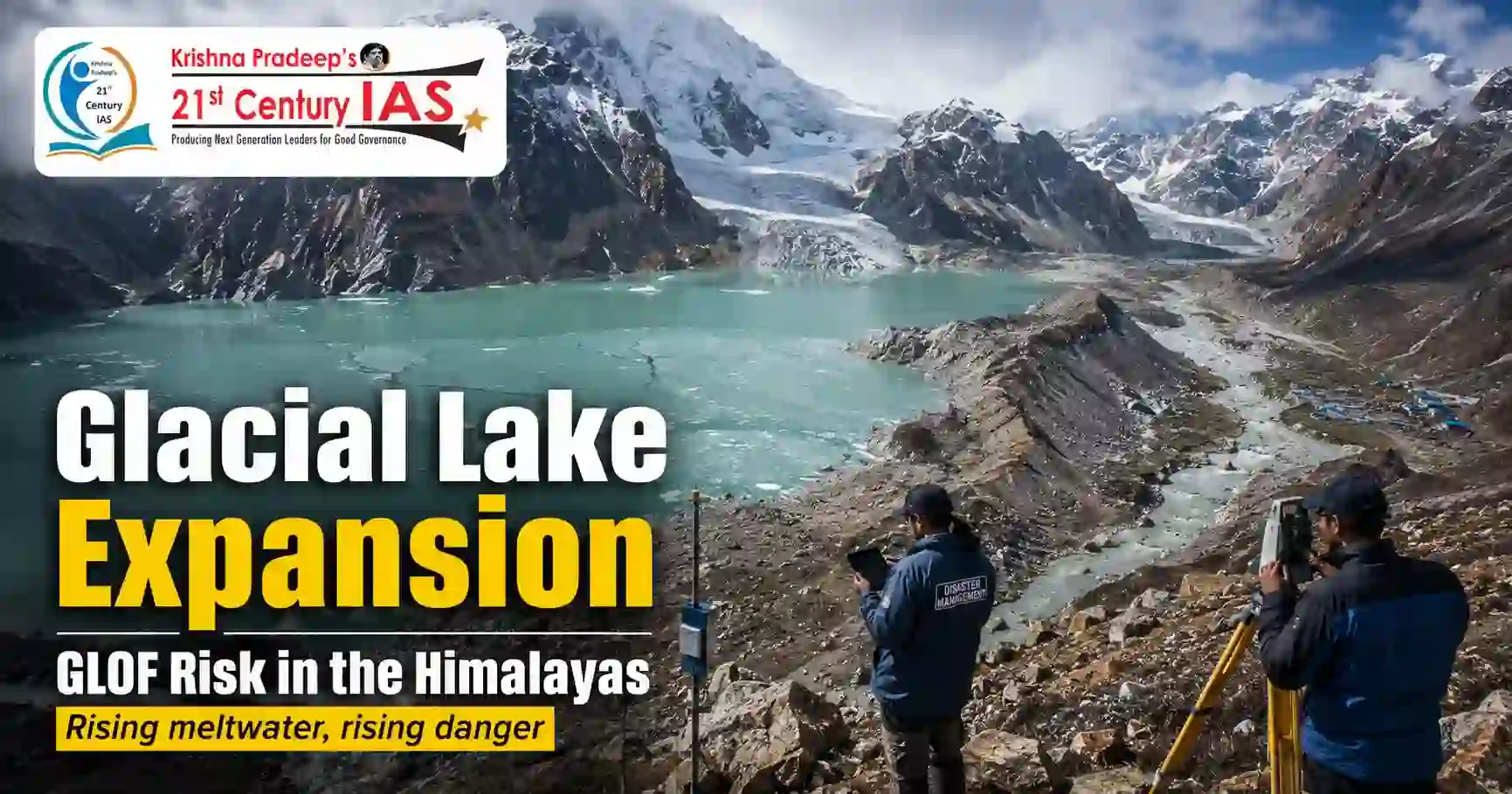
A recent analysis of glacial lakes in the Mago Chu Basin in Tawang district, Arunachal Pradesh, found that four out of five examined glacial lakes expanded between 2016 and 2026. This includes lakes categorised as high risk and very high risk, raising concerns over the growing threat of Glacial Lake Outburst Floods (GLOFs) in the Himalayas.
What are Glacial Lakes?
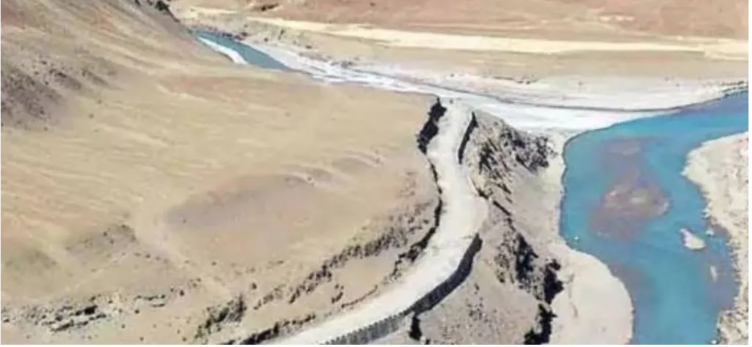
Glacial lakes are water bodies formed in high mountain regions when depressions created by glacier erosion are filled with meltwater from seasonal snow and glacier ice.
Their formation depends on:
- local and regional climate
- glacier erosion and deposition
- valley-floor and slope conditions
- type of glacial debris
- snowmelt and local topography
Glaciers are highly sensitive to temperature changes. As warming accelerates glacier retreat, meltwater increases, leading to the expansion of glacial lakes.
Types of Glacial Lakes
According to the ICIMOD classification, glacial lakes can be broadly grouped into five categories.
1. Glacial Erosion Lakes
- Formed in depressions created by glacier erosion and abrasion.
- Examples include cirque lakes and glacial valley lakes.
2. Moraine-Dammed Lakes
- Formed when water accumulates behind loose rock and debris left by retreating glaciers.
- These are among the most vulnerable to GLOFs because moraines are unstable and may collapse suddenly.
- Examples include Samudra Tapu and Gepang Gath in Himachal Pradesh.
3. Ice-Blocked Lakes
- Formed when an advancing or detached glacier blocks meltwater.
- These are mostly found in the upper Indus and Yarkand basins of the Karakoram region.
4. Supraglacial Lakes
- Formed on the surface of glaciers, usually in the ablation zone of debris-covered glaciers.
- Examples are found on Barashigri Glacier in Himachal Pradesh and Rongbuk Glacier near Mount Everest.
5. Subglacial Lakes
- Formed within or beneath glaciers or ice sheets.
- They cannot be identified through remote sensing alone and require tools such as Ground Penetrating Radar.
Distribution of Glacial Lakes in the Indian Himalayas
The Glacial Lake Atlas 2023 prepared by the National Remote Sensing Centre under ISRO identified a large number of glacial lakes in Indian Himalayan river basins.
Key patterns include:
- The Brahmaputra basin has the highest concentration of glacial lakes.
- The Indus basin and Ganga basin also have significant numbers.
- Among Indian regions, Arunachal Pradesh, Sikkim, Himachal Pradesh and Uttarakhand are important glacial lake zones.
- Many large lakes are located in the Brahmaputra basin and in the Union Territories of Jammu & Kashmir and Ladakh.
This distribution matters because expanding glacial lakes in high mountain basins can threaten downstream settlements, roads, bridges, hydropower projects and river valleys.
What are Glacial Lake Outburst Floods?
A Glacial Lake Outburst Flood (GLOF) occurs when the natural dam holding a glacial lake suddenly breaches, releasing a huge volume of water downstream.
Glacial lakes are often dammed by:
- ice
- moraines
- loose glacial debris
These natural dams are weak compared to engineered structures.
Major Triggers of GLOFs
- snow avalanches
- rockfalls
- earthquakes
- rapid meltwater increase
- heavy rainfall
- collapse of unstable moraine dams
Once breached, the sudden flood can generate extreme discharge, strong erosion and heavy sediment transport.
Why GLOF Risk is Increasing
1. Climate Change and Glacier Retreat
Rising temperatures are causing Himalayan glaciers to retreat, creating more meltwater and expanding glacial lakes.
2. Elevation-Dependent Warming
High mountain regions are warming faster than lower elevations. This phenomenon is called elevation-dependent warming, and it accelerates glacier melt and lake growth.
3. Expansion of High-Risk Lakes
The Mago Chu Basin example shows that even already classified high-risk lakes are continuing to expand.
4. Fragile Natural Dams
Moraine-dammed lakes are especially dangerous because they are formed by loose, unconsolidated debris.
5. Downstream Exposure
Hydropower projects, roads, settlements and local communities are increasingly located in vulnerable Himalayan valleys.
Recent GLOF Events
India and the Himalayan region have already experienced destructive GLOF-linked disasters.
1. Kedarnath Region, 2013
A compound disaster involving the Chorabari glacial lake, cloudbursts and landslides caused massive loss of life and infrastructure damage.
2. South Lhonak Lake, Sikkim, 2023
A GLOF from South Lhonak Lake caused deaths, injuries and severe downstream damage.
3. Nepal Himalayas
Recent GLOF events in Nepal show that even smaller and short-lived glacial lakes can cause major destruction.
India’s Mitigation Strategy
1. NDMA Guidelines, 2020
The National Disaster Management Authority issued guidelines to improve awareness, administrative response, early warning systems and risk reduction measures.
2. Standard Operating Procedure
A national SOP has been developed in coordination with ministries and departments such as MHA, DST and Ministry of Jal Shakti.
3. CWC Risk Indexing
The Central Water Commission has finalised criteria for risk indexing of glacial lakes and is ranking vulnerable lakes based on likelihood of failure and possible damage.
4. Guidelines for Dams
CWC has issued guidelines for structural measures to reduce adverse GLOF impacts on dams and to integrate GLOF risk into infrastructure planning.
5. National GLOF Risk Mitigation Project
The National Glacial Lake Outburst Flood Risk Mitigation Project was launched in 2025 for selected Himalayan states, including Arunachal Pradesh, Himachal Pradesh, Sikkim and Uttarakhand. It focuses on monitoring, early warning and risk reduction.
Challenges
1. Sparse Field Data
Rugged terrain and harsh climate make field-based glaciological and climate data collection difficult.
2. Remote Sensing Limitations
Most studies depend on satellite data, but resolution and seasonal availability can affect accuracy.
3. Monitoring of Supraglacial Lakes
Supraglacial and short-lived lakes can change quickly, making them difficult to track through static inventories.
4. Transboundary Nature of Risk
Many Himalayan river basins cross national borders, requiring cooperation among countries of the Hindu Kush Himalayan region.
5. Infrastructure Vulnerability
Hydropower projects and roads in narrow valleys are highly exposed to sudden floods and debris flow.
Way Forward
India needs dynamic glacial lake inventories with regular seasonal monitoring. Potentially dangerous glacial lakes should be tracked through remote sensing, field surveys, drones and ground-based instruments. Early warning systems must be connected with local administration and downstream communities.
Infrastructure planning in Himalayan states should include GLOF hazard mapping, dam safety measures and climate-risk screening. In the long term, countries of the Hindu Kush Himalayan region need a transboundary mechanism for real-time data sharing, joint monitoring and early warning.
Conclusion
The expansion of glacial lakes in the Himalayas is a visible indicator of climate change and a growing disaster risk. The Mago Chu Basin findings show that even classified high-risk lakes continue to expand. India’s response must move from event-based disaster management to continuous monitoring, early warning, risk-informed infrastructure and regional cooperation. GLOF preparedness is now central to Himalayan climate resilience.