Table of Contents
Relevance: GS Paper II – Polity | Representation | Social Justice
For Prelims:
Women’s Reservation, Nari Shakti Vandan Adhiniyam, 106th Constitutional Amendment Act, Article 334A, Delimitation Commission, Article 82, Article 170, Article 81, 131st Constitutional Amendment Bill, Rotation of Reserved Seats
For Mains:
Gender justice, political representation, substantive democracy, inclusive governance, legislative reservation, structural exclusion, democratic legitimacy, federalism and delimitation
Why in News?
The defeat of the Constitution (131st Amendment) Bill, 2026 in April 2026 has revived the debate on the immediate implementation of women’s reservation in Parliament and State Assemblies.
Although the Nari Shakti Vandan Adhiniyam was passed in 2023, its implementation remains delayed due to its linkage with the next Census and delimitation process.
This has intensified demands for delinking women’s reservation from delimitation and ensuring immediate political representation.
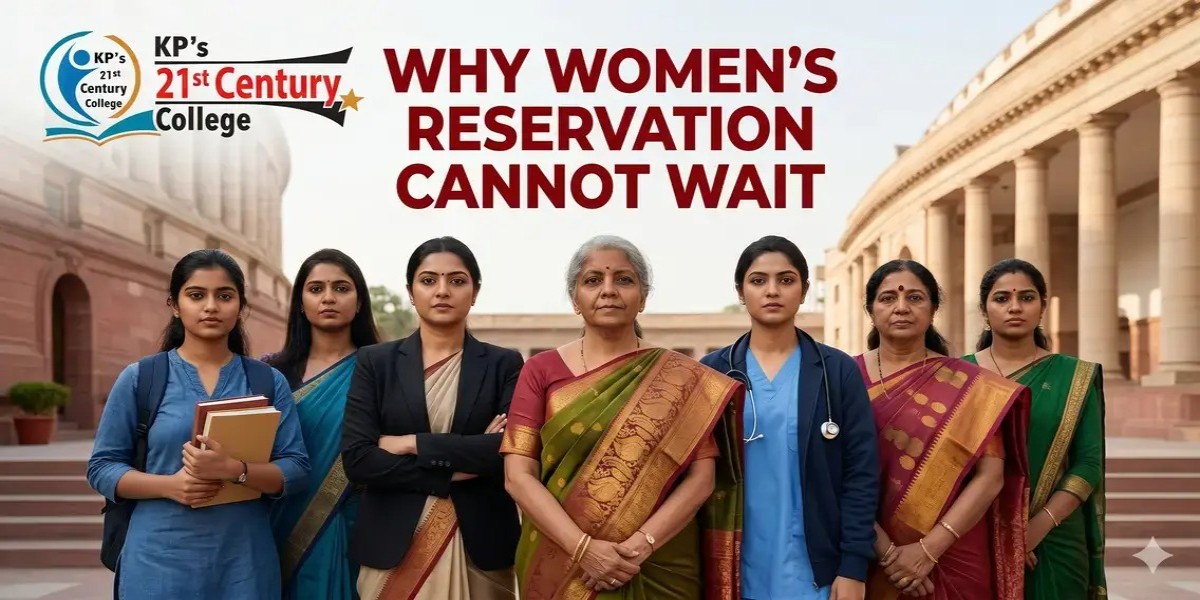
Why Women’s Reservation Cannot Wait
- The demand for immediate reservation arises from the sharp gap between women’s electoral participation and their representation in law-making institutions.
- Women vote in large numbers and in many States female voter turnout equals or exceeds male turnout, yet their presence in Parliament and Assemblies remains extremely low.
- The political system is not purely merit-based but often controlled by social networks, financial influence, and patriarchal gatekeeping that systematically exclude women.
- Reservation is therefore seen not as a privilege, but as a structural correction for structural exclusion.
Present Status of Women’s Political Representation
- Women constitute nearly 50% of India’s population, but their representation in the Lok Sabha remains only around 14–15%.
- In State Legislative Assemblies, the average representation is even lower, around 9%.
- This creates a serious democratic imbalance where half the population has limited influence over law-making and policy priorities.
- At the Panchayati Raj level, however, reservation of 33% to 50% has produced transformative results, especially in health, sanitation, drinking water, and education governance.
106th Constitutional Amendment Act, 2023
- The Nari Shakti Vandan Adhiniyam, 2023, popularly known as the Women’s Reservation Act, is a major constitutional reform aimed at strengthening women’s political participation in India. It provides for 33 percent reservation for women in the Lok Sabha and State Legislative Assemblies and seeks to ensure greater representation of women in law-making institutions.
- The Act is based on the principle that political democracy cannot be complete without adequate participation of women in representative bodies. It attempts to correct the long-standing imbalance between women’s role as voters and their limited presence as legislators.
- Women’s representation in India remains relatively low despite high electoral participation. At present, women constitute only around 15 percent of the Lok Sabha, which is significantly lower than countries such as Rwanda, where women’s representation is above 60 percent, and Sweden, where it is around 46 percent.
- The demand for reservation for women has a long legislative history. The first Women’s Reservation Bill was introduced in 1996 but could not be passed due to repeated political opposition. In 2010, the Bill was passed in the Rajya Sabha but lapsed because it was not approved by the Lok Sabha.
- After nearly three decades of debate and political negotiation, the law was finally enacted in 2023 as the Constitution (106th Amendment) Act and came to be known as the Nari Shakti Vandan Adhiniyam.
- Despite its passage, the Act does not come into force immediately. Its implementation has been made conditional upon the conduct of the next Census and the completion of delimitation of constituencies, making reservation dependent on future administrative and constitutional processes.
- The next Census is expected around 2027, and the publication and processing of Census data may take another 12 to 18 months. After that, the delimitation process itself may take three to six years, pushing the likely implementation of women’s reservation to around 2033–34.
- This delay transforms the Act from an immediate political reform into a long-term constitutional commitment. While the law has been passed, its actual effect on elections may not be visible for nearly a decade.
Why Implementation is Delayed?
- The most controversial part of the law is its linkage with delimitation after the first Census conducted after 2023.
- This means reservation will come into effect only after the next Census is completed and constituency boundaries are redrawn.
- Since delimitation is expected only after the post-2026 Census process, effective implementation may be pushed beyond the 2029 elections.
- This delay means another full electoral cycle without adequate women’s representation.
Three Bills to Fast-track Women’s Reservation
Constitution (131st Amendment) Bill, 2026
- This Bill proposed increasing the maximum strength of the Lok Sabha from 550 to 850 seats by amending Article 81.
- It also proposed changes in Article 82, Article 170, and Article 334A to allow delimitation based on the 2011 Census instead of waiting for the post-2026 Census.
- Its purpose was to immediately operationalise women’s reservation before the 2029 general elections.
- Since it amends the Constitution, it required a special majority in Parliament and ratification by at least half of the States.
Delimitation Bill, 2026
- This Bill proposed a new Delimitation Commission to replace the framework under the Delimitation Act, 2002.
- The Commission would redraw constituency boundaries and reallocate seats based on the latest published Census figures, which currently means the 2011 Census.
- It would also determine SC, ST, and women’s reserved constituencies.
- Its orders would have the force of law and could not be challenged in court except in cases of constitutional arbitrariness.
Union Territories Laws (Amendment) Bill, 2026
- This Bill was designed to extend the same reservation and delimitation framework to Union Territories with legislatures such as Delhi, Jammu and Kashmir, and Puducherry.
- It ensures that women’s reservation is uniformly implemented across parliamentary and legislative institutions.
Delimitation and Its Constitutional Framework
- Delimitation is the process of redrawing the boundaries of Lok Sabha and State Assembly constituencies to ensure equal representation based on population.
- Its objective is to uphold the democratic principle of “one person, one vote, one value.”
- Article 82 deals with delimitation for Parliament, while Article 170 deals with State Assemblies.
- The Delimitation Commission is a high-powered independent body whose orders have the force of law and cannot ordinarily be challenged in court.
- India has had Delimitation Commissions in 1952, 1963, 1973, and 2002.
Arguments Supporting Immediate Reservation
- Women’s reservation is necessary because voluntary party reforms have consistently failed to ensure adequate representation.
- Reservation improves policy priorities, as evidence from Panchayati Raj institutions shows greater focus on healthcare, education, sanitation, and welfare.
- Women leaders act as role models, challenging patriarchal norms and encouraging political participation by younger generations.
- A representative democracy must reflect its population composition; otherwise, institutional legitimacy is weakened.
- Excluding women from decision-making also creates economic inefficiency because governance outcomes improve when leadership becomes more inclusive.
Challenges and Criticisms
- One major criticism is that reservation linked with delimitation creates indefinite delay rather than immediate reform.
- Another criticism is the absence of a separate reservation for women from Other Backward Classes (OBCs), raising concerns about unequal inclusion.
- Frequent rotation of reserved seats may discourage long-term constituency development by elected representatives.
- Some critics also argue that reservation should be accompanied by internal party democracy, campaign finance reform, and leadership training rather than relying only on constitutional quotas.
Way Forward
- Women’s reservation should be delinked from Census and delimitation so that implementation is not indefinitely postponed.
- Political parties should adopt internal ticket quotas for women even before legal compulsion.
- Successful women leaders from Panchayati Raj institutions and Self-Help Groups should be supported as a pipeline for higher political leadership.
- Institutional mentorship, campaign funding support, and leadership development programmes are necessary for sustainable representation.
- Women’s reservation must be treated as a democratic necessity, not as a symbolic reform.
Conclusion
India’s democracy remains incomplete as long as women are present mainly as voters but not equally as lawmakers.
The immediate implementation of women’s reservation is not merely a question of fairness but a constitutional requirement for representative democracy.
Delaying this reform weakens democratic legitimacy and postpones social transformation that India urgently needs.
CARE MCQ
Q. With reference to the Nari Shakti Vandan Adhiniyam, consider the following statements:
- It provides one-third reservation for women in the Lok Sabha and State Legislative Assemblies.
- It includes a separate reservation for women belonging to Other Backward Classes (OBCs).
- Its implementation is linked with delimitation after the next Census.
Which of the statements given above are correct?
A. 1 and 3 only
B. 2 and 3 only
C. 1 and 2 only
D. 1, 2 and 3
Ans: (a)
Explanation
Statement 1 is correct: The 106th Constitutional Amendment provides 33% reservation for women in the Lok Sabha and State Assemblies.
Statement 2 is incorrect : No separate OBC reservation for women is provided in the Act. Only SC and ST women receive sub-quotas within reserved seats.
Statement 3 is correct : Implementation is linked with delimitation after the next Census.
Q. Regarding the reservation of seats in Municipalities, which of the following statements is accurate?
(a) One-third of the total number of seats are reserved for women in all municipalities.
(b) Reservation for Scheduled Castes and Scheduled Tribes is provided in every municipality in proportion to their population in the municipal area.
(c) The offices of Chairpersons in the municipalities are reserved for Scheduled Castes, Scheduled Tribes, and women in every municipality.
(d) The State Legislature has the sole discretion to decide whether to reserve seats for Scheduled Castes, Scheduled Tribes, and women in municipalities.
Ans: (b)
Explanation:
Article 243T mandates that reservation of seats for Scheduled Castes and Scheduled Tribes must be provided in every municipality in proportion to their population in that municipal area. This is a direct constitutional requirement under the 74th Constitutional Amendment Act, ensuring representation of historically disadvantaged communities in urban local governance.
Q.Consider the following statements regarding the implementation of recommendations made by the Delimitation Commission of India:
- The orders of the Delimitation Commission have the force of law and cannot be challenged in any court.
- While Parliament cannot alter the Commission’s delimitation orders, a parliamentary committee reviews the orders before they are laid before the House of the People.
- A Delimitation Commission continues to exist until a new Commission is appointed, allowing it to address unforeseen issues arising from its delimitation exercise.
Which of the above statements are correct?
(a) 1 only
(b) 3 only
(c) 1 and 3 only
(d) 2 and 3 only
Ans: (a)
Explanation:
Statement 1 is correct: The orders of the Delimitation Commission have the full force of law and cannot be challenged in any court. This finality is protected under Article 329(a) of the Constitution, which prevents judicial interference in delimitation matters so that elections are not delayed by litigation.
Statement 2 is incorrect: There is no parliamentary committee empowered to review or modify the delimitation orders. Once the Delimitation Commission finalizes its report, it is submitted to the President and published in the Gazette of India. The orders are laid before Parliament and State Legislatures only for information, not for approval or modification. Parliament cannot alter them.
Statement 3 is incorrect: The Delimitation Commission is not a permanent body. It is a temporary statutory body constituted for a specific delimitation exercise. Once it completes its work and submits its report, it stands dissolved. A fresh Commission is constituted separately for the next delimitation exercise.
Q. Under Article 169, the abolition of a State Legislative Council requires Parliament to pass
(a) a Constitutional Amendment Bill
(b) an Ordinary Law after a special majority resolution by the State Assembly
(c) a Money Bill with President’s recommendation
(d) a Resolution passed by half of the States
Ans: (b)
Explanation:
Article 169 of the Constitution deals with the creation or abolition of a State Legislative Council. A Legislative Council is the Upper House in states having a bicameral legislature. Parliament cannot abolish or create it on its own initiative. The process begins only when the concerned State Legislative Assembly passes a resolution requesting such creation or abolition.
This resolution must be passed by a special majority, which means a majority of the total membership of the Assembly and a majority of not less than two-thirds of the members present and voting. After such a resolution is passed, Parliament may enact an ordinary law to create or abolish the Council. It is not treated as a Constitutional Amendment under Article 368, even though it changes the legislative structure of the State.
UPSC MAINS
Q.Discuss the constitutional position of the Legislative Council in Indian States. Examine the arguments for and against the abolition of bicameralism at the State level.
[250 WORDS]
FAQs
Q1. What is Nari Shakti Vandan Adhiniyam?
It is the 106th Constitutional Amendment Act, 2023 providing one-third reservation for women in legislatures.
Q2. Why has women’s reservation not yet been implemented?
Because it is linked to delimitation after the next Census, which delays actual enforcement.
Q3. Which Article is associated with women’s reservation?
Article 334A contains provisions related to reservation for women in legislatures.
Q4. Does the Act provide OBC reservation for women?
No, it provides only SC and ST sub-quotas within the reserved seats.
Q5. Why is immediate implementation important?
Because continued delay excludes another generation of women from legislative representation and weakens democratic inclusiveness.