Table of Contents
Relevance: GS Paper II – Polity | State Legislature | Governor | Constitutional Governance | Federalism
For Prelims:
Legislative Council, Vidhan Parishad, Article 171, Article 163, Article 164(4), Governor’s Quota, MLC Nomination, Six-Month Rule for Ministers, Bicameral Legislature, Governor’s Powers
For Mains:
Governor–State Relations, Constitutional Morality, Aid and Advice, Legislative Council Reforms, Responsible Government, Federal Tensions, Bicameralism at State Level, Constitutional Accountability
Why in News?
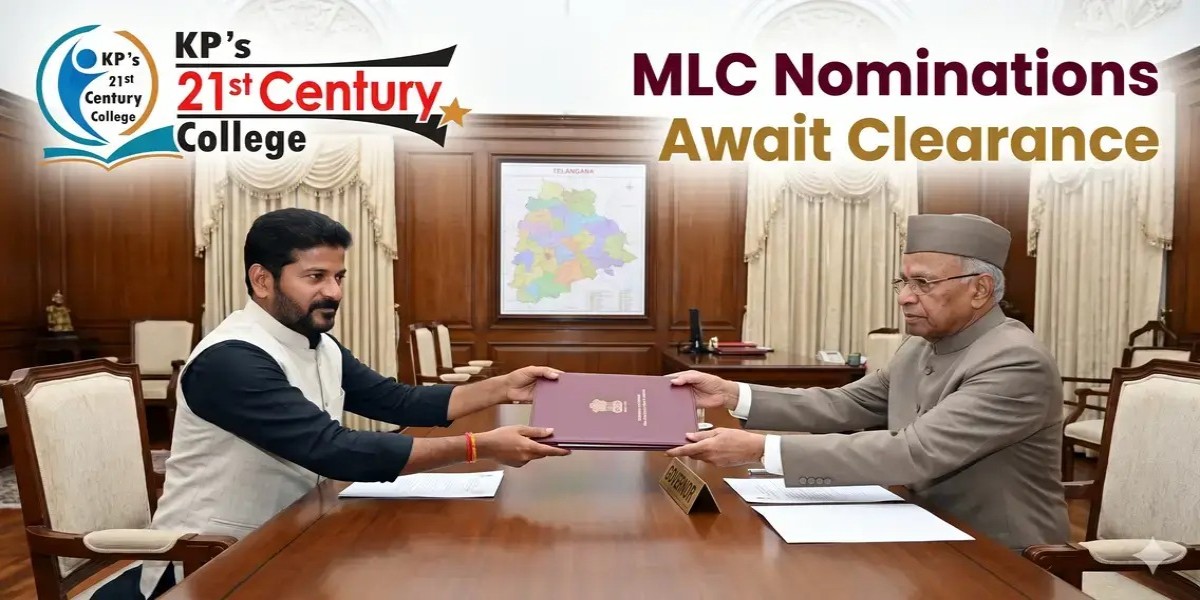
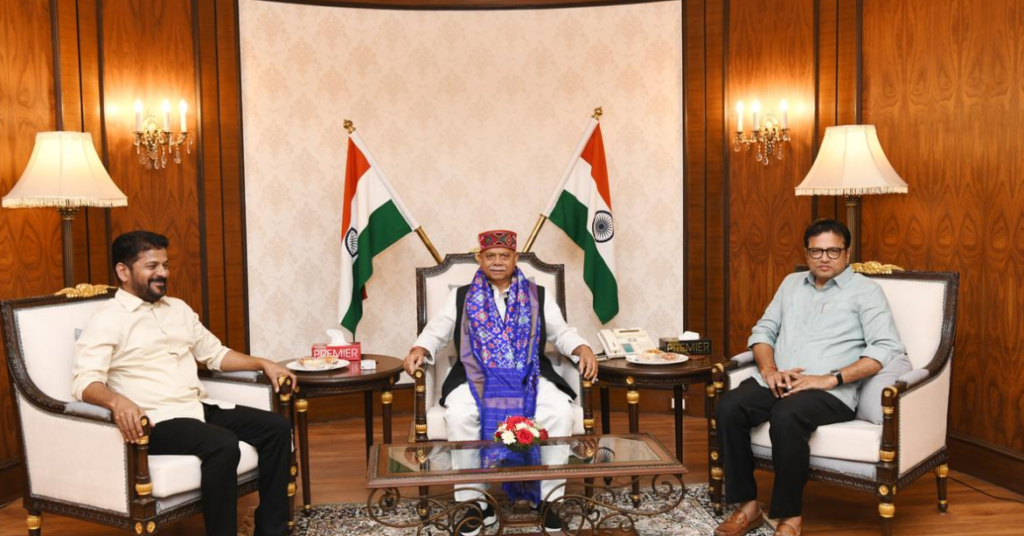
- Telangana Chief Minister A. Revanth Reddy recently met Governor Shiv Pratap Shukla and urged early approval of the pending nominations of Prof. M. Kodandaram and Mohammad Azharuddin to the Telangana Legislative Council under the Governor’s quota.
- The issue has become constitutionally significant because Mohammad Azharuddin is currently serving as a Minister without being a member of either the Legislative Assembly or the Legislative Council and is approaching the six-month constitutional deadline prescribed under Article 164(4).
- The delay in the Governor’s approval has raised important constitutional questions regarding the powers of the Governor, the binding nature of Cabinet advice, and the functioning of bicameralism at the state level
Background of the Issue
- The State Cabinet had earlier approved the names of Prof. Kodandaram and Mohammad Azharuddin for nomination to the Legislative Council under the Governor’s quota.
- However, these names remained pending with the Raj Bhavan during the tenure of the previous Governor, Jishnu Dev Varma, and continue to remain unresolved after the appointment of the new Governor.
- The urgency has increased because a Minister who is not a member of the legislature cannot continue in office beyond six months unless he becomes an MLA or MLC. Since Azharuddin is nearing the end of this constitutional period, the government is pressing for immediate approval.
- The issue has also revived the larger debate over delays by Governors in acting on the advice of elected State governments.
Legislative Council: Constitutional Position
- The Legislative Council, also known as Vidhan Parishad, is the Upper House of the State Legislature.
- Unlike the Legislative Assembly, the Legislative Council is not compulsory for every state. Its creation or abolition depends on the decision of the concerned State Legislature under Article 169 of the Constitution.
- It is a permanent house and cannot be dissolved. One-third of its members retire every two years.
- The purpose of the Council is to function as a revising chamber, provide representation to intellectual and professional groups, and ensure more detailed legislative scrutiny.
States such as Telangana, Andhra Pradesh, Karnataka, Maharashtra, Bihar, and Uttar Pradesh currently have Legislative Councils.
Composition of Legislative Council
- The composition of the Legislative Council is provided under Article 171 of the Constitution.
- Its total strength cannot exceed one-third of the total strength of the Legislative Assembly and cannot be less than forty members.
- The Constitution provides a mixed method of representation to ensure diversity in membership.
- One-third of the members are elected by local bodies such as municipalities and district boards.
- One-twelfth are elected by graduates.
- One-twelfth are elected by teachers.
- One-third are elected by members of the Legislative Assembly.
- The remaining one-sixth are nominated by the Governor.
- This one-sixth Governor’s quota is the constitutional basis of the present Telangana issue.
Governor’s Nomination Power under Article 171
- Article 171(5) empowers the Governor to nominate one-sixth of the members of the Legislative Council.
- These nominated persons must possess special knowledge or practical experience in literature, science, art, cooperative movement, or social service.
- The constitutional objective behind this provision is to bring expertise and informed public service into the legislative process beyond ordinary electoral politics.
- However, in practice, this provision has often been used for political accommodation rather than for genuine expert representation, leading to repeated controversies.
- The nominations of Prof. Kodandaram and Mohammad Azharuddin are being considered under this constitutional provision.
Six-Month Rule for Ministers under Article 164(4)
- Article 164(4) provides that a person can be appointed as a Minister even if he is not a member of the State Legislature at the time of appointment.
- However, such a person must become a member of either the Legislative Assembly or the Legislative Council within six months.
- If the person fails to secure membership within this period, he automatically ceases to be a Minister.
- This provision ensures legislative accountability of the executive and prevents non-elected individuals from continuing indefinitely in ministerial office.
- In the present case, Mohammad Azharuddin is nearing the end of this six-month constitutional period, making the nomination process urgent.
Governor’s Role and Constitutional Debate
- Although Article 171 formally gives the Governor the power to nominate MLCs, this power must be read together with Article 163, which states that the Governor ordinarily acts on the aid and advice of the Council of Ministers.
- This creates an important constitutional question: can the Governor independently delay or reject nominations recommended by the elected government?
- Judicial interpretation has generally held that the Governor’s discretionary powers are limited and that the Governor should normally act according to Cabinet advice except in exceptional constitutional situations.
- The absence of a fixed constitutional time limit for such decisions, however, has created repeated friction between Raj Bhavan and elected State governments across India.
Bicameralism at the State Level
- The Legislative Council reflects the principle of bicameralism in state legislatures.
- Its purpose is not to challenge the directly elected Assembly but to improve legislative quality through review, deliberation, and expert participation.
- It acts as a chamber of revision where laws can be examined more carefully before final passage.
- It also allows representation of groups such as teachers, graduates, and experts who may not directly participate in electoral politics.
- At the same time, critics argue that Legislative Councils often become centres of political rehabilitation and unnecessary expenditure rather than institutions of genuine democratic value.
Federal Tensions and Political Implications
- The Telangana MLC nomination issue reflects a broader constitutional pattern of tensions between Governors and elected State governments.
- Since Governors are appointed by the Union Government, delays in matters such as bills, nominations, and appointments are often viewed as affecting the federal balance.
- Such disputes raise important questions about cooperative federalism, constitutional morality, and the democratic legitimacy of executive action.
- When constitutional offices are used for prolonged political delays, governance efficiency and public trust are weakened.
- This issue is therefore larger than a simple nomination dispute—it concerns the functioning of Indian federalism itself.
Previous Telangana Example
- This is not the first such controversy in Telangana.
- During the previous BRS government, Governor Tamilisai Soundararajan rejected the nominations of Dasoju Sravan and Kurra Satyanarayana recommended by the State government.
- That episode also triggered major political and legal debate regarding the limits of gubernatorial discretion.
- The present case continues the same constitutional tension, showing that the issue is structural rather than isolated.
Significance of the Present Issue
- The present controversy is important because it directly involves legislative accountability, ministerial legitimacy, and the constitutional role of the Governor.
- It tests whether the principle of responsible government will function effectively when ministerial continuation depends upon time-bound legislative membership.
- It also highlights the need for constitutional clarity regarding the Governor’s obligation to act within a reasonable time.
- For Telangana, the issue affects both governance continuity and the larger debate over Centre–State institutional relations.
Challenges
- The Constitution does not provide a clear timeline within which the Governor must act on nominations.
- This allows delays to become politically sensitive and administratively disruptive.
- The original constitutional purpose of expert nomination is often diluted by political considerations.
- Repeated disputes between Raj Bhavan and State governments weaken public confidence in constitutional institutions.
- There is also a continuing debate regarding whether Legislative Councils themselves are serving their intended democratic purpose effectively.
Way Forward
- There is a need for clearer constitutional conventions or judicial guidelines requiring time-bound decisions by Governors on matters involving Cabinet advice.
- The nomination process should focus on genuine expertise and public service rather than political accommodation.
- Greater transparency in nominations can strengthen the legitimacy of the Legislative Council.
- Healthy federal functioning requires mutual constitutional respect between Governors and elected governments rather than prolonged institutional confrontation.
- Strengthening constitutional morality is essential for preserving democratic accountability.
Conclusion
The Telangana MLC nomination issue is not merely an administrative delay but an important constitutional debate involving Articles 163, 164, and 171 of the Constitution.
It highlights the relationship between the Governor and the elected government, the accountability of Ministers to the Legislature, and the intended purpose of the Legislative Council.
How such issues are handled determines not only political outcomes but also the strength of India’s constitutional democracy and federal structure.
CARE MCQ
Q. With reference to the Legislative Council in India, consider the following statements:
- One-sixth of the members of the Legislative Council are nominated by the Governor.
- A person can continue as a Minister for more than six months without becoming a member of the State Legislature if approved by the Governor.
- The Legislative Council is a permanent House and cannot be dissolved.
Which of the statements given above are correct?
A. 1 and 3 only
B. 2 and 3 only
C. 1 and 2 only
D. 1, 2 and 3
Ans: (a)
Explanation:
Statement 1 is correct: Article 171 provides that one-sixth of the members are nominated by the Governor.
Statement 2 is incorrect: Article 164(4) clearly states that a Minister must become a member of the legislature within six months, otherwise he ceases to hold office.
Statement 3 is correct because the Legislative Council is a permanent House and cannot be dissolved.
Therefore, the correct answer is A.
Q. With reference to the powers of the Governor in relation to the State Legislature, consider the following statements:
- The Governor may reserve certain Bills passed by the State Legislature for the consideration of the President.
- The Governor is constitutionally bound to give assent to every Bill that is passed again by the State Legislature after reconsideration.
- The Governor can promulgate an Ordinance only when the State Legislative Assembly is not in session.
Which of the statements given above are correct?
(a) 1 only
(b) 1 and 2 only
(c) 2 and 3 only
(d) 1, 2 and 3
Ans: (a)
Explanation:
Statement 1 is correct: Under Article 200, the Governor may reserve certain Bills for the consideration of the President, especially in cases where the Bill may conflict with constitutional provisions, affect the powers of the High Court, or involve issues of national importance.
Statement 2 is incorrect: If a non-Money Bill is returned by the Governor and passed again by the Legislature, the Governor is not always absolutely bound in practical terms, particularly where reservation for the President may arise. The constitutional position is nuanced, and the Governor may still reserve certain categories of Bills.
Statement 3 is incorrect: The Governor can promulgate an Ordinance when either House of the State Legislature is not in session in a bicameral legislature, not only when the Legislative Assembly is not in session. Hence the statement is too restrictive.
Q.Consider the following statements regarding the Legislative Council in a bicameral State Legislature:
- The Legislative Council is a permanent House and is not subject to dissolution.
- One-third of its members retire every second year.
- The maximum strength of the Legislative Council cannot exceed one-third of the total strength of the Legislative Assembly.
Which of the statements given above are correct?
(a) 1 and 2 only
(b) 2 and 3 only
(c) 1 and 3 only
(d) 1, 2 and 3
Ans: (d)
Explanation:
Statement 1 is correct: Like the Rajya Sabha at the Union level, the Legislative Council is a permanent chamber and cannot be dissolved. This ensures continuity in legislative functioning.
Statement 2 is correct: One-third of the members of the Council retire after every two years, and each member normally serves a term of six years. This provides stability and continuity.
Statement 3 is correct: The Constitution provides that the total number of members in the Legislative Council shall not exceed one-third of the total strength of the Legislative Assembly and shall not be less than 40, subject to certain exceptions.
Q.With reference to the State Legislature in India, consider the following statements:
- The Governor can address the Legislative Council separately even if the State Legislature is bicameral.
- The Legislative Council can delay an Ordinary Bill for a maximum period of four months in the first instance.
- The final power regarding the passage of an Ordinary Bill in a bicameral State Legislature rests with the Legislative Assembly.
Which of the statements given above are correct?
(a) 2 and 3 only
(b) 1 and 2 only
(c) 1 and 3 only
(d) 1, 2 and 3
Ans: (a)
Explanation:
Statement 1 is incorrect: The Governor addresses the State Legislature at the commencement of the first session after each general election and the first session of each year. In a bicameral legislature, this address is made to both Houses assembled together, not separately to the Legislative Council alone.
Statement 2 is correct: In the case of an Ordinary Bill, the Legislative Council can delay the Bill for a maximum of three months in the first instance and one month in the second instance. However, when considered in total legislative delay, it effectively amounts to four months before the Assembly can prevail.
Statement 3 is correct: The Legislative Assembly has overriding powers over the Legislative Council regarding Ordinary Bills. If disagreement persists, the Assembly’s will ultimately prevails because there is no provision for a joint sitting at the state level.
TSPSC MAINS QUESTION
Q.The delay in nomination of members to the Legislative Council under the Governor’s quota raises serious constitutional concerns regarding federalism and responsible government. Discuss with reference to Articles 163, 164, and 171 of the Constitution.
(250 Words)
FAQs
Q1. Which Article deals with nomination of MLCs by the Governor?
Article 171(5) deals with nomination of one-sixth members of the Legislative Council by the Governor.
Q2. Can a person become Minister without being an MLA or MLC?
Yes. Under Article 164(4), a person can be appointed Minister without being a member initially, but must secure membership within six months.
Q3. Is the Legislative Council compulsory for every State?
No. Legislative Council is optional and depends on Article 169.
Q4. Can the Governor reject Cabinet advice on MLC nominations?
Normally, the Governor acts on the aid and advice of the Council of Ministers, and discretionary powers are limited.
Q5. Why is the Telangana issue constitutionally important?
Because it involves Governor’s powers, ministerial accountability, and the functioning of bicameralism and federalism in the State.