Why in News?
Researchers have identified an inscription lying on the premises of the Siddheshwara Temple at Nandivanaparti, in Yacharam mandal of Telangana’s Rangareddy district, as belonging to the 11th century CE.The record, now called the Nandivanaparti Siddeshwara Temple Inscription, was written in Telugu-Kannada script and records a donation made in 1077 CE during the reign of Kalyani Chalukya ruler Vikramaditya VI.

Location of the Discovery
The inscription was found at:
- Temple: Siddheshwara Temple
- Village: Nandivanaparti
- Mandal: Yacharam
- District: Rangareddy
- State: Telangana
Researchers from Ibrahimpatnam examined the inscription. It was deciphered by a professor from the Government Degree College, Ibrahimpatnam, with assistance from the Kotha Telangana Charitra Brundam.
How Was the Complete Inscription Identified?
Initially, only one side of the inscription slab was visible.
When the pillar was turned over:
- the beginning portion of the inscription was discovered on the other side;
- inscriptions were found on both sides of the slab; and
- researchers were able to identify its script, language, date and political context.
However, parts of the record had already been damaged.
Physical Features
The inscription consists of two sides:
| Side | Details |
| First side | Contains 15 visible lines; several portions are damaged |
| Second side | Contains 20 lines and records a dated donation |
The damage has affected the completeness of the historical information, particularly the details of the donated gifts.
Script and Language
The research team confirmed that the inscription was:
- written in 11th-century Telugu-Kannada script; and
- composed in the Kannada language.
Telugu-Kannada Script
- The term refers to the historical script associated with the development of Telugu and Kannada writing traditions. The inscription shows the linguistic and cultural connections that existed across the Deccan during the medieval period.
Contents of the Inscription
First Side: Royal Eulogy
The first side contains a prasasti, or eulogy, of the Kalyani Chalukya emperor:
- Tribhuvanamalla Vikramaditya VI
It also mentions:
- Kalyana, the emperor’s capital.
Only 15 lines remain visible because part of this side has been damaged.
What Is a Prasasti?
A prasasti is an inscriptional eulogy praising a ruler. It generally records royal titles, achievements, lineage or authority.
Inscriptions containing prasastis help historians understand how rulers presented their political status and legitimacy.
Second Side: Donation Record
The second side contains 20 lines. It records a donation made on:
- Shaka year: 998
- Lunar date: Chaitra Shuddha 12
- Day: Friday
- Equivalent date: April 7, 1077 CE
The donation was made by:
- Tribhuvanamalla’s Mahamandaleshwar, identified in the inscription as “Mogata Rasara”.
The donation was made to:
- “Iinjakeshvara”.
The precise details of the donated gifts cannot be identified because that portion of the inscription has broken away.
Symbols Carved on the Inscription
Half-sculptures appearing at the top of the inscription include:
- the Moon;
- the Sun;
- Nandi;
- a Shiva Linga;
- a sword beneath a cow; and
- elephants.
These carvings form part of the inscription’s visual and cultural setting.
Possible Meaning of the Symbols
The inscription clearly records these symbols, although their precise individual meanings are not explained in the surviving text.
Broadly, their presence indicates the close relationship among:
- political authority;
- religious symbolism;
- temple culture; and
- formal donation records.
About Vikramaditya VI in the Inscription
- The inscription identifies the ruler through the title Tribhuvanamalla Vikramaditya VI and connects him with the Kalyani Chalukya dynasty.
- It also mentions Kalyana as his capital. This establishes the political setting in which the donation was made.
- The reference to his Mahamandaleshwar indicates the participation of a subordinate political authority in making the donation.
Conclusion
The Nandivanaparti Siddeshwara Temple Inscription is an important source for understanding 11th-century Telangana. Its reference to Vikramaditya VI, Kalyana, a local Mahamandaleshwar and a dated donation provides evidence of political authority, religious patronage and linguistic development under the Kalyani Chalukyas.
Although parts of the record are damaged, its surviving text and symbols offer a valuable window into the medieval history of the Deccan.
Why in News?
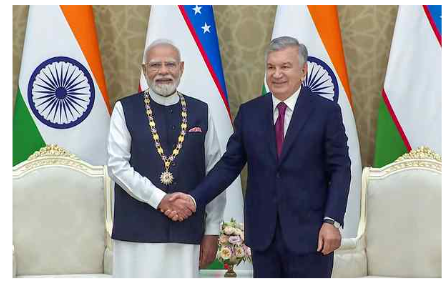
During the Indian Prime Minister’s State visit to Uzbekistan on August 29–30, 2026, India and Uzbekistan elevated their relations to a Comprehensive Strategic Partnership.The two countries signed 11 agreements, set a target of $5 billion in annual trade by 2030, and agreed to establish a framework for the long-term supply of uranium from Uzbekistan to India.
Strategic Upgrade
India and Uzbekistan marked the 15th anniversary of their strategic partnership by expanding cooperation into a wider range of strategic and developmental areas.
The Comprehensive Strategic Partnership covers:
- trade, investment and industrial cooperation;
- energy, uranium and critical minerals;
- defence, counterterrorism and cybersecurity;
- transport and logistics connectivity;
- digital technology, artificial intelligence and space; and
- agriculture, health, education, culture and tourism.
Uzbekistan’s location, resources and regional influence place it at the centre of India’s engagement with Central Asia.
Major Outcomes
| Area | Outcome |
| Strategic relations | Comprehensive Strategic Partnership |
| Trade | $5-billion annual target by 2030 |
| Uranium | Long-term supply framework |
| Critical minerals | Joint exploration, mining and processing |
| Defence | Co-development and co-production |
| Digital payments | Indian UPI applications to scan UZQR |
| Environment | $1-million grant for the Aral Sea region |
| Heritage | Restoration of Fayaz Tepa and Kara Tepa |
| Coordination | Foreign Ministers-led mechanism |
Institutional Mechanisms
Foreign Ministers-led Coordination Mechanism
The two countries will establish a high-level mechanism led by their Foreign Ministers to:
- oversee the implementation of agreements;
- coordinate different areas of bilateral cooperation; and
- ensure timely completion of priority projects.
Joint Commission
The existing joint commission will be elevated from the secretary level to the ministerial level, giving economic and technical cooperation stronger political supervision.
The two sides also agreed to expand parliamentary contacts and review existing bilateral legal instruments to reflect current priorities.
Trade and Investment Cooperation
The current volume of bilateral trade exceeds $1 billion. India and Uzbekistan aim to raise it to $5 billion by 2030.
To achieve this objective, they will:
- diversify the range of traded goods;
- remove non-tariff and investment barriers;
- digitalise trade procedures;
- improve mutual market access; and
- encourage business-to-business partnerships.
A Joint Working Group will address non-tariff issues and investment barriers. Electrical goods, engineering products, automobiles, pharmaceuticals, jewellery and agriculture have been identified as priority sectors.
A joint feasibility study on an India–Uzbekistan Preferential Trade Agreement has been completed. The concerned ministries will examine the next steps on a time-bound basis.
Invest India and Uzbekistan’s Investment Promotion Agency will promote investment through business forums, roadshows, seminars and stakeholder meetings. India also reaffirmed support for Uzbekistan’s accession to the World Trade Organization.
Uranium and Civil Nuclear Cooperation
India and Uzbekistan agreed to establish a framework for the long-term supply of uranium from Uzbekistan to India.
The arrangement is significant because it can:
- diversify India’s nuclear-fuel sources;
- improve the reliability of uranium supplies;
- support peaceful nuclear-energy cooperation; and
- contribute to India’s wider energy requirements.
Both countries also expressed interest in expanding cooperation in the peaceful applications of nuclear energy.
Critical Minerals and Mining
Critical-mineral cooperation will cover the complete mineral value chain rather than being limited to the purchase of raw materials.
The two countries will explore joint projects in:
- geological exploration and mining;
- mineral processing and recycling;
- production of value-added goods; and
- development of integrated supply chains.
Indian companies may participate in developing mineral deposits in Uzbekistan, while Uzbek enterprises may collaborate on projects in India.
Renewable Energy
- The two sides agreed to explore cooperation in renewable energy, modernisation of energy infrastructure and prospective investment projects.
- This cooperation brings together Uzbekistan’s resource potential and India’s experience in energy transition and clean-energy development.
Defence Cooperation
India and Uzbekistan will strengthen direct engagement between their defence industries.
Areas of cooperation include:
- co-development and co-production of military hardware;
- institutional exchanges and capacity-building;
- exploration of defence-industrial projects; and
- continuation of joint military activities.
Exercise Dustlik
Dustlik is the joint military exercise between India and Uzbekistan. Its latest edition was held in Uzbekistan’s Namangan Region in April 2026.
Security and Counterterrorism
The two countries reaffirmed zero tolerance towards terrorism, including cross-border terrorism.
They agreed to strengthen cooperation against:
- terrorism financing and safe havens;
- violent extremism and separatism;
- organised crime and illicit drug trafficking; and
- cyber threats.
Cooperation will continue through intelligence sharing, law-enforcement coordination and the Joint Working Group on Counterterrorism.
Transport and Logistics Connectivity
India and Uzbekistan agreed to strengthen multimodal transport routes and logistics corridors to facilitate the movement of goods and reduce freight costs.
Cooperation will also cover:
- restoration of freight transportation;
- modernisation of road infrastructure;
- exchange of road-construction technology; and
- development of energy-efficient public transport.
Improved connectivity is essential for expanding India’s economic engagement with landlocked Central Asia.
UPI–UZQR Payment Linkage
NPCI International Payments Limited and Uzbekistan’s National Interbank Processing Centre concluded a commercial agreement on digital payments.
Under the arrangement, Indian UPI applications will be able to scan Uzbekistan’s national UZQR for merchant payments.
This can:
- simplify payments for Indian visitors;
- support tourism and business travel;
- encourage cross-border digital-payment interoperability; and
- expand the global reach of India’s digital public infrastructure.
Information Technology and Artificial Intelligence
The first IT Park in Tashkent was established in 2019 on the Indian model with support from the Software Technology Parks of India.
The two countries will now strengthen cooperation among:
- technology parks;
- companies and start-ups;
- research and educational institutions; and
- digital-innovation ecosystems.
They also agreed to exchange experience in developing safe, secure and trustworthy artificial intelligence systems. Cybersecurity cooperation will form part of the wider digital partnership.
Space Cooperation
India and Uzbekistan will expand cooperation in the peaceful uses of outer space through:
- space applications;
- exchange of scientific data;
- joint workshops and training; and
- capacity-building.
Agriculture and Food Security
Agricultural cooperation will focus on:
- value-chain development and agricultural exports;
- livestock and food security;
- resource-efficient technologies;
- agricultural science; and
- conservation of plant genetic resources.
Research institutions and enterprises from both countries will work together to improve productivity and promote trade in agricultural products.
Health and Pharmaceuticals
India and Uzbekistan will strengthen cooperation in biomedical research, medical innovation and public-health systems.
The Tashkent Pharma Park will provide a platform for:
- joint pharmaceutical projects;
- localised production;
- technology transfer;
- investment; and
- skilled workforce development.
The two sides also supported the establishment of medical centres, laboratories, research institutions and joint pharmaceutical enterprises in Uzbekistan. An MoU on traditional medicine was also concluded.
Education and Capacity-Building
Educational cooperation will include joint research, academic exchanges, India studies in Uzbekistan and Uzbek studies in India.
Cooperation will focus particularly on medicine, pharmaceuticals, chemistry, nanotechnology and biotechnology.
India’s capacity-building contribution includes:
- over 2,700 Uzbek nationals trained under the ITEC programme;
- more than 400 Uzbek students selected for ICCR scholarships, including AYUSH scholarships; and
- announcement of the Lal Bahadur Shastri Scholarship for Hindi Language in Uzbekistan.
Indian students studying in Uzbekistan also contribute to people-to-people relations.
Cultural Exchange Programme
A Cultural Exchange Programme for 2026–2030 was signed. It covers:
- cultural festivals and exhibitions;
- artistic tours;
- institutional exchanges; and
- cooperation in archives.
Buddhist Heritage Cooperation
A Letter of Intent was concluded for conserving and restoring:
- Fayaz Tepa; and
- Kara Tepa.
These ancient Buddhist monasteries in southern Uzbekistan reflect the spread of Buddhism through the Silk Road and its historical presence in Central Asia.
Heritage cooperation will also include digital documentation, three-dimensional modelling of archaeological artefacts and advanced conservation technologies.
Sports, Yoga and Tourism
- Sports cooperation will include athlete preparation and coach training in badminton, archery and chess.
- India’s Ministry of AYUSH and Uzbekistan’s Yoga Federation will cooperate in yoga-instructor training, international Yogasana competitions and the promotion of healthy lifestyles.
- Tourism can benefit from improved payments, cultural programmes, heritage conservation and stronger connectivity.
Environmental Cooperation
India announced a $1-million grant for afforestation and ecological rehabilitation in the Aral Sea region.
The initiative connects:
- Uzbekistan’s Yashil Makon programme; and
- India’s Ek Ped Maa Ke Naam campaign.
India will also provide technical support under its Grant-in-Aid framework.
Regional and International Cooperation
Central Asia–India Format
Both sides reaffirmed their commitment to deeper engagement through the Central Asia–India mechanism at the level of Heads of State and other institutions.
United Nations Reform
India and Uzbekistan called for reform of the United Nations, including the Security Council. Uzbekistan reaffirmed its support for India’s candidature for permanent membership of the UN Security Council.
Multilateral Platforms
The two countries agreed to strengthen cooperation through:
- the Shanghai Cooperation Organisation;
- the United Nations;
- forums representing the Global South; and
- other international and regional bodies.
Uzbekistan congratulated India on its BRICS chairship in 2026. India supported Uzbekistan’s NAM chairship for 2027–2030. Uzbekistan also expressed interest in joining the International Solar Alliance and the International Big Cat Alliance.
Significance for India
Strategic Presence in Central Asia
A stronger partnership with Uzbekistan expands India’s political and strategic engagement in Central Asia.
Energy and Mineral Security
Long-term uranium supplies and critical-mineral projects can reduce India’s dependence on concentrated external sources.
Regional Security
Defence cooperation, Exercise Dustlik and intelligence sharing can help address terrorism, extremism and other regional threats.
Economic Opportunities
The trade target and proposed preferential trade arrangement can expand markets for Indian pharmaceuticals, engineering products, automobiles and digital services.
Digital Diplomacy
UPI–UZQR, artificial intelligence and IT-park cooperation demonstrate the growing role of Indian digital platforms in bilateral diplomacy.
Civilisational Linkages
Restoration of Buddhist sites strengthens India’s historical and cultural relationship with the Silk Road region.
Way Forward
- Prepare a time-bound roadmap for achieving the 2030 trade target.
- Advance the next steps towards a Preferential Trade Agreement.
- Operationalise the uranium-supply framework.
- Identify commercially viable critical-mineral projects.
- Improve multimodal freight and logistics connectivity.
- Implement UPI–UZQR interoperability.
- Promote direct defence-industry partnerships.
- Regularly review progress through the Foreign Ministers-led mechanism.
Conclusion
The Comprehensive Strategic Partnership brings trade, uranium, critical minerals, defence, connectivity, digital technology and cultural cooperation within a single framework.
Its success will depend on converting political commitments into functioning projects. Effective implementation can strengthen India’s resource security, regional influence and long-term engagement with Central Asia.
Why in News?
Vice-President C.P. Radhakrishnan inaugurated the Aranmula Uthrattathi boat race at Aranmula in Pathanamthitta district, Kerala, describing it as a timeless symbol of Keralam’s rich cultural heritage, deep devotion and enduring traditions.
About Aranmula Boat Race
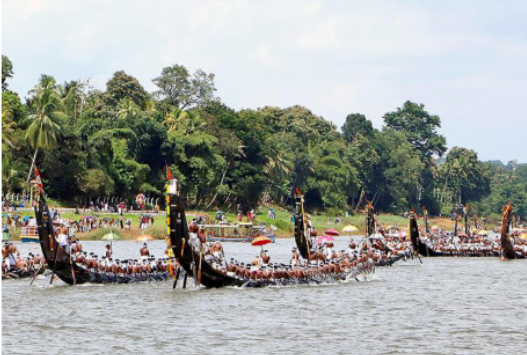
- The Aranmula Uthrattathi boat race is a traditional boat race held on the Pampa River in Kerala.
- It is associated with the cultural and religious traditions of Aranmula, a town closely linked with the ancient Parthasarathy Temple.
Cultural and Religious Significance
- The race reflects Kerala’s traditional community celebrations.
- It is linked with devotion, temple culture and collective participation.
- It attracts visitors from India and abroad.
- It has helped place Aranmula on the cultural and tourism map.
Palliyodams
Palliyodams are the traditional snake boats of Kerala used in the Aranmula boat race.
Key Features
- They are long, decorated traditional boats.
- Each boat is powered by over 100 oarsmen.
- Oarsmen row in complete unison.
- They represent physical endurance, teamwork and craftsmanship.
Link with Aranmula
- Aranmula is located in Pathanamthitta district, Kerala.
- The town is named after the ancient Parthasarathy Temple.
- The temple is said to have a heritage of nearly 1,800 years.
Aranmula Kannadi
- Aranmula is also famous as the birthplace of Aranmula Kannadi.
- It is a traditional metal mirror.
- It has received the Geographical Indication tag.
- It represents Kerala’s traditional craftsmanship.