Relevance: TGPSC: Telangana government initiatives

Important Keywords for Prelims and Mains

Young India Sports University, Korea National Sport University, high-performance sports, sports science, athlete training, 2036 Olympics

Why in News?

The Young India Physical Education and Sports University of Telangana has signed a Memorandum of Understanding with the Korea National Sport University, one of the leading institutions in high-performance sports. The partnership aims to connect Telangana’s athletes with global practices in training, sports science and high-performance education.

Background

  • The agreement follows discussions held during the Telangana Chief Minister’s earlier visit to South Korea.
  • During the visit, the Telangana delegation met senior representatives of the Korea National Sport University, including its president. The two sides discussed cooperation between KNSU and the proposed Young India Sports University.
  • The MoU has now formally established this institutional partnership.

About the Partnership

The agreement seeks to create a bridge between:

  • Telangana’s sporting talent; and
  • South Korea’s experience in high-performance sports.

It aims to open new learning opportunities for young athletes from Telangana by introducing them to internationally recognised sporting practices.

Major Areas of Cooperation

Athlete Training

The partnership seeks to improve the quality of training available to young athletes in Telangana.

Sports Science

Telangana aims to benefit from KNSU’s expertise in using scientific knowledge for the development of sportspersons.

High-Performance Education

The agreement will support specialised education connected with competitive and high-performance sports.

Global Sporting Practices

Young athletes will receive opportunities to learn from the training culture and experience of an internationally recognised sports institution.

Why Is KNSU Important?

  • The Korea National Sport University has an established record in producing successful athletes.
  • KNSU-trained sportspersons won 16 of South Korea’s 32 medals at the Paris Olympics. Thus, athletes associated with the university contributed half of the country’s total medal tally.

Telangana aims to introduce this culture of sporting excellence through its partnership with KNSU.

Significance for Telangana

Connecting Local Talent with Global Expertise

The partnership will link young athletes from Telangana with international practices in sports training and education.

Strengthening Young India Sports University

The MoU gives the proposed university an opportunity to learn from an institution experienced in developing high-performance athletes.

Opportunities for Rural and Urban Athletes

The government seeks to support talented sportspersons from villages and towns in their journey towards national and international competitions.

Developing a Culture of Excellence

KNSU’s Olympic record provides Telangana with a model for building a strong and performance-oriented sporting culture.

Link with the 2036 Olympics

As India looks towards the 2036 Olympic Games, Telangana intends to strengthen its sporting preparedness.

The State’s objective has two dimensions:

  • to be prepared to contribute to the hosting of a major international sporting event; and
  • to produce athletes capable of representing India and winning recognition at the Olympic level.

The partnership therefore places athlete development at the centre of Telangana’s Olympic vision.

Conclusion

The MoU between Young India Sports University and Korea National Sport University marks an important step in Telangana’s sports-development efforts. By connecting local talent with global expertise in training, sports science and high-performance education, the State seeks to create a pathway from its villages and towns to the Olympic podium.

CARE MCQ

Q. Consider the following statements about Telangana’s partnership with Korea National Sport University:

  1. It involves the Young India Physical Education and Sports University.
  2. It focuses on athlete training and sports science.
  3. KNSU-trained athletes contributed half of South Korea’s medals at the Paris Olympics.

Which of the statements given above are correct?

(a) 1 and 2 only
(b) 2 and 3 only
(c) 1 and 3 only
(d) 1, 2 and 3

Answer: (d) 1, 2 and 3

Explanation:

  • Statement 1 is correct: Young India Sports University signed the MoU.
  • Statement 2 is correct: Athlete training, sports science and high-performance education are its focus areas.
  • Statement 3 is correct: KNSU-trained athletes won 16 of South Korea’s 32 Paris Olympics medals.

FAQs

1. Which institutions signed the MoU?

The Young India Physical Education and Sports University and Korea National Sport University signed the agreement.

2. What is the objective of the partnership?

Its objective is to strengthen athlete training, sports science and high-performance sports education in Telangana.

3. What was KNSU’s contribution to the Paris Olympics?

KNSU-trained athletes contributed 16 of South Korea’s 32 medals.

4. How did the partnership begin?

It followed discussions between Telangana and KNSU representatives during the Chief Minister’s visit to South Korea.

5. How is the agreement related to the 2036 Olympics?

Telangana seeks to strengthen its sporting preparedness and develop athletes who can represent India at the highest level.

Relevance: GS Paper III: Mineral resources, critical minerals, energy security, infrastructure and industrial development

Important Keywords for Prelims and Mains

Prelims: MMDR Act, 1957 | MMDR Amendment Act, 2026 | Section 9D | Section 13 | Mineral Rights | Mineral-Bearing Land | Royalty | Auction Premium | Dead Rent | District Mineral Foundation (DMF) | PMKKKY | National Critical Mineral Mission | NMEDT | KABIL | Unified Mining Portal | Minor Minerals


Mains: Uniform Mineral Taxation | Fiscal Predictability | Fiscal Federalism | Cooperative Federalism | Integrated National Mineral Market | Critical-Mineral Security | Resource Federalism | Sustainable Mining | Domestic Value Addition | Mining-Affected Communities | Environmental Externalities | Mineral Self-Reliance

Why in News?

The Mines and Minerals (Development and Regulation) Amendment Act, 2026 has amended the MMDR Act, 1957 to establish a more uniform and predictable fiscal framework for mining.Under the amendment, State governments cannot impose fresh taxes, cesses or other levies on mineral rights and mineral-bearing land except according to the conditions or restrictions prescribed by the Central Government.

Regulation of Mining in India

Mining in India is primarily regulated by the Mines and Minerals (Development and Regulation) Act, 1957.

The Act provides the legal framework for:

  • granting mineral concessions;
  • regulating mining leases;
  • collection of royalty;
  • mineral exploration;
  • auction of mineral blocks; and
  • conservation and development of minerals.

The 2026 amendment mainly addresses the growing differences in taxes and charges imposed by States on mineral extraction and mineral-bearing land.

Why Are Minerals Strategically Important?

Minerals form the basic inputs for:

  • steel and cement;
  • electricity generation;
  • transport and construction;
  • electronics and telecommunications;
  • defence manufacturing;
  • renewable-energy systems; and
  • housing and public infrastructure.

Therefore, the availability and cost of minerals influence industrial competitiveness, national security, employment and household expenditure.

Why Was the Amendment Needed?

1. Multiplicity of Levies

Mining operations are subject to several taxes, charges and statutory payments, including:

  • royalty;
  • auction premium;
  • dead rent;
  • District Mineral Foundation contributions;
  • Goods and Services Tax;
  • transit fees; and
  • State-level taxes on mineral-bearing land.
  • Around 14 different taxes, charges and fees may apply to mining activities. In some cases, additional State levies on mineral-bearing land have reportedly reached 20%.
  • The cumulative burden can make domestic mining commercially unviable.

2. Variation across States

  • Minerals are concentrated in a limited number of States, but their output supports industries throughout the country.
  • Different State-level taxes result in different prices for the same mineral. This disrupts supply chains, increases logistics costs and fragments the national mineral market.

3. Critical and Strategic Mineral Security

High levies can make the extraction of critical and atomic minerals, including graphite and uranium, uneconomical.

These minerals are important for:

  • clean-energy technologies;
  • electronics;
  • strategic industries;
  • nuclear energy; and
  • defence production.

A stable tax framework is therefore connected with economic and national security.

4. Import Dependence

  • India imported minerals worth approximately ₹10.12 lakh crore in 2025–26. If domestically produced minerals become more expensive than imports, industries such as steel may prefer foreign raw materials.
  • At the same time, high domestic costs can reduce export competitiveness. For example, iron ore exports earned approximately ₹15,136 crore in 2025–26.

5. Impact on Consumers

Mining-stage taxes become part of the final price of minerals. These costs are transmitted through:

  • steel;
  • cement;
  • electricity;
  • transport;
  • construction; and
  • housing.

Thus, excessive mineral taxation may ultimately increase expenditure for ordinary households.

6. Employment Concerns

Mining supports a large workforce, especially in mineral-rich and tribal regions.

  • Coal mining supports more than 5 lakh direct and indirect jobs.
  • The non-coal mineral sector supports more than one crore workers.

Small and medium miners are particularly vulnerable because they operate with limited financial margins.

7. Need for Long-Term Investment

Mining projects require large investments in exploration, machinery, processing, transport and environmental management. Sudden or unpredictable levies can discourage such investments and delay the opening of new mines.

Major Provisions of the MMDR Amendment Act, 2026

New Section 9D: Restrictions on State Levies

The amendment inserts Section 9D into the MMDR Act.

It provides that a State government cannot impose any tax, cess or other levy on:

  • mineral rights; or
  • mineral-bearing land.

The restriction applies regardless of whether the levy is calculated according to:

  • mineral quantity;
  • mineral value;
  • royalty; or
  • any other basis.

States may impose such levies only according to the conditions or restrictions prescribed by the Central Government.

Treatment of Earlier Levies

The amendment makes a distinction between unpaid demands and amounts already collected.

  • A levy that had not been paid or collected before the commencement of the amendment will be treated as invalid.
  • Money already deposited or recovered before commencement will not be refunded.

This limits pending retrospective liabilities while protecting completed collections.

Amendment to Section 13

Section 13 has been amended to empower the Central Government to frame rules prescribing the conditions under which States may impose levies on mineral rights or mineral-bearing land.

Fiscal Framework: Before and After the Amendment

Earlier positionPosition after the amendment
State-level mineral taxation could vary widelyA Centre-directed framework will operate under Section 9D
Fresh levies could arise after mining operations beganNew levies require compliance with centrally prescribed conditions
Unpaid retrospective demands could remain pendingUnpaid or uncollected past levies become invalid
Miners faced different fiscal burdens across StatesThe amendment seeks greater uniformity and predictability
Small miners were more vulnerable to additional leviesA common framework may reduce unequal fiscal pressure

Will the Amendment Reduce State Revenue?

The amendment restricts fresh State levies on mineral rights and mineral-bearing land. However, it does not remove the established revenue streams available to mineral-producing States.

Major Revenue Sources Continue

States will continue to receive revenue through:

  • royalty;
  • auction premium;
  • dead rent;
  • District Mineral Foundation contributions;
  • other permissible mining payments; and
  • revenue from minor minerals.

Nearly 90% of mining-sector revenue presently accrues to State governments.

Growth in State Revenue

  • Since 2014, revenue accruing to States from mineral production has reportedly increased by 354%. States have received more than ₹7 lakh crore, including revenue from coal.
  • Their mineral revenue reached approximately ₹1.14 lakh crore in 2025–26.

Over the same period, the States’ share in coal revenue increased substantially, while the Centre’s share declined.

Auction Premium

The auction system introduced in 2015 created an additional revenue stream for States.

Since its introduction:

  • approximately ₹2.32 lakh crore has been collected as royalty from 1,200 operating mines; and
  • about ₹96,000 crore has been collected as auction premium from 100 auctioned mines.

Odisha alone earned around ₹87,000 crore as auction premium from operationalised blocks between 2020–21 and 2025–26.

Minor Minerals Remain under State Control

The amendment does not alter State control over nearly 50 minor minerals, including:

  • sand, gravel, clay, silica, granite; , marble, gypsum; and laterite.

State governments will continue to regulate and earn revenue from this category.

Mineral-Sector Reforms since 2014

1. Competitive E-Auction

The 2015 amendment ended the discretionary allocation of major mineral concessions and introduced competitive auctions.

Since then:

  • 723 major mineral blocks have been auctioned across 17 States;
  • Rajasthan has auctioned 140 blocks;
  • Madhya Pradesh has auctioned 127 blocks; and
  • Odisha has auctioned 76 blocks.

In 2025–26, a record 212 blocks were auctioned and 36 became operational. In the coal sector, 141 mines have been auctioned and 23 operationalised.

2. Growth in Mineral Production

In 2025–26:

  • the value of major mineral production rose by 26.8%;
  • iron ore output reached 313 million tonnes;
  • limestone production reached 484 million tonnes; and
  • coal production remained above one billion tonnes.

Non-coal mineral production has nearly tripled since 2014.

India’s global position includes:

  • second in limestone;
  • third in zinc;
  • fourth in iron ore; and
  • fifth in bauxite.

3. National Critical Mineral Mission

  • The National Critical Mineral Mission was approved in January 2025 with an outlay of ₹16,300 crore up to 2030–31, including ₹2,600 crore of budgetary support.
  • The Geological Survey of India and the National Mineral Exploration and Development Trust are working towards 1,200 critical-mineral exploration projects.
  • Of the 777 projects sanctioned by the NMEDT, 255 relate to critical minerals.

4. Overseas Mineral Sourcing

  • The exploration framework now allows NMEDT support for overseas projects.
  • Khanij Bidesh India Limited has secured exclusive rights for lithium exploration in Argentina. Such overseas partnerships seek to diversify India’s mineral supply sources.

5. Recycling and Processing

₹1,500-crore critical-mineral recycling incentive scheme was launched in October 2025.

Critical Mineral Processing Parks are being supported in:

  • Andhra Pradesh;
  • Gujarat;
  • Odisha; and
  • Maharashtra.

Customs duties have also been removed on specified critical minerals, lithium-ion battery scrap and processing machinery.

6. Research and Innovation

Nine institutions have been designated as Centres of Excellence with ₹210 crore under the MAHA mission to strengthen critical-mineral research and technological capabilities.

7. Wider Exploration Ecosystem

  • Exploration activity has expanded significantly, with 51 private agencies notified for such work.
  • The NMEDT contribution has been raised to 3%. The framework also provides partial reimbursement of direct exploration costs, subject to prescribed limits.
  • During Field Season 2025–26, the Geological Survey of India completed 457 projects, including 230 relating to critical and strategic minerals.

8. Operational Reforms

Recent reforms allow:

  • a one-time extension of a mining lease area by up to 10%;
  • extension of composite licence areas by up to 30%;
  • wider sale of minerals from captive mines; and
  • addition of critical, strategic or deep-seated minerals to existing leases without extra payment.

9. Digital Monitoring

  • The Unified Mining Portal, developed with State governments, tracks mineral blocks from auction to operationalisation.
  • Proposed coal and mineral exchanges can support transparent transactions and market-based price discovery.

Welfare of Mining-Affected Communities

District Mineral Foundations

A total of 656 District Mineral Foundations, including 106 in aspirational districts, have been established for communities affected by mining.

The entire DMF collection is used for local projects, with district administrations deciding the priorities.

PMKKKY

The Pradhan Mantri Khanij Kshetra Kalyan Yojana guides the use of DMF funds for:

  • roads;
  • hospitals;
  • schools;
  • drinking water;
  • sanitation; and
  • improvement of living conditions.

The 2026 amendment does not alter DMF collections or the operation of PMKKKY.

Significance of the Amendment

1. Predictable Fiscal Environment

A uniform framework can reduce unexpected liabilities and help companies make long-term investment decisions.

2. Integrated National Mineral Market

Reduced variation in State levies can improve interstate movement, supply-chain efficiency and price comparability.

3. Energy and Mineral Security

Commercially viable domestic mining can reduce excessive dependence on imported coal, critical minerals and industrial raw materials.

4. Industrial Competitiveness

Lower input uncertainty can support steel, cement, aluminium, power, transport, defence and renewable-energy industries.

5. Support for Small Miners

Small and medium operators may benefit from a stable framework because they are less capable of absorbing multiple or sudden taxes.

6. Employment and Regional Development

Sustained mining operations can protect employment in mineral-rich and tribal regions, provided environmental and community safeguards are effectively implemented.

Way Forward

Cooperative Federalism

Rules under Sections 9D and 13 should be framed after meaningful consultation with mineral-producing States.

Transparent Fiscal Formula

Permissible levies should be based on clear principles such as mineral value, environmental cost and regional infrastructure needs.

Strengthen DMF Governance

DMF planning should include local communities, particularly Gram Sabhas in tribal areas. Expenditure and project outcomes should be publicly disclosed.

Link Mining with Local Development

Mineral-rich districts should receive better infrastructure, healthcare, education, skill development and livelihood diversification.

Build Complete Mineral Value Chains

Exploration should be connected with domestic processing, recycling, research and manufacturing, particularly for critical minerals.

Periodic Review

The effect of the amendment on State revenue, mineral prices, investment, employment and imports should be independently reviewed.

Conclusion

The MMDR Amendment Act, 2026 seeks to replace fragmented mineral taxation with a stable and uniform framework. It can improve investment, domestic production and critical-mineral security while protecting existing State revenue streams.Its long-term success will depend on balancing national market integration with fiscal federalism, environmental protection and the rights of mining-affected communities.

CARE MCQ

Q. With reference to the MMDR Amendment Act, 2026, consider the following statements:

  1. It inserts Section 9D into the MMDR Act, 1957.
  2. It completely prohibits States from imposing any mineral-related levy under all circumstances.
  3. It does not require a refund of levies already collected before its commencement.

Which of the statements given above are correct?

(a) 1 only
(b) 1 and 3 only
(c) 2 and 3 only
(d) 1, 2 and 3

Answer: (b) 1 and 3 only

Explanation:

  • Statement 1 is correct: Section 9D restricts State taxation of mineral rights and mineral-bearing land.
  • Statement 2 is incorrect: States may impose levies subject to conditions or restrictions prescribed by the Centre.
  • Statement 3 is correct: Amounts already recovered are not refundable.

FAQs

1. What is the main purpose of the 2026 amendment?

It seeks to establish uniformity and predictability in State levies on mineral rights and mineral-bearing land.

2. What does the new Section 9D provide?

It restricts States from imposing taxes, cesses or other levies on mineral rights and mineral-bearing land except under centrally prescribed conditions.

3. Will already collected State levies be refunded?

No. Amounts deposited or recovered before commencement of the amendment will not be refunded.

4. Does the amendment affect minor minerals?

No. State control over minor minerals such as sand, granite, marble and gravel remains unchanged.

5. Does it abolish District Mineral Foundations?

No. DMF collections and welfare activities under PMKKKY will continue.

6. What is the major federal concern?

The restriction on independent State levies may affect the fiscal autonomy of mineral-producing States.

Relevance: GS Paper II: Environmental governance and government programmes

Important Keywords for Prelims and Mains

Prelims: Small Rivers | National Mission for Clean Ganga (NMCG) | Small River Rejuvenation Framework | Nature-Based Solutions | Geomorphological Correction | River Connectivity | Ecosystem Services | Groundwater Recharge | Environmental Flow | National Waterways Act, 2016 | Inland Waterways Authority of India | Inland Vessels Act, 2021


Mains: River-Basin Approach | Tributary–Main River Interdependence | Urban River Degradation | Pollution Prevention at Source | Climate-Resilient Restoration | Ecological Rejuvenation | Wetland and Floodplain Connectivity | Community-Led Governance | Scheme Convergence | Integrated Water-Resource Management

Why in News?

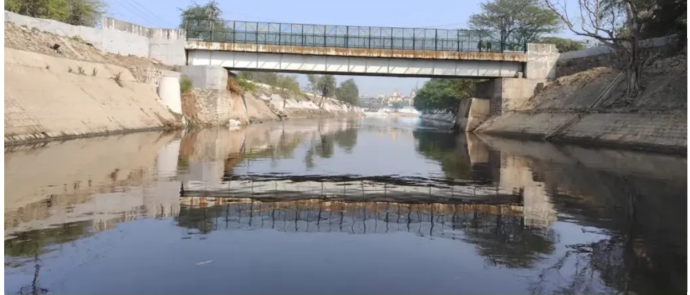
A draft Small River Rejuvenation (SRR) Framework has been unveiled under the National Mission for Clean Ganga. It seeks to revive small rivers through cost-effective, nature-based ecological solutions suited to local biodiversity and available natural resources.

The framework recognises that smaller rivers face different ecological and administrative challenges from large rivers and therefore require a distinct restoration strategy.
What Are Small Rivers?

Small rivers are natural watercourses that:

  • generally extend between 50 and 150 km;
  • usually flow within one or two districts; and
  • may be seasonal or perennial.

Their limited geographical spread distinguishes them from large interstate river systems. However, their ecological and social importance can be substantial because they directly support local communities and often function as tributaries of larger rivers.

Why Do Small Rivers Require a Separate Strategy?

For several decades, India’s river-cleaning programmes concentrated mainly on large and medium rivers. Since 2019, the policy focus has gradually expanded to include smaller rivers.

Small rivers require distinct treatment because:

  • their catchments are relatively localised;
  • encroachment can quickly narrow their channels;
  • untreated urban sewage can dominate their flow;
  • reduced natural flow affects them more severely;
  • restoration requires coordination among fewer districts but several local agencies;
  • their ecological conditions differ from one region to another; and
  • sustaining their flow is often more difficult than their initial restoration.

A single engineering-based model cannot adequately address these local variations.

Present Condition of Small Rivers

Increasing population, rapid urbanisation, pollution and changes in land use have disrupted the natural flow of many small rivers.

Major Forms of Degradation

  • Encroachment of river channels and floodplains;
  • narrowing of river width;
  • discharge of untreated sewage;
  • dumping of garbage and sludge;
  • reduced seasonal and perennial flow;
  • disconnection from wetlands and local water bodies;
  • physical alteration of riverbanks; and
  • conversion of rivers into urban drains.

Small rivers passing through cities are especially vulnerable because municipal and industrial waste often exceeds their natural capacity to dilute pollutants.

Examples of Degraded Small Rivers

Sahibi River

  • It is a tributary of the Yamuna.
  • It has suffered severe ecological degradation.
  • In Delhi, it is now commonly associated with the Najafgarh drain.

Mithi River

  • It begins at Vihar Lake and flows through Mumbai.
  • Garbage and sludge have severely degraded it.

Musi River

  • It flows through Hyderabad.
  • It is a tributary of the Krishna River.
  • It is also known as Muchukunda or Musunuru.
  • The river has become highly polluted.

Cooum River

  • It flows through Chennai.
  • It was once described as the “Thames of South India”.
  • It has become highly polluted and toxic.

Other degraded rivers include:

  • Vrishabhavathi in Bengaluru;
  • Bharalu and Bahini in Guwahati;
  • Varuna and Assi in Varanasi; and
  • Mula and Mutha in Pune.

Significance of Small Rivers

Small rivers provide ecosystem services that can be grouped into four broad categories.

Provisioning Services

They provide:

  • water for drinking;
  • irrigation;
  • water for livestock; and
  • support for wildlife.

Regulating Services

Small rivers help regulate:

  • groundwater recharge;
  • the hydrological cycle;
  • floodplains;
  • wetlands; and
  • aquatic vegetation.

Supporting Services

They contribute to:

  • nutrient cycling;
  • soil and sediment transportation;
  • habitat formation; and
  • survival of aquatic species such as fish, prawns, turtles and gharials.

Cultural Services

Rivers are closely connected with:

  • religious practices;
  • local traditions;
  • community identity; and
  • cultural landscapes.

What Is River Rejuvenation?

River rejuvenation is the process of restoring the ecological health and natural functioning of a degraded river.

It is wider than river cleaning. Removing waste or treating sewage addresses pollution, but rejuvenation also requires:

  • adequate and sustained flow;
  • restoration of river channels;
  • protection of floodplains;
  • reconnection with wetlands and water bodies;
  • revival of aquatic habitats; and
  • prevention of future degradation.

About the Small River Rejuvenation Framework

The draft framework has been introduced under the National Mission for Clean Ganga.

Its main objective is to restore small rivers through nature-based and locally suitable interventions, instead of depending only on expensive engineering and technological solutions.

Core Principles

The framework emphasises:

  • ecological restoration;
  • cost-effective interventions;
  • use of local natural resources;
  • protection of local biodiversity;
  • climate resilience;
  • connectivity with water bodies;
  • separate approaches for urban and rural rivers; and
  • maintenance of river health after restoration.

Major Areas of Intervention

1. Pollution and Climate-Related Interventions

The framework seeks to:

  • reduce contamination;
  • address sewage and waste inflows;
  • improve water quality; and
  • build resilience against climate-related changes in river flow.

2. Connectivity Restoration

A healthy river must remain connected with its wider hydrological system. The framework proposes to reconnect rivers with:

  • wetlands;
  • ponds;
  • lakes;
  • floodplains;
  • tributaries; and
  • other local water bodies.

Such connectivity supports natural water storage, groundwater recharge and biodiversity.

3. Geomorphological Correction

River geomorphology refers to the physical form and processes of a river, including its channel, banks, sediment and flow pattern.

Geomorphological correction may address:

  • narrowed or altered channels;
  • damaged riverbanks;
  • disturbed sediment movement;
  • physical obstructions; and
  • changes caused by encroachment or construction.

The objective is to restore the river’s natural physical functioning rather than merely improve its outward appearance.

Urban and Rural Rivers Require Different Approaches

The framework recognises that urban and rural small rivers face different problems.

Urban Rivers

They are more likely to experience:

  • sewage discharge;
  • solid-waste dumping;
  • channel encroachment;
  • concretisation;
  • industrial pollution; and
  • reduced floodplain space.

Rural Rivers

Their major concerns may include:

  • reduced seasonal flow;
  • catchment degradation;
  • agricultural runoff;
  • soil erosion;
  • disconnection from ponds and wetlands; and
  • excessive extraction of water.

Therefore, restoration measures must reflect the local land use, pollution sources and ecological conditions.

How Will Rivers Be Prioritised?

Small rivers will be selected for rejuvenation according to factors such as:

  • extent of reduction in water flow;
  • level of pollution;
  • ecological importance;
  • administrative feasibility; and
  • local environmental conditions.

This approach allows limited resources to be directed towards rivers where intervention is both urgent and practically achievable.

Funding and Implementation

The framework proposes to use resources available under existing government programmes, including:

  • VB-G RAM G Scheme;
  • Swachh Bharat Mission; and
  • Namami Gange.

Convergence of programmes can provide labour, sanitation infrastructure and river-cleaning resources without creating an entirely separate implementation system.

State-Led Initiatives

Uttar Pradesh

The One District–One River programme seeks to revive dying and polluted rivers.

Rivers covered by rejuvenation measures include:

  • Noon;
  • Sakarni;
  • Ghurari;
  • Manorama; and
  • Tamsa.

Kerala

State initiatives have focused on the ecological restoration of:

  • Chithari River; and
  • Kammalamkudi River.

These programmes demonstrate that small-river restoration can be planned at the State and district levels.

Community-Led Initiatives

Local communities have participated in restoring rivers and streams such as:

  • Sukhnag and Sandran, tributaries of the Jhelum in Jammu and Kashmir;
  • Manganga and Kayadhu in Maharashtra;
  • Lilagar in Chhattisgarh; and
  • Rushikulya and Daya in Odisha.

Community participation is important because local residents possess knowledge about:

  • historical river channels;
  • seasonal flow;
  • traditional water bodies;
  • sources of pollution; and
  • changes in land use.

How Do Small Rivers Affect Larger Rivers?

Small rivers, tributaries and streams are integral parts of larger river basins.

When a healthy tributary joins a major river, it contributes:

  • freshwater;
  • nutrients;
  • sediments;
  • aquatic organisms; and
  • ecological connectivity.

A degraded tributary may instead carry:

  • untreated sewage;
  • industrial pollutants;
  • garbage;
  • sludge; and
  • excessive sediment.

Therefore, cleaning only the main river cannot ensure basin-wide improvement if its tributaries continue to bring pollutants. Restoring small rivers complements programmes for larger rivers by addressing pollution and ecological degradation closer to their sources.

Small Rivers and Inland Water Transport

Rivers and canals can provide an energy-efficient mode of transport. However, navigation depends on the long-term ecological health of river systems.

Comparative Energy and Cost Advantages

According to the International Labour Organization, inland water transport:

  • consumes three to six times less energy than road transport; and
  • consumes up to two times less energy than rail transport.

The approximate freight costs are:

Mode of transportCost per tonne-kilometre
Inland waterways₹1.06
Railways₹1.36
Roads₹2.50

Current Position

  • Inland waterways carry approximately 2% of India’s freight.
  • Railways carry around 18%.
  • Roads carry about 71%.
  • India has 111 National Waterways across 23 States and four Union Territories.
  • Only 32 National Waterways are presently operational.
  • The Union Budget 2026–27 proposes to operationalise 20 additional waterways over five years.

Small-river rejuvenation is primarily ecological, but restoring the wider river network supports the sustainable development of river-based activities.

Policy Framework for Inland Waterways

Inland Waterways Authority of India

  • The IWAI was constituted under Section 3 of the Inland Waterways Authority of India Act, 1986.
  • It develops and maintains infrastructure for inland water transport.

National Waterways Act, 2016

  • It declared 111 waterways as National Waterways, consisting of five existing and 106 newly declared waterways.

Inland Vessels Act, 2021

  • It seeks to provide harmonised regulation of inland vessels and enable their safe and seamless movement across States.

Coastal Shipping Act, 2025

  • It identifies suitable coastal shipping routes and seeks better coordination between coastal shipping and inland water transport.

National Waterways Regulations, 2025

The regulations concerning the construction of jetties and terminals seek to:

  • expand cargo and passenger networks; and
  • encourage private investment.

River Cruise Tourism Roadmap 2047

  • Launched in 2024, it provides a framework for developing river cruise tourism. Such activities require ecologically healthy rivers for long-term sustainability.

Implementation Challenges

Maintaining River Flow

  • Restoring a river once is easier than maintaining adequate water flow over time. Continued extraction, altered land use and catchment degradation can reverse improvements.

Multiple Agencies

River restoration may involve:

  • municipal bodies;
  • rural local bodies;
  • pollution-control authorities;
  • irrigation departments;
  • district administrations; and
  • local communities.

Weak coordination can delay implementation.

Encroachment

  • Removing long-standing encroachments from channels and floodplains can be legally and socially difficult.

Sewage Management

  • A river cannot remain clean unless towns and cities prevent untreated wastewater from entering it.

Uniform Solutions

  • The ecological conditions of rivers vary. A single technical model may be unsuitable for all river systems.

Monitoring Difficulties

  • Long-term assessment must measure river flow, water quality, biodiversity, channel condition and connectivity—not merely the quantity of waste removed.

Way Forward

Adopt a River-Basin Approach

Small rivers should be managed as parts of larger river basins rather than as isolated water channels.

Ensure Ecological Flow

Restoration plans must protect sufficient natural flow to sustain aquatic ecosystems and dilute pollution.

Restore Local Connectivity

Rivers should be reconnected with ponds, wetlands, floodplains and groundwater systems.

Prevent Pollution at Source

Urban local bodies must control sewage, industrial discharge, garbage and sludge before they enter rivers.

Reduce Surface Runoff

Catchment treatment and nature-based measures should slow runoff, improve water infiltration and enhance groundwater recharge.

Develop Local Restoration Plans

Each river needs a plan based on:

  • its biodiversity;
  • flow conditions;
  • land use;
  • pollution sources;
  • natural resources; and
  • urban or rural setting.

Strengthen Community Participation

Local communities should participate in planning, implementation and monitoring to ensure that restored rivers are protected over time.

Measure Ecological Outcomes

Success should be assessed through:

  • cleaner water;
  • sustained flow;
  • restored biodiversity;
  • improved groundwater recharge;
  • stable riverbanks; and
  • renewed connection with local water bodies.

Conclusion

Small rivers are the connecting links of India’s larger river systems. Their degradation affects local water security, groundwater, biodiversity and the ecological condition of major rivers.

The draft SRR Framework marks a shift from isolated, engineering-heavy interventions towards local, nature-based restoration. Its success will depend on sustained flow, pollution prevention, institutional coordination and active community participation.
CARE MCQ

Q. Consider the following statements about the draft Small River Rejuvenation Framework:

  1. It was unveiled under the National Mission for Clean Ganga.
  2. It relies exclusively on large engineering structures.
  3. It recognises different challenges for urban and rural rivers.

Which of the statements given above are correct?

(a) 1 only
(b) 1 and 3 only
(c) 2 and 3 only
(d) 1, 2 and 3

Answer: (b) 1 and 3 only

Explanation:

  • Statement 1 is correct: The framework was unveiled under the NMCG.
  • Statement 2 is incorrect: It prioritises cost-effective, nature-based ecological solutions.
  • Statement 3 is correct: It recognises that urban and rural rivers require different approaches.

FAQs

1. What is a small river?

It is generally a natural river extending between 50 and 150 km and flowing within one or two districts.

2. Under which programme was the SRR Framework unveiled?

It was unveiled under the National Mission for Clean Ganga.

3. What are its major interventions?

It focuses on pollution and climate resilience, restoration of connectivity and geomorphological correction.

4. How will rivers be prioritised?

Selection will consider flow reduction, pollution, administrative feasibility and ecological factors.

5. Why are small rivers important for major rivers?

They supply water, sediments, nutrients and biodiversity to larger rivers, but can also carry sewage and pollutants when degraded.

6. Does river rejuvenation mean only cleaning waste?

No. It also includes restoring flow, channels, floodplains, water-body connectivity and biodiversity.

TGPSC Current Affairs August 31st 2026
TGPSC Current Affairs August 26th 2026

Enroll Now for Unlimited UPSC Utsav

Start Date

22/03/2026

Timings

08 AM – 4 PM

    Courses

    Scroll to Top