Relevance: TSPSC – Environment | Tribal Welfare | Forest Rights | Biodiversity Conservation
For Prelims:
Chenchu Tribe, Amrabad Tiger Reserve, Project Tiger, Forest Rights Act, 2006, Wildlife Protection Act, 1972, National Tiger Conservation Authority (NTCA), Core Zone, Buffer Zone, Particularly Vulnerable Tribal Group (PVTG), Nallamala Forests
For Mains:
Forest Conservation, Tribal Rights, Protected Area Management, Human-Wildlife Interface, Tribal Livelihood Security, Conservation versus Community Rights, Participatory Forest Governance
Why in News?
- The Chenchu tribe residing in the Amrabad Tiger Reserve have opposed relocation from core forest areas, stating that it would disrupt their livelihood, social structure, and traditional way of life.
- During the Prajavani Programme Telangana, tribal representatives from various hamlets highlighted their complete dependence on forest resources and expressed inability to survive outside the forest ecosystem.
- The Telangana State Planning Board assured that no forced eviction would take place and called for consultations, bringing focus again on the broader issue of balancing wildlife conservation with tribal rights.
About the Chenchu Tribe
The Chenchus are one of the oldest tribal communities of South India and are classified as a Particularly Vulnerable Tribal Group (PVTG), which means they are among the most socially and economically vulnerable tribal groups in India.
They are mainly found in:
- Telangana
- Andhra Pradesh
- Nallamala forest region
- Areas around Amrabad and Srisailam forests
Traditionally, the Chenchus are forest-dependent hunter-gatherers. Their economy, culture, and identity are closely linked with the forest ecosystem.
Their livelihood depends on:
- Collection of honey
- Gathering of fruits, roots, and tubers
- Minor forest produce
- Medicinal plants
- Small-scale hunting traditions
- Seasonal forest-based occupations
The forest is not only their source of income but also the centre of their social life, belief systems, and cultural identity. Forced displacement from forests therefore affects not just livelihood, but also community survival itself.
About Amrabad Tiger Reserve
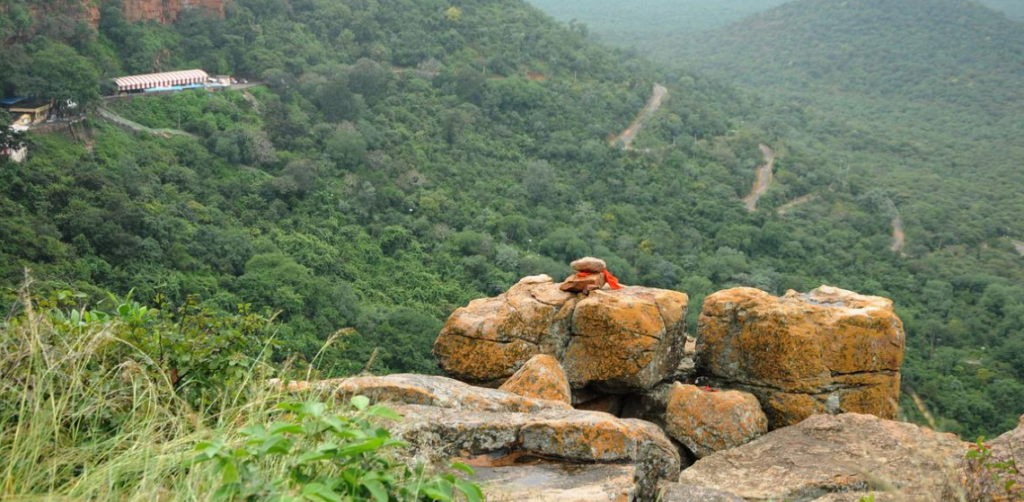
- It is one of the largest tiger reserves in India, located in the Nallamala Hills of southern Telangana, primarily spread across Nagar Kurnool and Nalgonda districts.
- The reserve was formed in 2014 after the bifurcation of Andhra Pradesh, when the northern part of the earlier Nagarjunsagar-Srisailam Tiger Reserve came under Telangana.
- It forms part of the Eastern Ghats landscape and is characterized by rugged terrain, deep valleys, plateaus, and dense dry deciduous forests.
- The area is drained by the Krishna River and its tributaries, which play a crucial role in sustaining the forest ecosystem.
- It is home to important wildlife species such as tiger, leopard, sloth bear, wild dog, deer species, and diverse flora and fauna, making it a significant biodiversity hotspot.
- The reserve is also notable for the presence of the Chenchu tribe, a Particularly Vulnerable Tribal Group (PVTG), who traditionally depend on forest resources for their livelihood.
- The region has historical significance, with ancient human habitation and cultural sites, including connections to the Nagarjunakonda Buddhist heritage region.
- It is managed under Project Tiger with a core-buffer strategy, aiming to conserve wildlife while addressing the needs of local communities.
- The reserve plays an important role in maintaining ecological balance, acting as a carbon sink, biodiversity reservoir, and watershed for the Krishna basin.
Important Features of Amrabad Tiger Reserve
- One of the largest tiger reserves in India
- Rich biodiversity and dense dry deciduous forests
- Habitat for tigers, leopards, sloth bears, deer, wild dogs, and many bird species
- Important watershed area in the Krishna river basin
- Home to forest-dwelling tribal communities, especially the Chenchus
Background of the Issue
Tiger reserves are managed with the objective of creating secure habitats for wildlife, especially tigers. For this reason, the forest department often encourages relocation of human settlements from the core area of the reserve.
The idea is that reduced human activity helps:
- Prevent habitat disturbance
- Reduce poaching risks
- Protect prey species
- Improve breeding conditions for tigers
- Maintain biodiversity and ecological balance
However, the Chenchu community argues that they have lived in these forests for generations without harming wildlife and that they should not be treated as encroachers in their own ancestral lands.
They believe that relocation would:
- Destroy their livelihood systems
- Break traditional community networks
- Create economic insecurity
- Disconnect them from cultural and spiritual traditions linked to the forest
This reflects the long-standing policy challenge of balancing conservation goals with tribal rights.
Forest Conservation and Tribal Rights
This issue represents one of the most important debates in environmental governance: whether conservation should exclude people or promote coexistence between wildlife and indigenous communities.
Conservation Perspective
Tiger reserves require strong habitat protection because:
- Tigers need large undisturbed territories
- Human interference may affect breeding and movement
- Illegal activities such as poaching must be controlled
- Habitat fragmentation weakens biodiversity protection
Under Project Tiger, the idea of creating “inviolate spaces” has often been used to justify relocation of villages from core forest zones.
Tribal Rights Perspective
For communities like the Chenchus:
- Forest is their home, not merely a resource
- Traditional knowledge helps sustainable use of forests
- Forest-based living often supports ecological balance
- Tribal identity is deeply connected to the land
Many experts argue that tribal communities should be treated as partners in conservation rather than obstacles to conservation.
This issue therefore raises an important governance question: should forest protection happen through exclusion or through community participation?
Forest Rights Act, 2006
The Scheduled Tribes and Other Traditional Forest Dwellers (Recognition of Forest Rights) Act, 2006, commonly known as the Forest Rights Act (FRA), was enacted to correct the historical injustice faced by forest-dwelling communities.
For many decades, tribal communities lived in forests without legal recognition of their traditional rights. The FRA was introduced to legally recognise those rights.
Major Provisions of the Act
The Act provides:
- Individual rights over forest land used for livelihood
- Community rights over forest resources
- Access to minor forest produce
- Grazing rights
- Rights over water bodies and traditional access routes
- Rights for habitat and cultural practices
- Recognition of traditional forest use patterns
It also recognises the role of forest communities in protecting and managing forest resources.
Protected Area Management in Tiger Reserves
- Tiger reserves in India are established under Project Tiger (1973) and are governed by the provisions of the Wildlife Protection Act, 1972, with policy oversight by the National Tiger Conservation Authority.
- Each reserve is managed through a legally notified structure consisting of a core area (Critical Tiger Habitat) and a buffer area, designed to balance strict conservation with sustainable human use.
- The core area is kept inviolate to ensure undisturbed conditions for tiger breeding and habitat preservation, where activities like commercial exploitation, grazing, and settlement expansion are highly restricted.
- The buffer area functions as a transition zone where regulated human activities are permitted, including sustainable resource use, eco-development programmes, and livelihood support for local communities.
- Management practices include habitat improvement, water conservation measures, anti-poaching operations, wildlife monitoring using modern technologies, and protection of prey base.
- Scientific management is promoted through periodic tiger estimation, biodiversity assessments, and landscape-level planning to ensure ecological connectivity between reserves.
- The rights of forest-dwelling communities are recognised under the Forest Rights Act, 2006, requiring that any displacement process must involve prior recognition of rights and consent of the Gram Sabha.
Buffer Zone
The buffer zone surrounds the core zone and acts as a transition area.
Its features include:
- Limited and regulated human use
- Support for local livelihoods
- Reduced pressure on the core zone
- Scope for coexistence of people and wildlife
This approach is meant to create balance rather than complete exclusion.
Wildlife Protection Act, 1972
- The Act provides the primary legal framework for wildlife conservation in India, extending to the entire country and aiming to protect wild animals, birds, and plants.
- The Act classifies species under six schedules (I–VI), with Schedule I and Part II of Schedule II granting the highest level of protection and strictest penalties.
- The Act empowers the government to declare protected areas such as National Parks, Wildlife Sanctuaries, Conservation Reserves, and Community Reserves.
- The Act originally permitted regulated hunting but was amended in 1991 to impose a near-complete ban on hunting of wild animals.
- The Act provides for the establishment of the National Board for Wildlife (NBWL) and State Boards for Wildlife for policy and advisory functions.
- The Act prohibits trade in wildlife and wildlife products, aligning India with international commitments like CITES.
Implications of the Issue
This issue is important because it highlights:
- Conflict between environmental conservation and livelihood security
- Need for proper implementation of the Forest Rights Act
- Importance of tribal participation in conservation decisions
- Debate over voluntary versus forced relocation
- The larger challenge of inclusive environmental governance
It also reminds policymakers that conservation cannot succeed if local communities lose trust in the system.
Challenges
Several practical and legal challenges exist:
- Balancing biodiversity protection with livelihood rights
- Delays in recognition of forest rights claims
- Conflict between forest department administration and FRA provisions
- Lack of trust regarding rehabilitation promises
- Weak participation of tribal communities in decision-making
- Administrative preference for relocation over coexistence models
These issues make implementation difficult on the ground.
Way Forward
A balanced and rights-based approach is necessary.
The following steps are important:
- Ensure full and proper implementation of the Forest Rights Act
- No forced relocation without Gram Sabha consent
- Promote coexistence-based conservation models wherever possible
- Include tribal communities as partners in forest governance
- Improve livelihood support and healthcare access for forest communities
- Ensure transparent dialogue between officials and tribal representatives
- Build trust through long-term rehabilitation planning where relocation is genuinely necessary
Conservation must be based on justice, not displacement alone.
Conclusion
The Chenchu issue in Amrabad Tiger Reserve reflects one of the most important governance challenges in India—how to protect forests without displacing the people who have historically lived within them.
Forest conservation and tribal rights should not be treated as opposing goals. Sustainable conservation becomes stronger when indigenous communities are recognised as stakeholders and protectors of biodiversity.
Protecting wildlife must go together with protecting dignity, livelihood, and constitutional rights of tribal communities.
CARE MCQ
Q.Consider the following statements regarding the Chenchu tribe:
- They are classified as a Particularly Vulnerable Tribal Group (PVTG).
- They are primarily concentrated in the Nallamala forest region.
- Their traditional livelihood is based mainly on settled agriculture.
Which of the statements given above is/are correct?
A. 1 and 2 only
B. 2 and 3 only
C. 1 and 3 only
D. 1, 2 and 3
Ans: (a)
Explanation:
- Statement 1 is correct: Chenchus are recognized as a PVTG, indicating high vulnerability and dependence on forest ecosystems.
- Statement 2 is correct: They are mainly found in the Nallamala forests across Telangana and Andhra Pradesh.
- Statement 3 is incorrect (close trap): Their traditional livelihood is hunting, gathering, and forest produce collection, not settled agriculture.
Q. Under the Forest Rights Act, 2006, which of the following correctly describes “Critical Wildlife Habitat”?
A) Any area within a tiger reserve notified by the State Government for relocation of forest dwellers
B) A protected area required to be kept inviolate, notified only after scientific assessment and recognition of forest rights
C) A forest area identified by the Gram Sabha for community conservation and sustainable use
D) Any biodiversity-rich area notified under the Biological Diversity Act, 2002
Ans: (b)
Explanation:
Under FRA, it is a part of a protected area kept inviolate for wildlife, but only after scientific evidence and completion of forest rights recognition.
Q.With reference to tiger reserves in India, consider the following statements:
- The core area is notified as Critical Tiger Habitat under the Wildlife Protection Act, 1972.
- The buffer area is intended to promote coexistence and reduce pressure on the core.
- Critical Tiger Habitat can be notified without completion of the process of recognition of forest rights.
Which of the statements given above is/are correct?
A. 1 and 2 only
B. 2 and 3 only
C. 1 and 3 only
D. 1, 2 and 3
Ans: (a)
Explanation:
- Statement 1 is correct: Core areas of tiger reserves are legally designated as Critical Tiger Habitat (CTH) under the Wildlife Protection Act, ensuring highest protection for tiger conservation.
- Statement 2 is correct: Buffer areas function as transition zones where regulated human activities and eco-development programmes are allowed to reduce pressure on the core.
- Statement 3 is incorrect (very close trap): Although CTH is notified under WLPA, the process must be consistent with safeguards, including consideration of rights under the Forest Rights Act, 2006. It cannot bypass due process related to rights recognition.
Q. Consider the following statements about National Parks in India:
Statement-I: Eravikulam National Park, known for its Nilgiri tahr, is located in the Western Ghats.
Statement-II: National Parks in India are always home to a wider variety of flora and fauna compared to Wildlife Sanctuaries.
Which of the following is correct?
(a) Both Statement-I and Statement-II are correct and Statement-II is the correct explanation for Statement-I
(b) Both Statement-I and Statement-II are correct and Statement-II is not the correct explanation for Statement-I
(c) Statement-I is correct but Statement-II is incorrect
(d) Statement-I is incorrect but Statement-II is correct
Ans: (c)
Explanation:
Statement-I is correct: Eravikulam National Park is located in the state of Kerala in the Western Ghats, a globally recognized biodiversity hotspot. It is especially famous for being the largest natural habitat of the Nilgiri tahr, an endangered mountain ungulate endemic to the Western Ghats. The park is also known for the blooming of the rare Neelakurinji flower, which blossoms once in twelve years. Its high-altitude grasslands and shola forests make it ecologically unique. Therefore, the statement is factually correct.
Statement-II is incorrect: This statement is incorrect because the distinction between a National Park and a Wildlife Sanctuary lies mainly in the level of legal protection and human activity restrictions, not necessarily in biodiversity richness. National Parks usually have stricter protection, with greater restrictions on human interference such as grazing or private rights. However, this does not mean they are always home to a wider variety of flora and fauna than Wildlife Sanctuaries. Many Wildlife Sanctuaries also possess extremely rich biodiversity and can support equally significant or even greater ecological diversity depending on location and ecosystem type. Hence, the word “always” makes the statement incorrect.
TSPSC MAINS QUESTION
Q.“Forest conservation and tribal rights must be balanced through participatory governance rather than forced displacement.”
Discuss this statement in the context of the Chenchu tribe issue in Amrabad Tiger Reserve.
(250 Words)
FAQs
Q1. Why are Chenchu tribals important in Telangana current affairs?
The Chenchus are a Particularly Vulnerable Tribal Group (PVTG) living inside the Nallamala forests and Amrabad Tiger Reserve. Their issue is important because it involves tribal rights, forest governance, and conservation policies.
Q2. What is Amrabad Tiger Reserve famous for?
Amrabad Tiger Reserve is known for tiger conservation, rich biodiversity, dry deciduous forests, and the presence of Chenchu tribal communities. It is one of the largest tiger reserves in India.
Q3. What is the main issue in this news?
The main issue is the opposition by Chenchu tribals to relocation from the core area of the tiger reserve, where they fear loss of livelihood, identity, and traditional rights.
Q4. Which law protects the rights of forest-dwelling tribes?
The Forest Rights Act, 2006 protects the rights of Scheduled Tribes and other traditional forest dwellers over forest land and resources.
Q5. Can tribal communities be forcibly relocated from tiger reserves?
No. Relocation can only happen after recognition of rights, informed consent of the Gram Sabha, and voluntary rehabilitation. Forced eviction is against the legal safeguards provided under the Forest Rights Act.
Relevance: GS Paper III – Science & Technology | Economy | Industrial Development
For Prelims:
Semiconductor Fab, Dholera SEZ, Special Economic Zone, Silicon, Germanium, Integrated Circuits, Semiconductor Mission, Dholera SIR, Tata Semiconductor, India Semiconductor Mission
For Mains:
semiconductor self-reliance, strategic manufacturing, supply chain resilience, technology sovereignty, electronics ecosystem, industrial policy, high-tech employment generation
Why in News?
- The Government of India has officially notified the country’s first semiconductor fabrication plant at Dholera Special Economic Zone in Gujarat.
- The project will be developed by Tata Semiconductor Manufacturing Private Limited and marks a major step in India’s effort to build domestic semiconductor manufacturing capacity and reduce dependence on imports.
What is India’s First Chip Fabrication Plant
- It is India’s first full-scale semiconductor fabrication facility, commonly called a “fab,” established for manufacturing advanced semiconductor chips within the country.
- Unlike chip design, fabrication involves the physical production of semiconductor wafers and integrated circuits using highly sophisticated industrial processes.
- The facility is being developed as a sector-specific Special Economic Zone focused on electronics, semiconductor manufacturing, and IT-enabled industries.
Dholera SEZ and Strategic Location
- The plant is located in Dholera Special Investment Region (SIR) in Gujarat.
- It is one of India’s largest planned industrial smart cities under the Delhi-Mumbai Industrial Corridor.
- The notified semiconductor zone covers nearly 166 hectares and is designed to support high-end industrial activity with integrated logistics, power supply, water systems, and digital infrastructure.
- Its proximity to ports, freight corridors, and industrial clusters makes it suitable for global manufacturing integration.
What are Semiconductors?
- Semiconductors are materials whose electrical conductivity lies between conductors and insulators.
- They are the foundation of modern electronic devices and are used in the manufacture of integrated circuits, microchips, processors, memory devices, and sensors.
- The most common semiconductor material is silicon, while germanium and compounds such as gallium arsenide are also used for specialised applications.
Silicon and Germanium
- Silicon is the most widely used semiconductor material in the world because of its stability, abundance, and ability to function effectively at high temperatures.
- It constitutes nearly 28% of the Earth’s crust and is mainly obtained from silica found in sand and quartz.
- Germanium was the first semiconductor used in transistor technology.
- The first transistor developed in 1947 by Bell Labs was based on germanium.
- However, silicon gradually replaced germanium due to lower cost, better thermal stability, and large-scale industrial suitability.0
Semiconductor Manufacturing Process
- Semiconductor chip production is one of the most complex industrial processes in the world.
- It begins with the purification of silicon into ultra-pure wafers. These wafers then undergo multiple stages such as photolithography, doping, etching, deposition, testing, and packaging.
- Doping is the process of adding controlled impurities to pure silicon to modify its electrical conductivity.
- A single chip may contain billions of transistors, and the full fabrication cycle may take several months under highly controlled dust-free clean room conditions.
Why Semiconductors are Important?
1. They control electricity 2. They are used to make computer chips 3. They enable modern communication 4. They power everyday devices 5. They are critical for advanced tech
all depend heavily on semiconductor technology. 6. They drive the global economy |
Government Support and Policy Framework
- India Semiconductor Mission (ISM)
The India Semiconductor Mission (ISM) was launched in 2021 under the Ministry of Electronics and Information Technology (MeitY) as an independent business division of the Digital India Corporation.
- Semicon India Programme
The Semicon India Programme was launched with a financial outlay of ₹76,000 crore to develop semiconductor and display manufacturing in India.
It provides fiscal support for:
- Semiconductor fabrication units (fabs)
- Display fabrication units
- Design Linked Incentive (DLI) Scheme
The DLI Scheme supports domestic semiconductor design companies and startups.
It offers:
- Financial incentives for chip design
- Product deployment support
- Access to design infrastructure
- Promotion of fabless semiconductor companies
Significance of India’s First Fab Plant
- The Dholera fab plant is important because it establishes India’s entry into one of the world’s most strategic industries.
- It reduces excessive dependence on semiconductor imports, especially from East Asian supply chains.
- The project involves an estimated investment of nearly ₹91,000 crore and is expected to generate around 21,000 direct and indirect jobs.
- It will strengthen India’s electronics manufacturing ecosystem and create multiplier effects across telecom, defence, automotive, and consumer electronics sectors.
- It also improves India’s strategic position in global semiconductor diplomacy.
Challenges in Semiconductor Manufacturing
- Semiconductor fabrication requires extremely high capital investment and long gestation periods.
- Reliable access to uninterrupted electricity, ultra-pure water, precision machinery, and highly skilled engineers is essential.
- India also faces competition from established semiconductor hubs such as Taiwan, South Korea, the United States, and China.
- Technology transfer, intellectual property dependence, and global supply chain concentration remain major barriers.
- Sustained policy stability is necessary because fabs cannot survive under short-term industrial planning.
Way Forward
- India must build a complete semiconductor ecosystem including design, fabrication, testing, packaging, and research capabilities.
- Investment in technical education, chip design talent, and advanced engineering institutions is equally important.
- Partnerships with global technology leaders should focus on long-term capability building rather than simple assembly operations.
- Stable industrial policy, trusted supply chains, and infrastructure reliability will determine the success of semiconductor self-reliance.
Conclusion
The semiconductor fabrication plant at Dholera represents a transformational step in India’s industrial and strategic development.
It moves India from being largely a consumer of semiconductor technology toward becoming a producer.
In an era where chips determine economic power, defence capability, and technological leadership, semiconductor manufacturing is not merely an economic project but a strategic national priority.
CARE MCQ
Q. With reference to semiconductor manufacturing, consider the following statements:
- Silicon is preferred over germanium in semiconductor manufacturing because of better thermal stability.
- Doping is the process of removing impurities from semiconductor material.
- Semiconductor fabrication plants require highly controlled clean-room environments.
Which of the statements given above are correct?
A) 1 and 3 only
B) 2 and 3 only
C) 1 and 2 only
D) 1, 2 and 3
Ans: (a)
Explanation:
Statement 1 is correct : Silicon is more stable at higher temperatures and is more suitable for large-scale manufacturing than germanium.
Statement 2 is incorrect : Doping means adding controlled impurities to pure semiconductor material to alter conductivity, not removing impurities.
Statement 3 is correct : Semiconductor fabrication requires dust-free clean rooms due to the microscopic scale of chip components.
Q. Which of the following properties makes Fluorescent Nanodiamonds (FNDs) uniquely suitable for long-term bio-imaging applications?
(a) Presence of nitrogen-vacancy defects enabling stable fluorescence without photobleaching
(b) High electrical conductivity similar to metals
(c) Ability to emit light only under high temperature conditions
(d) Dependence on external dyes for fluorescence
Ans: (a)
Explanation:
Fluorescent Nanodiamonds (FNDs) contain nitrogen-vacancy (NV) centers, which are defects in the diamond lattice where a nitrogen atom replaces a carbon atom adjacent to a vacancy. These NV centers act as stable quantum light emitters. Unlike conventional fluorescent materials, they exhibit no photobleaching (loss of fluorescence over time) and no photoblinking (intermittent light emission). This ensures continuous, reliable fluorescence, making them highly suitable for long-term bio-imaging and tracking of cellular processes.
Q. With reference to semiconductors, consider the following statements:
- The electrical conductivity of semiconductors lies between that of conductors and insulators.
- Silicon and germanium are commonly used elemental semiconductors.
- The conductivity of semiconductors decreases with increase in temperature.
Which of the statements given above are correct?
(a) 1 and 2 only
(b) 2 and 3 only
(c) 1 and 3 only
(d) 1, 2 and 3
Ans: (a)
Explanation:
Statement 1 is correct : semiconductors have conductivity greater than insulators but lower than conductors, which makes them useful in electronic devices.
Statement 2 is correct : silicon and germanium are the most widely used elemental semiconductors due to their stable properties and suitability for chip manufacturing.
Statement 3 is incorrect : semiconductor conductivity increases with rise in temperature as more charge carriers become available, unlike metals where conductivity decreases.
Q. Consider the following statements about Silicon:
- Silicon is the second most abundant element in the Earth’s crust after oxygen.
- Silicon is a metal.
- Silicon is used as a semiconductor in electronics.
How many of the above statements are correct?
(a) Only one
(b) Only two
(c) All three
(d) None
Ans: (b)
Explanation:
Statement 1 is correct: Silicon is the second most abundant element in the Earth’s crust after oxygen, constituting nearly 27–28% of the crust by mass. It is commonly found in the form of silica (SiO₂) and silicate minerals rather than in pure elemental form. This abundance makes it economically viable for large-scale industrial and technological use.
Statement 2 is incorrect: This is a common conceptual trap. Silicon is not a metal; it is classified as a metalloid (semi-metal). Metalloids possess properties intermediate between metals and non-metals. Silicon has some metallic characteristics like luster, but it does not conduct electricity like true metals and behaves differently chemically. This unique nature makes it especially useful in electronics.
Statement 3 is correct: Silicon is widely used as a semiconductor because its electrical conductivity lies between that of conductors and insulators. Its conductivity can be precisely controlled through doping, which makes it ideal for manufacturing transistors, diodes, integrated circuits, solar cells, and computer chips. It forms the foundation of modern electronics and the global semiconductor industry.
Q. Consider the following statements about Germanium:
- Germanium is a metalloid.
- It is primarily used in the production of semiconductors.
- Germanium was discovered by Clemens Winkler in 1886.
How many of the above statements are correct?
(a) Only one
(b) Only two
(c) All three
(d) None
Ans: (c)
Explanation:
Statement 1 is correct: Germanium is classified as a metalloid, similar to silicon. It has characteristics of both metals and non-metals and is placed in Group 14 of the periodic table. Its intermediate electrical properties make it highly valuable in electronics and optical technologies.
Statement 2 is correct: Germanium is used in the semiconductor industry, especially in high-speed electronics, fiber optics, infrared optics, and solar cells. Although silicon dominates most commercial semiconductor applications, germanium remains important where superior electron mobility and specialized performance are required.
Statement 3 is correct: Germanium was discovered by the German chemist Clemens Winkler in 1886. Its discovery was historically significant because it confirmed Dmitri Mendeleev’s earlier prediction of an unknown element called “eka-silicon” in the periodic table, thereby strengthening confidence in the periodic law.
FAQs
Q1. What is a semiconductor fab plant?
It is a manufacturing facility where semiconductor wafers and microchips are physically produced using advanced industrial processes.
Q2. Why is Dholera important for semiconductor manufacturing?
Dholera provides integrated industrial infrastructure, strategic connectivity, and policy support through SEZ and smart city planning.
Q3. Why is silicon preferred over germanium?
Silicon is cheaper, more abundant, thermally stable, and more suitable for mass industrial production.
Q4. Why are semiconductors strategically important?
They are essential for defence, telecom, automobiles, AI, space technology, and national technological security.
Q5. What is the biggest challenge in semiconductor fabrication?
Extremely high capital investment along with the need for advanced technology, skilled manpower, and reliable infrastructure.
Relevance: GS Paper III – Economy | Energy Security | International Relations
For Prelims:
OPEC, OAPEC, Oil Embargo, 1973 Oil Crisis, 1979 Oil Shock, Iranian Revolution, Strategic Petroleum Reserves (SPR), Strait of Hormuz, IMF Balance of Payments, Energy Security
For Mains:
energy security, import dependence, balance of payments crisis, oil diplomacy, strategic reserves, West Asia geopolitics, economic vulnerability, diversification of energy imports
Why in News?
- The ongoing US–Israel conflict involving Iran and the disruption of energy infrastructure in West Asia have revived concerns regarding global oil supply security.
- India, being the world’s third-largest consumer of crude oil and highly dependent on imports, faces serious risks from supply disruptions and rising prices.
- This has brought renewed attention to how India handled the major oil shocks of 1973 and 1979 and what lessons those crises offer today.

India’s Energy Basket and Import Dependence
- India’s energy demand is met through multiple sources, but coal remains the largest contributor.
- According to the International Energy Agency, coal and coal products account for nearly 48.4% of India’s total energy demand, while crude oil contributes around 24.7%.
- Although coal production is largely domestic, crude oil remains India’s biggest area of vulnerability because domestic production meets only about 13% of demand.
- India’s crude oil import dependence has risen to nearly 88.5% in FY26, making the country highly exposed to global oil market volatility.
Strait of Hormuz and Strategic Vulnerability
Dimension | Strategic Importance (Why it Matters) | Strategic Vulnerability (Why it is Risky) |
Geographical Location | The Strait of Hormuz serves as the only sea outlet from the Persian Gulf to the open ocean via the Gulf of Oman. This makes it indispensable for global maritime connectivity. | Its narrow width (about 33 km at the narrowest point) makes navigation highly constrained, creating a natural chokepoint that can be easily blocked or militarily targeted. |
Energy Security | Nearly one-fifth of global petroleum consumption passes through this route. Major exporters such as Saudi Arabia, Iran, Iraq, and UAE depend on it to access global markets. | Heavy concentration of global energy supply through a single route creates systemic risk; even temporary disruptions can trigger global oil price spikes, inflation, and economic instability. |
LNG and Energy Diversification | It is crucial for liquefied natural gas exports, especially from Qatar, supporting global transition towards cleaner fuels. | Limited alternative export routes for LNG make global gas markets highly sensitive to instability in the region. |
Global Trade and Shipping | Acts as a vital maritime chokepoint facilitating trade between West Asia and major Asian economies like India, China, and Japan. | Any blockade or disruption increases shipping costs, insurance premiums, and delays in global supply chains, affecting trade flows worldwide. |
Geopolitical Significance | The strait lies between Iran and Oman, giving it immense geopolitical leverage in West Asia. Control over this region translates into influence over global energy markets. | Persistent tensions, especially involving Iran and the United States, create uncertainty and raise the possibility of strategic coercion or closure of the strait. |
The 1973 Oil Crisis and Its Impact on India
- The first major oil shock occurred during the 1973 Arab-Israeli War when Arab members of OAPEC imposed an oil embargo on countries supporting Israel, particularly the United States and Western allies.
- This reduced global oil supply significantly and pushed oil prices up by nearly 70%, from around $3 to over $5 per barrel initially, and later much higher.
- For India, the consequences were severe. The oil import bill rose sharply from nearly $500 million in 1973 to around $1.3 billion in 1974.
- Higher petroleum prices also affected agriculture because petroleum-based fertilisers became expensive and scarce.
- Inflation surged to nearly 20%, economic growth slowed, and the assumptions of the Fifth Five-Year Plan became unrealistic.
India’s Response to the 1973 Oil Shock
- India responded primarily through import control, demand compression, and diplomatic balancing.
- The government reduced petroleum consumption, controlled imports, and increased administrative management of energy use.
- India also strengthened diplomatic engagement with Arab countries to secure stable energy supplies without directly entering bloc politics during the Cold War era.
- There was greater emphasis on public sector control of petroleum and long-term planning for energy self-reliance.
The 1979 Oil Crisis and Its Impact on India
- The second major oil shock came after the Iranian Revolution of 1979, which disrupted oil production in Iran, then one of the world’s major producers.
- Global oil prices rose dramatically from around $13 per barrel in 1979 to nearly $34 per barrel by 1980.
- The crisis struck when the world economy was still recovering from the earlier shock, worsening inflation and recessionary pressures globally.
- India faced a severe Balance of Payments crisis because of rising import costs and foreign exchange pressure.
India’s Response to the 1979 Oil Shock
- India had to approach the International Monetary Fund for financial assistance to manage the external payments crisis.
- The IMF support helped stabilise the immediate Balance of Payments problem but also exposed structural weaknesses in India’s economy.
- This period is often seen as an early step toward the broader process of economic liberalisation that culminated in the 1991 reforms.
- The crisis also pushed India to think more seriously about diversification of energy sources and reducing vulnerability to imported oil shocks.
Lessons for India in the Present West Asia Crisis
- The present geopolitical tensions show that energy security is not only an economic issue but also a strategic national security concern.
- India must avoid overdependence on a single region or supplier, especially when West Asia remains politically unstable.
- Diversification of suppliers, long-term contracts, and stronger strategic reserves are essential to prevent crisis-driven policy responses.
- Energy diplomacy must remain central to India’s foreign policy, especially with Russia, Gulf countries, and emerging suppliers in Africa and Latin America.
Strategic Petroleum Reserves and Energy Diversification
- India has created Strategic Petroleum Reserves (SPR) to store crude oil for emergency use during supply disruptions.
- The current storage capacity is around 5.33 million tonnes, though actual reserves remain below full capacity.
- These reserves act as a national buffer against sudden supply shocks and price spikes.
- At the same time, India is diversifying imports beyond traditional Gulf suppliers by increasing purchases from Russia, the United States, and African countries.
Challenges in India’s Energy Security
- Despite diversification efforts, India remains structurally vulnerable because domestic crude production is low and demand continues to rise.
- Electric mobility and renewable energy transition are progressing, but oil remains critical for transport, industry, and fertiliser production.
- Strategic reserves are still limited in comparison to major economies like the United States and China.
- Global conflicts, shipping disruptions, and sanctions politics continue to create uncertainty in energy planning.
Way Forward
- India must expand Strategic Petroleum Reserves to provide longer emergency coverage.
- Renewable energy, green hydrogen, biofuels, and domestic gas production must be accelerated to reduce long-term oil dependence.
- Improved public transport, fuel efficiency standards, and electric mobility can reduce import pressure.
- At the diplomatic level, India must continue balanced engagement with all major energy-producing regions while protecting maritime trade routes.
Conclusion
The oil crises of 1973 and 1979 showed that external energy shocks can rapidly become domestic economic crises.
India’s experience demonstrated the importance of diversification, strategic planning, and macroeconomic resilience.
In the present West Asia crisis, the lesson remains clear: energy security is not achieved only by buying oil, but by building strategic autonomy, resilient supply systems, and long-term alternatives.
CARE MCQ
Q. With reference to the oil crises of 1973 and 1979, consider the following statements:
- The 1973 oil crisis was triggered by the Arab oil embargo during the Arab-Israeli War.
- The 1979 oil shock was primarily caused by the Iranian Revolution.
- India approached the IMF after the 1973 oil crisis to resolve its Balance of Payments crisis.
Which of the statements given above are correct?
- 1 and 2 only
- 2 and 3 only
- 1 and 3 only
- 1, 2 and 3
Ans: (a)
Explanation
Statement 1 is correct: The 1973 oil crisis began after Arab oil producers imposed an embargo during the Arab-Israeli War.
Statement 2 is correct: The 1979 oil shock followed the Iranian Revolution and the resulting disruption in oil production.
Statement 3 is incorrect : India approached the IMF mainly after the 1979 oil shock due to the Balance of Payments crisis.
Q.Consider the following statements regarding the Strait of Hormuz:
- It connects the Persian Gulf with the Gulf of Oman.
- It lies between Iran and Oman.
- It provides a direct maritime outlet to the Red Sea.
Which of the statements given above is/are correct?
A. 1 and 2 only
B. 2 and 3 only
C. 1 and 3 only
D. 1, 2 and 3
Ans: (a)
Explanation:
- Statement 1 is correct: The strait serves as the only sea passage linking the Persian Gulf with the Gulf of Oman, and further to the Arabian Sea.
- Statement 2 is correct: Geographically, Iran borders the northern coast, while Oman (Musandam Peninsula) lies to the south.
- Statement 3 is incorrect: The Strait of Hormuz does not directly connect to the Red Sea; access to the Red Sea is through the Arabian Sea and then via the Suez Canal.
Q.Consider the following pairs:
Name of Strait | Between countries |
1. Magellan | Bolivia and Argentina |
2. Bosphorus | Syria and Turkey |
3. Bab-el-Mandeb | Saudi Arabia and Egypt |
How many of the pairs given above are correctly matched?
(a) Only one
(b) Only two
(c) All three
(d) None
Ans: (d)
Explanation:
Pair 1: Magellan – Bolivia and Argentina → Incorrect
The Strait of Magellan is located in the southern part of Chile, separating mainland South America from the Tierra del Fuego archipelago. It does not lie between Bolivia and Argentina. Bolivia is a landlocked country and has no connection with this strait. This makes the pair incorrect.
Pair 2: Bosphorus – Syria and Turkey → Incorrect
The Bosphorus Strait lies entirely within Turkey and separates European Turkey from Asian Turkey. It connects the Black Sea with the Sea of Marmara. Syria is not related to the Bosphorus. Hence, this pair is also incorrect.
Pair 3: Bab-el-Mandeb – Saudi Arabia and Egypt → Incorrect
The Bab-el-Mandeb Strait connects the Red Sea with the Gulf of Aden and lies between Yemen (Arabian Peninsula) and Djibouti and Eritrea (Africa). It does not separate Saudi Arabia and Egypt. Therefore, this pair is incorrect.
Q.How many of the following water bodies are connected to the Red Sea?
- Gulf of Aden
- Strait of Hormuz
- Suez Canal
- Bab-el-Mandeb Strait
(a) One only
(b) Two only
(c) Three only
(d) All four
Ans: (c)
Explanation:
- Gulf of Aden → Connected
The Gulf of Aden is directly connected to the Red Sea through the Bab-el-Mandeb Strait. It serves as the southern outlet of the Red Sea into the Arabian Sea. Hence, it is connected.
- Strait of Hormuz → Not Connected
The Strait of Hormuz connects the Persian Gulf with the Gulf of Oman and the Arabian Sea. It has no direct connection with the Red Sea. This is a common UPSC trap because both are strategically important maritime chokepoints in West Asia.
- Suez Canal → Connected
The Suez Canal connects the Red Sea with the Mediterranean Sea through Egypt. It is one of the most important artificial waterways in global trade. Therefore, it is directly connected to the Red Sea
- Bab-el-Mandeb Strait → Connected
The Bab-el-Mandeb Strait forms the southern entrance of the Red Sea and connects it to the Gulf of Aden. It is a critical international shipping route. Hence, it is connected.
FAQs
Q1. Why is the Strait of Hormuz important for India?
A large share of India’s crude oil imports passes through it, making it critical for energy security.
Q2. What was the main impact of the 1973 oil crisis on India?
It sharply increased the oil import bill, caused inflation, and affected agriculture and growth.
Q3. Why did India approach the IMF in 1979?
Because rising oil prices created a severe Balance of Payments crisis and foreign exchange pressure.
Q4. What are Strategic Petroleum Reserves?
They are emergency crude oil storage facilities used during supply disruptions or war-like situations.
Q5. What is the biggest lesson from past oil shocks?
Energy security requires diversification, strategic reserves, and reduced dependence on imported oil.