Table of Contents
Relevance: TSPSC – Environment | Tribal Welfare | Forest Rights | Biodiversity Conservation
For Prelims:
Chenchu Tribe, Amrabad Tiger Reserve, Project Tiger, Forest Rights Act, 2006, Wildlife Protection Act, 1972, National Tiger Conservation Authority (NTCA), Core Zone, Buffer Zone, Particularly Vulnerable Tribal Group (PVTG), Nallamala Forests
For Mains:
Forest Conservation, Tribal Rights, Protected Area Management, Human-Wildlife Interface, Tribal Livelihood Security, Conservation versus Community Rights, Participatory Forest Governance
Why in News?
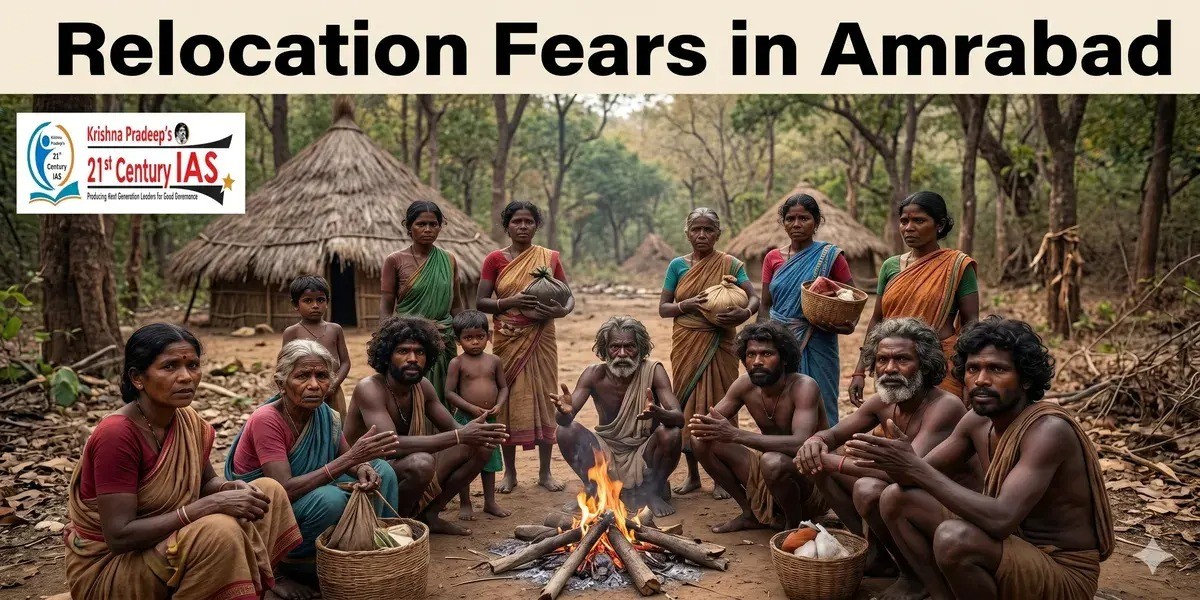
- The Chenchu tribe residing in the Amrabad Tiger Reserve have opposed relocation from core forest areas, stating that it would disrupt their livelihood, social structure, and traditional way of life.
- During the Prajavani Programme Telangana, tribal representatives from various hamlets highlighted their complete dependence on forest resources and expressed inability to survive outside the forest ecosystem.
- The Telangana State Planning Board assured that no forced eviction would take place and called for consultations, bringing focus again on the broader issue of balancing wildlife conservation with tribal rights.
About the Chenchu Tribe
The Chenchus are one of the oldest tribal communities of South India and are classified as a Particularly Vulnerable Tribal Group (PVTG), which means they are among the most socially and economically vulnerable tribal groups in India.
They are mainly found in:
- Telangana
- Andhra Pradesh
- Nallamala forest region
- Areas around Amrabad and Srisailam forests
Traditionally, the Chenchus are forest-dependent hunter-gatherers. Their economy, culture, and identity are closely linked with the forest ecosystem.
Their livelihood depends on:
- Collection of honey
- Gathering of fruits, roots, and tubers
- Minor forest produce
- Medicinal plants
- Small-scale hunting traditions
- Seasonal forest-based occupations
The forest is not only their source of income but also the centre of their social life, belief systems, and cultural identity. Forced displacement from forests therefore affects not just livelihood, but also community survival itself.
About Amrabad Tiger Reserve
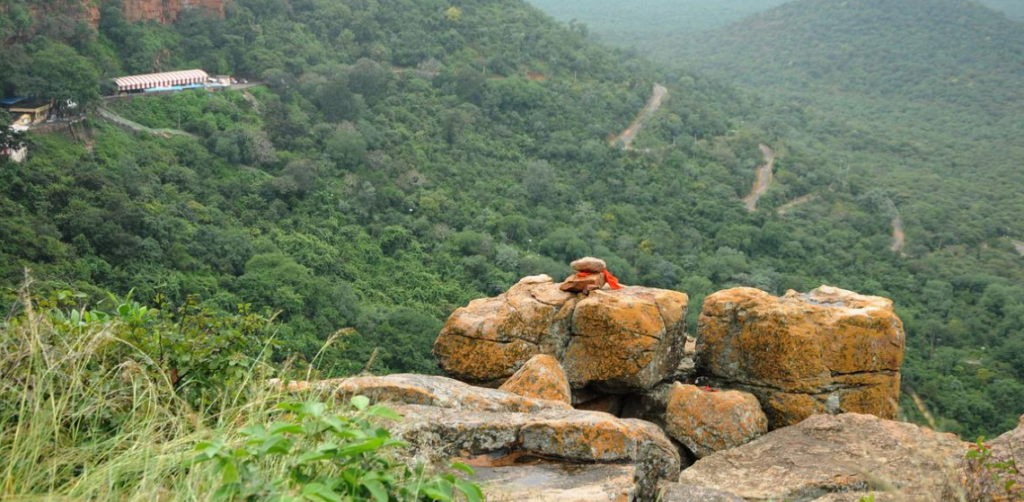
- It is one of the largest tiger reserves in India, located in the Nallamala Hills of southern Telangana, primarily spread across Nagar Kurnool and Nalgonda districts.
- The reserve was formed in 2014 after the bifurcation of Andhra Pradesh, when the northern part of the earlier Nagarjunsagar-Srisailam Tiger Reserve came under Telangana.
- It forms part of the Eastern Ghats landscape and is characterized by rugged terrain, deep valleys, plateaus, and dense dry deciduous forests.
- The area is drained by the Krishna River and its tributaries, which play a crucial role in sustaining the forest ecosystem.
- It is home to important wildlife species such as tiger, leopard, sloth bear, wild dog, deer species, and diverse flora and fauna, making it a significant biodiversity hotspot.
- The reserve is also notable for the presence of the Chenchu tribe, a Particularly Vulnerable Tribal Group (PVTG), who traditionally depend on forest resources for their livelihood.
- The region has historical significance, with ancient human habitation and cultural sites, including connections to the Nagarjunakonda Buddhist heritage region.
- It is managed under Project Tiger with a core-buffer strategy, aiming to conserve wildlife while addressing the needs of local communities.
- The reserve plays an important role in maintaining ecological balance, acting as a carbon sink, biodiversity reservoir, and watershed for the Krishna basin.
Important Features of Amrabad Tiger Reserve
- One of the largest tiger reserves in India
- Rich biodiversity and dense dry deciduous forests
- Habitat for tigers, leopards, sloth bears, deer, wild dogs, and many bird species
- Important watershed area in the Krishna river basin
- Home to forest-dwelling tribal communities, especially the Chenchus
Background of the Issue
Tiger reserves are managed with the objective of creating secure habitats for wildlife, especially tigers. For this reason, the forest department often encourages relocation of human settlements from the core area of the reserve.
The idea is that reduced human activity helps:
- Prevent habitat disturbance
- Reduce poaching risks
- Protect prey species
- Improve breeding conditions for tigers
- Maintain biodiversity and ecological balance
However, the Chenchu community argues that they have lived in these forests for generations without harming wildlife and that they should not be treated as encroachers in their own ancestral lands.
They believe that relocation would:
- Destroy their livelihood systems
- Break traditional community networks
- Create economic insecurity
- Disconnect them from cultural and spiritual traditions linked to the forest
This reflects the long-standing policy challenge of balancing conservation goals with tribal rights.
Forest Conservation and Tribal Rights
This issue represents one of the most important debates in environmental governance: whether conservation should exclude people or promote coexistence between wildlife and indigenous communities.
Conservation Perspective
Tiger reserves require strong habitat protection because:
- Tigers need large undisturbed territories
- Human interference may affect breeding and movement
- Illegal activities such as poaching must be controlled
- Habitat fragmentation weakens biodiversity protection
Under Project Tiger, the idea of creating “inviolate spaces” has often been used to justify relocation of villages from core forest zones.
Tribal Rights Perspective
For communities like the Chenchus:
- Forest is their home, not merely a resource
- Traditional knowledge helps sustainable use of forests
- Forest-based living often supports ecological balance
- Tribal identity is deeply connected to the land
Many experts argue that tribal communities should be treated as partners in conservation rather than obstacles to conservation.
This issue therefore raises an important governance question: should forest protection happen through exclusion or through community participation?
Forest Rights Act, 2006
The Scheduled Tribes and Other Traditional Forest Dwellers (Recognition of Forest Rights) Act, 2006, commonly known as the Forest Rights Act (FRA), was enacted to correct the historical injustice faced by forest-dwelling communities.
For many decades, tribal communities lived in forests without legal recognition of their traditional rights. The FRA was introduced to legally recognise those rights.
Major Provisions of the Act
The Act provides:
- Individual rights over forest land used for livelihood
- Community rights over forest resources
- Access to minor forest produce
- Grazing rights
- Rights over water bodies and traditional access routes
- Rights for habitat and cultural practices
- Recognition of traditional forest use patterns
It also recognises the role of forest communities in protecting and managing forest resources.
Protected Area Management in Tiger Reserves
- Tiger reserves in India are established under Project Tiger (1973) and are governed by the provisions of the Wildlife Protection Act, 1972, with policy oversight by the National Tiger Conservation Authority.
- Each reserve is managed through a legally notified structure consisting of a core area (Critical Tiger Habitat) and a buffer area, designed to balance strict conservation with sustainable human use.
- The core area is kept inviolate to ensure undisturbed conditions for tiger breeding and habitat preservation, where activities like commercial exploitation, grazing, and settlement expansion are highly restricted.
- The buffer area functions as a transition zone where regulated human activities are permitted, including sustainable resource use, eco-development programmes, and livelihood support for local communities.
- Management practices include habitat improvement, water conservation measures, anti-poaching operations, wildlife monitoring using modern technologies, and protection of prey base.
- Scientific management is promoted through periodic tiger estimation, biodiversity assessments, and landscape-level planning to ensure ecological connectivity between reserves.
- The rights of forest-dwelling communities are recognised under the Forest Rights Act, 2006, requiring that any displacement process must involve prior recognition of rights and consent of the Gram Sabha.
Buffer Zone
The buffer zone surrounds the core zone and acts as a transition area.
Its features include:
- Limited and regulated human use
- Support for local livelihoods
- Reduced pressure on the core zone
- Scope for coexistence of people and wildlife
This approach is meant to create balance rather than complete exclusion.
Wildlife Protection Act, 1972
- The Act provides the primary legal framework for wildlife conservation in India, extending to the entire country and aiming to protect wild animals, birds, and plants.
- The Act classifies species under six schedules (I–VI), with Schedule I and Part II of Schedule II granting the highest level of protection and strictest penalties.
- The Act empowers the government to declare protected areas such as National Parks, Wildlife Sanctuaries, Conservation Reserves, and Community Reserves.
- The Act originally permitted regulated hunting but was amended in 1991 to impose a near-complete ban on hunting of wild animals.
- The Act provides for the establishment of the National Board for Wildlife (NBWL) and State Boards for Wildlife for policy and advisory functions.
- The Act prohibits trade in wildlife and wildlife products, aligning India with international commitments like CITES.
Implications of the Issue
This issue is important because it highlights:
- Conflict between environmental conservation and livelihood security
- Need for proper implementation of the Forest Rights Act
- Importance of tribal participation in conservation decisions
- Debate over voluntary versus forced relocation
- The larger challenge of inclusive environmental governance
It also reminds policymakers that conservation cannot succeed if local communities lose trust in the system.
Challenges
Several practical and legal challenges exist:
- Balancing biodiversity protection with livelihood rights
- Delays in recognition of forest rights claims
- Conflict between forest department administration and FRA provisions
- Lack of trust regarding rehabilitation promises
- Weak participation of tribal communities in decision-making
- Administrative preference for relocation over coexistence models
These issues make implementation difficult on the ground.
Way Forward
A balanced and rights-based approach is necessary.
The following steps are important:
- Ensure full and proper implementation of the Forest Rights Act
- No forced relocation without Gram Sabha consent
- Promote coexistence-based conservation models wherever possible
- Include tribal communities as partners in forest governance
- Improve livelihood support and healthcare access for forest communities
- Ensure transparent dialogue between officials and tribal representatives
- Build trust through long-term rehabilitation planning where relocation is genuinely necessary
Conservation must be based on justice, not displacement alone.
Conclusion
The Chenchu issue in Amrabad Tiger Reserve reflects one of the most important governance challenges in India—how to protect forests without displacing the people who have historically lived within them.
Forest conservation and tribal rights should not be treated as opposing goals. Sustainable conservation becomes stronger when indigenous communities are recognised as stakeholders and protectors of biodiversity.
Protecting wildlife must go together with protecting dignity, livelihood, and constitutional rights of tribal communities.
CARE MCQ
Q.Consider the following statements regarding the Chenchu tribe:
- They are classified as a Particularly Vulnerable Tribal Group (PVTG).
- They are primarily concentrated in the Nallamala forest region.
- Their traditional livelihood is based mainly on settled agriculture.
Which of the statements given above is/are correct?
A. 1 and 2 only
B. 2 and 3 only
C. 1 and 3 only
D. 1, 2 and 3
Ans: (a)
Explanation:
- Statement 1 is correct: Chenchus are recognized as a PVTG, indicating high vulnerability and dependence on forest ecosystems.
- Statement 2 is correct: They are mainly found in the Nallamala forests across Telangana and Andhra Pradesh.
- Statement 3 is incorrect (close trap): Their traditional livelihood is hunting, gathering, and forest produce collection, not settled agriculture.
Q. Under the Forest Rights Act, 2006, which of the following correctly describes “Critical Wildlife Habitat”?
A) Any area within a tiger reserve notified by the State Government for relocation of forest dwellers
B) A protected area required to be kept inviolate, notified only after scientific assessment and recognition of forest rights
C) A forest area identified by the Gram Sabha for community conservation and sustainable use
D) Any biodiversity-rich area notified under the Biological Diversity Act, 2002
Ans: (b)
Explanation:
Under FRA, it is a part of a protected area kept inviolate for wildlife, but only after scientific evidence and completion of forest rights recognition.
Q.With reference to tiger reserves in India, consider the following statements:
- The core area is notified as Critical Tiger Habitat under the Wildlife Protection Act, 1972.
- The buffer area is intended to promote coexistence and reduce pressure on the core.
- Critical Tiger Habitat can be notified without completion of the process of recognition of forest rights.
Which of the statements given above is/are correct?
A. 1 and 2 only
B. 2 and 3 only
C. 1 and 3 only
D. 1, 2 and 3
Ans: (a)
Explanation:
- Statement 1 is correct: Core areas of tiger reserves are legally designated as Critical Tiger Habitat (CTH) under the Wildlife Protection Act, ensuring highest protection for tiger conservation.
- Statement 2 is correct: Buffer areas function as transition zones where regulated human activities and eco-development programmes are allowed to reduce pressure on the core.
- Statement 3 is incorrect (very close trap): Although CTH is notified under WLPA, the process must be consistent with safeguards, including consideration of rights under the Forest Rights Act, 2006. It cannot bypass due process related to rights recognition.
Q. Consider the following statements about National Parks in India:
Statement-I: Eravikulam National Park, known for its Nilgiri tahr, is located in the Western Ghats.
Statement-II: National Parks in India are always home to a wider variety of flora and fauna compared to Wildlife Sanctuaries.
Which of the following is correct?
(a) Both Statement-I and Statement-II are correct and Statement-II is the correct explanation for Statement-I
(b) Both Statement-I and Statement-II are correct and Statement-II is not the correct explanation for Statement-I
(c) Statement-I is correct but Statement-II is incorrect
(d) Statement-I is incorrect but Statement-II is correct
Ans: (c)
Explanation:
Statement-I is correct: Eravikulam National Park is located in the state of Kerala in the Western Ghats, a globally recognized biodiversity hotspot. It is especially famous for being the largest natural habitat of the Nilgiri tahr, an endangered mountain ungulate endemic to the Western Ghats. The park is also known for the blooming of the rare Neelakurinji flower, which blossoms once in twelve years. Its high-altitude grasslands and shola forests make it ecologically unique. Therefore, the statement is factually correct.
Statement-II is incorrect: This statement is incorrect because the distinction between a National Park and a Wildlife Sanctuary lies mainly in the level of legal protection and human activity restrictions, not necessarily in biodiversity richness. National Parks usually have stricter protection, with greater restrictions on human interference such as grazing or private rights. However, this does not mean they are always home to a wider variety of flora and fauna than Wildlife Sanctuaries. Many Wildlife Sanctuaries also possess extremely rich biodiversity and can support equally significant or even greater ecological diversity depending on location and ecosystem type. Hence, the word “always” makes the statement incorrect.
TSPSC MAINS QUESTION
Q.“Forest conservation and tribal rights must be balanced through participatory governance rather than forced displacement.”
Discuss this statement in the context of the Chenchu tribe issue in Amrabad Tiger Reserve.
(250 Words)
FAQs
Q1. Why are Chenchu tribals important in Telangana current affairs?
The Chenchus are a Particularly Vulnerable Tribal Group (PVTG) living inside the Nallamala forests and Amrabad Tiger Reserve. Their issue is important because it involves tribal rights, forest governance, and conservation policies.
Q2. What is Amrabad Tiger Reserve famous for?
Amrabad Tiger Reserve is known for tiger conservation, rich biodiversity, dry deciduous forests, and the presence of Chenchu tribal communities. It is one of the largest tiger reserves in India.
Q3. What is the main issue in this news?
The main issue is the opposition by Chenchu tribals to relocation from the core area of the tiger reserve, where they fear loss of livelihood, identity, and traditional rights.
Q4. Which law protects the rights of forest-dwelling tribes?
The Forest Rights Act, 2006 protects the rights of Scheduled Tribes and other traditional forest dwellers over forest land and resources.
Q5. Can tribal communities be forcibly relocated from tiger reserves?
No. Relocation can only happen after recognition of rights, informed consent of the Gram Sabha, and voluntary rehabilitation. Forced eviction is against the legal safeguards provided under the Forest Rights Act.