Table of Contents
Relevance: GS Paper III – Agriculture | Food Security | Fertilizer Subsidy | Energy Security
For Prelims:
Urea, DAP, LNG, Strait of Hormuz, GCC, Ammonia, Sulphur, Single Super Phosphate (SSP), Triple Super Phosphate (TSP), Nano Urea, Nano DAP, Indian Potash Limited (IPL), Fertilizer Subsidy
For Mains:
fertilizer security, food security, supply chain disruption, input inflation, maritime chokepoints, nutrient imbalance, subsidy burden, agricultural resilience, import dependence, strategic diversification
Why in News?
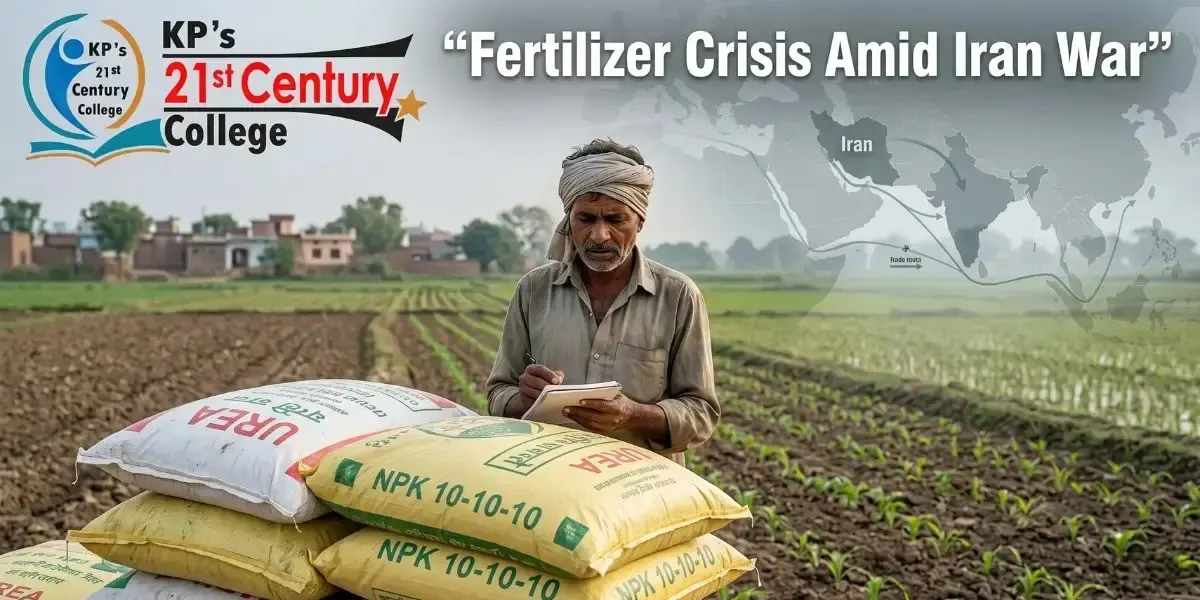
The ongoing US–Israel vs. Iran conflict and the closure of the Strait of Hormuz since February 2026 have triggered a major disruption in global fertilizer trade.
India, which depends heavily on imports of urea, DAP, ammonia, sulphur, and LNG from the Gulf region, is facing a serious supply shock ahead of the Kharif sowing season.
Fertilizer prices have surged sharply, domestic production has slowed, and concerns are rising over the availability of fertilizers for both Kharif 2026 and the upcoming Rabi season.
What is the Fertilizer Challenge?
- The fertilizer challenge refers to India’s vulnerability to disruptions in fertilizer imports and energy supplies caused by geopolitical tensions in West Asia.
- The Persian Gulf is the main route for finished fertilizers as well as Liquefied Natural Gas (LNG), which is used as feedstock for domestic urea production.
- When maritime routes such as the Strait of Hormuz are disrupted, India faces both higher import prices and reduced domestic production.
- This directly affects agricultural productivity, food prices, and government subsidy expenditure.
India’s Dependence on Fertilizers
- India annually consumes nearly 39–40 million tonnes of urea, making it the most important fertilizer for Indian agriculture.
- Urea is critical for staple crops such as rice, wheat, maize, and sugarcane because it provides nitrogen, which is essential for plant growth.
- The Green Revolution model of Indian agriculture is highly fertilizer-intensive, and any disruption in fertilizer supply directly affects crop yields and food security.
- India also imports large quantities of DAP (Di-Ammonium Phosphate), MOP (Muriate of Potash), sulphur, and ammonia for balanced nutrient supply.
- Heavy subsidy support for urea has led to overuse of nitrogen and an unhealthy NPK imbalance, making the agricultural system excessively dependent on cheap urea.
How the Iran War Affects India’s Fertilizer Supply
Strait of Hormuz as a Critical Chokepoint
- The Strait of Hormuz is about 33 km wide at its narrowest point, with shipping lanes only ~3 km wide in each direction.
- It carries around 17–20 million barrels of oil per day, nearly one-fifth of global petroleum consumption.
- Major exporters using this route include Saudi Arabia, Iraq, United Arab Emirates, Kuwait, and Iran.
- It is the only sea passage connecting the Persian Gulf with the open ocean through the Gulf of Oman.
- It is bordered by Iran to the north and Oman (Musandam Peninsula) to the south.
- A significant share of global LNG exports, especially from Qatar, also passes through this strait.
LNG Supply Disruption
- India’s domestic urea plants use natural gas as the main feedstock, and much of this LNG comes from Gulf countries such as Qatar and Oman.
- Because LNG shipments were disrupted, domestic urea production dropped from the normal 2.5 million tonnes per month to nearly 1.5 million tonnes in March 2026.
- This means India is facing both import shortages and reduced domestic production simultaneously.
Raw Material Shortage
- India also depends on Gulf countries for raw materials such as ammonia and sulphur used in DAP and other fertilizer manufacturing.
- Their prices have sharply increased, with ammonia and sulphur crossing $900 per tonne.
- This raises production costs even when final fertilizers are produced domestically.
Fertilizer Import Dependence and Supply Shock
- The Gulf Cooperation Council (GCC) countries including Oman, Qatar, Saudi Arabia, UAE, and Bahrain account for nearly 40% of India’s urea imports and over 60% of its LNG imports.
- For Kharif 2026, India requires nearly 19.4 million tonnes of urea, but opening stocks were only 5.5 million tonnes.
- Urea import bids increased dramatically from $510 per tonne in February to nearly $950 per tonne in April 2026 due to the Hormuz blockade.
- This sharp rise reflects panic buying, shipping risks, and severe supply uncertainty.
- Even if Kharif requirements are somehow managed, the Rabi season remains highly vulnerable if supply lines are not restored.
Government Response and Immediate Measures
Emergency Tendering
- Indian Potash Limited (IPL) issued a large tender for 2.5 million tonnes of urea in April 2026 to secure supplies before peak sowing begins.
- This is aimed at preventing shortages during Kharif operations.
Diversification of Import Sources
- India has started shifting procurement of ammonia and DAP toward countries such as Morocco, Jordan, Indonesia, and Malaysia to reduce excessive Gulf dependence.
- This diversification helps reduce strategic vulnerability.
Extension of Import Timelines
- The government extended loading deadlines for fertilizer imports because many vessels were delayed near conflict zones and maritime chokepoints.
- This prevents cancellation of import contracts.
Promoting Alternatives
- Farmers are being encouraged to use Single Super Phosphate (SSP) and Triple Super Phosphate (TSP) as substitutes for scarce DAP.
- This helps reduce pressure on imported phosphatic fertilizers.
Major Challenges Associated with the Crisis
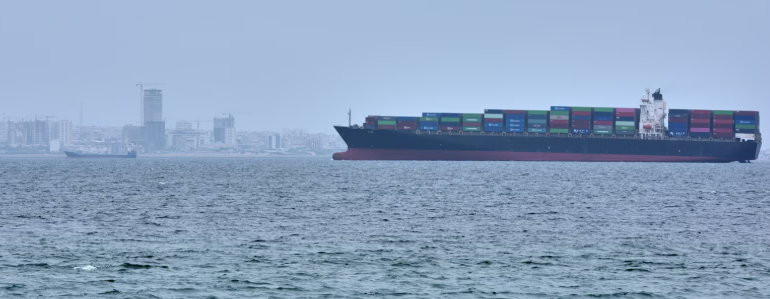
- The biggest challenge is that the Strait of Hormuz is a physical maritime chokepoint, and ships cannot move if the route remains blocked.
- Even high prices cannot solve this problem immediately.
- The sharp increase in fertilizer prices creates a massive rise in the fertilizer subsidy burden for the Government of India, putting pressure on fiscal stability.
- War-related insurance premiums and freight costs have increased sharply, and many shipping companies are reluctant to enter the region.
- Domestic fertilizer plants are operating only at partial capacity because LNG shortages reduce production efficiency.
- Shortages also create risks of hoarding, black marketing, and unequal access, especially harming small and marginal farmers.
Significance for Indian Agriculture
- Fertilizer availability directly determines crop productivity, especially for food grains such as rice and wheat.
- Any shortage during sowing seasons can reduce yields, create food inflation, and weaken national food security.
- The crisis also highlights how India’s food security is closely linked to global energy security because fertilizers depend heavily on imported gas and raw materials.
- The issue affects fiscal management because fertilizer subsidies are one of the largest agricultural support expenditures of the Union Government.
- This crisis is therefore not only an agricultural issue but also a strategic and economic challenge.
Way Forward
Fertilizer fortification should be expanded by coating urea and DAP with micronutrients such as zinc and boron so that less fertilizer produces better yields.
Nano Urea and Nano DAP should be rapidly scaled up because foliar spray reduces dependence on bulk fertilizer imports and improves nutrient-use efficiency.
Biostimulants such as microbial inputs and seaweed extracts should be promoted to reduce chemical fertilizer dependency.
Phosphate Solubilizing Bacteria should be used to unlock phosphorus already present in the soil and reduce immediate DAP demand.
Conclusion
The Iran war has exposed the fragile connection between India’s energy security and food security.
A conflict in West Asia can directly influence fertilizer availability for Indian farmers and therefore determine crop output and food prices.
While emergency imports may help manage the Kharif season, the real long-term solution lies in nutrient-efficient fertilizers, domestic resilience, and strategic diversification.
Ensuring fertilizer security is essential for protecting both farmers and national food stability.
CARE MCQ
Q. With reference to India’s fertilizer security, consider the following statements:
- Domestic urea production in India depends significantly on LNG as feedstock.
- The Strait of Hormuz is a critical route for fertilizer imports from Gulf countries.
- Single Super Phosphate is a substitute for potash fertilizers.
Which of the statements given above are correct?
A. 1 and 2 only
B. 2 and 3 only
C. 1 and 3 only
D. 1, 2 and 3
Ans: (a)
Explanation
Statement 1 is correct : domestic urea production depends heavily on natural gas and LNG as feedstock.
Statement 2 is correct : a major share of fertilizer and LNG imports from Gulf countries passes through the Strait of Hormuz.
Statement 3 is incorrect : Single Super Phosphate is a phosphatic fertilizer, not a potash fertilizer.
Q. Consider the following statements regarding the geopolitical significance of West Asia:
- West Asia holds more than 60% of the world’s proven oil reserves, making it the primary global source for hydrocarbon fuels.
- The Suez Canal, a critical maritime trade route, is located entirely within Egypt and serves as a major chokepoint for trade between Asia and Europe.
- The ongoing conflicts and geopolitical rivalries in West Asia are primarily driven by the region’s abundant freshwater resources and disputes over water sharing.
- The region’s strategic location at the crossroads of Asia, Africa, and Europe facilitates major air and sea trade routes, influencing global commerce.
How many of the statements given above are correct?
(a) Only one
(b) Only two
(c) Only three
(d) None
Ans: (b)
Explanation:
Statement 1 is incorrect: West Asia is one of the most important hydrocarbon-rich regions in the world and plays a central role in global energy security. However, the claim that it holds more than 60% of the world’s proven oil reserves is not accurate. The region accounts for roughly 48–50% of global proven oil reserves, although exact figures may vary with estimates. Countries such as Saudi Arabia, Iraq, Iran, Kuwait, and the UAE dominate global petroleum reserves, but the figure does not exceed 60 percent. Therefore, the statement is factually incorrect due to exaggeration.
Statement 2 is correct: The Suez Canal is an artificial sea-level waterway located entirely within the sovereign territory of Egypt. It connects the Mediterranean Sea with the Red Sea, providing the shortest maritime route between Europe and Asia without requiring ships to travel around the Cape of Good Hope. It is one of the world’s most important maritime chokepoints and handles a significant portion of global trade, particularly oil, LNG, and container shipping. Its strategic significance makes it central to global trade and geopolitics.
Statement 3 is incorrect: West Asia is actually a region of water scarcity, not abundant freshwater resources. While disputes over rivers such as the Tigris, Euphrates, and Jordan do exist, the primary drivers of geopolitical rivalry in the region are factors such as oil and gas resources, sectarian tensions (especially Sunni–Shia rivalry), strategic location, historical conflicts, external intervention, and regional power competition. Freshwater issues are important but are not the principal cause of most major conflicts across West Asia. Hence, the statement is incorrect both in describing the region as water-abundant and in identifying water as the primary driver of conflict.
Statement 4 is correct: West Asia occupies a highly strategic position at the junction of Asia, Africa, and Europe, making it a geopolitical crossroads. This location controls major trade routes, including the Suez Canal, Strait of Hormuz, and Bab-el-Mandeb Strait, all of which are crucial for the movement of goods and energy supplies. It also serves as an important aviation and logistics hub linking Europe with Asia and Africa. Because of this central location, developments in West Asia have a direct impact on global trade, shipping costs, and international commerce.
Q. With reference to Nano Urea, consider the following statements:
- Nano Urea is a liquid fertilizer developed to improve nitrogen use efficiency in crops.
- It helps reduce the dependence on conventional urea by improving nutrient absorption.
- Nano Urea provides nitrogen to crops in the same quantity and manner as conventional granular urea.
Which of the statements given above are correct?
(a) 1 and 2 only
(b) 2 and 3 only
(c) 1 and 3 only
(d) 1, 2 and 3
Ans: (a)
Explanation:
Statement 1 is correct: Nano Urea is a liquid fertilizer developed using nanotechnology to improve nitrogen delivery to plants. Its nano-sized particles enhance absorption efficiency and reduce nutrient losses, making fertilizer application more precise and effective compared to conventional methods.
Statement 2 is correct: Nano Urea improves nitrogen use efficiency and helps reduce excessive dependence on conventional urea. Since traditional urea often leads to nitrogen loss through volatilization, runoff, and leaching, Nano Urea supports better nutrient uptake and contributes to lower fertilizer consumption and environmental stress.
Statement 3 is incorrect: Nano Urea does not provide nitrogen in the same quantity and through the same mechanism as conventional granular urea. It works through targeted absorption and higher efficiency rather than bulk nutrient application. It is designed to supplement fertilizer use through improved efficiency, not by matching conventional urea in identical form and quantity.
FAQs
Q1. Why is urea so important for Indian agriculture?
Urea provides nitrogen, which is essential for plant growth and is critical for staple crops such as rice and wheat.
Q2. Why is the Strait of Hormuz important for India?
It is a major maritime route through which a large share of India’s crude oil, LNG, and fertilizer imports from the Gulf pass.
Q3. What is Nano Urea?
Nano Urea is a liquid fertilizer that delivers nitrogen more efficiently through foliar spray and reduces dependence on bulk imported urea.
Q4. Why is DAP important?
DAP provides phosphorus and nitrogen and is essential for root development and balanced crop nutrition.
Q5. What is the major long-term solution to fertilizer vulnerability?
Reducing excessive dependence on imports through nutrient-efficient farming, domestic alternatives, diversification of suppliers, and biological fertilizers.