India’s AI Governance Guidelines – Regulating Artificial Intelligence in India
Table of Contents
Source: The Hindu , The Indian Express
Relevance: Quick Facts for Prelims, GS Paper II & III – Governance: Ethical regulation of emerging technologies, Science & Tech: Responsible use of Artificial Intelligence and digital sovereignty.
Key Concepts for Prelims and Mains:
For Prelims:
- Do No Harm Principle
- India AI Mission (₹10,370 crore)
- AI Governance Group (AIGG)
- AI Safety Institute (AISI)
- Digital Public Infrastructure (DPI)
- AI Content Labelling Rules 2025
- AI Kosh Platform
- DPDP Act, 2023
For Mains:
- AI Ethics and Accountability
- Indigenous LLM Development
- Risk Mitigation and Algorithmic Transparency
- Data Sovereignty & Inclusive Innovation
Why in News?
- The Ministry of Electronics and Information Technology (MeitY) released the India AI Governance Guidelines on November 5, 2025, outlining India’s roadmap for regulating and promoting Artificial Intelligence (AI).
- The guidelines precede the India–AI Impact Summit 2026, which India will host as the first-ever Global South AI Summit.
- The document proposes a “Do No Harm” approach — balancing innovation with accountability — while ensuring AI supports inclusive growth, digital sovereignty, and safety.
India–AI Impact Summit 2026
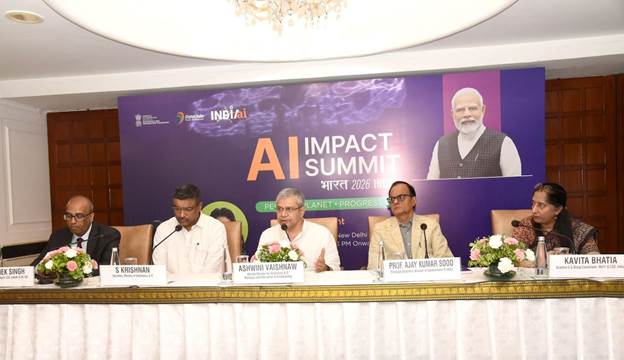
- Dates: 19–20 February 2026
- Venue: Bharat Mandapam, New Delhi
- Posted by: PIB Delhi (18 September 2025)
- Ministry of Electronics & Information Technology (MeitY)
- Hosted for the first time by a Global South nation (India)
- Guiding Three Sutras: People – Planet – Progress
- Vision: Showcasing the transformative role of AI in inclusive development, sustainability, and global collaboration.
- Human Capital – Skilling, reskilling, and workforce transformation
- Inclusion for Social Empowerment – Multilingual, gender-balanced, accessible AI
- Safe & Trusted AI – Safety testing, transparency, and governance tools
- Resilience, Innovation & Efficiency – Resource-efficient, low-cost AI systems
- Science – Responsible AI for scientific discovery
- Democratizing AI Resources – Equal access to data, compute, and models
- AI for Economic & Social Good – Public sector applications and collaboration
- UDAAN – Global AI Pitch Fest: Showcasing global and Indian AI startups
- YuvaAI Innovation Challenge: Youth-led AI innovation drive
- AI by HER: Women-led AI innovation initiative
- Global Innovation Challenge for All: Inclusive global AI problem-solving
- Research Symposium: Global South collaboration on AI research
- AI Expo: 300+ exhibitors from 30+ countries
- Avatar AI – Domain models (agriculture, healthcare, governance)
- IIT Bombay – BharatGen – Multilingual & multimodal open-source models
- Fractal Analytics – India’s first reasoning AI model (STEM, medicine)
- Tech Mahindra Maker’s Lab – Orion AI – Indic language agentic platform
- Zenteiq – BrahmAI – Science & industry-driven multimodal AI
- GenLoop – Yukti, Varta, Kavach – 22-language small language models
- Intellihealth – Brain–computer interface & EEG analysis model
- Shodh AI – AI-driven materials discovery
- 30 India AI Data & AI Labs launched (first wave of 570 labs)
- India AI Fellowship Program: 13,500 scholarships (UG–PG–PhD level)
- Symbol: Ashoka Chakra
- Represents ethical governance, justice, and inclusivity, with radiating neural networks symbolizing AI’s transformative reach across domains.
Background:
- India is the second-largest user of Large Language Models (LLMs) after the U.S.
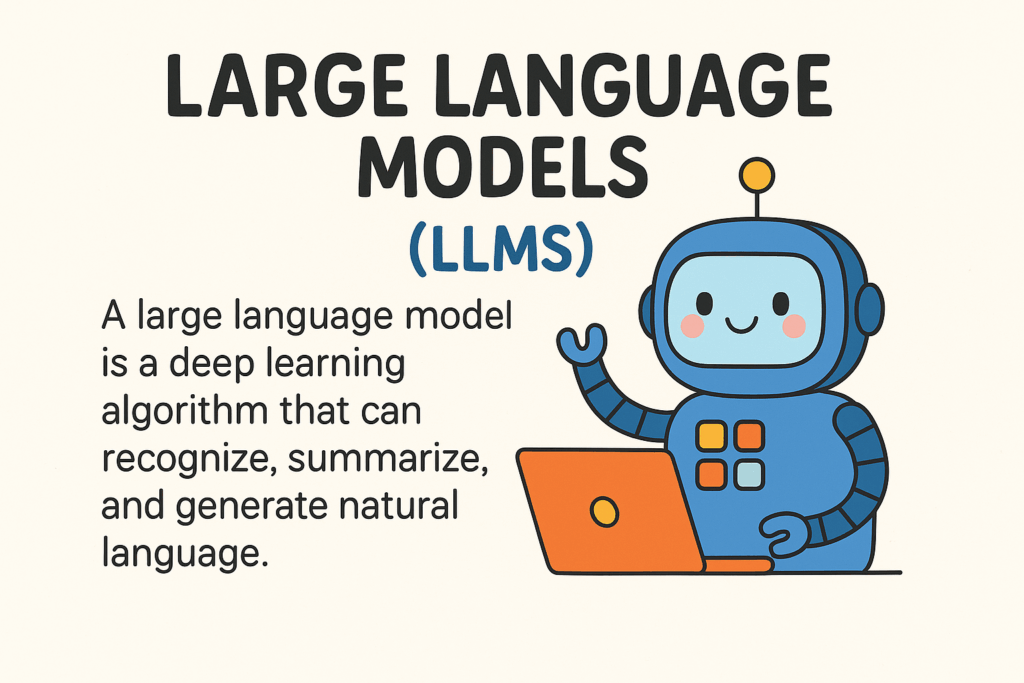
Large Language Models (LLMs)
Large Language Models (LLMs) are advanced artificial intelligence systems trained on massive text datasets to understand, generate, and process human-like language.
Examples:
- GPT-4 / GPT-5 by OpenAI
- Gemini by Google
Claude by Anthropic
- The growing influence of Generative AI (GenAI) — such as ChatGPT, Gemini, and DeepSeek — has raised ethical, legal, and privacy challenges, especially in governance, media, and education.
- MeitY constituted a high-level committee under Prof. Balaraman Ravindran (IIT Madras, Centre for Responsible AI) to draft India’s governance framework.
- The guidelines reflect India’s commitment to trustworthy, human-centric AI, aligning innovation with public safety and accountability.
Objectives of the AI Governance Guidelines:
- To create a consistent, India-specific regulatory framework for AI tools and developers.
- To promote responsible innovation while mitigating risks of bias, misinformation, and deepfakes.
- To ensure inter-ministerial coordination, institutional governance, and sectoral adaptation of AI ethics.
- To develop culturally representative and language-inclusive AI systems that reflect Indian diversity.
Key Directions and Institutional Framework:
1.Guiding Principles
- Human-centric and Inclusive AI: Ensure AI benefits citizens equitably.
- Accountability and Transparency: Define responsibility and traceability in AI deployment.
- Understandability: Promote explainable AI systems for user trust.
- Fairness and Safety: Prevent discrimination and harmful outcomes.
- Do No Harm Principle: Prioritise safety and ethical impact over rapid deployment.
2. Institutional Mechanisms
- AI Governance Group (AIGG): Apex inter-ministerial body to coordinate AI policy, regulation, and implementation.
- AI Safety Institute (AISI): A virtual hub under the India AI Mission to monitor AI safety and research risk mitigation.
- Technology & Policy Expert Committee (TPEC): Sectoral advisory group with technical, legal, and ethical experts.
- Role of Regulators: RBI, NITI Aayog, and Bureau of Indian Standards to issue sector-specific AI safety guidelines.
3. Core Policy Pillars
A. Infrastructure and Access
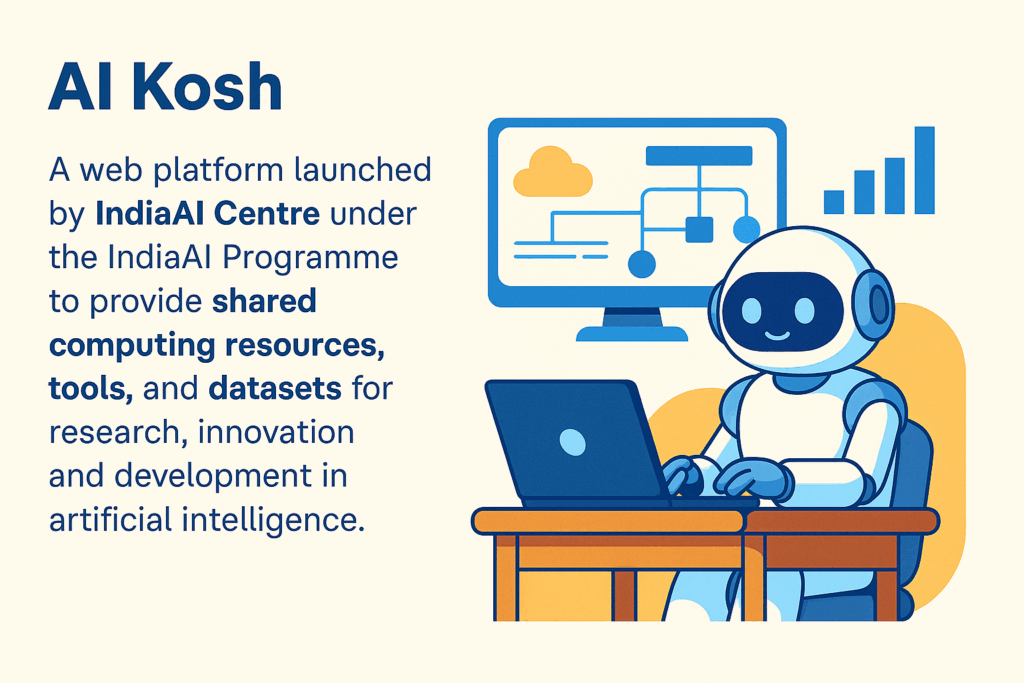
- Expand access to computing resources (GPUs) via AI Kosh platform.
- Integrate AI with Digital Public Infrastructure (DPI) — Aadhaar, UPI, Digi Locker.
- Promote public–private investment, tax rebates, and AI-linked MSME credit.
B. Policy and Regulation
- India will follow an agile, sector-specific regulatory approach, leveraging:
Information Technology (IT) Act, 2000
Enacted: 17 October 2000
Administered by: Ministry of Electronics and Information Technology (MeitY)
Objective:
- To provide a legal framework for electronic governance and to regulate cyber activities such as digital signatures, e-commerce, and cybercrimes in India.
Key Provisions:
- Legal recognition of electronic records and digital signatures.
- Defines cyber offences like hacking, identity theft, phishing, cyberstalking, and data theft.
- Section 66A (now struck down) – previously dealt with offensive messages via communication services.
- Adjudicating Officers & Cyber Appellate Tribunal established to handle disputes.
Amendment 2008: Introduced concepts of electronic signatures, data protection, and intermediary liability (platforms must remove unlawful content)
Digital Personal Data Protection (DPDP) Act, 2023
Enacted: August 2023
Administered by: Ministry of Electronics and Information Technology (MeitY)
Objective:
To safeguard individual privacy by regulating the processing of personal data in digital form while ensuring lawful data use by organisations.
Key Features:
- Applies to: Both Indian and foreign entities processing data within India.
- Data Fiduciary: The entity determining the purpose and means of processing personal data.
- Data Principal: The individual whose data is being processed.
- Consent-based Processing: Personal data to be processed only with explicit consent of the individual.
- Rights of Individuals: Right to access, correction, erasure, and grievance redressal.
- Penalties: Heavy fines up to ₹250 crore for data breaches or non-compliance.
- Exemptions: For national security, research, and prevention of offences.
- Data Protection Board of India: Established as an adjudicatory body to enforce the Act.
- No standalone AI law yet; targeted amendments to address:
- Liability and accountability gaps
- Copyright and text/data mining issues
- AI content authentication and deepfake detection
- Encourages international cooperation for AI standards harmonisation.
C. Risk Mitigation
- Introduces an India-specific AI Risk Assessment Framework for evaluating harm and bias.
- Establishes a National AI Incident Database for transparency and reporting of AI-related harms.
- Encourages techno-legal safeguards, privacy-by-design, and voluntary codes of conduct.
D. Accountability and Governance
- Adopts a graded liability regime based on function, risk, and control.
- Mandates transparency reports, grievance redressal, and self-certification by AI developers.
- Calls for cross-ministry cooperation to ensure agile response to emerging AI challenges.
E. Capacity Building and Skill Development
- Focus on AI literacy and reskilling of citizens, bureaucrats, and law enforcement.
- Expands skilling through the India AI Mission (₹10,370 crore) across smaller cities.
- Encourages academic–industry collaboration for indigenous LLMs and AI research.
4. Intellectual Property and AI Ethics
- Recommends updating India’s Copyright Act to address ownership and liability for AI-generated content.
- Emphasises fair use, transparency in training data, and model accountability.
- Calls for use of Indian language datasets to develop culturally contextual AI systems.
5. AI Content Labelling and Deepfake Rules
- As per proposed IT Rules amendments (2025):
- Social media platforms must label synthetically generated content.
- Platforms must deploy automated verification mechanisms for user-declared AI content.
- Failure to comply could result in loss of intermediary immunity (IT Act, Section 79).
- Aim: Combat misinformation, deepfakes, and protect public trust online.
6. Data Privacy and Inference Concerns
- Debate within government over foreign AI tools like ChatGPT and DeepSeek in official use.
- Inference Risk: AI systems can deduce user intent, role, and strategic patterns from prompts.
- Finance Ministry Directive (Feb 2025): Prohibited use of foreign GenAI on official devices.
- Push toward indigenous LLMs under the India AI Mission to ensure data sovereignty.
Significance of the Guidelines:
- Establishes a blueprint for AI governance in a developing democracy.
- Balances innovation with accountability and growth with safety.
- Strengthens India’s position as a responsible global AI player.
- Promotes trustworthy, human-centric, and culturally inclusive AI aligned with SDG goals.
- Enhances national security, data sovereignty, and digital ethics.
Way Forward:
- Operationalise AIGG, TPEC, and AISI with defined mandates.
- Ensure real-time AI audits, algorithmic impact assessments, and periodic review of models.
- Launch AI Awareness Mission for safe public adoption.
- Promote open-access datasets and publicly accountable AI research.
- Build global AI partnerships with the EU, US, and Global South.
- Continue updating legal frameworks to reflect evolving technological risks.
Conclusion:
India’s AI Governance Guidelines (2025) mark a transformative step in ethical tech governance — blending regulatory foresight with innovation freedom.
By prioritising safety, inclusivity, and accountability, India is shaping a “Responsible AI for Bharat” model — balancing technological ambition with democratic responsibility, setting a precedent for the Global South.
UPSC PYQ
1.Q. With the present state of development, Artificial Intelligence can effectively do which of the following? (2020)
- Bring down electricity consumption in industrial units
- Create meaningful short stories and songs
- Disease diagnosis
- Text-to-Speech Conversion
- Wireless transmission of electrical energy
Select the correct answer using the code given below:
(a) 1, 2, 3 and 5 only
(b) 1, 3 and 4 only
(c) 2, 4 and 5 only
(d) 1, 2, 3, 4 and 5
Ans: (b)
2. Q. The terms ‘WannaCry, Petya and Eternal Blue’ sometimes mentioned in the news recently are related to (2018)
(a) Exoplanets
(b) Cryptocurrency
(c) Cyber-attacks
(d) Mini satellitesAns: (c)
CARE MCQ
1Q . The India AI Governance Guidelines released in 2025 are based on which guiding principle?
a) Regulate First, Innovate Later
(b) Do No Harm
(c) Zero Regulation, Maximum Innovation
(d) AI for Administrative Control
Answer: (b) Do No Harm
Explanation:
The 2025 AI Governance Guidelines issued by MeitY follow the “Do No Harm” principle, ensuring that innovation in AI remains human-centric, ethically grounded, and aligned with India’s inclusive development goals.