Why in News?
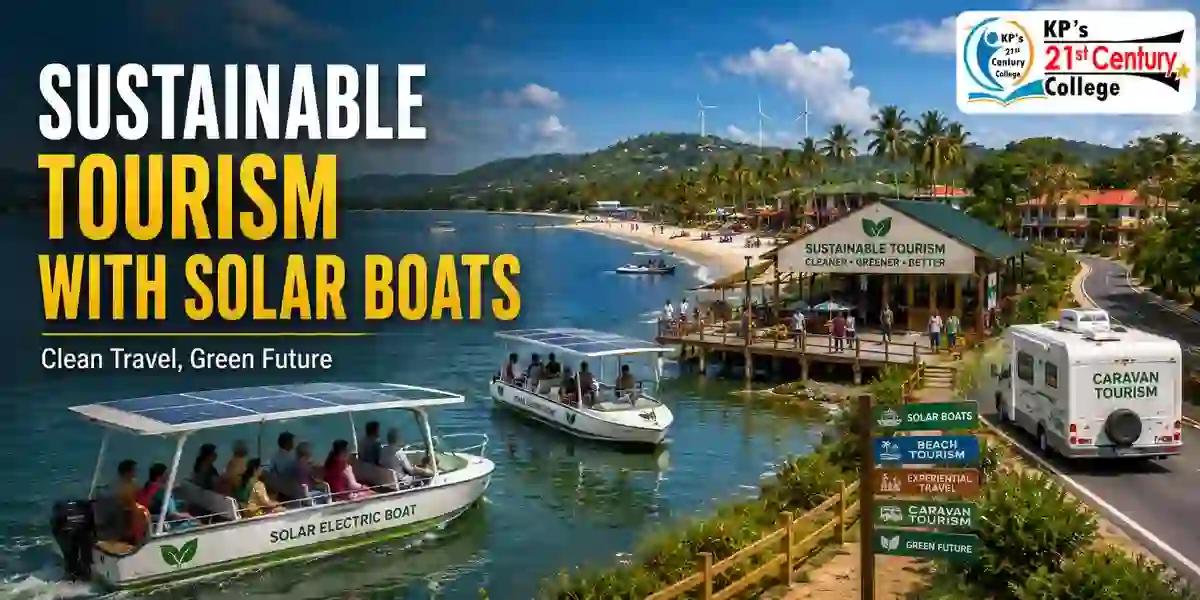
The Andhra Pradesh Tourism Development Corporation (APTDC) has announced plans to introduce solar-powered and electric boats at tourist destinations across the State in a phased manner.
The proposal formed part of a wider strategy to expand boating activities, promote tourism investment through the Public-Private Partnership model, improve hospitality services and develop caravan, beach and experiential tourism.
What has APTDC Proposed?
APTDC plans to strengthen Andhra Pradesh’s tourism sector through a combination of sustainable transport, infrastructure development and private investment.
The major proposals include:
- Introducing solar-powered and electric boats
- Expanding boating activities at tourist destinations
- Promoting tourism projects through the PPP model
- Developing caravan tourism
- Strengthening beach tourism
- Expanding experiential tourism
- Improving food quality and variety at APTDC hotels
- Attracting investment into new tourism projects
- Upgrading tourism infrastructure
The proposals reflect an attempt to move from conventional sightseeing towards diversified and experience-based tourism.
Solar-Powered and Electric Boats
The introduction of solar-powered and electric boats is aimed at reducing dependence on conventional fuel-based vessels.
Solar-powered boats:
- These vessels use solar energy for propulsion or battery charging, thereby lowering fuel consumption and operating emissions.
Electric boats:
- Electric boats use battery-powered motors and produce less noise and local air pollution than diesel boats.
Phased implementation:
- APTDC plans to introduce these boats gradually across suitable tourist destinations rather than implementing them simultaneously throughout the State.
- This approach allows the corporation to assess technical feasibility, tourist response and maintenance requirements before wider expansion.
Expansion of Boating Tourism
Boating is an important component of tourism in coastal, riverine, reservoir and lake destinations.
Expanding boating services can:
- Increase tourist engagement
- Extend visitor stay at destinations
- Generate local employment
- Support food, transport and hospitality businesses
- Improve the commercial viability of lesser-known tourist centres
However, expansion must be linked with safety standards, carrying-capacity assessments and environmental safeguards.
Promotion of Tourism through PPP Model
APTDC has decided to promote tourism investment through the Public-Private Partnership model.
Under this model, government agencies and private investors share responsibilities in financing, developing, operating or maintaining tourism infrastructure.
Potential advantages
- Mobilisation of private capital
- Faster infrastructure creation
- Professional management
- Better service quality
- Innovation in tourism products
- Reduced fiscal burden on the State
Need for safeguards
PPP projects must have clear agreements concerning:
- Pricing
- Public access
- Environmental protection
- Revenue sharing
- Maintenance standards
- Land use
- Accountability
The model should supplement public investment without reducing affordability or local community access.
Caravan Tourism
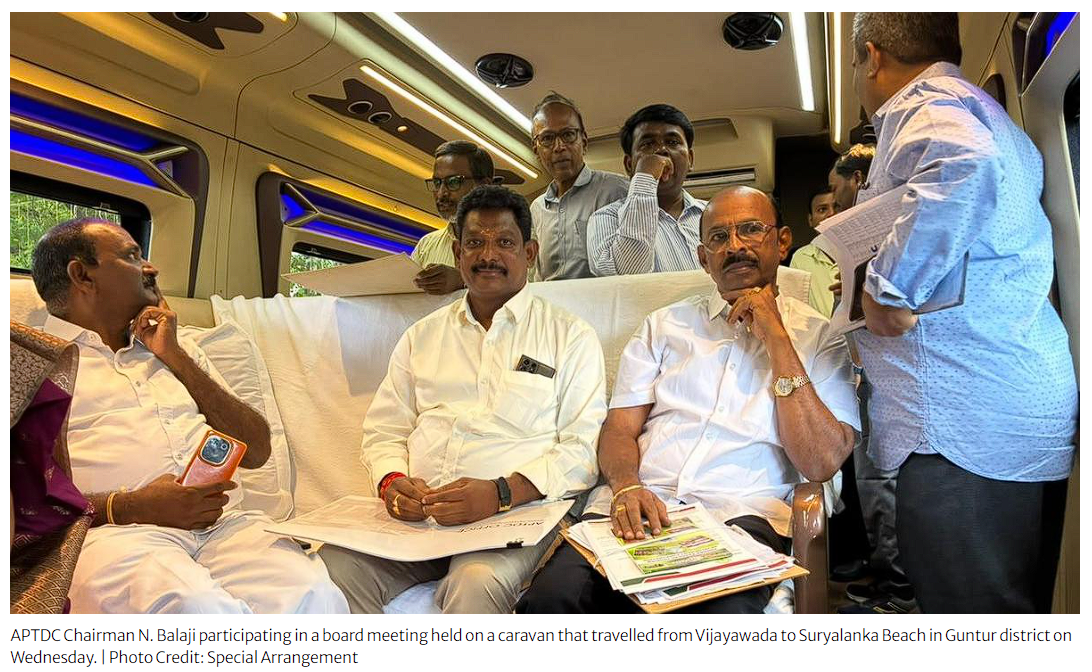
APTDC held its board meeting aboard a caravan travelling from Vijayawada to Suryalanka Beach, highlighting the potential of caravan tourism.
Caravan tourism allows travellers to combine transport, accommodation and recreation in a mobile unit.
It can help promote:
- Road-based tourism circuits
- Remote and rural destinations
- Flexible itineraries
- Long-duration travel
- Nature and adventure tourism
For successful implementation, the State will require designated caravan parks with:
- Parking facilities
- Water supply
- Electricity
- Waste disposal
- Security
- Sanitation
- Digital connectivity
Without such supporting infrastructure, caravan tourism may remain limited to demonstration projects.
Beach and Experiential Tourism
Beach tourism
Andhra Pradesh has a long coastline and several destinations with potential for recreation, water sports and hospitality development.
The focus on beach tourism can support:
- Coastal tourism circuits
- Resorts and accommodation
- Water-based recreation
- Local seafood and handicrafts
- Cultural tourism
- Employment in coastal communities
Experiential tourism
Experiential tourism emphasises active participation rather than passive sightseeing.
It may include:
- Village stays
- Local cuisine
- Handicraft workshops
- Nature trails
- Cultural performances
- Agricultural experiences
- Boating and adventure activities
Such tourism can distribute economic benefits beyond major cities and established tourist centres.
Strengthening APTDC Hospitality Services
APTDC also plans to improve the range and quality of food available at its hotels and resorts.
Better hospitality services are important because tourist satisfaction depends not only on the destination but also on:
- Food quality
- Hygiene
- Accommodation
- Staff behaviour
- Safety
- Local transport
- Booking facilities
Introducing regional cuisine and standardised quality controls can improve the identity and competitiveness of APTDC properties.
Conclusion
APTDC’s proposal to introduce solar-powered and electric boats reflects a shift towards sustainable and experience-oriented tourism in Andhra Pradesh.
The wider focus on PPP investment, caravan tourism, beach development and improved hospitality can generate employment and strengthen regional economies. Its success, however, will depend on safety, environmental protection, transparent partnerships and meaningful participation of local communities.