Why in News?
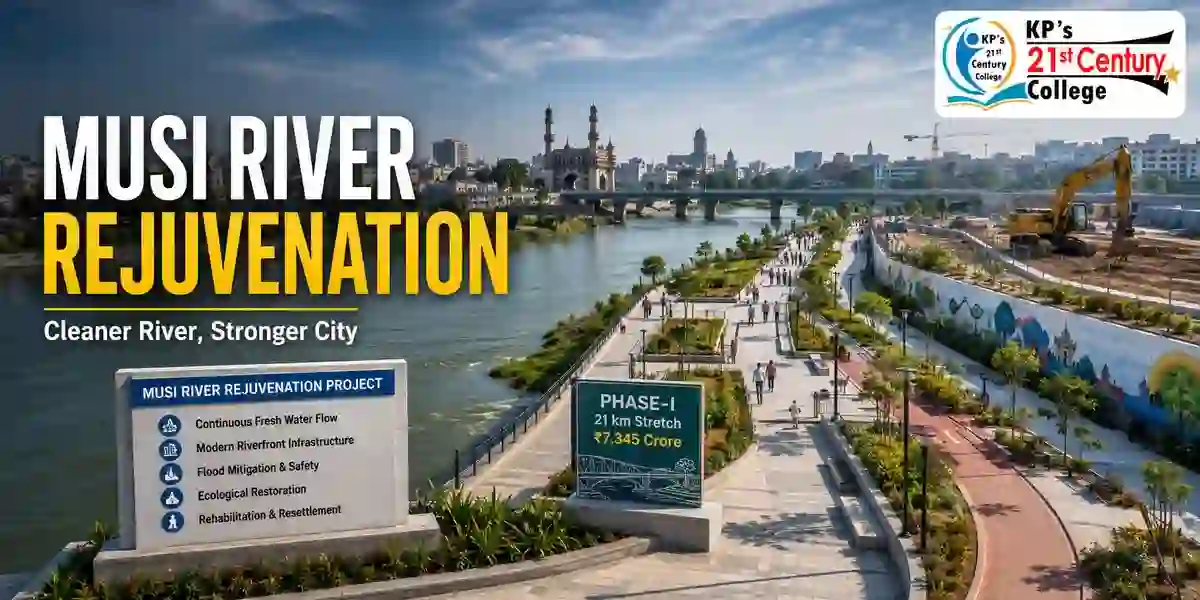
The Telangana Cabinet has granted administrative approval for the first phase of the Musi River Rejuvenation Project at an estimated cost of ₹7,345.12 crore.Phase-I covers a 21-km stretch of the river and marks the formal beginning of implementation of the riverfront development initiative.The government plans to complete technical sanction and tender-related procedures before awarding contracts for the works.
What is the Musi River Rejuvenation Project?
The project is an urban river-restoration and riverfront-development initiative intended to transform the Musi into a cleaner, safer and more sustainable urban waterway.
The Phase-I Detailed Project Report focuses on:
- Ensuring continuous flow of fresh water
- Developing modern riverfront infrastructure
- Strengthening flood-mitigation measures
- Improving the ecological and urban condition of the river corridor
- Rehabilitating families and structures affected by project implementation
The project combines river restoration with urban infrastructure, flood management and planned redevelopment.
| MUSI RIVER
The Musi River is a major tributary of the Krishna River and flows through Hyderabad in Telangana. About Musi River
Course
Important Water Structures
Historical Importance
|
Key Features of Phase-I
Project cost:
- The Cabinet approved an expenditure of ₹7,345.12 crore for Phase-I.
Total length:
- The first phase covers approximately 21 km.
Fresh-water flow:
- The project seeks to maintain continuous fresh-water flow in the Musi.
Riverfront infrastructure:
- Modern public and riverfront infrastructure is proposed along the selected stretches.
Flood mitigation:
- The plan includes measures to reduce flood risk and improve management of the river corridor.
Implementation schedule:
- The government intends to fast-track technical sanctions, tender invitations and contract awards.
Project Area and Alignment
- Phase-I begins from the streams originating from Himayatsagar and Osmansagar, which converge near Bapu Ghat at Langar Houz.
It comprises two stretches:
Stretch-A
- Extends from Himayatsagar
- Covers approximately 9.2 km
Stretch-B
- Extends from Osmansagar or Gandipet
- Covers approximately 11.8 km
- Both stretches converge near the proposed Gandhi Sarovar at Bapu Ghat.
- This alignment connects the two major reservoir-fed streams with the proposed central riverfront-development zone.
Institutional and Administrative Measures
Creation of new posts:
- The Cabinet approved the creation of 147 posts for project implementation and maintenance.
Deputation of personnel:
- Officials may be deputed from other government departments to support execution and management.
Detailed Project Report:
- The draft DPR was submitted by Singapore-based consultancy Meinhardt, working with an international consortium that includes Cushman & Wakefield and RIOS.
Tender process:
- The government plans to issue technical sanction and the Notice Inviting Tenders before finalising contracts.
- These measures seek to create a dedicated administrative structure for the project.
Rehabilitation and Land-Acquisition Measures
- Large urban river projects often involve displacement, land acquisition and relocation. The Cabinet therefore approved several rehabilitation measures.
Housing for riverbed residents:
Families residing in the Musi riverbed are to be allotted double-bedroom houses.
Compensation for landowners:
Affected landowners may be provided either:
- Transferable Development Rights, or
- Suitable monetary compensation
Relocation of structures:
- Structures situated on defence land required for the Gandhi Sarovar project are to be shifted, with the State government taking responsibility for relocation.
- These measures seek to balance urban redevelopment with rehabilitation and compensation.
Proposed Gandhi Sarovar
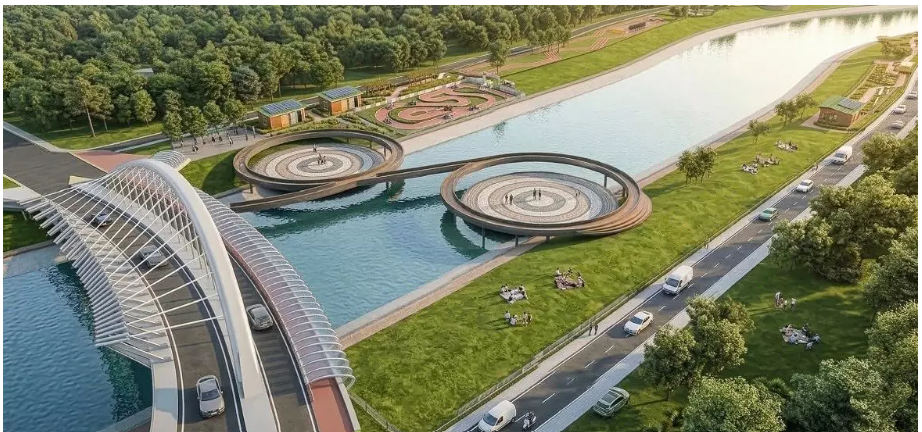
- The proposed Gandhi Sarovar near Bapu Ghat is expected to form a central component of Phase-I.
- The two project stretches from Himayatsagar and Osmansagar will converge in this area.
Its development is linked with:
- Riverfront infrastructure
- Water-flow management
- Landscape and public-space development
- Relocation of affected structures
- Integration of the surrounding urban area
The project seeks to make this zone a major focal point of the rejuvenated river corridor.
Musi Experience Centre
The Chief Minister directed officials to establish a Musi Experience Centre on Necklace Road–P.V. Narasimha Rao Marg, near Hussainsagar.
The centre is intended to:
- Explain the project’s overall vision
- Display proposed development components
- Inform the public about implementation plans
- Collect feedback and suggestions
- Build public awareness and participation
Such a centre can improve transparency and provide a platform for citizen engagement.
Significance of the Project
Urban river restoration:
- The project seeks to revive a river corridor affected by urbanisation and environmental degradation.
Flood resilience:
- Flood-mitigation works can reduce vulnerability of low-lying settlements and infrastructure.
Improved urban infrastructure:
- Planned riverfront development may support better roads, public spaces and civic amenities.
Environmental improvement:
- Continuous fresh-water flow and river management may improve the ecological condition of the corridor.
Public-space creation:
- Riverfront development can create accessible recreational and cultural spaces for residents.
Integrated planning:
- The project brings together water management, land use, housing, transport and urban design.
Economic potential:
- Improved infrastructure may attract investment, tourism and commercial activity along the corridor.
Participatory governance:
- The experience centre and feedback mechanism may help involve citizens in project planning.
Way Forward
- Prevent untreated sewage and solid waste from entering the river.
- Conduct detailed environmental and social-impact assessments.
- Protect the natural floodplain and river-carrying capacity.
- Ensure rehabilitation before displacement.
- Provide fair and transparent compensation to affected landowners.
- Establish clear coordination among all implementing departments.
Conclusion
The approval of Phase-I of the Musi River Rejuvenation Project marks an important step in Telangana’s urban-development agenda. Its success, however, will depend on whether the initiative goes beyond riverfront beautification to achieve genuine pollution control, ecological restoration, flood resilience and humane rehabilitation. A transparent, participatory and environmentally sensitive approach can help transform the Musi into a sustainable urban waterway while protecting the rights of affected communities.