APPSC Daily Current Affairs 25th February 2026
Relevance (UPSC)
UPSC GS Paper II – State Legislature – functioning & institutional culture – Democratic values & participatory governance
For Prelims:
- Aatavidupu, AP Legislators Sports Meet, Indira Gandhi Municipal Stadium (Vijayawada), SAAP (Sports Authority of Andhra Pradesh), Legislative Council Chairman, Assembly Speaker
For Mains:
- Democratic culture beyond politics, Institutional cohesion, Sports diplomacy at state level, Political camaraderie, Legislative traditions in India
Why in News?
The Andhra Pradesh Legislative Assembly’s three-day sports meet, ‘Aatavidupu’, began on a festive note at the Indira Gandhi Municipal Stadium (IGMC), Vijayawada, with legislators setting aside political differences to celebrate sportsmanship.
Background & Context

Background of the Initiative
- The initiative was first launched in 1983 during the tenure of N. T. Rama Rao, with sports events held at Lal Bahadur Stadium.
- Over time, the tradition faded.
- It has now been revived after consultations with legislators.
- The current Assembly has 78% young MLAs, encouraging renewed participation.
Key Highlights of Aatavidupu 2026
1. Grand Inauguration
The event was inaugurated with the ceremonial flame lighting by:
- Koyye Moshen Raju (Legislative Council Chairman)
- Chintakayala Ayyanna Patrudu (Assembly Speaker)
- K. Raghurama Krishnam Raju (Deputy Speaker)
- AP Sports Authority Chairman A. Ravi Naidu
The release of balloons marked the formal opening.
2. Sporting Events
Friendly yet competitive contests included:
- Tug-of-war
- Running races
- Volleyball matches
The Speaker and Deputy Speaker led their respective volleyball teams, generating enthusiasm among spectators.
3. Emphasis on Mental Wellbeing
Speaker Ayyanna Patrudu observed that:
- Legislators operate under continuous political and administrative pressure.
- Sports and cultural activities offer much-needed mental relaxation.
- The initiative strengthens personal bonds across party lines.
4. Inclusive Participation
- Public invited to witness competitions.
- Women members encouraged to participate in concluding cultural events.
- Legislators asked to attend valedictory ceremony with families.
- Appeal to “set aside politics for three days.”
Significance
1. Strengthening Democratic Culture
- Encourages non-partisan interaction among lawmakers.
- Promotes cooperative political environment.
2. Institutional Cohesion
- Builds trust and reduces adversarial tension.
- Encourages cross-party dialogue.
3. Work-Life Balance in Public Life
- Recognises stress in legislative responsibilities.
- Promotes wellness and holistic leadership.
4. Revival of Legislative Traditions
- Reconnects with 1983 tradition under N.T. Rama Rao.
- Reinforces continuity in democratic practices.
Challenges / Limitations
- Symbolic gestures must translate into improved legislative cooperation.
- Risk of being perceived as ceremonial without structural reform.
- Need to ensure equal participation across gender and party lines.
Conclusion
‘Aatavidupu’ reflects an effort to humanise politics and foster unity among legislators beyond partisan divides. By reviving a 1983 tradition, Andhra Pradesh underscores the importance of sportsmanship, wellness, and institutional harmony in strengthening democratic governance.
CARE MCQ
Q. With reference to ‘Aatavidupu’, consider the following statements:
- It is a sports event organised exclusively for Members of Parliament.
- The initiative was originally launched in 1983 during N.T. Rama Rao’s tenure.
- The 2026 event was held at the Indira Gandhi Municipal Stadium in Vijayawada.
Which of the statements given above is/are correct?
A. 2 and 3 only
B. 1 and 2 only
C. 1 and 3 only
D. 1, 2 and 3
Answer: A
Explanation
- Statement 1 – Incorrect. It is for Andhra Pradesh legislators (MLAs & MLCs), not Members of Parliament.
- Statement 2 – Correct. It was first launched in 1983 during N.T. Rama Rao’s tenure.
- Statement 3 – Correct. The 2026 event was held at IGMC Stadium, Vijayawada.
Relevance (UPSC)
GS Paper II: Issues relating to development and management of Social Sector/Health. GS Paper III: Human Resource Development; Role of technology in everyday life; Social impact of digitalisation.
For Prelims:
- Adolescent Mental Health, Comorbidity, Internet Addiction, Neuroplasticity, Trauma-Informed Parenting.
For Mains:
- Digital Ecosystem & Mental Health, School-Based Screening, De-stigmatisation, Preventive Mental Health, Whole-of-Society Approach, Social Media Regulation.
Why in News?
- The tragic deaths of three adolescent girls in Ghaziabad triggered public concern over youth mental health.
- Experts warn this is not an isolated incident but reflects a growing crisis in child and adolescent mental health in India, exacerbated by digital overexposure and inadequate systemic response.
Background & Context


- Mental health issues are increasingly seen in children as young as 4–5 years.
- Early trauma, neglect and chronic stress disrupt emotional development.
- Conditions now often present as comorbidities (e.g., attention deficit hyperactivity disorder (ADHD) + anxiety; depression + digital addiction).
- Traditionally viewed as “adult issues,” these problems remain under-recognised in children.
Extent of the Problem
- According to the National Mental Health Survey:
- 7–10% of adolescents have diagnosable mental health conditions.
- 5–7% of school-aged children have ADHD.
- India has fewer than 10,000 psychiatrists for a population exceeding 1.4 billion.
- Only a small fraction specialise in child and adolescent psychiatry.
- Shortages also exist in clinical psychologists and psychiatric social workers.
This highlights a severe treatment gap.

Digital Dimension of the Crisis
- Over 800 million Internet users in India, including millions of children.
- COVID-19 accelerated screen dependence for education and recreation.
- Boundaries between school, social interaction, and entertainment blurred.
WHO Guidelines (2019)
- Warned against excessive screen exposure.
- Linked to:
- Sleep disruption
- Poor attention span
- Emotional dysregulation
While screen use does not cause ADHD or autism, it can:
- Exacerbate symptoms
- Delay diagnosis
- Replace essential human interaction during neuroplastic development stages
Role of Families and Community
- Parents are the first mental health buffer.
- Trauma-informed parenting includes:
- Listening without judgement
- Monitoring mood/sleep changes
- Early help-seeking
Support Systems
- Parent support groups reduce isolation.
- Adolescent peer-support groups build resilience.
- Community-based approaches are more effective than isolated clinical interventions.
Schools as a Critical Gap
- Academic performance dominates institutional priorities.
- Emotional regulation and stress management receive limited structured attention.
- Examination pressure intensifies distress.
Needed Reforms
- Routine emotional wellbeing sessions.
- Teacher training for early identification.
- Integration of mental wellbeing into curriculum.
Policy Context & Government Initiatives
The issue has been recognised in:
- India’s Economic Survey 2025–26 (highlighting youth mental health).
- National Mental Health Programme (NMHP).
- Ayushman Bharat – Health & Wellness Centres.
- Tele-MANAS tele-mental health initiative.
Some States are considering regulation of adolescent social media use, inspired by models in Australia, France and South Korea.
Challenges
- Persistent stigma around mental illness.
- Delayed help-seeking until crisis stage.
- Digital addiction and unregulated social media environment.
- Workforce shortages in child psychiatry.
- Urban–rural mental health access divide.
Way Forward
- Routine school-based mental health screening.
- Clear digital use guidelines in schools.
- Expand Tele-MANAS and community counselling centres.
- Earmarked funding for child mental health.
- Structured training for teachers and paediatricians.
- Promote balanced digital literacy rather than punitive restrictions.
- De-stigmatise mental health conversations nationally.
Conclusion
India’s adolescent mental health crisis is a silent public health emergency. Without coordinated action involving families, schools, health systems, and policymakers, the long-term social and economic costs will be profound. Mental wellbeing must be recognised as foundational to human capital development and national progress.
CARE MCQ
Q. With reference to adolescent mental health in India, consider the following statements:
- Excessive screen use can exacerbate symptoms of existing neurodevelopmental disorders.
- The National Mental Health Survey suggests that over 20% of Indian adolescents have diagnosable mental health conditions.
- India faces a shortage of trained child and adolescent mental health professionals.
Relevance (UPSC)
Health, Social sector; Role of international organisations (WHO, UNAIDS, Global Fund)
For Prelims:
- Lenacapavir, PrEP, PEP, ART, HIV capsid, Reverse transcriptase, Protease, Integrase, FDA (June 18, 2025), WHO early access, Global Fund, UNAIDS 95-95-95, Combination prevention
For Mains:
- Long-acting injectables, Adherence & stigma, Combination prevention strategy, Structural biology drug targets, Resistance “fitness cost”, Sub-Saharan Africa HIV burden, 2030 AIDS-free target
Why in News?
- Zimbabwe began rolling out Lenacapavir, the first twice-yearly injectable PrEP for HIV, making it an early adopter globally (launch on Feb 19, 2026).
- A new study shows that to escape lenacapavir, HIV must mutate the capsid in ways that damage its own fitness, reaffirming capsid as a strong drug target.

Background
- HIV drug history shows monotherapy fails due to rapid mutation and resistance.
- 1987 (4 years after HIV identified as the cause of AIDS): zidovudine (AZT) targeted reverse transcriptase, but HIV quickly evolved resistance due to copying “mistakes” during RNA→DNA conversion.
- This led to combination antiretroviral therapy targeting multiple viral proteins (reverse transcriptase, protease, integrase) — focusing on viral regions that are “must keep” for survival.
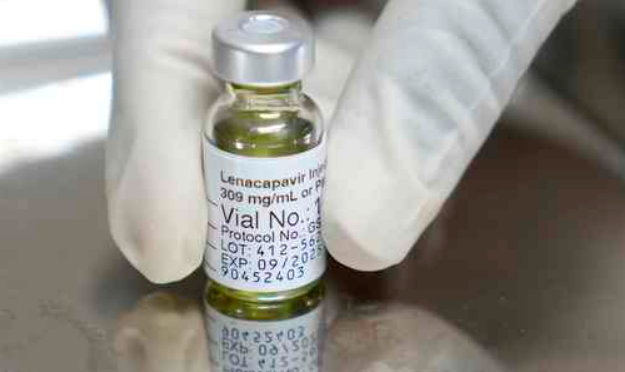
What is Lenacapavir?
What it is
- First twice-yearly injectable PrEP: two doses per year for HIV prevention.
- A long-acting alternative to daily pills, useful for people facing:
- adherence difficulties
- stigma
- limited access to healthcare
- Developed by scientists at Gilead Sciences.
How it works as a long-acting drug (science detail)
- FDA approved (June 18, 2025) the world’s first capsid-based HIV inhibitor.
- Injected under the skin of the abdomen once every six months, forming a slow-release reservoir that steadily releases drug into bloodstream.
- In trials, it showed 100% effectiveness in preventing HIV infection in high-risk individuals (not a cure; described as “next best thing to a vaccine” in popular science coverage).
What it is NOT
- Not a vaccine
- Not for HIV-positive persons (PrEP is strictly for those who test HIV-negative)
- Does not replace: condoms, oral PrEP, other injectables, abstinence, faithfulness, etc.
- Does not replace ART for people living with HIV
Zimbabwe Rollout:
Where & when
- Rollout began Feb 19, 2026 in Epworth, a shanty settlement ~20 km south of Harare.
Scale
- Started with 46,000 doses.
- Targets 46,000+ high-risk people across 24 sites nationwide.
Funding
- Funded by the U.S. government and the Global Fund.
WHO early access
- Zimbabwe is among nine countries selected by WHO for early receipt of this next-generation prevention injection.
Priority groups
- Adolescent girls and young women
- Sex workers
- Homosexual communities
- Pregnant and breastfeeding women
- Others facing high social/economic vulnerability
Combination Prevention Strategy (Zimbabwe’s model)
Zimbabwe emphasised lenacapavir complements, not replaces, existing tools.
Principle
- No “magic bullet” can end HIV. A combination of proven interventions is needed.
Behavioural interventions (explicit list)
- Abstinence
- Monogamy / being faithful
- Reducing concurrent sexual partnerships
Biomedical interventions (explicit list)
- HIV testing and counselling
- Treatment (ART)
- Proper and consistent condom use
- Management of STIs
- PEP
- PrEP
Zimbabwe’s PrEP toolkit (WHO-recommended options adopted)
- Oral PrEP (2016)
- Dapivirine vaginal ring (2021)
- Long-acting injectable cabotegravir (2024)
- Lenacapavir (2026)
Zimbabwe notes it has progressively adopted all four WHO-recommended PrEP options.
Community messaging & misconception risk
- Bernard Madzima (National AIDS Council CEO): important for young women, who may lack power to negotiate condom use.
- Rev. Maxwell Kapachawo (activist pastor, openly HIV+ since 2005): warned misconceptions could make some people on ART wrongly default, thinking lenacapavir replaces daily treatment.
HIV Science Link: Why the Capsid Target Matters (Despite Resistance)
Why capsid became a target
- 1999 Science paper explained capsid folding into a unique protective 3D shape.
- Later, most capsid mutations were found to make HIV non-infectious → capsid is essential and fragile.
Resistance finding
- In treatment settings, resistance mutations appeared mainly when lenacapavir was effectively acting alone (without other fully active drugs).
- In proper combination therapy, suppression largely held.
- Lab-engineered resistant viruses often replicated at only 20–30% of normal levels even without drug → escaping lenacapavir damages the capsid and weakens HIV.
Implication
- Capsid is a high-constraint target: HIV cannot afford to change it too much.
- Opens door to:
- new capsid-focused drugs
- exploring protective shells of other viruses as drug targets
- Also highlights: breakthroughs often come from persistence, not sudden inspiration (solubility issue turned into long-acting advantage).
Broader Sub-Saharan Context
- HIV/AIDS has killed 44+ million since early 1980s.
- Of ~41 million people living with HIV globally, ~27 million are in Sub-Saharan Africa (~67%), despite the region having ~12% of global population.
- Global new infections declined 33%+ since 2005, but the region still faces:
- ~700,000 new infections annually
- ~300,000 AIDS-related deaths annually
- Young women (15–24) bear disproportionate burden.
Significance
- Adherence revolution: Two injections/year reduces pill fatigue and missed doses.
- Stigma reduction: More private than daily pills.
- Choice-based prevention: Expands PrEP options within combination prevention.
- Targets high-risk groups effectively: especially adolescent girls/young women.
- Science reassurance: capsid targeting remains strong because resistance weakens HIV.
- 2030 goal support: strengthens path to ending AIDS as public health threat.
Challenges/Concerns
- Misconceptions: PrEP vs ART confusion may cause ART default (needs communication).
- Testing requirement: PrEP must be given only to HIV-negative persons → strong screening + follow-up essential.
- Funding sustainability: reliance on external support (U.S. + Global Fund).
- Delivery capacity: scale-up beyond 24 sites, supply chain, trained workforce.
- Resistance risk in treatment misuse: “acting solo” lesson underscores need for correct regimens.
Conclusion
Zimbabwe’s early roll-out of lenacapavir shows how long-acting prevention can align with real-life barriers like adherence and stigma. Simultaneously, scientific evidence confirms that the HIV capsid is an excellent drug target: even when resistance emerges, it comes at a heavy cost to the virus. Together, these developments strengthen the case for long-acting, capsid-targeted strategies within a combination prevention framework to accelerate progress toward an AIDS-free future.
UPSC PYQ
Q. Which of the following diseases can be transmitted from one person to another through tattooing?
- Chikungunya
- Hepatitis B
- HIV-AIDS
-
- 1 only
- 2 and 3 only
- 1 and 3 only
- 1, 2 and 3
- Chikungunya is caused by a virus transmitted primarily by Aedes mosquitoes.
- It is not a blood-borne infection transmitted through contaminated needles.
- There is no standard evidence that it spreads through tattooing.
- Hepatitis B is a blood-borne viral infection (HBV).
- It can spread through:
- Contaminated needles
- Blood-to-blood contact
- Tattooing involves repeated skin piercing, creating a pathway for infected blood if equipment is not sterilised.
- HBV has a high transmission rate via needle exposure.
- HIV is also a blood-borne virus.
- It spreads through:
- Infected blood
- Contaminated needles
- Unsafe tattooing practices can transmit HIV if sterilisation is inadequate.
CARE MCQ
Q. With reference to Lenacapavir and HIV prevention, consider the following statements:
- Lenacapavir is the first twice-yearly injectable PrEP for HIV prevention.
- PrEP is meant for people living with HIV as a substitute for ART.
- Zimbabwe’s rollout began in Epworth, about 20 km south of Harare, with 46,000 doses across 24 sites.
- Resistance to lenacapavir can occur, but strong resistance mutations can reduce viral replication to about 20–30% of normal levels.
Which of the statements given above is/are correct?
- 1, 3 and 4 only
- 1 and 2 only
- 2 and 3 only
- 1, 2, 3 and 4
Answer: A
Explanation:
Statement 1 – Correct.
Lenacapavir is the first twice-yearly injectable PrEP for HIV prevention.
Statement 2 – Incorrect.
PrEP is for HIV-negative individuals. It does not replace ART, which is used for people living with HIV.
Statement 3 – Correct.
Zimbabwe’s rollout began in Epworth (20 km south of Harare) with 46,000 doses across 24 sites.
Statement 4 – Correct.
Resistance can occur, but strong mutations reduce viral replication to about 20–30%, showing a fitness cost.