Relevance : APPSC Group 1: Paper II – Polity and Governance – Government policies and interventions, welfare schemes, women and child development, public health and population-related issues.
For Prelims:
- IBM Skills Build, APSCHE, APSSDC, Amaravati Quantum Valley, NIELIT, National Technology Day, NPTEL, Quantum Computing, Artificial Intelligence, Cybersecurity
For Mains:
- Deep-Tech Skilling, Future-ready Workforce, Human Capital, Digital Economy, Innovation Ecosystem, Industry-linked Training, Quantum Valley Vision, Technology-led Development
Why in News?
Andhra Pradesh Chief Minister N. Chandrababu Naidu announced a statewide deep-tech skilling initiative in collaboration with IBM SkillsBuild, APSCHE, APSSDC and Amaravati Quantum Valley. The initiative aims to train 2 lakh learners in 2026–27 and scale up to 10 lakh learners over five years through digital learning, industry-linked training and globally recognised credentials.
Major Features of the Initiative
- The initiative will cover major emerging technology areas: Quantum Technologies, Artificial Intelligence, Data Analytics, Cybersecurity, Entrepreneurship
- It will use:
- Digital learning platforms
- Industry-linked training
- Globally recognised credentials
- Advanced technology programmes
- Target:
- 2 lakh learners in 2026–27
- 10 lakh learners over five years
- Key institutions involved:
- IBM SkillsBuild
- Andhra Pradesh State Council for Higher Education
- Andhra Pradesh State Skill Development Corporation
- Amaravati Quantum Valley
National Institute of Electronics & Information Technology (NIELIT) Innovation and Skilling Centre
- The proposed NIELIT Innovation & Skilling Centre at Acharya Nagarjuna University, Guntur, will focus on:
- Quantum Computing
- Artificial Intelligence
- Quantum Communication
- Semiconductor technologies
- The centre is planned to begin operations from the current academic year.
- It aims to support:
- Students
- Researchers
- Innovators
- It will provide:
- World-class infrastructure
- Advanced laboratories
- Industry-driven learning opportunities
- Officially, NIELIT and the Government of Andhra Pradesh signed an MoU to establish India’s first dedicated Quantum and Artificial Intelligence University campus in Amaravati, with focus areas such as quantum computing, AI, quantum communication, cybersecurity, quantum hardware and AI–Quantum convergence research.
National Technology Day
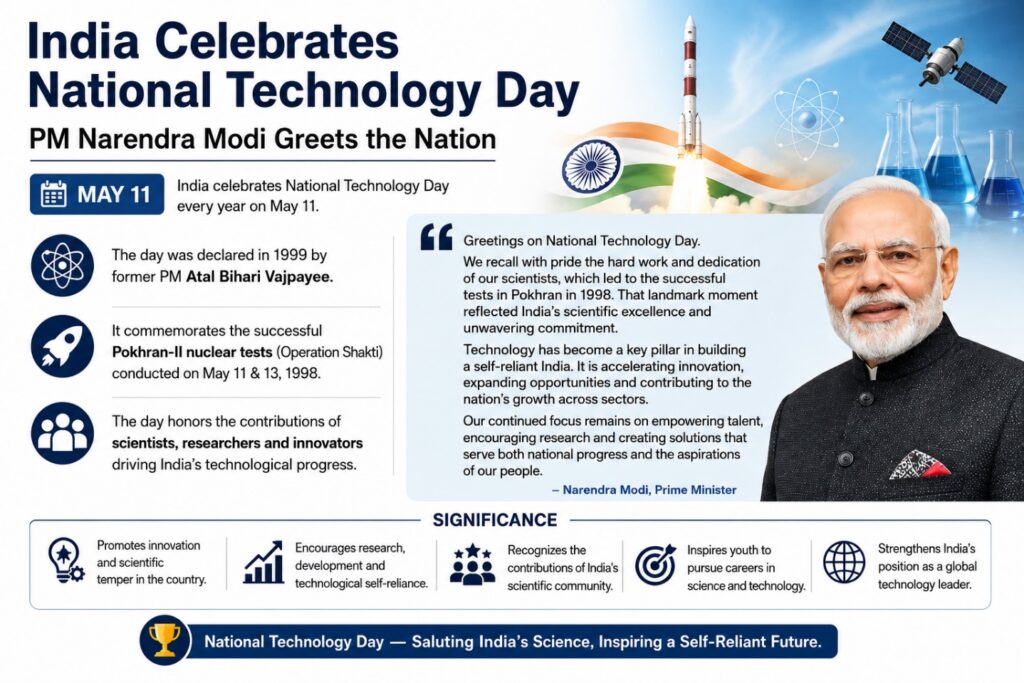
- The announcement was made on National Technology Day.
- The day commemorates India’s scientific achievements, especially the successful Pokhran tests of 1998.
- The Chief Minister stated that India’s progress depends on investment in:
- Knowledge
- Research
- Innovation
- Human capital
- Andhra Pradesh also celebrated its students for securing:
- 4 Gold Medals
- 14 Silver Medals
in the prestigious NPTEL national examinations.
Significance
- Future-ready Workforce
The initiative can prepare students for new-age sectors such as AI, quantum technologies, cybersecurity and semiconductors.
- Strengthening Human Capital
Training lakhs of learners can improve Andhra Pradesh’s skilled workforce base and make youth more employable.
- Innovation-led Growth
The initiative supports the State’s vision of building a strong technology and innovation ecosystem under the Quantum Valley model.
- Industry-Academia Linkage
Collaboration with IBM SkillsBuild and NIELIT can connect classroom learning with industry needs.
- Support to Digital Economy
Skilling in data analytics, cybersecurity and AI can support governance, startups, industry and digital services.
- Research and Deep-Tech Ecosystem
Advanced laboratories and innovation centres can help students and researchers work on frontier technologies.
Challenges
- Ensuring quality training for large numbers of learners
- Bridging the gap between urban and rural students
- Providing access to digital devices and internet connectivity
- Training faculty in emerging technologies
- Aligning courses with industry requirements
- Creating sufficient internships and placement pathways
- Preventing certificate-based learning without practical skills
Government Initiatives / Policy Support
- APSCHE and APSSDC will support higher education and skill development in the State.
- Amaravati Quantum Valley is being developed as a major hub for quantum and deep-tech innovation.
- NIELIT, under MeitY, supports education, skilling, training, research and capacity building in electronics and information technology.
- The National Quantum Mission was approved with an outlay of ₹6,003.65 crore for 2023–24 to 2030–31 to build a strong ecosystem in quantum technologies.
- NPTEL continues to support technology-based learning and national-level certification.
Way Forward
- Provide equal access to students from rural and government institutions.
- Create Telugu and English digital learning modules.
- Train faculty as master trainers in deep-tech areas.
- Link training with internships, projects and industry mentorship.
- Build advanced laboratories in universities and colleges.
- Encourage students to participate in national-level competitions.
- Support startups in AI, cybersecurity, quantum and semiconductor technologies.
- Track outcomes through placements, certifications, projects and innovation outputs.
Conclusion
Andhra Pradesh’s deep-tech skilling initiative is an important step towards creating a future-ready State. By focusing on AI, quantum technologies, cybersecurity, data analytics and entrepreneurship, the State aims to prepare students for emerging technology-driven opportunities.
If implemented effectively, the initiative can strengthen human capital, promote innovation, support the Quantum Valley vision, and contribute to India’s larger goal of technology-led development.
CARE MCQ
Q. With reference to the proposed NIELIT Innovation & Skilling Centre, consider the following statements:
- It will focus on Quantum Computing and Artificial Intelligence.
- It will also cover Quantum Communication and Semiconductor technologies.
- It is related to student skilling and innovation.
How many of the above statements are correct?
A.Only one
B. Only two
C. All the three
D. None
Answer: C
Explanation:
- Statement 1 is correct: Quantum Computing and AI are major focus areas.
- Statement 2 is correct: Quantum Communication and Semiconductor technologies are also included.
- Statement 3 is correct: The centre aims to empower students, researchers and innovators.
Additional Information:
NIELIT is linked with skill development and capacity building in electronics and information technology.
FAQs
Q.What is the deep-tech skilling initiative?
It is a statewide programme to train learners in AI, quantum technologies, cybersecurity, data analytics and entrepreneurship.
Q.What is the target of the initiative?
It aims to train 2 lakh learners in 2026–27 and 10 lakh learners over five years.
Q.Which organisations are involved?
IBM Skills Build, APSCHE, APSSDC and Amaravati Quantum Valley.
Q.Why is it important?
It helps build a future-ready workforce for emerging technology sectors.
Relevance : GS Paper III – Science & Technology, Renewable Energy, Infrastructure, Energy Security, Climate Change
For Prelims:
- Energy Storage, Battery Energy Storage System, Pumped Hydro Storage, Lithium Iron Phosphate Battery, Central Electricity Authority, Non-Fossil Fuel Capacity, Grid Stability, Renewable Energy
For Mains:
- Renewable Energy Integration, Grid Flexibility, Energy Security, Import Dependence, Clean Energy Transition, Round-the-Clock Renewable Power, Battery Supply Chain, Climate Commitments
Why in News?
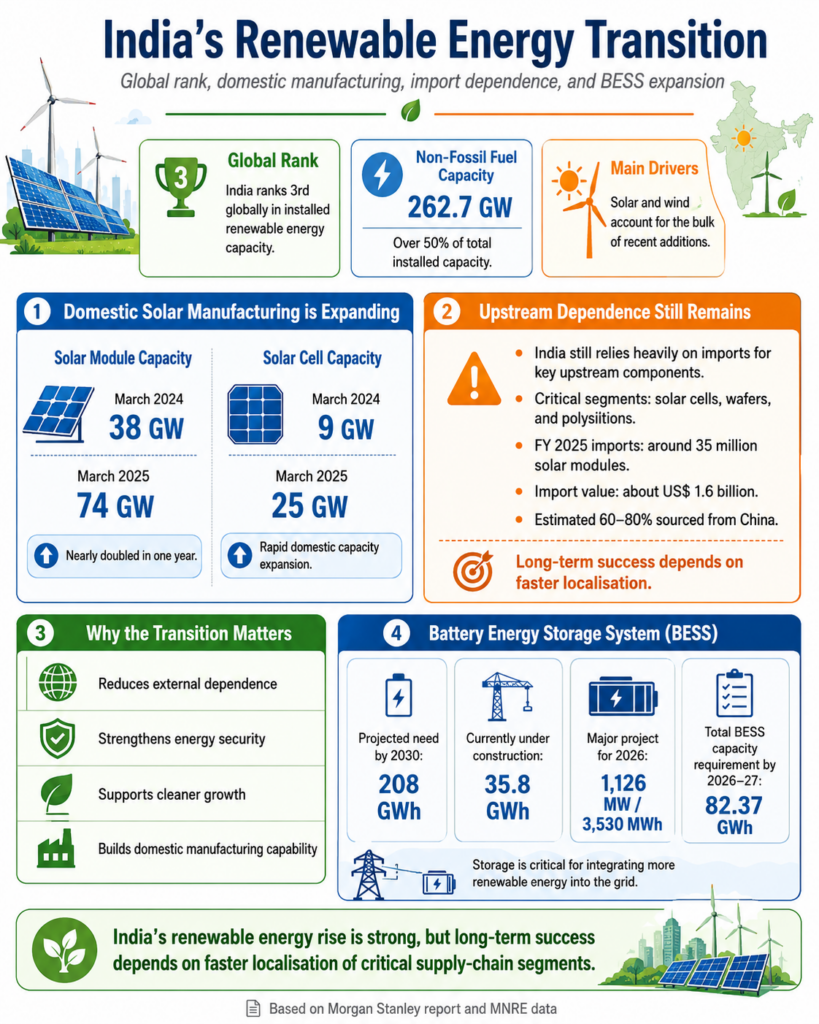
- India is rapidly expanding its renewable energy capacity, but a major challenge is emerging: renewable electricity is not always available when demand is high.
- Solar power falls to zero after sunset, while wind generation changes with weather conditions.
- This creates a mismatch between electricity generation and demand, making energy storage systems essential for grid stability. India’s renewable sources account for about 53% of installed power capacity, but energy storage deployment is still limited.
What is Energy Storage?
Energy storage refers to systems that store surplus electricity during periods of high generation and release it when demand rises or renewable generation falls. In simple terms, it helps save excess solar or wind power for later use.
This is important because electricity demand often peaks in the evening or night, when solar generation is unavailable. Storage can therefore make renewable energy more reliable and help supply round-the-clock clean power.
Major Types of Energy Storage
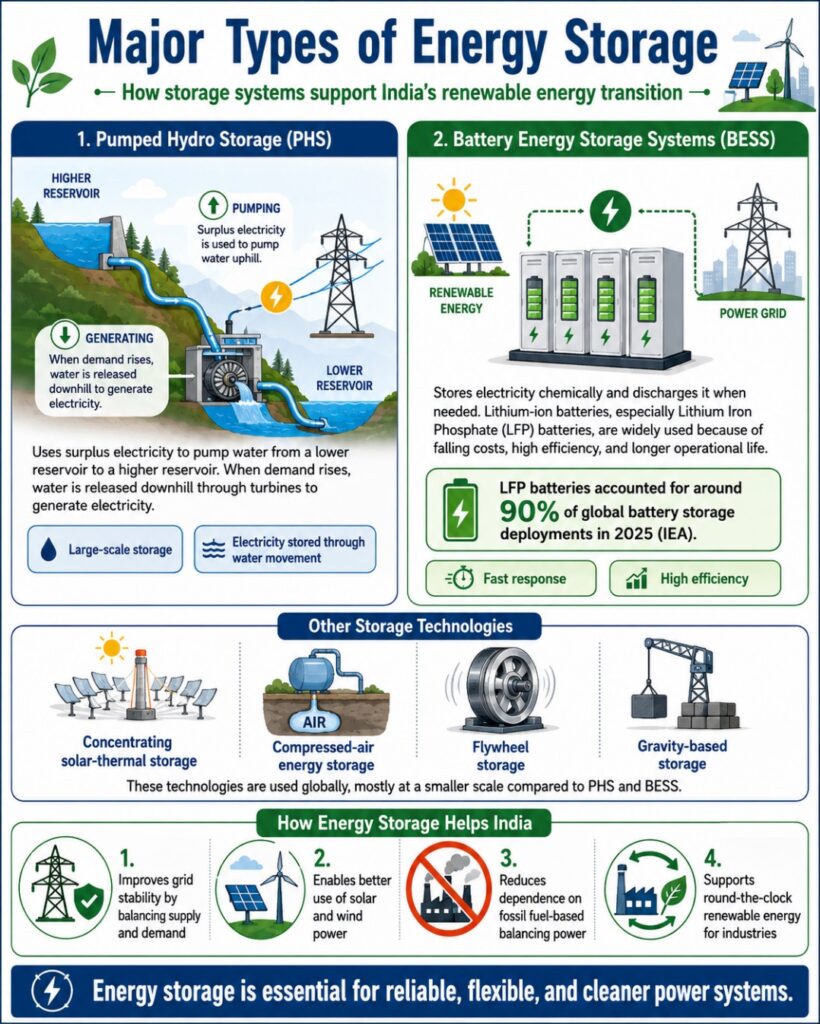
The two most widely used storage systems are Pumped Hydro Storage and Battery Energy Storage Systems.
- Pumped Hydro Storage (PHS) uses surplus electricity to pump water from a lower reservoir to a higher reservoir. When demand rises, water is released downhill through turbines to generate electricity.
- Battery Energy Storage Systems (BESS) store electricity chemically and discharge it when needed. Lithium-ion batteries, especially Lithium Iron Phosphate (LFP) batteries, are widely used because of falling c osts, high efficiency and longer operational life. LFP batteries accounted for around 90% of global battery storage deployments in 2025, according to the International Energy Agency.
Other storage technologies include concentrating solar-thermal storage, compressed-air energy storage, flywheel storage, and gravity-based storage. These are used globally, but mostly at a smaller scale compared to PHS and BESS.
India’s Energy Storage Capacity
India’s energy storage capacity has not grown at the same pace as its renewable energy capacity. At present, India has around 0.27 GW of BESS capacity and about 7.2 GW of pumped hydro storage capacity.
The Central Electricity Authority projects a major expansion by 2035–36, with total energy storage capacity expected to reach 174 GW / 888 GWh. This includes 80 GW / 321 GWh of BESS and 94 GW / 567 GWh of pumped storage projects.
Storage systems of around four to six hours are expected to become increasingly important beyond 2030, as India’s non-fossil fuel capacity is projected to rise from about 283 GW to 786 GW by 2035–36.
Need for Energy Storage in India
Energy storage is becoming critical because renewable power is intermittent. Solar power is available mainly during the day, while wind energy fluctuates with weather. Without storage, the grid may face surplus power during some hours and shortages during others.
Energy storage can help India in five major ways:
- It improves grid stability by balancing supply and demand.
- It enables better use of solar and wind power.
- It reduces dependence on fossil fuel-based balancing power.
- It supports round-the-clock renewable energy for industries.
- It helps meet India’s climate and clean energy goals.
Global Energy Storage Scenario
Globally, PHS and BESS are the most widely deployed electricity storage technologies. Battery storage is growing very rapidly. The International Energy Agency notes that 108 GW of new battery storage capacity was deployed globally in 2025, which was 40% more than in 2024.
China continues to dominate global battery storage deployment, followed by the United States and Europe. Storage is also expanding in Australia and parts of West Asia, where it is being used for renewable integration and electricity security.
Challenges
- Low existing storage capacity: India’s storage capacity is still small compared to its renewable energy expansion.
- Import dependence: India imports nearly 75–80% of lithium-ion cells, which form a major share of battery storage cost.
- Supply chain risk: Global battery manufacturing is heavily concentrated in one Asian country, creating risks of price volatility and trade disruptions.
- High project cost: Grid-scale BESS and pumped storage projects require large investments.
- Long gestation period: Pumped hydro projects need land, environmental approvals and long construction timelines.
- Grid integration issues: Storage must be supported by transmission planning, forecasting and flexible grid management.
Government Initiatives / Policy Support
The CEA’s National Generation Adequacy Plan provides a roadmap for scaling energy storage to support India’s renewable energy growth up to 2035–36.
The Government has approved a Viability Gap Funding scheme to support 30 GWh of BESS capacity, funded through ₹5,400 crore from the Power System Development Fund. It has also encouraged co-locating energy storage systems with solar projects for better grid stability and cost efficiency.
The Ministry of Power has also issued guidelines to promote Pumped Storage Projects, including measures related to project allotment, environmental clearance and transmission charge waivers.
Way Forward
India should treat storage as a core part of renewable energy planning, not as an add-on. Expansion of solar and wind must be matched with timely investment in BESS, pumped hydro and transmission infrastructure.
Key steps include:
- Promote domestic manufacturing of battery cells and storage components.
- Diversify battery supply chains to reduce import dependence.
- Fast-track pumped storage projects with proper environmental safeguards.
- Encourage hybrid projects combining solar, wind and storage.
- Use BESS for short-duration storage and PHS for long-duration storage.
- Support research in alternative storage technologies such as sodium-ion batteries, gravity storage and green hydrogen.
- Strengthen forecasting, smart grids and demand-side management.
Conclusion
India’s renewable energy transition has entered a new phase. Adding solar and wind capacity is no longer enough; the country must also build large-scale energy storage capacity. Storage will decide whether India can manage renewable intermittency, ensure grid stability and provide reliable clean power.
A strong storage ecosystem, supported by domestic manufacturing, policy incentives and grid planning, is essential for India’s energy security and climate goals.
UPSC PYQ
Q.Which one of the following is a non-conventional source of energy? (NDA-I, 2025)
A. Petroleum
B. Natural Gas
C. Tidal energy
D. Coal
Answer: C
Explanation:
- Petroleum, Natural Gas, and Coal are conventional (fossil fuel) sources of energy.
- Tidal energy is a renewable and non-conventional source of energy generated from ocean tides.
CARE MCQ
Q. With reference to Pumped Hydro Storage, consider the following statements:
- It stores energy by pumping water to a higher reservoir.
- It releases water downhill through turbines to generate electricity.
- It stores electricity only through chemical batteries.
How many of the above statements are correct?
A.Only one
B. Only two
C. All the three
D. None
Answer: B
Explanation:
- Statement 1 is correct: PHS uses surplus power to pump water uphill.
- Statement 2 is correct: Stored water is released downhill to generate electricity.
- Statement 3 is incorrect: Chemical storage refers to batteries, not pumped hydro.
Additional Information:
PHS is generally suitable for longer-duration energy storage.
FAQs
Q.What is energy storage?
It stores surplus electricity and supplies it when demand rises.
Q.Why does India need energy storage?
Solar and wind power are intermittent, so storage helps maintain grid stability.
Q.What are the main storage technologies?
Pumped Hydro Storage and Battery Energy Storage Systems.
Q.What is the key challenge for India?
Low storage capacity and high dependence on imported lithium-ion cells.
Relevance : GS Paper III – Environment Environmental Pollution, Waste Management, Urbanisation and Sustainable Development.
For Prelims:
- Solid Waste Management Rules 2026, Environment Protection Act 1986, Article 253, Stockholm Declaration 1972, CPCB, Source Segregation, Material Recovery Facility, Circular Economy, Legacy Dumpsites, Local Bodies, Gram Sabha.
For Mains:
- Federalism, Subsidiarity, Local Democracy, Decentralised Governance, Waste Crisis, Technocratic Governance, State Capacity, Citizen Accountability, Environmental Governance, Predictable Finance, Sustainable Cities.
Why in News?
The Solid Waste Management Rules, 2026 came into effect from April 1, 2026, replacing the 2016 Rules. They aim to improve segregation, scientific processing, landfill reduction and digital monitoring. However, concerns have been raised that their centralised approach may limit the flexibility of States and local bodies.
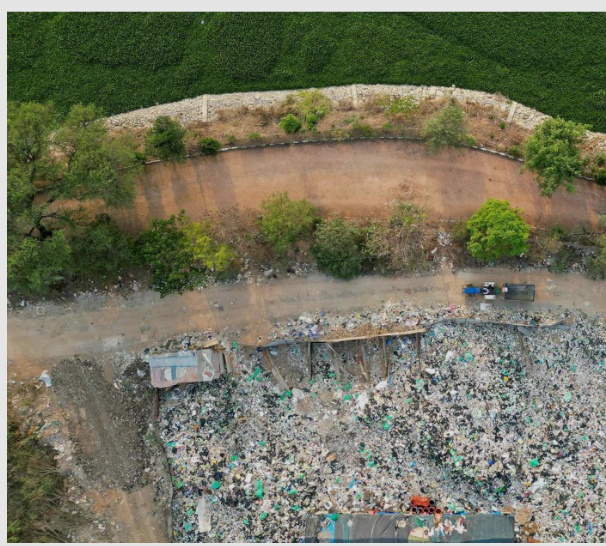
India’s Waste Crisis
- India’s waste problem has become a serious ecological and public health challenge.
- Urban areas are facing problems such as overflowing landfills, plastic-clogged drains, monsoon flooding, methane emissions, landfill fires, leachate pollution and open burning of waste.
- Rural areas are also affected by plastic waste, sanitary waste, pesticide containers, e-waste and packaged consumption waste.
- Therefore, a new waste-management framework was necessary. But the main concern is whether the framework is administratively practical and constitutionally balanced.
Objectives of Solid Waste Management Rules, 2026
The Rules have several important environmental objectives.
They seek to:
- Improve source segregation of waste
- Regulate bulk waste generators
- Promote scientific waste processing
- Reduce dependence on landfills
- Remediate legacy dumpsites
- Encourage circular economy
- Introduce digital monitoring
These objectives are important. However, good environmental intention alone does not guarantee good administrative design.
Constitutional and Federal Angle
Solid waste management is closely linked with:
- Environment
- Public health
- Sanitation
- Land use
- Local government
- Urban and rural administration
Many of these areas fall within the domain of States and local bodies.
Therefore, the issue is not only environmental. It is also a question of federalism, decentralisation and local self-government.
Treaty Power and Article 253
Treaty Power and Article 253
- The Environment Protection Act, 1986 was enacted mainly under Article 253 of the Constitution.
- Article 253 allows Parliament to make laws for implementing international obligations, such as the Stockholm Declaration, 1972.
- This gives Parliament wide powers, even on matters linked to States and local bodies.
- However, this power should be used to set minimum national environmental standards.
- It should not become a tool to create a rigid centralised model for every State and local body.
- A national environmental framework is needed, but States must have flexibility to design local solutions.
Importance of Subsidiarity
The principle of subsidiarity means that governance functions should be performed at the lowest level capable of handling them effectively.
In waste management, local knowledge is extremely important. Waste systems differ according to:
- Geography
- Population density
- Settlement pattern
- Local economy
- Fiscal capacity
- Availability of land
- Citizen behaviour
- Informal waste-worker networks
A policy suitable for Mumbai may not suit a Himalayan pilgrimage town, coastal panchayat, island settlement or tribal hamlet.
Therefore, decentralised design is necessary.
Rural and Urban Differences
- The 2026 Rules extend waste-management duties to rural local bodies.
- This is relevant because rural areas also face problems of plastic waste, sanitary waste and packaged consumption waste.
- However, treating a Gram Panchayat like a small municipality may be unrealistic.
- Many panchayats lack staff, sanitation experts, waste vehicles, digital reporting capacity and adequate funds.
- A simpler rural model is needed, based on Gram Sabha awareness, household composting, community composting and periodic collection of plastic and sanitary waste.
- Dry waste can be managed through cluster-level aggregation with nearby urban local bodies.
Need for Different Models for Big Cities
Megacities and metropolitan cities need a stronger institutional approach. Cities such as Delhi, Mumbai, Kolkata, Bengaluru and Chennai generate huge volumes of waste. They require specialised institutions.
Metropolitan Waste Management Authorities with:
- Elected local representation
- State participation
- Technical expertise
- Citizen oversight
Thus, rural and urban waste systems should not be governed through the same rigid model.
States as Policy Laboratories
Federalism allows States to act as laboratories of policy innovation,Different States can test different solutions according to local needs.
For example:
- One State may promote decentralised composting through women’s self-help groups.
- Another State may integrate informal waste workers into cooperatives.
- Another may develop cluster-based facilities for small towns.
- Another may regulate tourist waste through user fees.
After a few years, the Centre can study successful models and convert them into national best practices.
This approach would build State capacity and encourage policy learning.
Concern over Centralised Online Portal
The Rules provide for reporting to the Central Pollution Control Board, data audits, report uploads and centralised formats.
Digital monitoring is useful, but it can become a problem if local bodies spend more time feeding dashboards than improving waste services.
States and local bodies should be able to:
- Add local indicators
- Customise dashboards
- Access raw data
- Publish ward-level information
- Use local languages for citizen information
Data should build capacity, not merely discipline local governments.
Need for Democratic Accountability
Waste management succeeds only when citizens participate.
In rural areas, the Gram Sabha can play an important role.
In urban areas, waste reports should be placed before:
- Municipal councils
- Ward committees
- Local citizen forums
Finance and Implementation Issues
The Rules expand the responsibilities of municipalities and panchayats.
But if these responsibilities are not supported by predictable and adequate finance, they may become underfunded mandates.
This may lead to:
- Selective compliance
- Inflated reporting
- Paper-based implementation
- Quiet evasion
- Poor service delivery
Thus, solid waste reform must be backed by formula-based and reliable funding.
Risk of Judicialized Administration
- If States and local bodies fail to implement the Rules, public interest litigation may arise.
- Courts may treat the issue as a matter of legal non-compliance.
- This can lead to repeated court directions, affidavits and monitoring.
- Environmental reform may then shift from ground-level action to court-driven administration.
- Governments may spend more time on legal compliance than on improving actual waste-management services.
Significance
- Helps tackle landfills, plastic waste, open burning and pollution.
- Encourages segregation, recycling, circular economy and legacy waste remediation.
- Creates a framework for monitoring and implementation.
- Balances national environmental goals with State and local flexibility.
- Supports local solutions based on local behaviour, geography and institutions.
- Promotes citizen participation through ward-level accountability and Gram Sabha involvement.
Challenges
- A uniform model may not suit India’s diverse local conditions.
- Many local bodies lack staff, funds, vehicles and technical support.
- Gram Panchayats may struggle with complex waste-management systems.
- Digital reporting may become paperwork without improving services.
- Expanded duties without adequate funds may weaken implementation.
- Waste reform needs community involvement and behavioural change.
- Responsibility may become unclear when powers, duties and resources are not properly aligned.
Way Forward
- The Centre should set minimum environmental standards.
- States should be allowed to design waste models according to local needs.
- Municipalities and panchayats need funds, staff, vehicles and training.
- Rural areas should focus on composting, periodic collection and cluster-level dry-waste management.
- Large cities need specialised waste-management authorities with technical expertise and citizen oversight.
- Waste reports should be discussed in municipal councils, ward committees and Gram Sabhas.
- Local bodies need adequate and formula-based funding.
- Digital portals should support local service delivery, not only upward repor
Conclusion
The Solid Waste Management Rules, 2026 are based on an urgent environmental need. Their goals of segregation, scientific processing, circular economy and landfill reduction are important.
However, waste management is a deeply local function. A centralised and uniform model may produce blurred accountability, excessive reporting and weak implementation.
The Rules should be recast around minimum national standards, State flexibility, empowered local bodies, predictable finance and citizen accountability.
UPSC PYQ
Q.As per the Solid Waste Management Rules, 2016 in India, which one of the following statements is correct? (IAS 2019)
a) Waste generator has to segregate waste into five categories.
b) The Rules are applicable to notified urban local bodies, notified towns and all industrial townships only.
c) The Rules provide for exact and elaborate criteria for the identification of sites for landfills and waste processing facilities.
d) It is mandatory on the part of waste generator that the waste generated in one district cannot be moved to another district.
Answer: C
Explanation:
Option C – Correct:
The Solid Waste Management Rules, 2016 provide detailed criteria for identifying sites for solid waste processing, treatment and sanitary landfills. The rules aim to ensure scientific site selection to reduce environmental and public health risks.
CARE MCQ
Q. With reference to the Solid Waste Management Rules, 2026, consider the following statements:
- They replaced the Solid Waste Management Rules, 2016.
- They came into effect from April 1, 2026.
- They exclude rural local bodies from waste-management responsibilities.
Which of the above statements are correct?
a) 1 and 2 only
b) 2 and 3 only
c) 1 and 3 only
d) 1, 2 and 3
Answer: A
Explanation:
- Statement 1 is correct: The 2026 Rules replaced the 2016 Rules.
- Statement 2 is correct: They came into effect from April 1, 2026.
- Statement 3 is incorrect: Rural local bodies are also covered under the Rules.
Additional Information:
Rural implementation requires simpler and locally suitable waste-management models.
FAQs
Q. Why are the Solid Waste Management Rules, 2026 important?
They are important because India faces serious waste-related problems such as landfills, plastic pollution, open burning and poor waste processing.
Q. When did the 2026 Rules come into effect?
They came into effect from April 1, 2026.
Q. Which earlier rules did they replace?
They replaced the Solid Waste Management Rules, 2016.
Q.What are the main objectives of the 2026 Rules?
The main objectives are source segregation, scientific processing, landfill reduction, legacy waste remediation, circular economy and digital monitoring.
Q. Why is federalism important in waste management?
Waste management depends on local conditions. States and local bodies are better placed to understand local geography, capacity and citizen behaviour.
Q.What is subsidiarity?
Subsidiarity means that governance functions should be performed at the lowest level capable of handling them effectively.