Table of Contents
Relevance: UPSC: GS Paper II – Health, Governance, Public Health Systems, International Health Regulations
For Prelims:
Hantavirus, Zoonotic Spillover, One Health, Wildlife Reservoirs, Aedes aegypti, Aedes albopictus, Anopheline Mosquitoes, Nipah Virus, Ebola, Filoviruses, Coronaviruses, International Health Regulations, Pandemic Accord.
For Mains:
Zoonotic Risk, Climate Change and Health, Human-Wildlife Interface, Disease Surveillance, Biosecurity, Public Health Preparedness, One Health Governance, Habitat Fragmentation, Industrial Livestock Farming, Global Health Security.
Why in News?
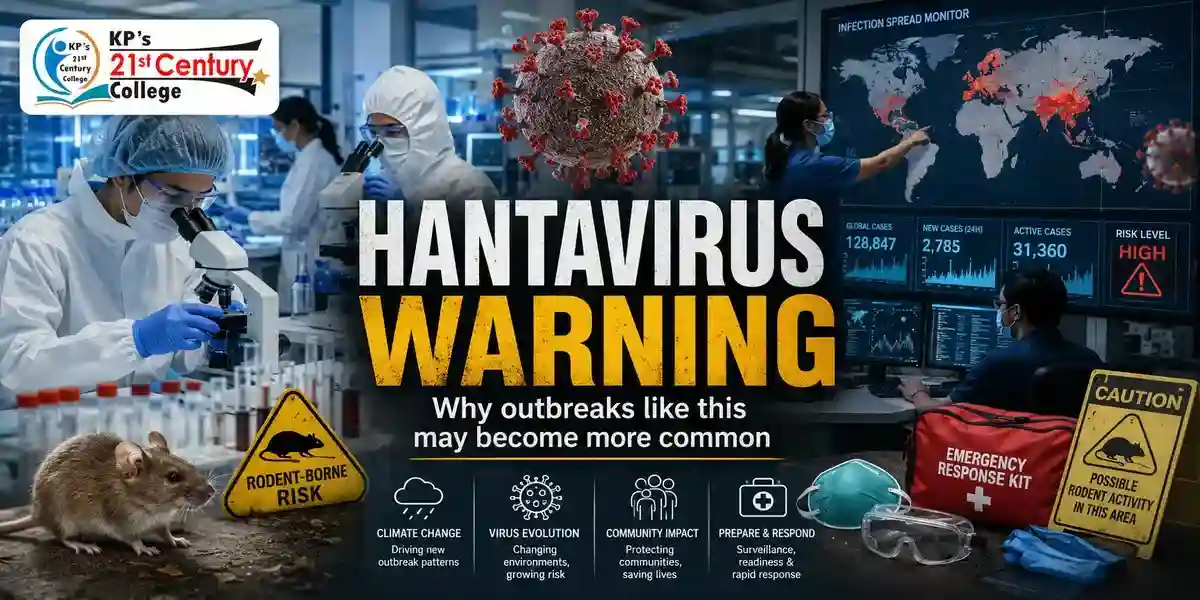
- A recent hantavirus outbreak has renewed concern over zoonotic spillovers, where pathogens move from animals to humans.
- Experts have highlighted that such outbreaks may become more common due to deforestation, climate change, human expansion into wildlife habitats, industrial farming and global travel.
- The issue is important because the conditions that allow animal-borne infections to emerge and spread are increasing rapidly.
What are Zoonotic Spillovers?
- Zoonotic spillover refers to the transmission of pathogens from animals to humans.
- These pathogens may include viruses, bacteria or other disease-causing organisms.
- Spillovers are not completely random. They are often linked to ecological and social conditions that bring humans, domestic animals and wildlife into closer contact.
- COVID-19, Nipah, Ebola and hantavirus-like outbreaks show the public health risks of animal-origin infections.
What is a virus? A virus is a very small infectious particle that can cause disease in living organisms. Viruses are much smaller than bacteria. They cannot be seen with a normal microscope. They can infect humans, animals, plants and even bacteria. A virus is made up of:
Viruses cannot live and multiply on their own. They do not have their own machinery to make energy or proteins. So, they enter a living cell and use the cell’s machinery to make more viruses. That is why viruses are called intracellular parasites, meaning they live and multiply inside living cells. |
Why Spillovers May Become More Frequent
- Deforestation brings humans closer to wildlife reservoirs.
- Agricultural encroachment increases contact between farms and animal habitats.
- Unplanned urban growth expands cities into wildlife zones.
- Global travel and trade allow local outbreaks to spread rapidly.
- Climate change alters animal movement, vector distribution and disease geography.
- The list of pathogens with spillover potential is large, including filoviruses, influenza viruses and coronaviruses.
Major Human-Animal Interaction Risks
1. Industrial Livestock Farming
- Industrial farming creates large concentrations of genetically similar animals.
- Such conditions can amplify pathogens with pandemic potential.
- Influenza is one of the clearest examples.
- Weak bio-surveillance in animal production systems can increase risk.
2. Deforestation and Habitat Fragmentation
- Habitat loss pushes bats, rodents and other reservoir hosts into human-modified landscapes.
- Outbreaks such as Nipah in India, Malaysia and Bangladesh and Ebola in Central Africa show this pattern.
- Forest loss increases direct and indirect human-wildlife contact.
Surveillance Gaps
- Current disease surveillance systems are still more focused on responding to outbreaks than predicting them.
- Human clinical surveillance often detects disease only after people fall sick.
- Early warning systems need stronger:
- Veterinary surveillance
- Wildlife monitoring
- Environmental sampling
- Real-time data sharing
- A pathogen may circulate in animal reservoirs for years before a visible human outbreak occurs.
- One Health surveillance is therefore necessary because it connects human health, animal health and environmental health.
Role of Climate Change
- Climate change is reshaping the geography of zoonotic diseases.
- Mosquitoes such as Aedes aegypti and Aedes albopictus are expanding into new altitudes and latitudes.
- Tick distribution patterns are also changing.
- Anopheline mosquitoes are appearing at elevations where they were earlier absent.
- Changes in rainfall, temperature and land productivity affect animal behaviour and migration.
- Climate stress may alter bat roosting patterns and rodent populations.
- Fragile health systems face higher risk because they often lack capacity for early detection and response.
Why Zoonotic Diseases are a Major Public Health Challenge
- COVID-19 showed that zoonotic diseases can become global crises.
- Such diseases are shaped by the convergence of:
- Ecological disruption
- Climate change
- Globalisation
- Antimicrobial resistance in animal reservoirs
- Weak surveillance systems
- Preparedness gaps include limited manufacturing capacity, unequal access to countermeasures and weak global governance mechanisms.
- Zoonotic diseases are likely to remain a defining public health challenge of this century.
Examples of Zoonotic Diseases Zoonotic diseases are diseases that spread from animals to humans. Some important examples are:
Note – Zoonotic diseases can spread through animal bites, contaminated food or water, insects, close contact with animals, or exposure to animal waste. |
Significance
- Highlights the link between environment, animals and human health.
- Shows the need for the One Health approach in disease prevention.
- Connects climate change with public health risks.
- Emphasises the importance of early detection before human outbreaks occur.
- Underlines the role of wildlife and veterinary surveillance.
- Strengthens the case for better pandemic preparedness.
- Shows that environmental degradation can become a health security issue.
Challenges
- Surveillance systems are still largely human-clinical and reactive.
- Wildlife and veterinary monitoring remain underfunded and fragmented.
- Deforestation and habitat loss continue to increase human-wildlife contact.
- Industrial livestock systems may amplify pathogens.
- Climate change is expanding disease-vector ranges.
- Fragile health systems may not detect new outbreaks early.
- Global travel reduces the time available for containment.
- International reporting systems may suffer from weak compliance and delayed alerts.
Way Forward
- Strengthen integrated One Health surveillance across human, animal and environmental systems.
- Improve veterinary and wildlife disease monitoring.
- Create standardised protocols and real-time data sharing mechanisms.
- Regulate industrial livestock farming with stronger bio-surveillance.
- Reduce deforestation and habitat fragmentation.
- Strengthen climate-sensitive disease surveillance.
- Improve early reporting under International Health Regulations.
- Use the Pandemic Accord process to strengthen global preparedness and cooperation.
- Build public health capacity in vulnerable and climate-exposed regions.
UPSC PYQ
Q. Which one among the following pairs of diseases and their types is not correctly matched? (CDS-2026 )
A. Polio — Viral disease
B. Athlete’s foot — Fungal disease
C. Dengue fever — Non-viral disease
D. Whooping cough — Bacterial disease
Answer: C
Explanation
The pair in Option C is not correctly matched because Dengue fever is a viral disease, not a non-viral disease.
Dengue is caused by the Dengue virus (DENV). It spreads mainly through the bite of infected Aedes mosquitoes, especially Aedes aegypti.
- Polio — Viral disease: Correct
Polio is caused by the Poliovirus. It mainly affects the nervous system and can lead to paralysis in severe cases. - Athlete’s foot — Fungal disease: Correct
Athlete’s foot is a fungal infection of the skin, usually affecting the feet. It is also called Tinea pedis. - Dengue fever — Non-viral disease: Incorrect
Dengue fever is a viral disease caused by the Dengue virus. Hence, calling it a non-viral disease is wrong. - Whooping cough — Bacterial disease: Correct
Whooping cough, also called Pertussis, is caused by the bacterium Bordetella pertussis.
Additional Information
Diseases can be classified based on their causative agents:
Type of Disease | Examples |
Viral diseases | Polio, Dengue, COVID-19, Measles |
Bacterial diseases | Tuberculosis, Cholera, Whooping cough, Typhoid |
Fungal diseases | Athlete’s foot, Ringworm |
Protozoan diseases | Malaria, Amoebiasis |
CARE MCQ
Q. Consider the following diseases in the context of zoonotic diseases:
- Rabies
- Nipah
- Ebola
- Brucellosis
Which of the above are examples of zoonotic diseases?
A. 1 and 2 only
B. 1, 2 and 3 only
C. 2, 3 and 4 only
D. 1, 2, 3 and 4
Answer: D
Explanation:
- Rabies – Correct. Rabies is a zoonotic disease transmitted between animals and humans.
- Nipah – Correct. Nipah is also an example of a zoonotic disease.
- Ebola – Correct. Ebola is included among zoonotic diseases.
- Brucellosis – Correct. Brucellosis is another zoonotic disease mentioned in the content.
Additional Information:
Zoonotic diseases are infectious diseases transmitted between animals and humans. They can be caused by:
- bacteria
- viruses
- parasites
- fungi
The given content also notes that climate change and land-use changes increase human-animal interaction and raise the risk of zoonotic spillovers.
FAQs
Q. What is zoonotic spillover?
Zoonotic spillover is the transmission of pathogens from animals to humans.
Q. Why is hantavirus in news?
A recent hantavirus outbreak has raised concerns about rising zoonotic spillover risks.
Q. Why are zoonotic outbreaks increasing?
They may increase due to deforestation, human expansion into wildlife habitats, industrial farming, climate change and global travel.
Q. What is the One Health approach?
One Health is an integrated approach that connects human health, animal health and environmental health.
Q. How does climate change affect zoonotic diseases?
Climate change alters vector ranges, animal movement, rainfall patterns and disease geography.