Why in News?
The Central Government has sanctioned ₹765 crore capital support under the Electronics Component Manufacturing Scheme (ECMS) for Syrma SGS’s multi-layer PCB manufacturing facility at Naidupeta, Andhra Pradesh
Introduction
- The In a major boost to India’s electronics manufacturing ambitions, the Central Government has sanctioned ₹765 crore as capital support to Syrma SGS’s multi-layer Printed Circuit Board (PCB) manufacturing facility coming up at Naidupeta in Tirupati district, Andhra Pradesh.
- The project, sanctioned under the Electronics Component Manufacturing Scheme (ECMS) of the Ministry of Electronics and Information Technology (MeitY), is set to become India’s largest integrated PCB and materials ecosystem, strengthening domestic value addition and reducing import dependence in the critical electronics components segment.
Background: The ECMS and India’s Electronics Vision
- The Electronics Component Manufacturing Scheme (ECMS) forms a core pillar of India’s broader electronics policy framework, complementing initiatives such as:
- Production Linked Incentive (PLI) Scheme for Large Scale Electronics Manufacturing (2020)
- Modified Electronics Manufacturing Clusters (EMC 2.0)
- Design Linked Incentive (DLI) Scheme
- Semicon India Programme (2022)
- These initiatives aim to transform India into a global hub for electronics system design and manufacturing (ESDM) by encouraging domestic production of components, sub-assemblies, and semiconductor materials.
- PCBs are among the most crucial and value-intensive components in any electronic device—from smartphones and computers to automotive systems and defence equipment. Currently, India imports a significant portion of its PCB requirements, especially high-density interconnect (HDI) and multi-layer variants.
- The ECMS thus seeks to bridge this critical gap by incentivizing domestic firms to establish advanced component manufacturing units.

(image Source: The Hans India)
About the Naidupeta PCB Project
Key Details
- Project Proponent: Syrma SGS Technology Ltd. (Syrma Strategic Electronics)
- Location: Naidupeta, Tirupati District, Andhra Pradesh
- Total Investment: ₹765 crore (with Centre’s capital subsidy support)
- State Incentive Package: ₹856 crore approved by Andhra Pradesh Government
- Land Allocation: 12.56 acres at 75% subsidized cost
- Focus Areas:
- Multi-layer and HDI (High-Density Interconnect) PCBs
- Flexible PCBs
- Integration with upstream materials such as Copper-Clad Laminates (CCL)
- End-use applications in automotive, telecom, renewable energy, and defence sectors
State–Centre Coordination: A Model of Cooperative Federalism
- The project exemplifies Centre–State alignment in industrial policy implementation, a key pillar of India’s cooperative federalism approach.
- The Union Government, through MeitY, provided capital subsidy under ECMS, accelerating project execution.
- The Andhra Pradesh Government complemented this by sanctioning a comprehensive incentive package worth ₹856 crore under its Electronics Components Manufacturing Policy (4.0) 2025–30, which offers:
- Early-bird capital subsidies
- Electricity duty exemptions
- Tax reimbursements
- Matching of ECMS disbursements
- According to officials, this alignment is expected to attract over ₹2,000 crore in cumulative investments in the advanced electronics component segment over the next three years.
Strategic Significance of Naidupeta
- Naidupeta’s geographical position provides multiple strategic advantages:
- Proximity to Chennai’s electronics manufacturing corridor, enabling synergies with existing vendor networks and logistics infrastructure.
- Connectivity to major ports and industrial corridors (like Chennai–Bengaluru Industrial Corridor), improving export competitiveness.
- Availability of skilled workforce and supporting ecosystem, with institutions in Tirupati and Sri City industrial region.
- These locational strengths position Naidupeta as a potential hub for the southern electronics manufacturing ecosystem.
Economic and Industrial Implications
1. Boost to Domestic Value Addition
- The project will enable local production of multi-layer PCBs and copper-clad laminates, both of which are currently heavily imported from East Asia (mainly China, Taiwan, and South Korea).
This will: - Deepen India’s domestic electronics value chain,
- Reduce dependence on imports, and
- Support backward integration in the semiconductor and device manufacturing segments.
2. Job Creation and Skill Development
- The Syrma SGS facility is expected to generate high-skilled employment in areas such as electronics assembly, materials science, quality testing, and automation engineering—contributing to local skill development and industrial employment in Andhra Pradesh.
3. Support for Key Sectors
- By supplying advanced PCBs to sectors like automotive, telecom, renewable energy, and defence, the project aligns with Atmanirbhar Bharat and Make in India objectives, enhancing India’s strategic self-reliance in critical technology supply chains.
4. Export Competitiveness
- With access to the Chennai port ecosystem and global vendor networks, the project strengthens India’s position as a competitive exporter of electronic components in the Indo-Pacific region.
Policy Linkages and National Relevance
- The project directly supports multiple national missions:
- Digital India: By ensuring availability of indigenously made electronic components.
- Make in India and Atmanirbhar Bharat: By reducing import dependency and promoting local production.
- National Policy on Electronics (NPE) 2019: Targeting $400 billion electronics manufacturing by 2025.
- Semicon India Vision: Building a robust supply chain from materials to finished semiconductors.
- Furthermore, it aligns with India’s commitment under the Global Electronics Value Chain Integration, enhancing its role as a trusted electronics manufacturing destination amid shifting global supply chains.
CARE MCQ
Q1. Consider the following statements about Andhra Pradesh’s Electronics Components Manufacturing Policy (4.0) 2025–30:
- The policy offers early-bird capital subsidies, electricity duty exemptions, and tax reimbursements to attract pioneering component manufacturers.
- It aims to promote the development of the electronics manufacturing ecosystem primarily in the Naidupeta–Sri City–Tirupati corridor.
Which of the statements given above is/are correct?
(a) 1 only
(b) 2 only
(c) Both 1 and 2
(d) Neither 1 nor 2
Answer 1- C
Explanation
- The Andhra Pradesh Electronics Components Manufacturing Policy (4.0) 2025–30 aims to strengthen the state’s role in India’s electronics value chain by offering fiscal incentives such as capital subsidies, tax reimbursements, and power duty exemptions, while focusing on the Naidupeta–Sri City–Tirupati industrial corridor as a key manufacturing cluster.
- Therefore, option C is the correct answer.
Why in News?
Andhra Pradesh’s decision to establish 10 new government medical colleges under the Public-Private Partnership (PPP) model has sparked debate over healthcare privatisation and access equity.
Introduction
- Healthcare and medical education in India occupy a critical place in the development agenda, given their close linkages to social equity, human capital formation, and economic productivity.
- Andhra Pradesh’s recent decision to run 10 new government medical colleges under the Public-Private Partnership (PPP) model has sparked a major debate on the ethics, economics, and efficiency of such a model in the public health domain.
- While the State government defends the move as a fiscal necessity, critics argue that the PPP model represents a gradual shift toward privatisation, potentially diluting the public character of healthcare. This controversy highlights the broader national dilemma of balancing financial sustainability with social responsibility in public health infrastructure.
Background: From Expansion to Privatisation Concerns
- In 2020, the then YSRCP government announced 17 new medical colleges with a total investment of ₹8,480 crore to decentralise healthcare access and improve regional medical education capacity. However, by 2024, only five of them were functional.
- Facing severe fiscal constraints, the newly elected TDP-led NDA government proposed to complete the remaining 10 colleges through a PPP framework. A Government Order (GO) issued on September 9, 2025, approved four colleges—Adoni, Markapuram, Madanapalle, and Pulivendula—under this model, with six more to follow.
- These colleges are to be developed under a Design-Build-Finance-Operate-Transfer (DBFOT) framework using an Annual Concession Fee model, which means the private partner will invest, build, and operate for a specified period before transferring control back to the government.
Understanding the PPP Model in Healthcare
- The Public-Private Partnership (PPP) model allows the government to leverage private sector investment, expertise, and efficiency to develop public infrastructure and deliver services. In theory, this approach can accelerate project completion and ensure better management outcomes.
- However, in the health and education sectors, where the social objective outweighs commercial returns, PPP models are contentious. Critics argue that profit motives can distort priorities, compromise affordability, and undermine equity in service delivery.

(Image Source: Jorie AI)
Government’s Rationale
According to Health Minister, the PPP model in Andhra Pradesh does not amount to privatisation because:
- Land, infrastructure, and seat allocation remain under government ownership.
- 50% of medical seats (out of 150 MBBS and 24 PG seats per college) will be under government quota.
- The government will regulate fee structure, quality, and admissions for the public quota.
- The State argues that without private investment, completing these colleges is financially unviable, given limited budgetary space and competing developmental needs.
Criticism and Public Opposition
- The move has drawn strong opposition from political parties, health activists, and sections of the medical community:
- Health experts warn that PPP-run medical colleges could “dehumanise and desocialise” medical education by prioritising revenue over service.
- Critics also question the need for 17 new colleges, given that Andhra Pradesh already has 38 medical colleges offering 6,785 MBBS seats and ranks fourth in India in the number of practicing doctors.
Key Policy and Structural Issues
Doctor Surplus vs. Vacant Positions
- Despite having over 1,05,805 allopathic doctors, the State struggles with vacant specialist positions in public hospitals.
- Primary Health Centre doctors have protested for higher PG quota and specialist posts, highlighting mismanagement rather than shortage.
- New colleges may produce more graduates but not necessarily improve health service delivery unless vacancies and incentives in public health are addressed.
Affordability and Equity
- Under the PPP framework, 50% of seats could be charged at market rates, excluding students from lower-income groups.
- This may exacerbate inequality in access to medical education, contradicting the idea of medicine as a social service.
Impact on Public Health Schemes
- Hospitals attached to PPP colleges will reserve 70% of beds for patients under the Dr. NTR Vaidya Seva scheme, which provides free treatment.
- The remaining 30% of beds will operate under market pricing, creating dual systems within the same institution.
- The recent strike by private hospitals over unpaid dues to the government shows the vulnerability of public-private dependence in health delivery.
Fiscal Prioritisation
- Andhra Pradesh allocated ₹19,264.63 crore to the health sector in FY 2025–26.
- Experts argue that instead of diverting funds to new colleges, the government should focus on achieving its commitment to allocate 2.5% of GSDP to healthcare, improve primary and secondary care infrastructure, and clear dues under welfare schemes.
Wider Implications for India’s Health Policy
- The Andhra Pradesh case reflects a larger national debate on the commercialisation of public health. Similar PPP models in Maharashtra and Karnataka have also faced resistance.
- The risk lies in transforming healthcare from a public good to a market commodity. When medical education becomes profit-oriented, the ethical core of medicine—service, empathy, and equity—can erode. Moreover, privatisation through PPPs could deepen regional and class inequalities in access to health education and care.
CARE MCQ
Q2. Consider the following statements regarding the PPP model for medical colleges recently approved in Andhra Pradesh:
- The colleges are being developed under the Design-Build-Finance-Operate-Transfer (DBFOT) framework.
- Under the model, 100% of seats in each medical college will be filled through the government quota.
- The land and ownership of the medical colleges will remain with the State government.
Which of the statements given above is/are correct?
a. 1 and 3 only
b. 2 only
c. 1 and 2 only
d. 1, 2 and 3
Answer 2: A
Explanation
- Statement 1 is correct: The Government of Andhra Pradesh has approved the establishment of new medical colleges under the Design-Build-Finance-Operate-Transfer (DBFOT) framework. This model allows private partners to design, construct, finance, and operate the colleges for a specific period before transferring ownership back to the government.
- Statement 2 is incorrect: Under the PPP model, only 50% of seats in each medical college will be under government control, while the remaining 50% will be managed by the private partner with higher, market-linked fees. Hence, it is incorrect to say that all seats will be filled through the government quota.
- Statement 3 is correct: The State government has clarified that the land, ownership, and regulatory authority over the colleges will remain with the government. The PPP arrangement is limited to operational and financial participation, not ownership transfer.
- Therefore, option A is the correct answer.
Why in News?
The Supreme Court is examining whether the Election Commission’s Special Intensive Revision (SIR) of electoral rolls, aimed at verifying voters and citizenship, exceeds its constitutional powers under Article 324.
Introduction
- The Election Commission of India (ECI) has initiated a pan-India Special Intensive Revision (SIR) of electoral rolls, aimed at cleaning, updating, and verifying voter lists across several states.
- However, the legality and constitutional propriety of this exercise have been challenged before the Supreme Court, with petitioners alleging that the ECI has overstepped its statutory and constitutional boundaries — particularly by linking the process to citizenship verification.
- This development has opened a critical debate on the scope of ECI’s plenary powers under Article 324, the limits of its jurisdiction, and the protection of the right to vote in a democratic polity.
Background: The SIR Exercise
What is SIR?
- The Special Intensive Revision is an enhanced electoral roll verification process undertaken by the ECI to update and purify the voters’ list.
- It involves door-to-door verification by Booth Level Officers (BLOs), collection of proof of residence, and in some cases, documents to establish citizenship.
First Phase – Bihar Pilot
- The first phase was launched in Bihar in June 2024 under Section 21(3) of the Representation of the People Act, 1950 (RPA, 1950). It faced criticism and legal challenge on the grounds that it:
- Violated the RPA and the Registration of Electors Rules, 1960.
- Forced existing voters to re-prove their citizenship.
- Imposed an arbitrary procedure not backed by statutory law.
Second Phase – Pan-India Rollout
- Despite the legal challenge, the ECI has expanded SIR to 12 States and Union Territories, covering approximately 51 crore voters.
- Modifications have been introduced — such as the inclusion of Aadhaar as proof of identity and exemption from document filing at the enumeration stage — but the fundamental controversy over citizenship verification persists.

(Image Source: DD News)
Constitutional and Legal Issues Before the Supreme Court
- The Supreme Court, in its July 10, 2025 order, framed the fundamental question:
- “Does the Election Commission of India have the power to conduct such an exercise as SIR, and is it being done in a constitutionally valid manner?”
- This question touches upon:
- The extent of ECI’s powers under Article 324.
- The right to vote as a constitutional and statutory right.
- The procedural safeguards for inclusion and deletion in electoral rolls.
Arguments of the Petitioners
1. Violation of Voters’ Rights
- Petitioners (represented by advocates Prashant Bhushan, Vrinda Grover, and Neha Rathi) argue that:
- SIR violates the fundamental right to vote guaranteed under Article 326.
- It forces citizens to repeatedly prove their citizenship, violating dignity and equality under Articles 14 and 21.
- The process lacks statutory backing, as neither the RPA, 1950 nor the Rules, 1960 authorize citizenship verification by the ECI.
2. Citizenship Beyond EC’s Jurisdiction
- They contend that the Citizenship Act, 1955 and the Foreigners Act, 1946 already define and regulate citizenship matters.
Hence, the ECI has no jurisdiction to determine or verify citizenship, especially for voters already enrolled.
3. Precedent – Lal Babu Hussain Case (1995)
- In Lal Babu Hussain vs. Electoral Registration Officer, the Supreme Court held:
- “The burden of proof of citizenship lies only on those seeking fresh registration, not on existing registered voters.”
- Thus, requiring existing voters to re-establish citizenship is contrary to settled law.
Election Commission of India (ECI)
Composition
New Reform (2023): A selection committee (following the Supreme Court’s March 2023 ruling) includes:
This ensures greater transparency in appointments. Tenure and Conditions
Powers and Functions (a) Constitutional Powers (Article 324)
(b) Statutory Powers Granted under:
(c) Administrative and Advisory Functions
|
Arguments of the Election Commission
1. Plenary Powers Under Article 324
- The ECI claims constitutional authority to conduct SIR under Article 324(1), which grants it:
- “Superintendence, direction, and control of elections to Parliament and the State Legislatures.”
- Citing the landmark Mohinder Singh Gill v. Chief Election Commissioner (1978) case, the EC argues:
- Article 324 gives residual and plenary powers to act in areas not covered by statute.
- It allows the ECI to take “prompt action to ensure free and fair elections” even when legislation is silent.
2. Citizenship as a Precondition to Vote
- Under Article 326 and Section 16 of the RPA, 1950, only citizens of India can be registered as voters.
Thus, according to the EC: - Verifying citizenship is integral to maintaining the purity of the electoral roll.
- The burden to prove citizenship rests on the individual claiming inclusion in the voter list.
Judicial Responses and Interim Observations
- The Supreme Court did not stay the Bihar SIR but ordered greater transparency:
- Publication of draft electoral rolls.
- Inclusion of Aadhaar as an additional document.
- Monitoring to prevent arbitrary exclusions.
Key Legal Provisions Involved
| Provision | Content / Relevance |
| Article 324 | Empowers the ECI with “superintendence, direction, and control” over elections. |
| Article 326 | Provides for universal adult suffrage; only Indian citizens can vote. |
| Section 21(3), RPA 1950 | Allows revision of electoral rolls under conditions prescribed by law. |
| Registration of Electors Rules, 1960 | Prescribes detailed procedures for inclusion, deletion, and verification of voters. |
| Lal Babu Hussain (1995) | Burden of proof of citizenship lies on new registrants, not existing voters. |
| Mohinder Singh Gill (1978) | Article 324 powers are plenary but must be exercised within constitutional limits. |
The Constitutional and Democratic Dimensions
1. Balance Between Autonomy and Accountability
- The ECI’s autonomy is crucial for free and fair elections, but unchecked use of plenary powers risks judicial and democratic overreach.
- If SIR is deemed to have citizenship-screening elements, it may infringe individual rights and undermine electoral inclusion.
2. Right to Vote – Not a Fundamental Right, But a Democratic Necessity
- While technically a statutory right, the right to vote has constitutional sanctity under Article 326.
- Any action that arbitrarily deprives citizens of this right could amount to a violation of constitutional morality.
3. Citizenship Verification – A Slippery Slope
- Requiring lineage or ancestry details (as in the Bihar SIR) risks turning voter verification into a citizenship determination exercise, reminiscent of the Assam NRC process — a politically and socially sensitive precedent.
4. Institutional Implications
- If the Court upholds EC’s claim, it could broaden the scope of Article 324 and strengthen institutional independence.
- Conversely, if restricted, it may reassert the supremacy of legislative frameworks over constitutional bodies in electoral matters.
Conclusion
- The Supreme Court’s upcoming verdict on the SIR’s constitutionality will have far-reaching implications for India’s electoral integrity, citizenship policy, and democratic rights.
- It will test the delicate equilibrium between ECI’s autonomy and constitutional accountability, reaffirming whether plenary power can extend to functions not explicitly authorized by law.
CARE MCQ
Q1. With reference to the ongoing Special Intensive Revision (SIR) of electoral rolls, consider the following statements:
- The SIR is conducted under the plenary powers of the Election Commission granted by Article 324 of the Constitution.
- The Supreme Court’s 1995 Lal Babu Hussain judgment held that existing voters are required to re-prove their citizenship during such revisions.
- The Representation of the People Act, 1950, and the Registration of Electors Rules, 1960, provide the statutory framework for electoral roll management in India.
Which of the statements given above is/are correct?
a) 1 and 2 only
b) 2 and 3 only
c) 1 and 3 only
d) 1, 2 and 3
Answer 1- C
Explanation
- Statement 1 is correct – The Election Commission claims its authority to conduct SIR under Article 324, which grants plenary powers for the “superintendence, direction, and control” of elections.
- Statement 2 is incorrect – The Lal Babu Hussain (1995) judgment held that existing voters are not required to re-prove citizenship; the burden lies only on new applicants.
- Statement 3 is correct – The RPA, 1950 and Registration of Electors Rules, 1960 govern preparation and revision of electoral rolls in India.
- Therefore, option C is the correct answer.
UPSC PYQ
Q. Consider the following statements: (2021)
- In India, there is no law restricting the candidates from contesting in one Lok Sabha election from three constituencies.
- In the 1991 Lok Sabha Election, Shri Devi Lal contested from three Lok Sabha constituencies.
- As per the existing rules, if a candidate contests in one Lok Sabha election from many constituencies, his/her party should bear the cost of bye-elections to the constituencies vacated by him/her winning in all the constituencies.
Which of the statements given above is/are correct?
(a) 1 only
(b) 2 only
(c) 1 and 3
(d) 2 and 3
Ans: (b)
Why in News?
India records around 1.8 million new stroke cases annually, yet less than 20% of survivors receive structured rehabilitation.
Introduction
- Stroke is one of the leading causes of death and long-term disability in India. While advances in emergency treatment have saved countless lives, the recovery journey of a stroke survivor remains an overlooked challenge.
- Rehabilitation—an essential process that helps survivors regain mobility, speech, and independence—remains fragmented and under-prioritised in India’s healthcare framework.
- As the nation grapples with an ageing population and rising incidence of non-communicable diseases, mainstreaming stroke rehabilitation is no longer a luxury—it is a public health necessity.
Understanding the Magnitude of the Problem
- According to estimates, India records nearly 1.8 million new stroke cases every year, making it one of the highest global contributors to stroke-related mortality and disability.
- The World Health Organization (2023) recommends that rehabilitation should ideally begin within 24–48 hours of a stroke. However, only one in five Indian survivors receive structured rehabilitation.
- This gap between emergency care and long-term recovery has created a silent crisis — where survival is not synonymous with recovery. Survivors often return home with residual paralysis, speech difficulties, or cognitive impairment, which can worsen without continuous therapy.
- Moreover, stroke caused about 6.99 lakh deaths in India in 2019, accounting for 7.4% of all fatalities, reflecting the gravity of the condition’s health and economic impact.
The Cost and Inequity of Recovery
- Stroke treatment is an expensive journey, divided into two distinct phases:
- Acute Care Phase – Involving emergency procedures like clot-busting drugs, imaging, and surgery. This phase typically costs between ₹2 lakh to ₹8 lakh.
- Rehabilitation Phase – The long-term recovery process involving physiotherapy, speech therapy, and occupational therapy, costing ₹10,000–₹30,000 per month.
- For most Indian families, the rehabilitation phase is financially unsustainable. Insurance coverage rarely includes rehabilitation, leading to high out-of-pocket expenses and, in many cases, catastrophic health expenditure.
- This problem is further compounded by geographical inequality. While metropolitan cities host advanced neuro-rehabilitation centres, rural and semi-urban India faces a severe shortage of specialists and institutions.
- Consequently, many stroke survivors in smaller towns rely on untrained caregivers or informal treatment, reducing the chances of full recovery.

(image Source: The Hindu)
The Human and Emotional Dimension
- Stroke not only transforms the life of the survivor but also that of the caregiver. Families are often thrust into a cycle of emotional, social, and financial strain.
- Research shows that over 60% of caregivers experience depression or anxiety within six months of assuming caregiving responsibilities.
- In India, where formal caregiver support systems are largely absent, these individuals face burnout and isolation. The dual loss of income—from both the survivor and the caregiver—further compounds poverty and emotional distress.
- Thus, stroke rehabilitation must be viewed not only as a medical necessity but also as a social welfare and economic resilience issue.
Rehabilitation: The Missing Link in India’s Stroke Care
- Despite policy progress in tertiary healthcare, rehabilitation continues to be treated as a secondary concern. India’s healthcare system focuses disproportionately on saving lives rather than restoring them.
- Rehabilitation units are typically concentrated in major hospitals, while district and rural hospitals often lack even basic physiotherapy infrastructure.
- To make rehabilitation mainstream, the following reforms are critical:
- Integration of Multidisciplinary Rehabilitation Units Every district hospital should include coordinated rehabilitation facilities, involving physiotherapists, occupational therapists, speech-language pathologists, and psychologists.
- Insurance Coverage for Rehabilitation Government and private health insurance schemes (like Ayushman Bharat – PM-JAY) should explicitly include long-term rehabilitation to prevent financial distress.
- Capacity Building and Workforce Training India urgently needs to expand training programmes for physiotherapists and neuro-rehabilitation experts to meet rising demand.
Leveraging Technology and Innovation
- Telerehabilitation platforms can connect patients in remote areas with specialists.
- AI-assisted recovery tools and mobile-based physiotherapy apps can monitor progress and personalise treatment.
- Community-based rehabilitation models can empower local health workers to deliver basic therapy under supervision.
Public Awareness and Preventive Focus
- Public health campaigns such as ‘FAST’ (Face, Arms, Speech, Time) have helped improve awareness about recognising stroke symptoms.
- However, messaging must now evolve to emphasise the “rehabilitation window” — the crucial first few months after stroke when recovery potential is highest.
- Promoting early rehabilitation awareness can ensure better neurological outcomes and reduce the long-term socio-economic burden of disability.
Policy Imperatives and Institutional Reforms
- The government’s ongoing efforts under the National Programme for Prevention and Control of Cancer, Diabetes, Cardiovascular Diseases and Stroke (NPCDCS) must be expanded to include structured rehabilitation modules at the primary and secondary healthcare levels.
- Additionally, integrating rehabilitation into Ayushman Bharat Health and Wellness Centres (HWCs) can help decentralise access. Collaboration between public health departments, NGOs, and private hospitals is essential to develop an integrated stroke recovery ecosystem.
Conclusion
- India’s healthcare policies must therefore evolve from “life-saving” to “life-restoring”. Mainstreaming stroke rehabilitation—through awareness, technology, insurance reform, and institutional integration—is essential for building a humane, inclusive, and sustainable public health system.
CARE MCQ
Q3. With reference to stroke rehabilitation in India, consider the following statements:
- The World Health Organization recommends that stroke rehabilitation should ideally begin within 24 to 48 hours of a stroke.
- Less than 20% of stroke survivors in India currently receive structured rehabilitation services.
- Post-stroke rehabilitation is fully covered under Ayushman Bharat – Pradhan Mantri Jan Arogya Yojana (AB-PMJAY).
- Stroke is among the top five leading causes of adult disability in India.
Which of the statements given above are correct?
(a) 1, 2 and 4 only
(b) 1 and 3 only
(c) 2 and 4 only
(d) 1, 2, 3 and 4
Explanation
- Statement 1 is Correct: The World Health Organization (WHO) recommends that stroke rehabilitation should ideally begin within 24 to 48 hours of the incident. Early rehabilitation helps prevent complications such as muscle stiffness and enhances chances of neurological recovery.
- Statement 2 is Correct: As per studies, less than 20% of stroke survivors in India receive structured rehabilitation services. This highlights the gap in post-stroke care and the need to integrate rehabilitation into mainstream healthcare facilities.
- Statement 3 is Incorrect: Post-stroke rehabilitation is not fully covered under Ayushman Bharat – Pradhan Mantri Jan Arogya Yojana (AB-PMJAY). Most patients have to bear rehabilitation expenses out of pocket, leading to significant financial stress for families.
- Statement 4 is Correct: Stroke is among the leading causes of adult disability in India, resulting in long-term physical and cognitive impairments that affect quality of life and productivity.
- Therefore, option A is the correct answer.
UPSC PYQ
Q. Which of the following are the objectives of ‘National Nutrition Mission’? (2017)
- To create awareness relating to malnutrition among pregnant women and lactating mothers.
- To reduce the incidence of anaemia among young children, adolescent girls and women.
- To promote the consumption of millets, coarse cereals and unpolished rice.
- To promote the consumption of poultry eggs.
Select the correct answer using the code given below:
(a) 1 and 2 only
(b) 1, 2 and 3 only
(c) 1, 2 and 4 only
(d) 3 and 4 only
Ans: (a)
Why in News?
Vizhinjam International Seaport in Kerala is set to become India’s first ship-to-ship LNG bunkering facility, marking a major step toward green and sustainable maritime operations.
Background
- In a landmark development for India’s maritime and energy sectors, Vizhinjam International Seaport in Kerala is set to become India’s first ship-to-ship Liquefied Natural Gas (LNG) bunkering facility.
- This initiative not only positions India as a key player in global green shipping but also aligns with international decarbonisation goals set by the International Maritime Organization (IMO).
- The project represents a convergence of technological innovation, environmental responsibility, and strategic economic foresight — strengthening India’s ambition to emerge as a sustainable maritime power.

(Image Source: Indian Express)
Background: The Rise of LNG as a Marine Fuel
- Traditional marine fuels such as Heavy Fuel Oil (HFO) and Marine Diesel Oil (MDO) are major sources of carbon, sulphur, and particulate emissions, significantly contributing to maritime pollution.
- The IMO’s 2020 Sulphur Cap Regulation (limiting sulphur content in marine fuels to 0.5%) and its 2050 Decarbonisation Target (reducing total greenhouse gas emissions by 50% compared to 2008 levels) have pushed nations and shipping companies to adopt cleaner alternatives.
- LNG (Liquefied Natural Gas) has emerged as a viable transition fuel — producing up to 25% less CO₂, 90% less NOx, and virtually zero SOx compared to conventional fuels.
- Establishing an LNG bunkering hub, therefore, is critical for India’s transition towards low-carbon maritime operations.
About the Project
- The LNG bunkering hub at Vizhinjam is being developed through a strategic partnership between Adani Vizhinjam Port Private Limited (AVPPL) and Bharat Petroleum Corporation Limited (BPCL).
- An MoU was signed during India Maritime Week 2025 in Mumbai, formalizing the collaboration. The key stakeholders included senior officials from BPCL and Adani Ports and Special Economic Zone (APSEZ).
Key Features of the Project:
- Ship-to-Ship LNG Bunkering: Vizhinjam will enable direct transfer of LNG fuel from one ship to another at sea — a facility previously unavailable in India.
- Strategic Location: Located just 10 nautical miles from the East-West international shipping corridor, Vizhinjam enjoys unparalleled access to one of the busiest maritime trade routes connecting Europe, the Middle East, and Southeast Asia.
- Sustainable Refuelling Infrastructure: The facility will cater to international vessels transitioning to LNG fuel, significantly reducing emissions from ocean-going traffic in the Indian Ocean region.
- Advanced Operational Standards: BPCL will bring its technical and operational expertise to ensure reliability, safety, and efficiency in line with global benchmarks.
Strategic and Economic Significance
1. Strengthening India’s Maritime Competitiveness
- By positioning Vizhinjam as a global LNG refuelling and transshipment hub, India enhances its competitiveness within the Indian Ocean maritime network. The port’s proximity to major sea lanes offers logistical advantages for global shipping operators.
2. Boosting Kerala’s Economic Prospects
- The project elevates Kerala’s profile as a maritime investment destination. It will generate high-skilled employment, attract foreign vessels and trade, and promote ancillary industries such as ship repair, marine engineering, and logistics.
3. Supporting India’s Energy Transition
- The initiative aligns with India’s National Green Hydrogen Mission and Panchamrit commitments under COP26, reinforcing the country’s long-term vision for carbon-neutral energy systems.
4. Enhancing Strategic Maritime Presence
- Vizhinjam’s location at India’s southern tip offers access to both Arabian Sea and Bay of Bengal routes, reinforcing the nation’s strategic maritime footprint in the Indo-Pacific region.
Alignment with Global Decarbonisation Goals
- The LNG bunkering facility directly supports the IMO’s Green Shipping Agenda by:
- Reducing carbon and particulate emissions.
- Promoting the use of cleaner fuels among global fleets.
- Setting the stage for future integration with ammonia or hydrogen-based marine fuels.
- This marks a paradigm shift in India’s maritime energy strategy — from fossil-fuel dependency to cleaner and sustainable alternatives.
Institutional Collaboration: Adani Ports and BPCL
- Adani Ports and SEZ (APSEZ): Through this project, APSEZ reinforces its commitment to developing next-generation, environmentally responsible ports. It also underscores the company’s vision to create green, future-ready maritime infrastructure.
- Bharat Petroleum Corporation Limited (BPCL): BPCL contributes its technical expertise in LNG handling and distribution, ensuring world-class standards of operational safety and reliability. This partnership also highlights BPCL’s role in India’s clean energy transition.
Future Prospects
- The Vizhinjam port is expected to enter its next phase of development by November 2025, which will further expand its logistics, energy, and bunkering capabilities. In the coming decade, Vizhinjam could evolve into:
- A multi-fuel energy hub integrating LNG, biofuels, and hydrogen.
- A transshipment and green logistics centre linking India with global trade routes.
- A model port under India’s “Blue Economy Vision” — balancing economic growth with ecological sustainability.
CARE MCQ
Q4. With reference to the Vizhinjam International Seaport, recently in news, consider the following statements:
- It will be India’s first port to host a ship-to-ship Liquefied Natural Gas (LNG) bunkering facility.
- The project is a collaboration between Adani Vizhinjam Port Private Limited (AVPPL) and Bharat Petroleum Corporation Limited (BPCL).
- The port is strategically located near the East–West international shipping corridor in the Bay of Bengal.
- The project aims to support the International Maritime Organization’s global decarbonisation goals.
Which of the statements given above are correct?
a) 1, 2 and 3 only
b) 1, 2 and 4 only
c) 1, 3 and 4 only
d) 2 and 4 only
Answer 4- B
Explanation
- Statement 1 is Correct: Vizhinjam Port will indeed host India’s first ship-to-ship LNG bunkering facility.
- Statement 2 is Correct: The project is a collaboration between Adani Vizhinjam Port Pvt. Ltd. (AVPPL) and BPCL.
- Statement 3 is Incorrect: Vizhinjam is located near the East–West international shipping corridor in the Arabian Sea, not the Bay of Bengal.
- Statement 4 is Correct: The initiative aligns with the International Maritime Organization’s (IMO) global decarbonisation goals for sustainable shipping.
- Therefore, option B is the correct answer.
UPSC PYQ
Q. With reference to India’s defence, consider the following pairs:(2025)
| Aircraft Type | Description |
| I. Dornier-228 | Maritime patrol aircraft |
| II. IL-76 | Supersonic combat aircraft |
| III. C-17 Globemaster III | Military transport aircraft |
How many of the pairs are correctly matched?
(a) Only one
(b) Only two
(c) All three
(d) None
Ans: (b)
Why in News?
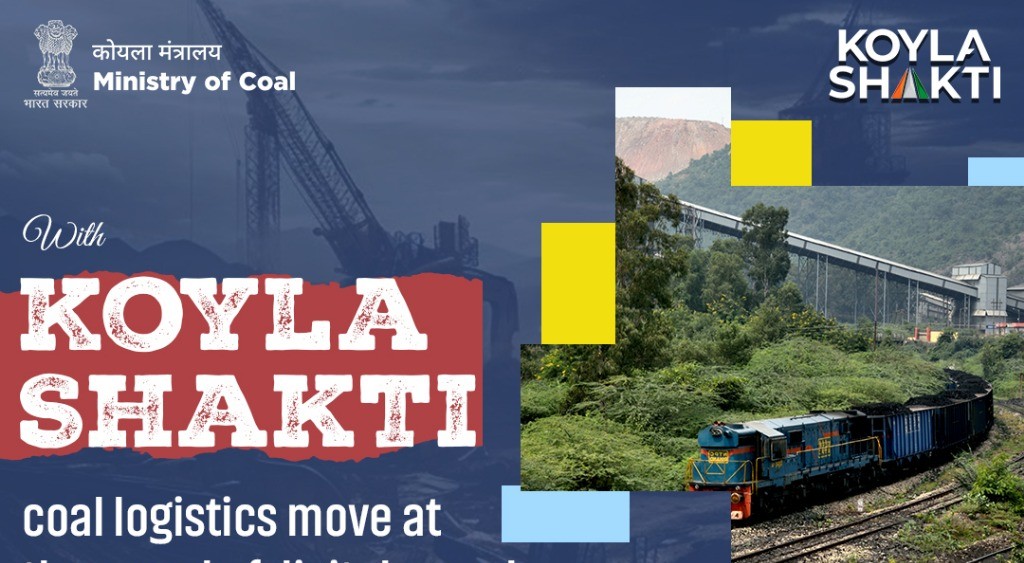
The Ministry of Coal is set to launch “Koyla Shakti” – Smart Coal Analytics Dashboard (SCAD) to enable real-time, data-driven monitoring and transparency in the coal sector under the Digital India Mission.
Introduction
- In a landmark move towards digital transformation and data-driven governance, the Ministry of Coal is set to launch “Koyla Shakti” – Smart Coal Analytics Dashboard (SCAD) on 29th October 2025.
- This initiative marks a crucial step in modernizing India’s coal sector through technology-enabled monitoring, transparency, and decision-making.
- The dashboard reflects the government’s commitment to integrating Digital India principles into resource management and industrial governance.
 .(Image Source: The Samikhsya)
Background: Coal and the Need for Digital Reform
- Coal remains the backbone of India’s energy economy, accounting for around 55–60% of the country’s total energy supply and nearly 70% of electricity generation. Despite its critical role, the sector has long been challenged by issues such as:
- Data fragmentation across agencies
- Delays in logistics and dispatch coordination
- Lack of real-time monitoring of production and supply
- Manual reporting errors and inefficiencies
- Limited transparency in coal allocation and pricing
- The Ministry of Coal has, over the past few years, undertaken several digital initiatives—such as Uttam App for quality monitoring, Mines Surveillance System, and Coal Allocation Monitoring System (CAMS). The launch of Koyla Shakti represents the next major leap—an integrated, analytical platform that will unify all coal-related operations into a single digital ecosystem.
About Koyla Shakti – Smart Coal Analytics Dashboard (SCAD)
- Koyla Shakti is a centralized digital intelligence platform designed to collect, integrate, and analyze real-time data from multiple stakeholders in the coal value chain. It aims to create a unified and transparent operational interface to monitor production, dispatch, transportation, and supply efficiency.
- Stakeholders Integrated
- The dashboard aggregates information from:
- Coal producing companies (CIL, SCCL, and private miners)
- Central Ministries & Departments – Coal, Railways, Power, Finance, Ports, Shipping & Waterways, and Road Transport & Highways
- State Departments managing mineral production through E-khanij platforms
- Power generation companies and industrial coal consumers
- Port authorities and private coal-handling terminals
- This integrated framework enables end-to-end visibility of the coal supply chain—from mine to end user.
Objectives of Koyla Shakti
- The primary objective of Koyla Shakti is to strengthen operational efficiency, promote transparency, and enable coordination across the entire coal ecosystem.
- The initiative aligns with the broader goals of Digital India and Atmanirbhar Bharat, ensuring efficient resource management through digital empowerment.
Key Features of the Dashboard
- Unified Visibility – Brings all data from diverse sources into a single interactive interface, breaking silos between agencies.
- Real-Time Monitoring – Enables continuous, live tracking of coal production, dispatch, and logistics.
- Data-Driven Decision Making – Provides analytical tools for evidence-based policy planning and management.
- Incident Response System – Issues timely alerts for operational bottlenecks or logistics delays.
- Standardization – Introduces uniform metrics and formats across departments for consistent reporting.
- Operational Efficiency – Reduces manual processes and human errors through automation.
- Scalability – Designed to integrate future datasets and digital platforms.
- Transparency & Accountability – Ensures public and inter-departmental visibility of key performance indicators.
- Policy Planning & Forecasting – Offers data analytics for demand forecasting, supply planning, and strategic resource allocation.
Significance for Governance and Policy
- Enhancing Efficiency and Coordination: The coal supply chain involves multiple actors—miners, railways, ports, and power producers. Koyla Shakti enables real-time synchronization among these entities, minimizing delays and improving overall coordination.
- Data-Driven Governance: The platform embodies the shift from reactive to predictive governance. Policy decisions on production targets, imports, and logistics can now be based on analytical insights rather than retrospective reports.
- Strengthening Transparency and Accountability: By providing open access to operational data across departments, the system reduces information asymmetry and enhances public trust in coal management.
- Supporting Energy Security: Efficient monitoring and dispatch planning ensure steady coal supply to power plants—crucial for India’s energy security and industrial stability.
- Facilitating Environmental Oversight: Data integration can eventually extend to environmental performance metrics, supporting sustainable mining practices and ESG (Environmental, Social, Governance) compliance.
Alignment with National Missions
1. Digital India Mission
- Koyla Shakti directly contributes to the Digital India vision of transforming governance through technology by:
- Enabling digital platforms for transparency
- Promoting inter-agency data integration
- Strengthening accountability through digital reporting
2. Atmanirbhar Bharat
- By modernizing domestic coal governance, India reduces dependence on coal imports, supporting self-reliance in energy.
3. Ease of Doing Business
- A seamless digital interface simplifies compliance and reduces delays for both public and private coal operators.
4. Sustainable Development Goals (SDGs)
- The initiative advances SDG 7 (Affordable and Clean Energy) and SDG 9 (Industry, Innovation and Infrastructure) by enhancing efficiency and sustainability in energy resource management.
Conclusion
- The Koyla Shakti Smart Coal Analytics Dashboard represents a paradigm shift in India’s approach to managing its most critical energy resource.
- By fusing technology, transparency, and efficiency, the Ministry of Coal aims to establish a real-time, data-integrated governance model.
CARE MCQ
Q5. With reference to the Koyla Shakti – Smart Coal Analytics Dashboard (SCAD), consider the following statements:
- It is a centralized digital platform developed by the Ministry of Coal for real-time monitoring and analysis of coal sector operations.
- The dashboard integrates data only from public sector coal companies under Coal India Limited.
- One of its key objectives is to enhance transparency and efficiency across the entire coal supply chain.
- It is aligned with the government’s Digital India Mission to promote technology-enabled governance.
Which of the statements given above are correct?
a) 1 and 3 only
b) 1, 3 and 4 only
c) 2 and 4 only
d) 1, 2, 3 and 4
Answer 5- B
Explanation
- Statement 1 is Correct: Koyla Shakti is a centralized Smart Coal Analytics Dashboard developed by the Ministry of Coal for real-time monitoring, analysis, and decision-making in coal operations.
- Statement 2 is Incorrect: The platform integrates data not just from Coal India Limited, but also from private miners, state departments, central ministries (Railways, Power, Ports, etc.), and coal-handling terminals.
- Statement 3 is Correct: A major aim is to enhance transparency, accountability, and operational efficiency in coal production, transport, and supply.
- Statement 4 is Correct: The initiative aligns with the Digital India Mission and supports Atmanirbhar Bharat by leveraging digital technology for efficient resource management.
- Therefore, option B is the correct answer.
UPSC PYQ
Q. Consider the following statements: (2019)
- Coal sector was nationalized by the Government of India under Indira Gandhi.
- Now, coal blocks are allocated on lottery basis
- Till recently, India imported coal to meet the shortages of domestic supply, but now India is self-sufficient in coal production.
Which of the statements given above is/are correct?
- 1 only
- 2 and 3 only
- 3 only
- 1, 2 and 3
Ans: (a)
Why in News?
According to the Lancet Countdown 2025 Report, India accounts for around 70% of global air-pollution-related deaths
Introduction
- The 2025 Global Report of the Lancet Countdown on Health and Climate Change, prepared by University College London in partnership with the World Health Organization (WHO), has sounded a grave warning for India.
- It states that India alone accounts for around 70% of global deaths caused by air pollution, marking the country as the epicentre of a global public health and environmental crisis.
- This alarming statistic not only reflects the deteriorating air quality but also underlines the intersection of public health, energy dependence, and climate vulnerability.
- The report urges urgent, multi-sectoral interventions in fossil fuel usage, urban governance, and climate resilience policies.

(Image Source: New Indian Express)
Scale and Magnitude of Air Pollution in India
- According to the report, India witnesses 1.72 million deaths annually due to anthropogenic (human-caused) air pollution — primarily from fine particulate matter (PM2.5).
- This represents a 38% increase since 2010, while the global total stands at 2.5 million deaths per year.
- PM2.5 refers to particulate matter smaller than 2.5 microns, which penetrates deep into the lungs and bloodstream, leading to cardiovascular, respiratory, and neurological disorders.
Fossil Fuels as the Core Cause
- The Lancet Countdown 2025 attributes 44% of air pollution-related deaths (7.52 lakh annually) to fossil fuel combustion, breaking it down as follows:
- Coal → 394,000 deaths
- Of which, 298,000 deaths are linked directly to coal-based power generation.
- Petrol and Diesel → 269,000 deaths
- Mainly from road transportation and vehicular emissions.
- Liquid gas and other fuels → Remaining share of deaths.
- The heavy reliance on coal-based power plants, especially in northern and eastern India, continues to make air pollution a structural issue embedded in India’s energy economy.
The Rising Threat from Wildfire Smoke and Household Pollution
Beyond fossil fuels, wildfire smoke and household fuels have emerged as significant contributors:
- Wildfire smoke (PM2.5) caused an average of 10,200 deaths annually from 2020–2024 — a 28% increase from the previous decade (2003–2012).
- Household air pollution led to an average of 113 deaths per 100,000 people in 2022.
- Rural mortality rate: 125 per 100,000
- Urban mortality rate: 99 per 100,000
- This indicates the urban-rural divide in access to clean cooking fuels, despite initiatives such as the Pradhan Mantri Ujjwala Yojana (PMUY).
Economic Burden of Air Pollution
- The report estimates that premature mortality due to outdoor air pollution cost India $339.4 billion in 2022, equivalent to 9.5% of GDP.
- Such a massive economic burden reflects:
- Loss of productivity and labour hours.
- Increased healthcare costs.
- Reduced agricultural output due to pollution-induced soil degradation.
- This makes air pollution not just a health issue, but a macroeconomic and developmental challenge.
Climate Change Interlinkages: Heatwaves, Drought, and Disease Spread
The Lancet Countdown 2025 goes beyond pollution to show climate-health interconnections:
(a) Rising Heatwaves and Labour Productivity Loss
- Indians experienced 50% more heatwave days in 2024, with 366 extra hours of exposure per person.
- This resulted in 419 lost labour hours per person annually, which is 124% higher than in 1990–1999.
- The resultant income loss was $194 billion in 2024, particularly in agriculture and construction sectors.
(b) Drought and Ecological Stress
- Areas experiencing at least one month of extreme drought each year rose by 138%, from 14.1% (1951–1960) to 2015–2024.
- This intensifies water stress, crop failures, and migration pressures.
(c) Vector- and Water-Borne Disease Surge
- Dengue transmission potential from Aedes albopictus mosquitoes has doubled over the last seven decades.
- Coastal bacterial diseases like Vibrio infections are 46% higher than the 1982–2010 baseline.
- Thus, climate-induced air pollution is not only a respiratory threat but also a driver of infectious disease vulnerability.
Policy Dimensions and Challenges
a. Gaps in Air Quality Governance
- Despite the National Clean Air Programme (NCAP) launched in 2019, India struggles with:
- Weak enforcement of emission standards.
- Poor coordination among Centre, States, and Urban Local Bodies.
- Limited real-time data coverage beyond metro cities.
b. Energy Transition Dilemmas
- While India has committed to net-zero by 2070, coal continues to dominate energy generation, meeting over 70% of power needs.
- Transitioning to renewables requires large-scale investment and just-transition planning for coal-dependent regions.
c. Public Health Preparedness
- The integration of climate-health data into healthcare planning remains limited.
- The Lancet Countdown urges synergising health and environmental policies, including early warning systems for air quality and heat stress.
The Way Forward
Policy Recommendations
- Strengthen the NCAP by introducing legally binding air quality standards.
- Accelerate renewable energy deployment while ensuring a just transition for fossil-fuel workers.
- Expand clean cooking initiatives and ensure equitable energy access in rural India.
- Integrate climate-health data into national health missions.
- Invest in urban green infrastructure and public transport to cut vehicular emissions.
- Enhance inter-sectoral coordination among energy, environment, and health ministries.
Conclusion
- The Lancet Countdown 2025 underscores a stark truth: India is at the heart of the global air pollution crisis. The nexus between fossil fuel dependence, climate change, and public health has reached a critical tipping point.
CARE MCQ
Q6. According to the Lancet Countdown on Health and Climate Change 2025 Report, which of the following statements are correct regarding air pollution and climate impacts in India?
- Fossil fuel combustion accounts for nearly half of air pollution deaths in India, with coal-based power plants being a major contributor.
- Household air pollution mortality rates are higher in urban areas compared to rural areas.
- The economic cost of premature mortality due to outdoor air pollution in India was estimated at nearly 10% of GDP in 2022.
- The report notes that India experienced over a 100% increase in labour hour loss due to heat stress compared to the 1990–1999 period.
Select the correct answer using the code given below:
a) 1 and 3 only
b) 1, 3 and 4 only
c) 2 and 3 only
d) 1, 2, 3 and 4
Answer 6-B
Explanation
- Statement 1 is Correct: Fossil fuels cause about 44% of air pollution deaths, with coal-based power plants responsible for nearly 298,000 fatalities annually.
- Statement 2 is Incorrect: Rural areas have higher household air pollution mortality (125 per 100,000) than urban areas (99 per 100,000).
- Statement 3 is Correct: The economic cost of premature mortality due to air pollution was estimated at $339.4 billion, equivalent to 9.5% of GDP.
- Statement 4 is Correct: Heat-stress-related labour loss increased over 124% compared to the 1990–1999 baseline.
- Therefore, option B is the correct answer.
UPSC PYQ
Q. In the cities of our country, which among the following atmospheric gases are normally considered in calculating the value of the Air Quality Index? (2016)
- Carbon dioxide
- Carbon monoxide
- Nitrogen dioxide
- Sulphur dioxide
- Methane
Select the correct answer using the code given below:
(a) 1, 2 and 3 only
(b) 2, 3 and 4 only
(c) 1, 4 and 5 only
(d) 1, 2, 3, 4 and 5
Ans: (b)