Why in News?
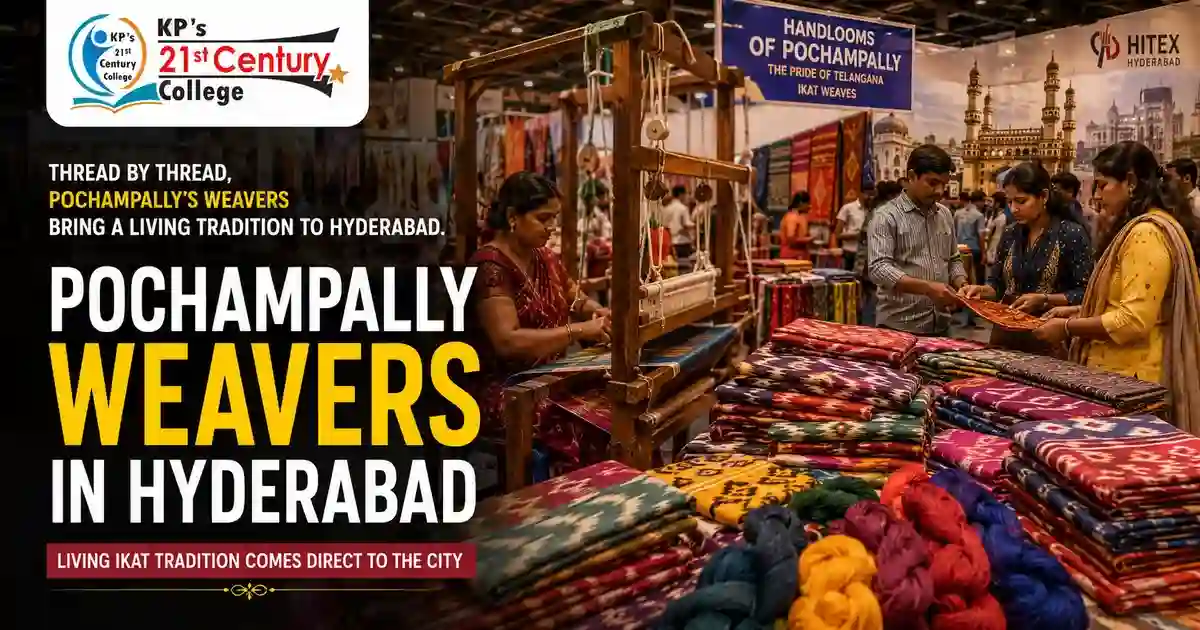
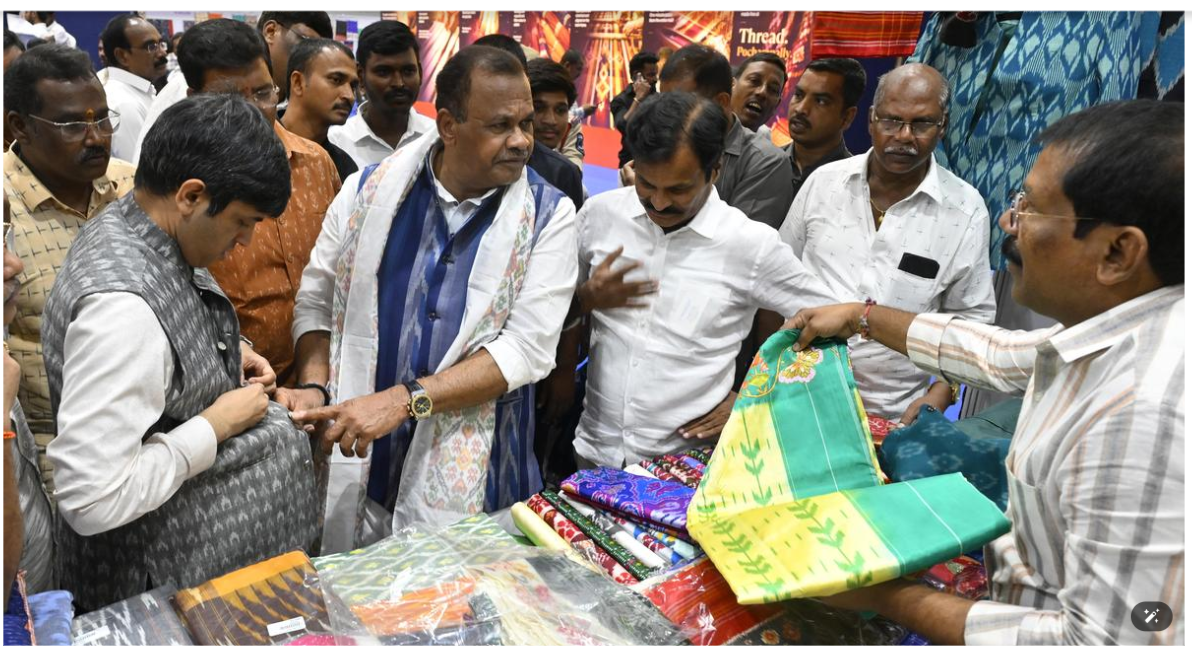
A three-day exhibition-cum-sale titled “Thread Pochampally” was organised at HITEX Exhibition Centre, Hyderabad, to celebrate Telangana’s world-famous Pochampally Ikat tradition.The exhibition brought together around 100 weavers and showcased sarees, dress materials, shirts, home furnishings and lifestyle products. It also displayed the process of weaving, natural dyes and traditional looms.
What is Thread Pochampally?
- Thread Pochampally is a first-of-its-kind exhibition dedicated entirely to Pochampally Ikat.
- It was organised by the Yadadri Bhuvanagiri district administration with support from CSR partners.
- The programme was inaugurated by the Minister for Agriculture, Marketing, Cooperation, Handlooms and Textiles Tummala Nageswara Rao, in the presence of Minister Komatireddy Venkat Reddy and other officials.
The exhibition aimed to:
- Promote authentic Pochampally handloom products.
- Create direct market access for weavers.
- Educate visitors about the Ikat-making process.
- Encourage citizens to support Telangana’s handloom communities.
- Present Pochampally as both a heritage craft and a modern fashion identity.
What is Pochampally Ikat?
Pochampally Ikat is a traditional handloom textile from Bhoodan Pochampally in Telangana.
It is famous for its:
- Geometric patterns
- Bright colour combinations
- Fine handwoven designs
- Tie-and-dye technique
- Durable colours
- Use of cotton, silk and silk-cotton blends
Pochampally Ikat is one of Telangana’s most celebrated handloom traditions and is known both in India and abroad.
Weaving Technique
- Pochampally Ikat is based on the Ikat or Tie-and-Dye weaving technique.
- In this method, designs are transferred onto the threads before weaving. This gives the fabric a unique blurred or feathered edge effect.
The process includes:
- Lining up warp threads
- Marking the design
- Tying selected thread portions
- Dyeing in a dye bath
- Unwrapping the threads
- Arranging them on the loom
- Weaving the final fabric
This process requires high skill, patience and mathematical precision. Even a small mistake in tying or arranging threads can affect the design.
Materials Used
Common materials used in Pochampally Ikat include:
- Cotton
- Silk
- Sico, a silk-cotton blend
Natural dyes and pure dyes are also used in many traditional products. The exhibition displayed natural dyes and their ingredients, helping visitors understand the eco-friendly side of the craft.
Cultural and Economic Importance
Pochampally Ikat is not merely a textile product. It is a living cultural tradition.
Its importance can be seen in the following ways:
1. Cultural Identity
Pochampally Ikat represents Telangana’s artistic heritage and traditional knowledge.
2. Rural Livelihood
The craft supports thousands of weaver families and allied workers involved in dyeing, designing, finishing and marketing.
3. Sustainable Textile Tradition
Handloom weaving uses less energy compared to machine-made textiles and supports slow, sustainable fashion.
4. Women and Family Labour
Many handloom processes involve family-based work, including women’s contribution in preparation, dyeing and finishing.
5. Tourism Potential
Telangana Tourism is promoting customised packages for visitors to explore weaving villages, interact with artisan families and see traditional looms.
GI Status and UNESCO Recognition
- Pochampally Ikat received Geographical Indication (GI) status in 2005. This gives legal recognition to its unique identity and protects it from imitation.
- Pochampally is also included in the UNESCO tentative list of World Heritage Sites, reflecting its cultural and heritage value.
The GI tag is important because it:
- Protects the authenticity of the craft.
- Helps promote the product in domestic and global markets.
- Supports weaver identity and brand value.
- Prevents misuse of the Pochampally name by fake products.
Weavers’ Cooperative Society
- The Pochampally Handloom Weavers’ Cooperative Society Ltd. was established in 1955.
- It includes around 125 weaver families and has received several national recognitions.
The cooperative model helps weavers by supporting:
- Production
- Marketing
- Collective bargaining
- Product promotion
- Craft preservation
Such institutions are important for protecting traditional crafts from market instability.
Weavers’ Concerns
- Despite public appreciation, weavers face serious concerns.
- Elderly weavers fear that younger generations are moving away from the craft. Many children and grandchildren of weavers are not interested in continuing the tradition due to income uncertainty and hard labour.
Major concerns include:
- Declining interest among youth
- Low and uncertain income
- Competition from powerloom and machine-made products
- Lack of awareness among consumers
- Difficulty in distinguishing genuine handloom from imitation
- Limited direct market access
- Rising cost of raw materials
- Need for modern design and branding support
Challenges
- Younger generations are not showing enough interest in weaving.
- Fake and machine-made products weaken the value of genuine Ikat.
- Handloom products are often seen as expensive by consumers.
- Weavers need better design, branding and e-commerce support.
- Raw material prices affect production costs.
- Middlemen reduce the income of artisans.
- Many weavers lack social security and stable market access.
- Traditional skills may decline if training is not institutionalised.
Way Forward
- Promote genuine Pochampally Ikat through GI-based branding.
- Create handloom awareness campaigns in schools, colleges and urban markets.
- Strengthen direct-to-consumer exhibitions and online sales.
- Provide design training to young weavers.
- Link handlooms with fashion institutes and designers.
- Promote weaving village tourism through Telangana Tourism.
- Provide social security, credit support and insurance to weavers.
- Use technology such as virtual try-on, QR codes and digital certification.
- Encourage government and private institutions to buy handloom products.
- Train youth in both traditional weaving and modern entrepreneurship.
Conclusion
The Thread Pochampally exhibition showed that Pochampally Ikat is not just a fabric but a living heritage of Telangana. Every saree carries the skill, patience and cultural memory of the weaver.
The success of the exhibition proves that traditional crafts can survive when people understand their value and support artisans directly. Preserving Pochampally Ikat requires a balance of heritage protection, modern design, technology, tourism and fair income for weavers.