Table of Contents
Relevance: GS Paper II – International Relations | GS Paper III – Economy | Energy Security | Strategic Autonomy
For Prelims:
CAATSA, Chabahar Port, INSTC, Unilateral Sanctions, Secondary Sanctions, Strategic Autonomy, Rupee-Rial Trade, Strait of Hormuz, S-400, IPGL, Gulf of Oman
For Mains:
strategic autonomy, extraterritorial sanctions, energy security, payment sovereignty, multilateralism, rules-based order, supply chain resilience, foreign policy independence, sanctions diplomacy, regional connectivity
Why in News?
- The ongoing U.S.–Israel conflict involving Iran and the tightening of U.S. unilateral sanctions have increased pressure on India’s energy security, trade routes, and foreign policy choices.
- India faces rising oil prices, fertilizer disruptions, export slowdowns, and uncertainty over strategic projects such as Chabahar Port because of U.S. sanctions policy.
- The U.S. waiver allowing India’s operations at Chabahar Port is also nearing expiry, reviving debate over whether India should continue complying with unilateral sanctions that affect its national interest.
What are Unilateral Sanctions?
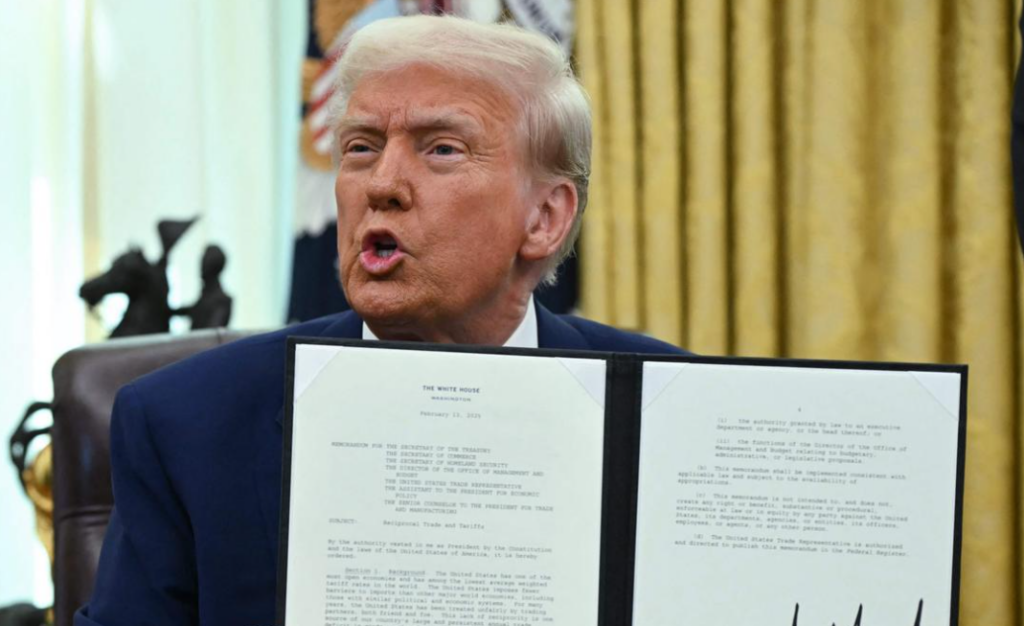
- Unilateral sanctions are economic, financial, or trade restrictions imposed by one country on another without approval from multilateral institutions like the United Nations Security Council.
- These sanctions may include restrictions on banking, imports, exports, shipping, technology access, financial transactions, and strategic cooperation.
- When such sanctions also target third countries dealing with the sanctioned state, they are called secondary or extraterritorial sanctions.
- The United States frequently uses such sanctions against countries like Iran, Russia, North Korea, and Venezuela
Why U.S. Sanctions Matter for India?
- India is heavily dependent on imported crude oil, LNG, fertilizers, and strategic connectivity routes passing through West Asia.
- When the U.S. imposes sanctions on countries such as Iran or Russia, India’s access to affordable energy and trade corridors becomes difficult.
- This affects inflation, fertilizer availability, export competitiveness, and strategic projects like Chabahar Port and the International North-South Transport Corridor (INSTC).
- Frequent sanctions also create policy uncertainty, discouraging long-term diversification of suppliers and weakening India’s economic planning.
Major Areas of U.S. Sanctions Impact on India
Iranian Oil Imports
- India had earlier imported significant quantities of crude oil from Iran because of favorable pricing and payment flexibility.
- However, after U.S. sanctions intensified in 2019, India stopped importing Iranian oil despite energy security concerns.
- This increased dependence on other suppliers and raised import costs.
Venezuelan Oil
- India also reduced or halted oil imports from Venezuela due to U.S. sanctions pressure.
- This reduced India’s flexibility in diversifying energy sources.
Russian Oil Purchases
- India increased Russian oil imports after the Ukraine conflict due to discounted prices.
- However, from late 2025 to early 2026, pressure from the U.S. led to reduced purchases, affecting cost-effective energy sourcing.
- This demonstrated the continued influence of sanctions diplomacy on Indian decisions.
Fertilizer and LNG Imports
- Iran conflict and Gulf instability affect fertilizer imports, ammonia supply, and LNG shipments, directly impacting Indian agriculture and food security.
- This shows that sanctions are not limited to oil alone but influence the entire economic chain.
CAATSA and India’s Strategic Dilemma
What is CAATSA?
- CAATSA stands for Countering America’s Adversaries Through Sanctions Act, passed by the U.S. in 2017.
- It authorizes sanctions on countries engaging in significant defense or strategic transactions with Russia, Iran, and North Korea.
India and the S-400 Issue
- India signed a $5.4 billion deal with Russia in 2018 to purchase the S-400 Triumf air defense system.
- This created fears of U.S. sanctions under CAATSA because Russia is one of the target countries.
- However, the U.S. did not impose sanctions on India, showing that strategic considerations can override rigid enforcement.
Strategic Lesson
- This indicates that firm assertion of national interest can sometimes be more effective than automatic compliance.
- India’s defense and national security decisions cannot be permanently shaped by external legislative frameworks of another country.
Chabahar Port and INSTC Importance
Chabahar Port
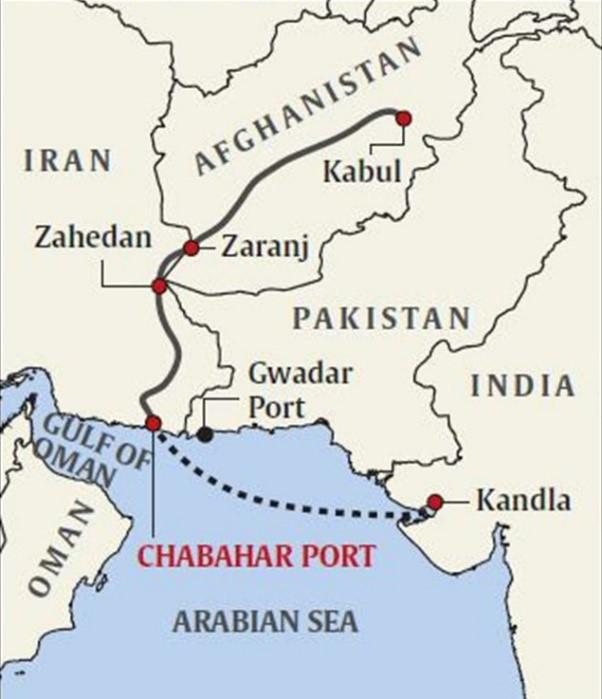
- Chabahar Port is located in southeastern Iran on the Gulf of Oman and is Iran’s only oceanic port.
- It allows India direct access to Afghanistan and Central Asia without depending on Pakistan’s land routes.
- India operates the Shahid Beheshti terminal through India Ports Global Limited (IPGL) and signed a long-term operational agreement in 2024.
Strategic Importance
- Chabahar acts as a counterbalance to China’s Gwadar Port in Pakistan.
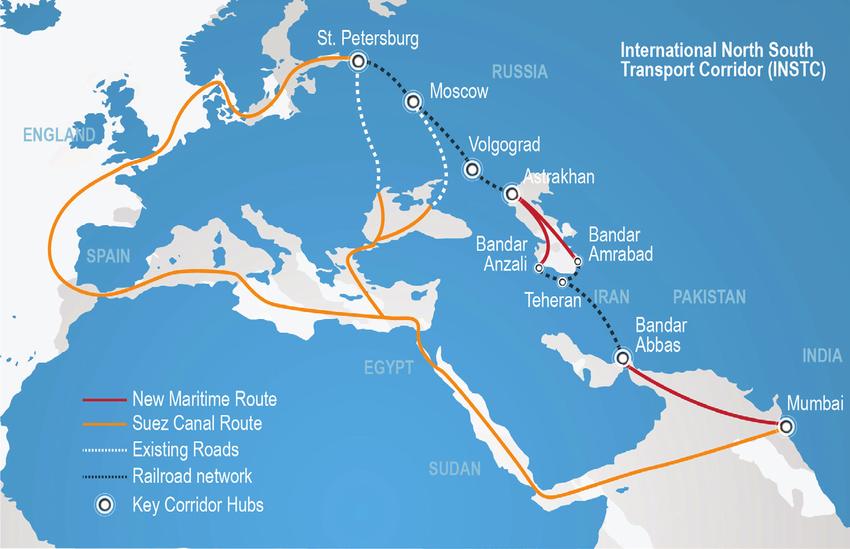
- It is also a crucial gateway for the International North-South Transport Corridor (INSTC), connecting India with Iran, Russia, Central Asia, and Europe.
INSTC
- The INSTC is a 7,200 km multimodal trade corridor involving ship, rail, and road connectivity.
- It reduces transit time and costs compared to the Suez Canal route and strengthens India’s trade diversification and Eurasian access.
Challenges Created by U.S. Sanctions
- Frequent sanctions create uncertainty and discourage strategic planning in energy, trade, and connectivity.
- Compliance increases India’s dependence on expensive suppliers and reduces bargaining power.
- Fertilizer and LNG disruptions directly affect agriculture, inflation, and food security.
- Sanctions also weaken the principle of multilateralism because they bypass UN-based international decision-making and rely on unilateral coercion.
- Financial dependence on dollar-based systems makes India vulnerable to payment restrictions and global financial pressure
Significance for India’s Foreign Policy
The issue is fundamentally about strategic autonomy—the ability of India to make independent foreign policy choices based on national interest rather than external pressure.
- India has historically followed strategic autonomy rather than bloc politics, especially from the Non-Aligned Movement to modern multi-alignment diplomacy.
- Blind compliance with unilateral sanctions weakens this tradition and reduces India’s credibility as an independent global actor.
- Balancing relations with the U.S. while protecting sovereign decision-making is therefore central to Indian foreign policy.
Way Forward
- India should strengthen alternative payment mechanisms such as rupee-rial and rupee-ruble settlement systems to reduce excessive dependence on dollar transactions.
- Domestic payment infrastructure and financial sovereignty must be expanded to reduce vulnerability to sanctions-linked banking restrictions.
- Renewable energy expansion and strategic petroleum reserves should be strengthened to reduce oil dependence on conflict-prone regions.
- India must continue diversifying crude oil, fertilizer, and LNG suppliers across Africa, Latin America, and Central Asia.
- Strategic projects like Chabahar and INSTC must be protected through active diplomacy and long-term institutional commitment.
- India should insist that only UN-backed sanctions carry full legitimacy under international law, while resisting purely unilateral coercive frameworks.
Conclusion
U.S. unilateral sanctions are not merely foreign policy instruments; they directly affect India’s economy, agriculture, energy security, and strategic space.
A nation aspiring for major power status cannot permanently outsource its sovereign choices to the domestic legislation of another country.
India must protect its strategic autonomy by building economic resilience, diplomatic alternatives, and payment sovereignty while maintaining balanced relations with all major powers.
CARE MCQ
Q. With reference to CAATSA and India’s strategic interests, consider the following statements:
- CAATSA authorizes U.S. sanctions on countries engaging in significant defense transactions with Russia.
- Chabahar Port helps India access Afghanistan and Central Asia without passing through Pakistan.
- INSTC primarily connects India to Southeast Asia through maritime routes.
Which of the statements given above are correct?
A.1 and 2 only
B. 2 and 3 only
C. 1 and 3 only
D. 1, 2 and 3
Answer: A
Explanation
Statement 1 is correct because CAATSA targets major transactions involving Russia, Iran, and North Korea.
Statement 2 is correct because Chabahar provides India an alternative route bypassing Pakistan for access to Afghanistan and Central Asia.
Statement 3 is incorrect because INSTC connects India mainly to Iran, Russia, Central Asia, and Europe—not Southeast Asia.
Q. Consider the following statements:
Statement-I: A major challenge in India–Central Asia trade is the absence of direct land connectivity, as the most convenient overland route passes through Pakistan.
Statement-II: India is attempting to overcome this challenge by promoting alternatives such as Chabahar Port in Iran and the International North-South Transport Corridor (INSTC).
Which one of the following is correct?
(a) Both Statement-I and Statement-II are correct and Statement-II is the correct explanation for Statement-I
(b) Both Statement-I and Statement-II are correct but Statement-II is not the correct explanation for Statement-I
(c) Statement-I is correct but Statement-II is incorrect
(d) Statement-I is incorrect but Statement-II is correct
Ans: (a)
Explanation:
Statement-I is correct: One of the biggest constraints in India’s trade and strategic engagement with Central Asia is the lack of direct land access. Geographically, the shortest and most practical overland route would pass through Pakistan and Afghanistan. However, due to political and strategic constraints, Pakistan does not provide India with direct transit access for trade with Central Asia. This creates a major obstacle in expanding India’s economic presence in the region.
Statement-II is correct: To address this problem, India has invested in Chabahar Port in Iran and promoted the International North-South Transport Corridor (INSTC). Chabahar allows India to access Afghanistan and further connect with Central Asia without depending on Pakistan. Similarly, the INSTC links India with Iran, the Caspian region, Russia, and Eurasia through a multi-modal transport network involving sea, rail, and road routes. These projects are designed specifically to improve strategic and commercial connectivity.
Statement-II correctly explains Statement-I:
Statement-II directly provides the solution to the problem identified in Statement-I. Since Pakistan blocks the most direct land route, India requires alternative connectivity mechanisms. Chabahar Port and INSTC are strategic responses created precisely to bypass this constraint and ensure access to Central Asia. Therefore, Statement-II is the correct explanation of Statement-I.
Q. Consider the following statements regarding the India–Iran relationship:
- Chabahar Port is located outside the Persian Gulf and provides direct access to the Gulf of Oman.
- The 2024 agreement allows India to operate a terminal at Chabahar Port for a period of 10 years.
- US sanctions on Iran have affected formal banking and payment channels between India and Iran.
Which of the statements given above are correct?
(a) 1 only
(b) 2 and 3 only
(c) 1 and 3 only
(d) 1, 2 and 3
Ans: (d)
Explanation:
Statement 1 is correct: A major strategic advantage of Chabahar Port is that it is located outside the Persian Gulf, on the Gulf of Oman. This makes it different from ports like Bandar Abbas, which lie inside the Strait of Hormuz region. Because of this location, Chabahar offers India direct maritime access without dependence on routes vulnerable to chokepoint pressures inside the Persian Gulf.
Statement 2 is correct: In May 2024, India and Iran signed a significant long-term agreement under which India Ports Global Limited (IPGL) will operate the Shahid Beheshti terminal at Chabahar Port for 10 years. This marked a major step in strengthening India’s long-term connectivity strategy with Afghanistan, Central Asia, and Eurasia.
Statement 3 is correct: US sanctions on Iran have created serious challenges for India–Iran trade, especially in relation to formal banking channels and payment mechanisms. These restrictions have made oil payments, trade settlements, and financial transfers difficult, forcing both countries to depend on alternative arrangements and limiting the overall scale of bilateral trade.
Q. Which of the following are significant economic implications for a transit country participating in a transit agreement?
(a) Enhanced revenue generation through transit fees, tolls, and related logistics services, along with incentives for infrastructure development
(b) Guaranteed tariff-free access for its domestic products to the markets of all participating landlocked countries
(c) An obligation to maintain strategic reserves of essential commodities for all partner countries at its own expense
(d) A mandatory reduction in its own import duties to lower domestic consumer prices
Ans: (a)
Explanation:
A transit agreement allows goods and services to pass through the territory of one country (the transit country) so that another country—often a landlocked country—can access international trade routes and seaports. Such agreements are important for regional connectivity, trade facilitation, and economic cooperation.
The most significant economic benefit for the transit country is the opportunity for revenue generation. It can earn income through:
- Transit fees and tolls charged for the use of roads, railways, ports, and inland waterways
- Charges for warehousing, customs handling, port services, and logistics operations
- Increased employment and economic activity in transport and service sectors
Transit arrangements also encourage governments to improve infrastructure development, such as highways, rail links, dry ports, and communication networks. This strengthens long-term trade capacity and regional integration.
UPSC CARE MAINS
Q. “Unilateral sanctions imposed by major powers often challenge the principles of sovereignty, strategic autonomy, and rules-based international order.” In this context, examine why India must draw a red line on U.S. unilateral sanctions while balancing its strategic and economic interests. [250 WORDS]
FAQs
Q1. What is CAATSA?
It is a U.S. law that allows sanctions on countries dealing significantly with Russia, Iran, and North Korea in defense and strategic sectors.
Q2. Why is Chabahar Port important for India?
It gives India strategic access to Afghanistan and Central Asia while bypassing Pakistan and supports the INSTC trade corridor.
Q3. What is meant by strategic autonomy?
It means the ability of a country to make independent foreign policy decisions based on national interest without external pressure.
Q4. Why are unilateral sanctions controversial?
Because they are imposed without UN approval and often affect third countries, raising questions about international law and sovereignty.
Q5. What is the main long-term solution for India?
Reducing dependence on vulnerable supply chains through diversified imports, alternative payments, renewable energy, and stronger diplomatic leverage.