Relevance: GS Paper II – International Relations | GS Paper III – Economy | Energy Security | Strategic Autonomy
For Prelims:
CAATSA, Chabahar Port, INSTC, Unilateral Sanctions, Secondary Sanctions, Strategic Autonomy, Rupee-Rial Trade, Strait of Hormuz, S-400, IPGL, Gulf of Oman
For Mains:
strategic autonomy, extraterritorial sanctions, energy security, payment sovereignty, multilateralism, rules-based order, supply chain resilience, foreign policy independence, sanctions diplomacy, regional connectivity
Why in News?
- The ongoing U.S.–Israel conflict involving Iran and the tightening of U.S. unilateral sanctions have increased pressure on India’s energy security, trade routes, and foreign policy choices.
- India faces rising oil prices, fertilizer disruptions, export slowdowns, and uncertainty over strategic projects such as Chabahar Port because of U.S. sanctions policy.
- The U.S. waiver allowing India’s operations at Chabahar Port is also nearing expiry, reviving debate over whether India should continue complying with unilateral sanctions that affect its national interest.
What are Unilateral Sanctions?
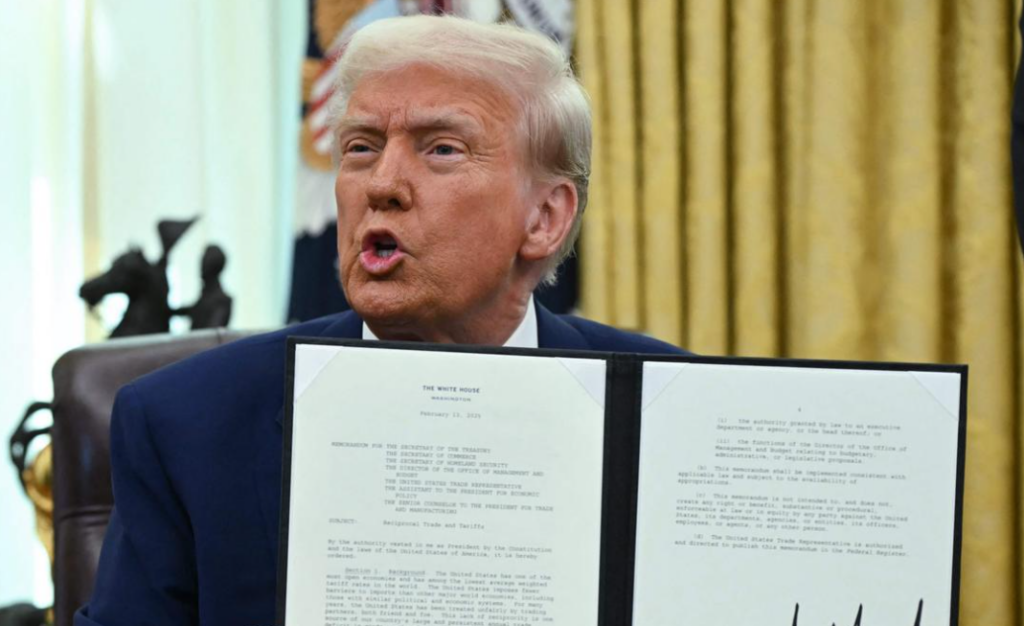
- Unilateral sanctions are economic, financial, or trade restrictions imposed by one country on another without approval from multilateral institutions like the United Nations Security Council.
- These sanctions may include restrictions on banking, imports, exports, shipping, technology access, financial transactions, and strategic cooperation.
- When such sanctions also target third countries dealing with the sanctioned state, they are called secondary or extraterritorial sanctions.
- The United States frequently uses such sanctions against countries like Iran, Russia, North Korea, and Venezuela
Why U.S. Sanctions Matter for India?
- India is heavily dependent on imported crude oil, LNG, fertilizers, and strategic connectivity routes passing through West Asia.
- When the U.S. imposes sanctions on countries such as Iran or Russia, India’s access to affordable energy and trade corridors becomes difficult.
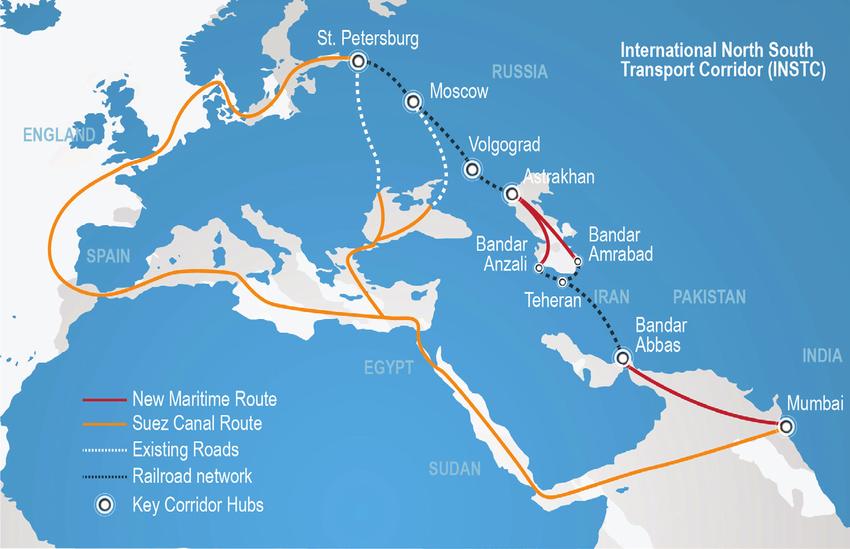
- This affects inflation, fertilizer availability, export competitiveness, and strategic projects like Chabahar Port and the International North-South Transport Corridor (INSTC).
- Frequent sanctions also create policy uncertainty, discouraging long-term diversification of suppliers and weakening India’s economic planning.
Major Areas of U.S. Sanctions Impact on India
Iranian Oil Imports
- India had earlier imported significant quantities of crude oil from Iran because of favorable pricing and payment flexibility.
- However, after U.S. sanctions intensified in 2019, India stopped importing Iranian oil despite energy security concerns.
- This increased dependence on other suppliers and raised import costs.
Venezuelan Oil
- India also reduced or halted oil imports from Venezuela due to U.S. sanctions pressure.
- This reduced India’s flexibility in diversifying energy sources.
Russian Oil Purchases
- India increased Russian oil imports after the Ukraine conflict due to discounted prices.
- However, from late 2025 to early 2026, pressure from the U.S. led to reduced purchases, affecting cost-effective energy sourcing.
- This demonstrated the continued influence of sanctions diplomacy on Indian decisions.
Fertilizer and LNG Imports
- Iran conflict and Gulf instability affect fertilizer imports, ammonia supply, and LNG shipments, directly impacting Indian agriculture and food security.
- This shows that sanctions are not limited to oil alone but influence the entire economic chain.
CAATSA and India’s Strategic Dilemma
What is CAATSA?
- CAATSA stands for Countering America’s Adversaries Through Sanctions Act, passed by the U.S. in 2017.
- It authorizes sanctions on countries engaging in significant defense or strategic transactions with Russia, Iran, and North Korea.
India and the S-400 Issue
- India signed a $5.4 billion deal with Russia in 2018 to purchase the S-400 Triumf air defense system.
- This created fears of U.S. sanctions under CAATSA because Russia is one of the target countries.
- However, the U.S. did not impose sanctions on India, showing that strategic considerations can override rigid enforcement.
Strategic Lesson
- This indicates that firm assertion of national interest can sometimes be more effective than automatic compliance.
- India’s defense and national security decisions cannot be permanently shaped by external legislative frameworks of another country.
Chabahar Port and INSTC Importance
Chabahar Port
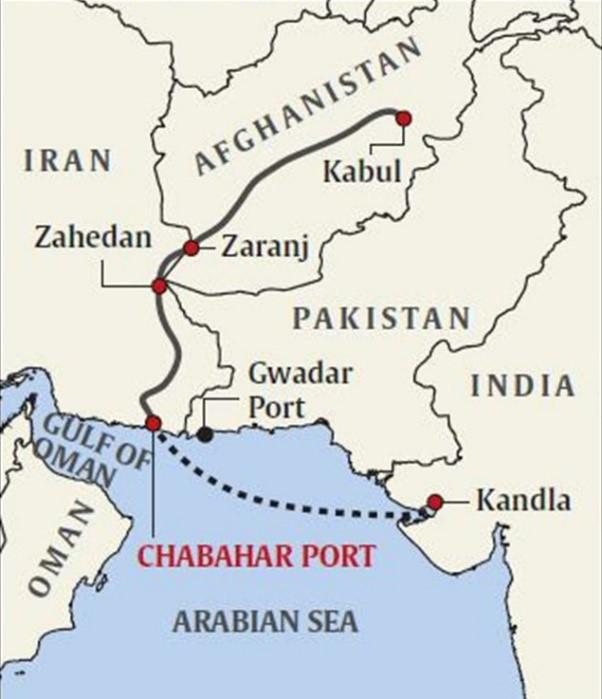
- Chabahar Port is located in southeastern Iran on the Gulf of Oman and is Iran’s only oceanic port.
- It allows India direct access to Afghanistan and Central Asia without depending on Pakistan’s land routes.
- India operates the Shahid Beheshti terminal through India Ports Global Limited (IPGL) and signed a long-term operational agreement in 2024.
Strategic Importance
- Chabahar acts as a counterbalance to China’s Gwadar Port in Pakistan.
- It is also a crucial gateway for the International North-South Transport Corridor (INSTC), connecting India with Iran, Russia, Central Asia, and Europe.
INSTC
- The INSTC is a 7,200 km multimodal trade corridor involving ship, rail, and road connectivity.
- It reduces transit time and costs compared to the Suez Canal route and strengthens India’s trade diversification and Eurasian access.
Challenges Created by U.S. Sanctions
- Frequent sanctions create uncertainty and discourage strategic planning in energy, trade, and connectivity.
- Compliance increases India’s dependence on expensive suppliers and reduces bargaining power.
- Fertilizer and LNG disruptions directly affect agriculture, inflation, and food security.
- Sanctions also weaken the principle of multilateralism because they bypass UN-based international decision-making and rely on unilateral coercion.
- Financial dependence on dollar-based systems makes India vulnerable to payment restrictions and global financial pressure
Significance for India’s Foreign Policy
The issue is fundamentally about strategic autonomy—the ability of India to make independent foreign policy choices based on national interest rather than external pressure.
- India has historically followed strategic autonomy rather than bloc politics, especially from the Non-Aligned Movement to modern multi-alignment diplomacy.
- Blind compliance with unilateral sanctions weakens this tradition and reduces India’s credibility as an independent global actor.
- Balancing relations with the U.S. while protecting sovereign decision-making is therefore central to Indian foreign policy.
Way Forward
- India should strengthen alternative payment mechanisms such as rupee-rial and rupee-ruble settlement systems to reduce excessive dependence on dollar transactions.
- Domestic payment infrastructure and financial sovereignty must be expanded to reduce vulnerability to sanctions-linked banking restrictions.
- Renewable energy expansion and strategic petroleum reserves should be strengthened to reduce oil dependence on conflict-prone regions.
- India must continue diversifying crude oil, fertilizer, and LNG suppliers across Africa, Latin America, and Central Asia.
- Strategic projects like Chabahar and INSTC must be protected through active diplomacy and long-term institutional commitment.
- India should insist that only UN-backed sanctions carry full legitimacy under international law, while resisting purely unilateral coercive frameworks.
Conclusion
U.S. unilateral sanctions are not merely foreign policy instruments; they directly affect India’s economy, agriculture, energy security, and strategic space.
A nation aspiring for major power status cannot permanently outsource its sovereign choices to the domestic legislation of another country.
India must protect its strategic autonomy by building economic resilience, diplomatic alternatives, and payment sovereignty while maintaining balanced relations with all major powers.
CARE MCQ
Q. With reference to CAATSA and India’s strategic interests, consider the following statements:
- CAATSA authorizes U.S. sanctions on countries engaging in significant defense transactions with Russia.
- Chabahar Port helps India access Afghanistan and Central Asia without passing through Pakistan.
- INSTC primarily connects India to Southeast Asia through maritime routes.
Which of the statements given above are correct?
A.1 and 2 only
B. 2 and 3 only
C. 1 and 3 only
D. 1, 2 and 3
Answer: A
Explanation
Statement 1 is correct because CAATSA targets major transactions involving Russia, Iran, and North Korea.
Statement 2 is correct because Chabahar provides India an alternative route bypassing Pakistan for access to Afghanistan and Central Asia.
Statement 3 is incorrect because INSTC connects India mainly to Iran, Russia, Central Asia, and Europe—not Southeast Asia.
Q. Consider the following statements:
Statement-I: A major challenge in India–Central Asia trade is the absence of direct land connectivity, as the most convenient overland route passes through Pakistan.
Statement-II: India is attempting to overcome this challenge by promoting alternatives such as Chabahar Port in Iran and the International North-South Transport Corridor (INSTC).
Which one of the following is correct?
(a) Both Statement-I and Statement-II are correct and Statement-II is the correct explanation for Statement-I
(b) Both Statement-I and Statement-II are correct but Statement-II is not the correct explanation for Statement-I
(c) Statement-I is correct but Statement-II is incorrect
(d) Statement-I is incorrect but Statement-II is correct
Ans: (a)
Explanation:
Statement-I is correct: One of the biggest constraints in India’s trade and strategic engagement with Central Asia is the lack of direct land access. Geographically, the shortest and most practical overland route would pass through Pakistan and Afghanistan. However, due to political and strategic constraints, Pakistan does not provide India with direct transit access for trade with Central Asia. This creates a major obstacle in expanding India’s economic presence in the region.
Statement-II is correct: To address this problem, India has invested in Chabahar Port in Iran and promoted the International North-South Transport Corridor (INSTC). Chabahar allows India to access Afghanistan and further connect with Central Asia without depending on Pakistan. Similarly, the INSTC links India with Iran, the Caspian region, Russia, and Eurasia through a multi-modal transport network involving sea, rail, and road routes. These projects are designed specifically to improve strategic and commercial connectivity.
Statement-II correctly explains Statement-I:
Statement-II directly provides the solution to the problem identified in Statement-I. Since Pakistan blocks the most direct land route, India requires alternative connectivity mechanisms. Chabahar Port and INSTC are strategic responses created precisely to bypass this constraint and ensure access to Central Asia. Therefore, Statement-II is the correct explanation of Statement-I.
Q. Consider the following statements regarding the India–Iran relationship:
- Chabahar Port is located outside the Persian Gulf and provides direct access to the Gulf of Oman.
- The 2024 agreement allows India to operate a terminal at Chabahar Port for a period of 10 years.
- US sanctions on Iran have affected formal banking and payment channels between India and Iran.
Which of the statements given above are correct?
(a) 1 only
(b) 2 and 3 only
(c) 1 and 3 only
(d) 1, 2 and 3
Ans: (d)
Explanation:
Statement 1 is correct: A major strategic advantage of Chabahar Port is that it is located outside the Persian Gulf, on the Gulf of Oman. This makes it different from ports like Bandar Abbas, which lie inside the Strait of Hormuz region. Because of this location, Chabahar offers India direct maritime access without dependence on routes vulnerable to chokepoint pressures inside the Persian Gulf.
Statement 2 is correct: In May 2024, India and Iran signed a significant long-term agreement under which India Ports Global Limited (IPGL) will operate the Shahid Beheshti terminal at Chabahar Port for 10 years. This marked a major step in strengthening India’s long-term connectivity strategy with Afghanistan, Central Asia, and Eurasia.
Statement 3 is correct: US sanctions on Iran have created serious challenges for India–Iran trade, especially in relation to formal banking channels and payment mechanisms. These restrictions have made oil payments, trade settlements, and financial transfers difficult, forcing both countries to depend on alternative arrangements and limiting the overall scale of bilateral trade.
Q. Which of the following are significant economic implications for a transit country participating in a transit agreement?
(a) Enhanced revenue generation through transit fees, tolls, and related logistics services, along with incentives for infrastructure development
(b) Guaranteed tariff-free access for its domestic products to the markets of all participating landlocked countries
(c) An obligation to maintain strategic reserves of essential commodities for all partner countries at its own expense
(d) A mandatory reduction in its own import duties to lower domestic consumer prices
Ans: (a)
Explanation:
A transit agreement allows goods and services to pass through the territory of one country (the transit country) so that another country—often a landlocked country—can access international trade routes and seaports. Such agreements are important for regional connectivity, trade facilitation, and economic cooperation.
The most significant economic benefit for the transit country is the opportunity for revenue generation. It can earn income through:
- Transit fees and tolls charged for the use of roads, railways, ports, and inland waterways
- Charges for warehousing, customs handling, port services, and logistics operations
- Increased employment and economic activity in transport and service sectors
Transit arrangements also encourage governments to improve infrastructure development, such as highways, rail links, dry ports, and communication networks. This strengthens long-term trade capacity and regional integration.
UPSC CARE MAINS
Q. “Unilateral sanctions imposed by major powers often challenge the principles of sovereignty, strategic autonomy, and rules-based international order.” In this context, examine why India must draw a red line on U.S. unilateral sanctions while balancing its strategic and economic interests. [250 WORDS]
FAQs
Q1. What is CAATSA?
It is a U.S. law that allows sanctions on countries dealing significantly with Russia, Iran, and North Korea in defense and strategic sectors.
Q2. Why is Chabahar Port important for India?
It gives India strategic access to Afghanistan and Central Asia while bypassing Pakistan and supports the INSTC trade corridor.
Q3. What is meant by strategic autonomy?
It means the ability of a country to make independent foreign policy decisions based on national interest without external pressure.
Q4. Why are unilateral sanctions controversial?
Because they are imposed without UN approval and often affect third countries, raising questions about international law and sovereignty.
Q5. What is the main long-term solution for India?
Reducing dependence on vulnerable supply chains through diversified imports, alternative payments, renewable energy, and stronger diplomatic leverage.
Relevance: GS Paper III – Economy | Inflation | Monetary Policy | Central Banking
For Prelims:
Inflation Targeting, CPI, WPI, Core Inflation, Repo Rate, Reverse Repo Rate, Monetary Policy Committee (MPC), Sacrifice Ratio, Flexible Inflation Targeting (FIT), Stagflation, Demand-Pull Inflation, Cost-Push Inflation, Fed, Bank of England (BoE), RBI Act 1934
For Mains:
price stability, monetary tightening, inflation management, policy transmission, food inflation, imported inflation, exchange rate pressure, macroeconomic stability, growth-inflation trade-off, central bank credibility
Why in News?
- Crude oil prices have crossed $120 per barrel due to the West Asia conflict, creating the possibility of another inflationary shock across the world.
- The U.S. Federal Reserve, the Bank of England, and the Reserve Bank of India had earlier raised interest rates sharply between 2022 and 2023 to control inflation.
- Their experiences show that reducing inflation carries different economic costs depending on the structure of the economy, energy dependence, labour markets, and policy choices.
Meaning of Inflation and Inflation Control
Topic | Meaning |
Inflation | Inflation refers to a sustained and continuous rise in the general price level of goods and services in an economy over a period of time. It means that the prices of most goods and services such as food, fuel, transport, housing, education, and healthcare keep increasing, which reduces the purchasing power of money. In simple words, the same amount of money buys fewer goods and services than before. Inflation is not the rise in the price of one or two commodities only; it is a broad-based and persistent increase in overall prices across the economy. Moderate inflation is considered normal in a growing economy, but high inflation creates economic instability, reduces savings, increases inequality, and affects the standard of living of people. |
Inflation Control | Inflation control refers to the policies and measures taken by the government and the Reserve Bank of India to prevent excessive rise in prices and maintain price stability in the economy. Its objective is not to eliminate inflation completely, but to keep it within a stable and manageable range so that economic growth remains balanced and people’s welfare is protected. In India, inflation is mainly controlled through monetary measures such as repo rate, CRR, SLR, and Open Market Operations by RBI, along with fiscal measures like taxation, public expenditure control, subsidy management, and administrative actions such as price control, anti-hoarding measures, and release of buffer stocks by the government. |
What is Sacrifice Ratio
- Sacrifice Ratio measures the economic cost of reducing inflation.
- It shows how much output or GDP must be lost to reduce inflation by one percentage point.
- A low sacrifice ratio means inflation was reduced with little damage to growth and employment.
- A high sacrifice ratio means inflation control caused recession, unemployment, and economic slowdown.
Global Inflation Shock after 2022
- The global inflation surge after 2022 was driven by multiple shocks.
- Pandemic-related supply chain disruptions increased production and transport costs across countries.
- Large fiscal stimulus during COVID boosted demand sharply while supply remained constrained.
- The Russia–Ukraine conflict further raised global prices of oil, gas, food grains, and fertilizers.
- This created both demand-pull and cost-push inflation, forcing central banks to aggressively raise interest rates.
U.S. Experience in Inflation Control
Federal Reserve Response
- The U.S. Federal Reserve raised interest rates 11 times between 2022 and July 2023.
- The policy rate reached 5.25%–5.50%, one of the sharpest tightening cycles in recent history.
Outcome
- Despite aggressive hikes, the U.S. avoided a recession and inflation declined significantly.
- The sacrifice ratio remained close to zero because economic growth stayed resilient and unemployment remained relatively stable.
Reasons for Success
- Supply chain bottlenecks gradually eased, reducing goods inflation.
- Strong labour markets and consumer demand supported growth.
- Energy dependence was relatively manageable compared to Europe.
- This allowed inflation to fall without major economic contraction.
U.K. Experience in Inflation Control
Bank of England Response
- The Bank of England also raised policy rates aggressively to fight inflation.
- However, inflation remained stubborn and the economy entered recession in late 2023.
Outcome
- Britain faced a high sacrifice ratio with rising unemployment and weak growth.
- Even by February 2026, CPI inflation remained around 3%, still above the BoE’s 2% target.
Reasons for Weak Performance
- The U.K. is heavily dependent on imported energy, making it highly vulnerable to global oil and gas shocks.
- Brexit-related labour shortages increased wage pressures and supply rigidities.
- Weak productivity and structural economic problems worsened inflation persistence.
India’s Inflation Challenge
- High Food Inflation – Food and beverages have the highest weight in Consumer Price Index (CPI), and irregular monsoons, floods, droughts, supply disruptions, and low agricultural productivity frequently increase prices of essential items like cereals, pulses, vegetables, and edible oils, directly affecting poor households.
- Dependence on Crude Oil Imports – India imports nearly 85% of its crude oil requirement, making it highly vulnerable to global oil price shocks. Rising crude prices increase transport, fertilizer, electricity, and production costs, leading to widespread cost-push inflation.
- Imported Inflation – Heavy dependence on imports of edible oils, fertilizers, semiconductors, and industrial raw materials exposes India to global inflation. Depreciation of the Indian rupee further raises import costs and domestic prices.
- Structural Bottlenecks – Poor storage facilities, weak cold chains, inefficient agricultural marketing, transport delays, and supply chain inefficiencies create shortages and price rise even when demand is stable, resulting in structural inflation.
- Growth vs Inflation Dilemma – The Reserve Bank of India increases repo rates to control inflation, but higher interest rates reduce borrowing, investment, industrial expansion, and employment generation, creating a policy conflict between growth and price stability.
- Fiscal Deficit and Government Spending – High fiscal deficits, subsidy burdens, welfare expenditure, and excessive public spending can increase aggregate demand without matching supply expansion, leading to demand-pull inflation and long-term inflationary pressure.
- Climate Change and Agricultural Shocks – Heatwaves, erratic monsoons, droughts, floods, and pest attacks affect crop production and food supply, causing repeated food inflation and making inflation management more difficult.
- Global Supply Chain Disruptions – International crises such as pandemics, wars, and geopolitical conflicts disrupt food, fuel, and fertilizer supply chains. Events like COVID-19 and the Russia–Ukraine war increased inflationary pressures in India through higher import costs and market uncertainty.
RBI’s Monetary Policy Response
Aspect | Details |
Repo Rate Hikes | The Reserve Bank of India raised the repo rate from 4% to 6.5% between May 2022 and February 2023 to control rising inflation and anchor inflation expectations. Higher repo rates made borrowing costlier, reduced excess liquidity, and helped contain demand-side inflation. RBI then maintained this rate for a prolonged period to ensure inflation remained under control. |
Pause and Cautious Easing | In early 2025, RBI started reducing repo rates gradually by nearly 125 basis points to support economic growth, investment, and credit expansion. However, in April 2026, repo rate cuts were paused at 5.25% due to fresh inflationary risks arising from rising global crude oil prices, imported inflation, and depreciation of the Indian rupee. |
Flexible Inflation Targeting (FIT) | India follows the system of Flexible Inflation Targeting since 2016. Under this framework, RBI aims to maintain inflation while also supporting growth. The inflation target is fixed at 4% with a tolerance band of ±2%, which means acceptable inflation should remain between 2% and 6%. This framework improves accountability and transparency in monetary policy. |
Legal Basis | Inflation targeting in India received statutory backing through the amendment of the RBI Act, 1934 in 2016. This amendment formally established the inflation-targeting framework and made price stability the primary objective of monetary policy while keeping growth in mind. |
Monetary Policy Committee (MPC) | The Monetary Policy Committee (MPC) is a six-member body responsible for deciding the repo rate and monetary policy stance. It consists of three members from RBI and three members appointed by the Central Government. The RBI Governor acts as the Chairperson of the MPC and has a casting vote in case of a tie. MPC decisions ensure institutional and transparent inflation management. |
Objective
- The main objective is price stability while keeping growth concerns in mind.
- This is called Flexible Inflation Targeting rather than strict inflation targeting.
Why India’s Inflation Problem is Different?
- Unlike advanced economies, India faces stronger food inflation than demand inflation.
- Interest rate hikes cannot directly solve supply-side problems like poor rainfall, vegetable shortages, or global oil shocks.
- Higher interest rates may reduce growth without significantly reducing food prices.
- This makes inflation control in India more complex than in purely demand-driven inflation systems.
Challenges in Controlling Inflation
- Food Price Volatility – Food inflation is difficult to control because it depends heavily on monsoon performance, agricultural output, seasonal factors, and supply chain disruptions. Since food items have the highest weight in CPI, sudden increases in prices of vegetables, pulses, cereals, and edible oils quickly raise overall inflation.
- Imported Inflation – India depends heavily on imports of crude oil, fertilizers, edible oils, and industrial raw materials. A rise in global prices of these commodities directly increases domestic inflation. Since these are external factors, the Reserve Bank of India has limited control over them through monetary policy.
- Fuel Price Shocks – Rising international crude oil prices increase transportation costs, electricity generation costs, and manufacturing expenses. This creates cost-push inflation across the economy and makes inflation management more difficult.
- Growth vs Inflation Trade-off – Increasing repo rates helps control inflation by reducing borrowing and demand, but it also slows investment, industrial growth, employment generation, and overall economic expansion. RBI must maintain a balance between price stability and economic growth.
- Structural Bottlenecks – Poor storage facilities, weak cold chains, transport inefficiencies, and inefficient agricultural marketing create supply shortages and artificial price rise. These structural issues cannot be solved by monetary policy alone and require long-term reforms.
Way Forward
India must strengthen food supply chains, warehousing, and logistics to reduce seasonal inflation spikes.
Strategic petroleum reserves and energy diversification should reduce vulnerability to imported oil inflation.
Agricultural productivity and irrigation reforms can help stabilize food prices structurally.
Fiscal policy and monetary policy must work together rather than relying only on repo rate hikes.
Stable exchange rate management and external sector resilience are essential to control imported inflation. RBI must maintain policy credibility while ensuring growth is not excessively sacrificed for short-term inflation control.
Conclusion
Inflation control is not only about raising interest rates; it is about balancing growth, employment, and price stability together.
The U.S. showed that inflation can be reduced with minimal economic pain, while the U.K. demonstrated how structural weaknesses increase the cost of adjustment.
For India, where food and fuel dominate inflation, the challenge is even more complex.
The true test of policy lies not in simply reducing inflation, but in doing so without hurting the foundations of long-term development.
CARE MCQ
Q. With reference to inflation targeting in India, consider the following statements:
- The Monetary Policy Committee consists of six members.
- The RBI aims to maintain inflation at exactly 2% under the current framework.
- The RBI Governor has a casting vote in case of a tie in MPC decisions.
Which of the statements given above are correct?
A) 1 and 3 only
B) 2 and 3 only
C) 1 and 2 only
D) 1, 2 and 3
Ans: (a)
Explanation
Statement 1 is correct: The Monetary Policy Committee (MPC) was established under the Reserve Bank of India Act, 1934, as amended in 2016, to institutionalize inflation targeting in India. The MPC consists of six members:
- Three members from the RBI, including the RBI Governor (Chairperson), the Deputy Governor in charge of monetary policy, and one RBI official nominated by the Central Board.
- Three external members appointed by the Central Government.
Thus, the total strength of the MPC is six members, making Statement 1 correct.
Statement 2 is incorrect: India follows a flexible inflation targeting framework, under which the RBI aims to maintain Consumer Price Index (CPI) inflation at 4 percent, with a tolerance band of ±2 percent. This means inflation should remain within the range of 2 percent to 6 percent, but the central target is 4 percent, not exactly 2 percent.
The value of 2 percent represents only the lower limit of the permitted range, not the target itself. Therefore, Statement 2 is incorrect.
Statement 3 is correct: Each member of the MPC has one vote while deciding the policy repo rate and other monetary policy measures. In case of an equal division of votes, the RBI Governor, who serves as the Chairperson of the MPC, exercises a casting vote to break the tie.
This provision ensures that decisions can be finalized even when there is no majority consensus. Therefore, Statement 3 is correct.
Q. Consider the following statements regarding the factors influencing decisions on the Repo Rate by the Reserve Bank of India:
Statement-I: Inflation trends play a crucial role in determining the Repo Rate.
Statement-II: The Repo Rate is determined solely by the Government of India without consultation with the Reserve Bank of India.
Which one of the following is correct in respect of the above statements?
(a) Both Statement-I and Statement-II are correct and Statement-II is the correct explanation for Statement-I
(b) Both Statement-I and Statement-II are correct and Statement-II is not the correct explanation for Statement-I
(c) Statement-I is correct but Statement-II is incorrect
(d) Statement-I is incorrect but Statement-II is correct
Ans: (c)
Explanation:
Statement-I is correct: Inflation is one of the most important factors considered while deciding the Repo Rate, which is the rate at which the Reserve Bank of India (RBI) lends short-term funds to commercial banks. Under India’s inflation-targeting framework, the RBI uses repo rate changes as a major monetary policy tool to control inflation and maintain price stability.
When inflation rises above the desired level, the RBI may increase the repo rate to make borrowing costlier, thereby reducing money supply and demand in the economy. When inflation is low and economic growth needs support, the repo rate may be reduced to encourage borrowing and investment. Thus, inflation trends directly influence repo rate decisions.
Statement-II is incorrect: The Repo Rate is not determined solely by the Government of India. It is decided by the Monetary Policy Committee (MPC) of the RBI, which was established under the RBI Act in 2016. The MPC consists of six members—three from the RBI and three appointed by the Central Government.
While the Government sets the inflation target in consultation with the RBI, the actual decision regarding the repo rate is taken independently by the MPC through voting. Therefore, the Government does not unilaterally decide the repo rate, making this statement incorrect.
Q. Consider the following statements regarding the Monetary Policy Committee (MPC) in India:
Statement-I: The Monetary Policy Committee was constituted in India in February 2015 along with the new Monetary Policy Framework Agreement.
Statement-II: The MPC is responsible for determining the policy repo rate required to achieve the inflation target set by the Government of India.
Which one of the following is correct in respect of the above statements?
(a) Both Statement-I and Statement-II are correct and Statement-II is the correct explanation for Statement-I
(b) Both Statement-I and Statement-II are correct and Statement-II is not the correct explanation for Statement-I
(c) Statement-I is correct but Statement-II is incorrect
(d) Statement-I is incorrect but Statement-II is correct
Ans: (d)
Explanation:
Statement-I is incorrect: The Monetary Policy Framework Agreement between the Government of India and the RBI was signed in February 2015, but the Monetary Policy Committee itself was formally constituted in September 2016, after the RBI Act was amended through the Finance Act, 2016.
Thus, the statement wrongly equates the 2015 framework agreement with the formation of the MPC. The agreement laid the foundation, but the MPC came into existence later. Therefore, Statement-I is incorrect.
Statement-II is correct: The MPC is responsible for deciding the policy repo rate, which is the main instrument for implementing monetary policy in India. Its objective is to maintain the inflation target set by the Government of India under the flexible inflation targeting framework.
At present, the inflation target is 4 percent CPI inflation with a tolerance band of ±2 percent. The MPC meets periodically and decides the repo rate required to keep inflation within this range while also considering growth and financial stability. Hence, Statement-II is correct.
UPSC CARE MAINS
Q. Discuss the significance of inflation targeting in India’s monetary policy framework. Examine its advantages and the major challenges faced by the Reserve Bank of India in maintaining price stability while supporting economic growth. [250 WORDS]
FAQs
Q1. What is sacrifice ratio?
It measures how much GDP or output must be sacrificed to reduce inflation by one percentage point.
Q2. Why is inflation control harder in India?
Because food and fuel dominate inflation, and interest rate hikes cannot directly solve supply-side shortages.
Q3. What is the inflation target of RBI?
RBI targets 4% inflation with a tolerance band between 2% and 6%.
Q4. What is the main tool used by RBI to control inflation?
The main tool is the repo rate, through which RBI adjusts borrowing costs in the economy.
Q5. Why did Britain face a higher sacrifice ratio than the U.S.?
Because of higher imported energy dependence, labour shortages, and deeper structural economic weaknesses.