
Why in News?
The Telangana government launched a breakfast scheme for students from pre-primary to Class XII in government schools and junior colleges. The initiative aims to improve nutrition, health, attendance and classroom concentration. Textbooks and notebooks were also distributed to students.
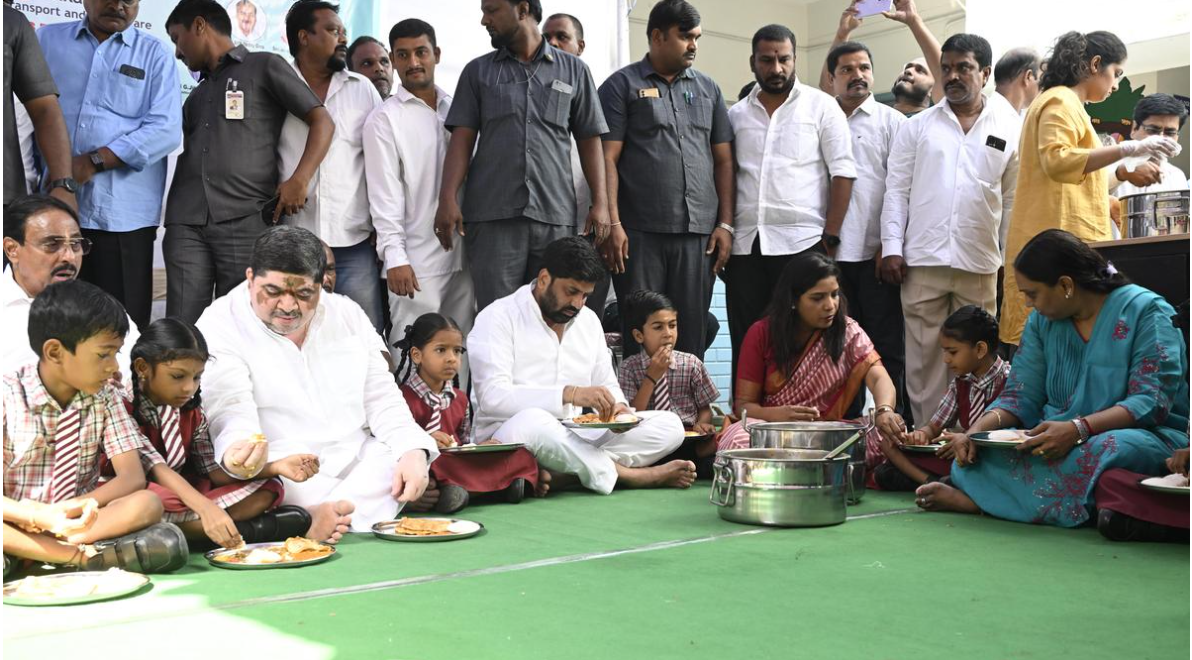
What is the Breakfast Scheme?
- It is a state government nutrition programme for students studying in:
- Government pre-primary institutions
- Government schools
- Government junior colleges
- It covers students from pre-primary to Class XII.
- Nutritious breakfast will be served from Monday to Saturday.
- The scheme aims to improve the physical and psychological well-being of students.
Beneficiaries and Coverage
- The scheme is intended for students studying in government educational institutions across Telangana.
- It includes junior college students, extending nutritional support beyond the school level.
- In the first phase, the programme will cover:
- 1,302 institutions
- Including 33 junior colleges
- Across eight districts
- It will later be expanded across the State in phases.
Weekly Breakfast Menu
| Day | Breakfast | Supplementary Drink |
| Monday | Dosa with chutney or chapathi with curry | Milk |
| Tuesday | Two millet idlis with sambar | Ragi jawa |
| Wednesday | Puri with aloo kurma | Milk |
| Thursday | Two millet idlis with sambar | Ragi jawa |
| Friday | Millet upma or pongal with chutney | Milk |
| Saturday | Two bondas with chutney | Ragi jawa |
Focus on Millet-Based Nutrition
- Millet idli and millet upma are included in the weekly menu.
- Millets are rich in:
- Dietary fibre
- Minerals
- Complex carbohydrates
- Micronutrients
- Ragi jawa provides calcium and energy and is suitable for school-age children.
- The menu combines traditional foods with locally familiar dietary practices.
- Millet inclusion can also promote demand for nutritious and climate-resilient crops.
Role of Partner Organisations
The following organisations will implement the scheme during Phase I:
- Hare Krishna Movement Charitable Trust
- Manna Trust
Their responsibilities are expected to include:
- Preparing breakfast
- Maintaining kitchen hygiene
- Transporting meals to institutions
- Ensuring timely delivery
- Following prescribed nutritional and quality standards
Need for a School Breakfast Programme
Many students, particularly those from economically weaker families, may attend school without eating breakfast.
This can lead to:
- Hunger during morning classes
- Reduced concentration
- Fatigue
- Lower classroom participation
- Poor learning outcomes
- Irregular attendance
Breakfast provides energy after the overnight fasting period and supports children during the first half of the school day.
Significance of the Scheme
1. Improved Student Nutrition
Regular breakfast can provide essential energy and nutrients required for physical development.
2. Better Classroom Concentration
Students who eat breakfast are more likely to remain attentive and actively participate in morning lessons.
3. Higher Attendance
The availability of nutritious food may encourage students to attend educational institutions regularly and on time.
4. Reduction in Dropouts
Food support can reduce the financial burden on vulnerable families and help retain students in education.
5. Social Equality
Children from different social and economic backgrounds eat the same food in the same institution, strengthening inclusion.
6. Support for Adolescent Students
The extension of the programme to junior colleges recognises that older students also face nutritional needs and financial difficulties.
7. Promotion of Millets
The inclusion of millet-based food promotes nutritious diets and creates awareness about traditional grains.
8. Human Capital Development
Improved nutrition can support health, education, productivity and long-term economic development.
Challenges
- Maintaining food quality across a large number of institutions
- Ensuring meals reach schools before classes begin
- Preventing contamination during preparation and transportation
- Maintaining centralised kitchen hygiene
- Providing sufficient nutritional diversity
- Managing food preferences and local dietary variations
- Monitoring private implementing organisations
Way Forward
- Establish strict food safety and hygiene protocols.
- Conduct regular inspection of centralised kitchens.
- Create school-level meal monitoring committees.
- Collect feedback from students, teachers and parents.
- Display the weekly menu publicly in every institution.
- Ensure timely delivery before morning classes begin.
- Use locally available foods and seasonal ingredients.
- Include periodic health and nutrition assessments.
- Link the programme with anaemia prevention and adolescent health initiatives.
- Publish data on:
- Institutions covered
- Students served
- Attendance changes
- Food quality
- Learning and health outcomes
- Expand the scheme carefully after evaluating Phase I.
Conclusion
Telangana’s breakfast scheme represents an important investment in child nutrition, educational participation and human capital development. Its extension from pre-primary classes to junior colleges gives it a broad and inclusive character.
The millet-based menu, milk and ragi jawa can help reduce classroom hunger and improve student well-being. However, the scheme’s success will depend on food safety, timely delivery, nutritional quality, transparent monitoring and effective statewide expansion.
Why in News?
The Government highlighted the transformation of India’s agricultural sector through higher public investment, increased production, expanded credit, insurance, irrigation, market access, food processing, digital technologies and growth in allied activities.
The policy approach has gradually shifted from limited welfare assistance towards a broader framework of productivity, income stability, risk protection, value addition and long-term agricultural resilience.
Growth of Agriculture and Allied Sectors
|
Crop Production and Food Security
- India’s total foodgrain production increased from 265.05 million tonnes in 2013–14 to 357.73 million tonnes in 2024–25, showing a substantial rise in agricultural output. This growth was driven by higher production of rice, wheat, maize and coarse cereals, including millets promoted as Shree Anna.
- The National Food Security and Nutrition Mission supported this expansion through improved seeds, better agronomic practices and wider adoption of technology in rice, wheat, pulses and coarse cereals.
- India emerged as the world’s largest rice producer, with production rising by 42.38% since 2014–15.
- Wheat production reached a record 117.94 million tonnes in 2024–25.
- Maize production increased by nearly 79% during the same period.
- Oilseed production rose from 27.51 million tonnes in 2014–15 to a record 42.99 million tonnes in 2024–25, an increase of about 56%.
- Edible-oil import dependence declined from 63.2% in 2015–16 to 56.25% in 2023–24, indicating gradual progress towards self-reliance.
- The horticulture sector has also emerged as a major source of agricultural growth. It contributes nearly 37% of the crop sector’s Gross Value Output, reflecting diversification towards high-value fruits, vegetables and other horticultural crops.
Farmer Welfare and Social Security
PM-KISAN
The Pradhan Mantri Kisan Samman Nidhi provides eligible farmer families with ₹6,000 annually through Direct Benefit Transfer. The scheme has reached more than 9.44 crore farmer families, with women receiving over 25% of the benefits.
Crop Insurance
- The Pradhan Mantri Fasal Bima Yojana provides affordable and comprehensive insurance against crop losses. It covers the entire crop cycle, including pre-sowing, standing crop and post-harvest risks.
- More than 4 crore farmers are insured annually, helping cultivators manage losses caused by natural disasters, pests and other uncertainties.
Pension Support
The Pradhan Mantri Kisan Maan-Dhan Yojana provides eligible small and marginal farmers with a monthly pension of ₹3,000 after the age of 60. Around 24.95 lakh farmers were enrolled under the scheme by February 2026.
MSP and Public Procurement
The Minimum Support Price protects farmers against sharp falls in market prices by providing a pre-announced price for agricultural produce.
- MSP is announced annually for 22 mandated crops.
- Since 2018–19, MSP has been fixed at least 50% above the cost of production.
- Public procurement has expanded significantly.
- The total value of MSP procurement during 2014–2026 was about 3.5 times the value recorded during 2004–2014.
These measures have strengthened price assurance, market support and income security for farmers.
Agricultural Policy Reforms (2014-2026)
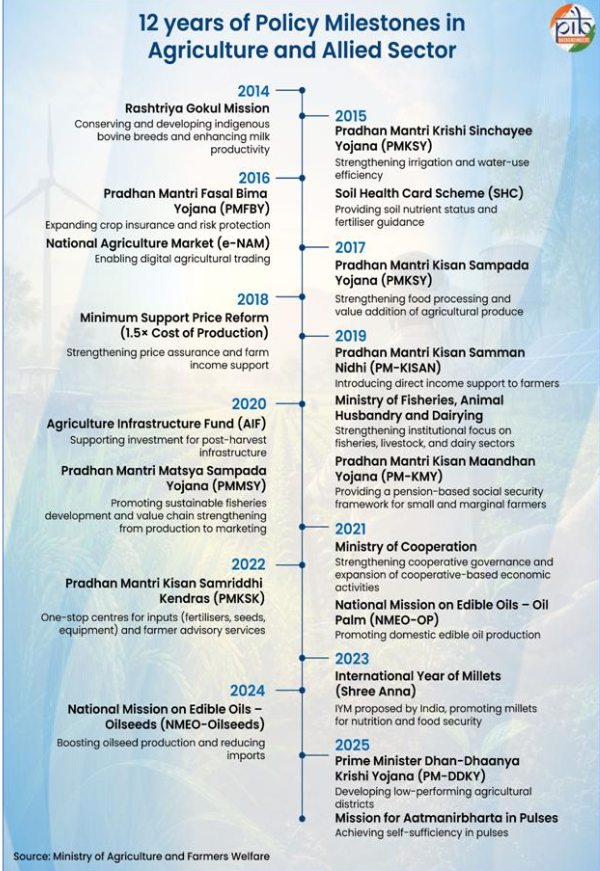
Livestock and Dairy: Drivers of Rural Economic Growth
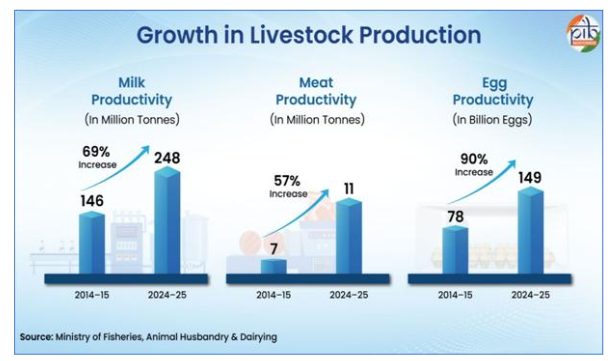
India’s livestock sector has recorded strong growth, with a compound annual growth rate of 12.77% since 2014–15. The sector has become an important source of rural income, nutrition and employment.
India remains the world’s largest milk producer, contributing nearly 25% of global milk production.
- Milk production increased from 146.31 million tonnes in 2014–15 to 247.87 million tonnes in 2024–25.
- This represents growth of more than 69%.
- Per capita milk availability rose to 485 grams per day, compared with the global average of 328 grams per day.
Productivity Improvements
- Indigenous cattle productivity increased from 927 kg in 2014–15 to 1,292 kg in 2023–24.
- Buffalo productivity increased from 1,880 kg to 2,161 kg.
- Overall bovine productivity improved from 1,648.17 kg in 2013–14 to 2,079 kg in 2024–25.
Poultry and Meat Production
India ranks second in egg production and fourth in meat production globally.
- Egg production increased from 78.48 billion in 2014–15 to 149.11 billion in 2024–25.
- Per capita egg availability rose from 62 to 106 eggs per year.
- Meat production increased from 6.69 million tonnes to 10.50 million tonnes.
These trends show the growing role of livestock, dairy and poultry in diversifying farm incomes and strengthening rural livelihoods.
Fisheries and Aquaculture
India’s fisheries sector has recorded an average annual growth rate of 8.74% over the past decade.
- Total fish production increased from 9.58 million tonnes in 2013–14 to 19.78 million tonnes in 2024–25.
- Inland fisheries and aquaculture production rose from 6.14 million tonnes to 15.16 million tonnes, an increase of about 147%.
Emerging Opportunities in Beekeeping and Bio Energy
Beekeeping and Honey Production
The National Beekeeping and Honey Mission, launched in 2020, promotes scientific beekeeping, pollination services and rural livelihoods.
- Honey production increased from 0.081 million tonnes to 0.152 million tonnes.
- Honey exports rose by about 240%.
Beekeeping provides additional income to farmers and supports crop productivity through pollination.
Bio-Energy and Ethanol Blending
Bio-energy has become an important part of agricultural diversification. It provides additional income to farmers while improving energy security.
Ethanol is produced from sugarcane by-products and foodgrains. The Ethanol Blended Petrol Programme promotes its blending with petrol to reduce crude-oil imports and support domestic production.
Major Progress
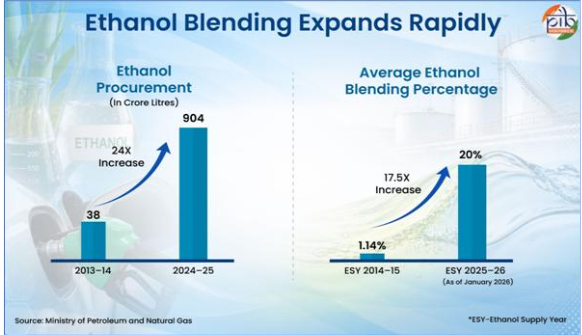
- Ethanol procurement increased from 38 crore litres in 2013–14 to 904 crore litres in 2024–25.
- The average blending level increased from 1.14% in 2014–15 to 20% in 2025–26.
- Sugar mills earned more than ₹1.29 lakh crore from ethanol sales.
- Investments of over ₹42,000 crore were mobilised in the sector.
The programme supports farmer income, sugar-industry stability and India’s clean-energy transition.
Agricultural and Processed Food Exports
India’s agricultural and allied exports have expanded due to higher production, improved processing capacity and better access to global markets.
- Agricultural exports increased from $37.29 billion in 2013–14 to $51.1 billion in 2024–25.
- This represents growth of nearly 37%.
India is a major global exporter of:
- Rice
- Spices
- Marine products
- Cotton
- Sugar
Growth of Processed Food Exports
- The share of processed food in agricultural exports increased from 13.7% in 2014–15 to 20.4% in 2024–25.
- This reflects greater value addition and improved global competitiveness.
Marine Exports
- Seafood exports increased from $3.64 billion in 2013–14 to around $7.52 billion in 2024–25.
- This represents growth of about 106%.
- Indian seafood now reaches more than 130 countries.
These developments show that India’s agricultural export basket is gradually moving from primary commodities towards processed, diversified and high-value products.Top of Form
Digital Agriculture and Precision Technologies
Technology is increasingly transforming Indian agriculture by improving planning, service delivery, risk management and access to timely information. Digital platforms are helping farmers obtain accurate advisories, government benefits and market-related services.
Digital Agriculture Mission
The Digital Agriculture Mission aims to create an integrated digital ecosystem by linking:
- Farmer databases
- Land records
- Crop information
- Agricultural services
- Government benefit-delivery systems
These systems improve beneficiary identification, agricultural planning and transparent delivery of government support.
Namo Drone Didi
The Namo Drone Didi initiative, launched in 2023, promotes the use of drones in agriculture through women Self-Help Groups.
- Total outlay: ₹1,261 crore
- Implementation period: 2023–24 to 2025–26
- 500 drones were distributed during 2023–24.
Women SHGs can provide drone-based agricultural services such as:
- Spraying fertilisers and pesticides
- Crop monitoring
- Precision application of inputs
- Field mapping
The initiative promotes modern farming while creating technology-based livelihood opportunities for rural women.
National Pest Surveillance System
The National Pest Surveillance System uses digital tools and field-level information to monitor pest attacks in real time.
Coverage
- 66 crops
- More than 432 pest species
- Over 10,000 field functionaries
The system provides early warnings and crop advisories, helping farmers respond quickly to pest outbreaks and reduce crop losses.
Kisan e-Mitra
Kisan e-Mitra provides farmers with digital information on agricultural schemes, services and government programmes.
- More than 95 lakh queries were handled by March 2026.
- The platform can process over 8,000 queries daily.
- It is available in 11 regional languages.
The multilingual platform improves the accessibility of agricultural information for farmers across different regions.
Agricultural Extension and Advisory Services
As agriculture becomes more technology-driven and climate-sensitive, farmer training and scientific advisory services have gained greater importance.
Extension services help farmers:
- Adopt improved farming practices
- Use new technologies
- Manage pests and diseases
- Respond to climate-related risks
- Improve productivity and resource efficiency
Krishi Vigyan Kendras
Krishi Vigyan Kendras, established by the Indian Council of Agricultural Research, serve as frontline agricultural training and knowledge centres.
- India has 731 KVKs.
KVKs conduct:
- Farmer training programmes
- Field demonstrations
- Technology testing
- Agricultural advisories
- Skill-development activities
They connect agricultural research institutions with farmers at the field level.
Agricultural Technology Management Agency
- The Agricultural Technology Management Agency supports decentralised agricultural extension at the district level.
- Overall, approximately 1.27 crore farmers were trained under ATMA between 2021 and 2025.
- ATMA strengthens district-level advisory services and promotes the adoption of locally suitable agricultural technologies.
Towards a Resilient Agricultural Ecosystem
India’s agricultural policy is gradually shifting towards a more integrated, technology-driven and farmer-centric system.
This transformation is supported by:
- Higher agricultural production
- Expanded institutional credit
- Crop insurance
- Increased MSP and procurement support
- Digital agricultural infrastructure
- Improved farm-to-market linkages
- Growth of food processing
- Expansion of livestock, fisheries and other allied activities
Digital technologies and extension services are improving the connection between scientific research, government institutions and farmers.
These interventions are strengthening productivity, income stability and risk management while laying the foundation for a more resilient, inclusive and sustainable agricultural sector.
Measures to Empower India’s Farmers
- Income and Insurance: Ensure timely PM-KISAN transfers and expand PMFBY coverage with faster claim settlement.
- Institutional Credit: Increase access to Kisan Credit Cards and affordable farm loans.
- Infrastructure: Develop warehouses, cold chains, processing units and farm-gate facilities.
- Technology: Promote Digital Agriculture, drones, Kisan e-Mitra, KVK and ATMA training.
- Sustainability: Expand natural farming, efficient irrigation, climate-resilient crops and solar pumps
Conclusion
Farmer empowerment requires an integrated approach combining income support, credit, insurance, infrastructure, technology and sustainability. The Centre must provide policy and financial support, while States and local institutions should adapt implementation to regional needs. Such coordination can improve productivity, resilience and income security.
Why in News?
India has rapidly expanded ethanol production and achieved the E20 blending target. The programme has supported farmers, sugar mills, rural investment and fuel diversification.
However, ethanol production capacity now exceeds the demand required for E20. This has raised concerns about surplus capacity, water intensity, grain diversion, vehicle compatibility, indirect imports and life-cycle emissions.
The debate is therefore shifting from how to produce more ethanol to how to make the programme economically and environmentally sustainable.
What is Ethanol Blending?
Ethanol blending refers to mixing ethanol, a plant-based biofuel, with petrol.
| Blend | Composition |
| E10 | 10% ethanol and 90% petrol |
| E15 | 15% ethanol and 85% petrol |
| E20 | 20% ethanol and 80% petrol |
| E85 | 51–83% ethanol; requires a flex-fuel vehicle |
| E100 | Pure ethanol fuel |
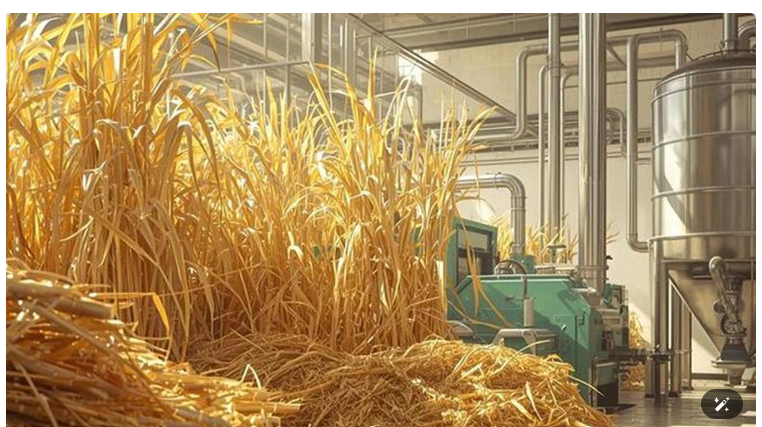
Different engines are designed for different ethanol concentrations. Higher blends may require changes in fuel lines, seals, engine calibration and sensors.
How is Ethanol Produced?
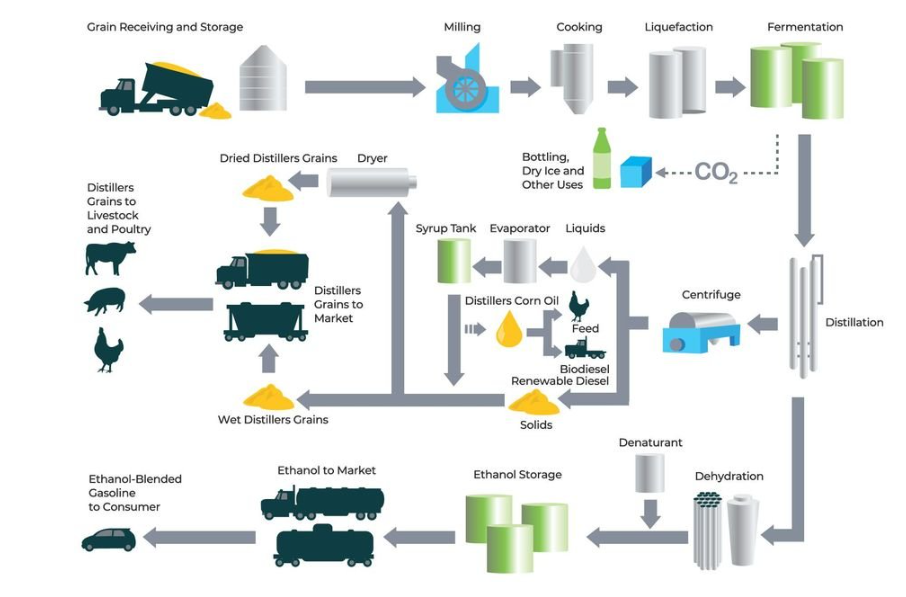
First-Generation Ethanol
1G ethanol is produced from sugar- and starch-based feedstocks such as:
- Sugarcane juice, Molasses, Maize, Rice
The process includes:
Feedstock preparation → Fermentation → Distillation → Dehydration
Yeast converts fermentable sugars into ethanol. Water is then removed to obtain anhydrous ethanol suitable for petrol blending.
Second-Generation Ethanol
2G ethanol is produced from lignocellulosic biomass such as:
- Rice straw, Wheat straw, Bagasse, Bamboo
It requires an additional pre-treatment stage to break down tough plant fibres before fermentation.
It can reduce dependence on food crops and convert agricultural waste into fuel.
Regulatory Framework
National Policy on Biofuels, 2018
It provides the main framework for ethanol production, feedstock use, pricing and distribution.
Roadmap for Ethanol Blending, 2020–25
It advanced India’s E20 target from 2030 to 2025.
Financial Support
The government supported ethanol expansion through:
- Soft loans
- Interest-subvention schemes
- Administered procurement prices
- Support for molasses-, grain- and dual-feed distilleries
Higher ethanol blends have also received tax support to encourage future adoption.
Expansion of Ethanol Capacity
India requires approximately 10–11 billion litres of ethanol to meet E20 blending norms.
However:
- Installed production capacity approached 20 billion litres by November 2025.
- Capacity may increase by another 15% as new projects become operational.
- Current E20 demand absorbs only about half of installed capacity.
- India has close to 500 ethanol distilleries.
The programme has reportedly generated investment opportunities exceeding ₹40,000 crore.
- This creates a new policy challenge: underused distilleries face high fixed costs, lower returns and the risk of becoming stranded assets.
- Higher blending targets may therefore be driven partly by the need to utilise capacity already created.
Benefits of the Ethanol Programme
1. Reduction in Crude-Oil Dependence
India imports more than 85% of its crude-oil requirements.
Ethanol blending replaces part of petrol consumption and reduces exposure to:
- International oil-price volatility
- OPEC production decisions
- Geopolitical supply disruptions
The programme is reported to have:
- Saved around ₹1.84 lakh crore in foreign exchange
- Reduced crude-oil imports by over 302 lakh metric tonnes
2. Support to Farmers
Demand for sugarcane, maize and rice creates an assured market for farmers.
The programme reportedly generated more than ₹1.58 lakh crore in direct income for the farming community.
It reflects the idea of transforming farmers from Annadatas to Urjadatas.
3. Support to Sugar Mills
Sugar mills earned more than ₹1.29 lakh crore from ethanol sales over the past decade.
This helped:
- Manage sugar surpluses
- Improve mill finances
- Clear sugarcane dues
- Diversify revenue
4. Rural Investment and Employment
Expansion of distilleries generated investment and employment in rural and semi-urban regions.
5. Fuel Diversification
Ethanol expands India’s transport-fuel basket and reduces exclusive dependence on petrol.
6. Emission Reduction
Ethanol generally burns cleaner than petrol and can lower tailpipe emissions such as carbon monoxide and hydrocarbons.
The programme is reported to have avoided more than 909 lakh metric tonnes of carbon dioxide emissions.
7. Waste-to-Wealth
2G ethanol can convert crop residues into fuel, reducing stubble burning and supporting a circular bio-economy.
India’s bamboo-based bioethanol plant at Golakganj/Golaghat, Assam, represents progress towards non-food feedstocks.

Major Concerns
1. Supply–Demand Mismatch
India has built significantly more ethanol capacity than is required for E20.
This means:
- The policy has moved from building supply to creating demand.
- Low-capacity utilisation may reduce financial viability.
- Pressure may increase for higher blending targets.
- Policy decisions may prioritise distillery economics over resource efficiency.
2. Import-Substitution Paradox
Ethanol lowers crude-oil demand, but the full production chain requires:
- Fertilisers
- Natural gas, Potash, Phosphatic inputs, Electricity, Irrigation
Many of these inputs are imported.
Increased cultivation of sugarcane, maize and rice may also reduce land available for pulses and oilseeds, where India already has high import dependence.
Thus, lower crude imports may be offset by greater imports of:
- Fertiliser inputs. Natural gas, Edible oils, Pulses, Grain feedstocks
The programme may shift external dependence rather than eliminate it.
3. Food–Feed–Fuel Competition
Maize and rice are used for food, animal feed and industry.
Rapid growth of maize ethanol has placed pressure on the poultry and livestock sectors.
- Poultry consumes nearly 60% of India’s maize.
- Maize prices reportedly increased to around ₹26–₹30 per kg.
- Distilleries faced an estimated maize shortfall of 17 million tonnes.
- India has moved from being a maize exporter towards importing maize to manage shortages.
During poor harvests, fixed blending requirements may increase food inflation or create a need to import ethanol or feedstocks.
4. Cropping-Pattern Distortion
Assured procurement and administered ethanol prices may draw acreage towards:
- Sugarcane, Maize, Rice
This may reduce cultivation of:
- Pulses, Oilseeds, Less water-intensive crops
Cropping choices may therefore be shaped by ethanol incentives rather than local agro-climatic conditions, nutrition needs and water availability.
5. Water Intensity
The water footprint of ethanol is one of its most serious environmental concerns.
| Feedstock | Estimated Water Use per Litre of Ethanol |
| Sugarcane | Around 2,860 litres |
| Maize | Around 4,093 litres |
| Rice | Up to 10,790 litres |
These estimates include cultivation and processing.
The exact footprint varies according to rainfall, irrigation efficiency, yield and location, but the figures show that grain-based ethanol is not necessarily less water-intensive.
In Maharashtra, sugarcane occupies less than 10% of cropped area but consumes a disproportionately high share of irrigation water. Expanding ethanol-linked crops can worsen regional water stress.
6. Lower Fuel Efficiency
Ethanol has lower energy density than petrol.
Therefore:
- More fuel may be required to travel the same distance.
- Vehicle mileage may decline.
- Fuel savings may be partly offset by higher consumption.
- Consumers may face greater operating costs.
7. Vehicle Compatibility
Higher blends may affect older and non-compatible vehicles.
Possible concerns include:
- Corrosion of fuel-system components, Damage to rubber seals and fuel lines,Reduced engine durability, Higher maintenance costs, Lower mileage
Consumer uncertainty may increase if fuel grades and vehicle compatibility are not clearly communicated.
8. Technological Challenges of 2G Ethanol
Although 2G ethanol avoids direct competition with food crops, its production remains difficult because plant residues are resistant to breakdown.
Major challenges include:
- Expensive pre-treatment, Complex enzymes, High capital costs, Biomass collection and storage, Seasonal feedstock supply, High energy consumption
Distillation alone may account for a large share of the total energy used in 2G production.
9. Upstream Emissions
Ethanol may reduce tailpipe emissions, but its complete carbon footprint includes emissions from:
- Fertiliser production, Irrigation, Farm machinery, Feedstock transportation, Fermentation and distillation, Coal-based electricity, Land-use changes
10. Storage and Logistics
Ethanol is hygroscopic, meaning it absorbs moisture from the atmosphere.
It therefore requires:
- Sealed transportation, Moisture-controlled storage, Dedicated logistics, Quality testing, Proper handling at retail outlets
Poor storage can reduce fuel quality and damage engines
Flex-Fuel Vehicles
Flex-Fuel Vehicles can operate on different combinations of petrol and ethanol, including E20, E85 and sometimes E100.
Advantages include:
- Consumer flexibility, Greater ethanol demand, Reduced petrol dependence, Easier transition to higher blends
However, FFVs require:
- Corrosion-resistant materials, Modified fuel systems, Advanced sensors,Engine recalibration
Without adequate incentives, they may remain more expensive than conventional vehicles.
Measures Needed
- Prioritise 2G ethanol: Shift incentives from food-based feedstocks to crop residues to reduce food-fuel competition and stubble burning.
- Adopt regional feedstock planning: Select crops based on water availability, soil, rainfall and local food needs.
- Conduct life-cycle assessment: Evaluate water use, emissions, fertilisers, land use, imports and food-price impacts.
- Create biomass hubs: Collect, store and pre-treat crop residues for 2G plants while ensuring income for farmers.
- Build multi-grade fuel infrastructure: Provide clearly marked E20, E25, E85 and E100 pumps.
- Promote flex-fuel vehicles: Support compatible engines, fuel lines, sensors and calibration systems.
- Develop retrofit technology: Create affordable certified kits for older vehicles.
- Reform ethanol pricing: Combine farmer protection with crude-price and sustainability-linked incentives.
- Improve storage and transport: Develop moisture-controlled tanks, dedicated tankers and quality-testing systems.
- Protect pulses and oilseeds: Prevent ethanol incentives from weakening food and edible-oil security.
- Diversify clean transport: Use ethanol alongside electric mobility, public transport, rail freight and green hydrogen.
Conclusion
India’s ethanol programme has delivered important gains in fuel diversification, farmer income, sugar-mill viability, rural investment and foreign-exchange savings.
However, the programme has entered a new phase in which installed capacity, rather than inadequate supply, has become the central concern. Increasing blending merely to absorb surplus capacity may intensify water stress, distort cropping patterns and shift import dependence from crude oil to fertilisers, grains and edible oils.
The future strategy must therefore prioritise 2G ethanol, resource-efficient feedstocks, life-cycle assessment, flexible pricing, compatible vehicles and region-specific planning. Ethanol can contribute to India’s energy transition only when it is aligned with food, water, environmental and fiscal security.