Why in News?
The Telangana government launched a breakfast scheme for students from pre-primary to Class XII in government schools and junior colleges. The initiative aims to improve nutrition, health, attendance and classroom concentration. Textbooks and notebooks were also distributed to students.
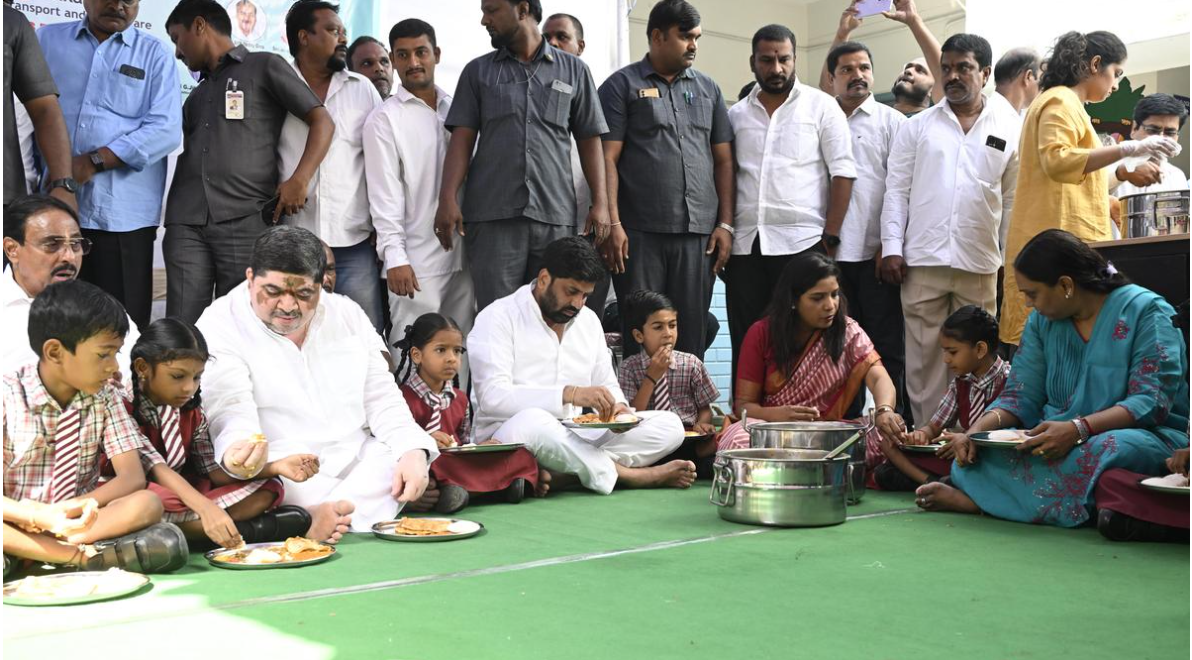
What is the Breakfast Scheme?
- It is a state government nutrition programme for students studying in:
- Government pre-primary institutions
- Government schools
- Government junior colleges
- It covers students from pre-primary to Class XII.
- Nutritious breakfast will be served from Monday to Saturday.
- The scheme aims to improve the physical and psychological well-being of students.
Beneficiaries and Coverage
- The scheme is intended for students studying in government educational institutions across Telangana.
- It includes junior college students, extending nutritional support beyond the school level.
- In the first phase, the programme will cover:
- 1,302 institutions
- Including 33 junior colleges
- Across eight districts
- It will later be expanded across the State in phases.
Weekly Breakfast Menu
| Day | Breakfast | Supplementary Drink |
| Monday | Dosa with chutney or chapathi with curry | Milk |
| Tuesday | Two millet idlis with sambar | Ragi jawa |
| Wednesday | Puri with aloo kurma | Milk |
| Thursday | Two millet idlis with sambar | Ragi jawa |
| Friday | Millet upma or pongal with chutney | Milk |
| Saturday | Two bondas with chutney | Ragi jawa |
Focus on Millet-Based Nutrition
- Millet idli and millet upma are included in the weekly menu.
- Millets are rich in:
- Dietary fibre
- Minerals
- Complex carbohydrates
- Micronutrients
- Ragi jawa provides calcium and energy and is suitable for school-age children.
- The menu combines traditional foods with locally familiar dietary practices.
- Millet inclusion can also promote demand for nutritious and climate-resilient crops.
Role of Partner Organisations
The following organisations will implement the scheme during Phase I:
- Hare Krishna Movement Charitable Trust
- Manna Trust
Their responsibilities are expected to include:
- Preparing breakfast
- Maintaining kitchen hygiene
- Transporting meals to institutions
- Ensuring timely delivery
- Following prescribed nutritional and quality standards
Need for a School Breakfast Programme
Many students, particularly those from economically weaker families, may attend school without eating breakfast.
This can lead to:
- Hunger during morning classes
- Reduced concentration
- Fatigue
- Lower classroom participation
- Poor learning outcomes
- Irregular attendance
Breakfast provides energy after the overnight fasting period and supports children during the first half of the school day.
Significance of the Scheme
1. Improved Student Nutrition
Regular breakfast can provide essential energy and nutrients required for physical development.
2. Better Classroom Concentration
Students who eat breakfast are more likely to remain attentive and actively participate in morning lessons.
3. Higher Attendance
The availability of nutritious food may encourage students to attend educational institutions regularly and on time.
4. Reduction in Dropouts
Food support can reduce the financial burden on vulnerable families and help retain students in education.
5. Social Equality
Children from different social and economic backgrounds eat the same food in the same institution, strengthening inclusion.
6. Support for Adolescent Students
The extension of the programme to junior colleges recognises that older students also face nutritional needs and financial difficulties.
7. Promotion of Millets
The inclusion of millet-based food promotes nutritious diets and creates awareness about traditional grains.
8. Human Capital Development
Improved nutrition can support health, education, productivity and long-term economic development.
Challenges
- Maintaining food quality across a large number of institutions
- Ensuring meals reach schools before classes begin
- Preventing contamination during preparation and transportation
- Maintaining centralised kitchen hygiene
- Providing sufficient nutritional diversity
- Managing food preferences and local dietary variations
- Monitoring private implementing organisations
Way Forward
- Establish strict food safety and hygiene protocols.
- Conduct regular inspection of centralised kitchens.
- Create school-level meal monitoring committees.
- Collect feedback from students, teachers and parents.
- Display the weekly menu publicly in every institution.
- Ensure timely delivery before morning classes begin.
- Use locally available foods and seasonal ingredients.
- Include periodic health and nutrition assessments.
- Link the programme with anaemia prevention and adolescent health initiatives.
- Publish data on:
- Institutions covered
- Students served
- Attendance changes
- Food quality
- Learning and health outcomes
- Expand the scheme carefully after evaluating Phase I.
Conclusion
Telangana’s breakfast scheme represents an important investment in child nutrition, educational participation and human capital development. Its extension from pre-primary classes to junior colleges gives it a broad and inclusive character.
The millet-based menu, milk and ragi jawa can help reduce classroom hunger and improve student well-being. However, the scheme’s success will depend on food safety, timely delivery, nutritional quality, transparent monitoring and effective statewide expansion.