
Why in News?
A rare copper Adil / ½ Paika coin of Ghiyath al-Din Tughluq has drawn attention for its historical value. The coin was minted at Warangal, which was renamed Sultanpur after its conquest by the Delhi Sultanate in 1323 CE.
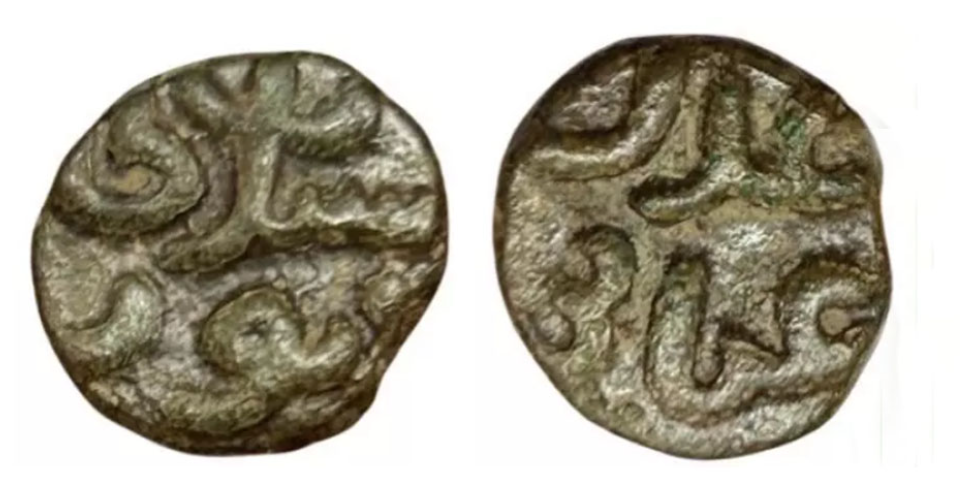
Key Features of the Coin
The coin provides direct evidence of Tughluq authority in Warangal after the fall of the Kakatiya kingdom.
| Feature | Details |
| Coin type | Copper Adil / ½ Paika |
| Ruler | Ghiyath al-Din Tughluq |
| Period | 1320–1325 CE |
| Weight | 2.09 grams |
| Mint location | Warangal, renamed Sultanpur |
| Obverse inscription | “Adl Ghiyathi” |
| Reverse inscription | “bi-Sultanpur” |
The inscription “bi-Sultanpur” is historically important because it confirms the name given to Warangal during Tughluq rule.
Historical Background
- Warangal was an important centre of the Kakatiya kingdom. In 1323 CE, it came under the control of the Delhi Sultanate.
- After the conquest, Warangal was renamed Sultanpur. Later, in 1336 CE, local leaders led by Kapaya Nayaka drove out the Tughluq forces, and the city came to be known again as Warangal.
- This transition marks one of the major political changes in medieval Telangana.
Why the Coin is Important
1. Evidence of the Fall of the Kakatiyas
The coin is a material record of the collapse of the Kakatiya kingdom and the establishment of Tughluq rule in Telangana.
2. Proof of Warangal’s Renaming
The inscription “bi-Sultanpur” confirms that Warangal was known as Sultanpur during that period.
3. Symbol of Political Authority
By minting coins locally, the Tughluq rulers asserted their authority over newly acquired territory.
4. Record of Administrative Change
The coin reflects the administrative changes introduced after the Delhi Sultanate extended its control into Telangana.
5. Numismatic Testimony
It is not merely a relic of medieval trade; it is a numismatic source that helps reconstruct political history.
Conclusion
The rare copper Adil / ½ Paika coin minted at Warangal is an important historical source. Its inscription “bi-Sultanpur” confirms Warangal’s renamed identity under Tughluq rule and records the political shift that followed the fall of the Kakatiya kingdom. It shows how coinage functioned as a tool of authority, administration and territorial control in medieval India.
Why in News?
The Ancient Buddhist Site of Sarnath in Uttar Pradesh has been inscribed on the UNESCO World Heritage List during the 48th session of the World Heritage Committee held in Busan, South Korea. With this inscription, India now has 45 World Heritage Sites.
Sarnath had been on UNESCO’s tentative list since 1998, and after nearly 28 years, it has received full World Heritage recognition.
Historical Importance of Sarnath
Sarnath, located near Varanasi in Uttar Pradesh, is one of the holiest sites of Buddhism. It is the place where Gautama Buddha delivered his first sermon after attaining enlightenment.
This event is known as Dharmachakra Pravartan, meaning the turning of the wheel of Dharma. It marks the beginning of the spread of Buddhist teachings.
According to sacred Buddhist traditions, Buddha travelled to Sarnath in the sixth century BCE, met his first disciples, and delivered his first sermon there.
Sarnath in Buddhist Tradition
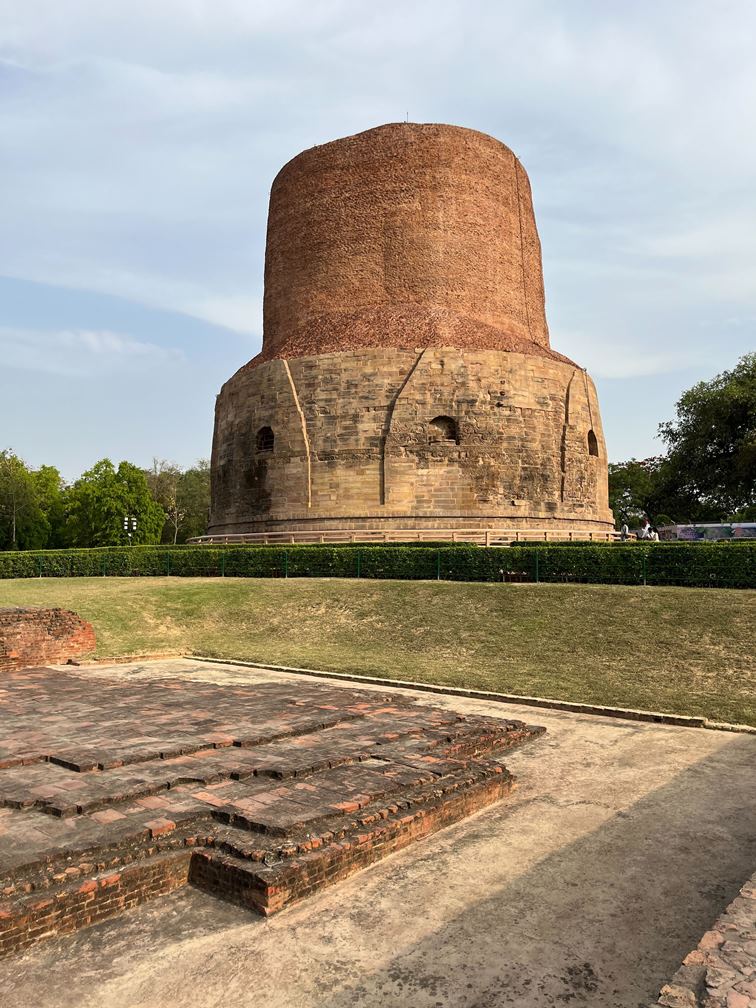 Sarnath is counted among the major Buddhist pilgrimage centres of the world.
It is also referred to in Buddhist texts by names such as:
- Rishipatana
- Isipatana
- Mrigadava
- Deer Park
These names reflect the spiritual and historical memory of the site across different Buddhist traditions.
For nearly 2,500 years, Sarnath has remained associated with pilgrimage, Buddhist learning, monastic activity and the message of wisdom, compassion and peace. (UNESCO)
UNESCO World Heritage Recognition
The UNESCO World Heritage Committee inscribes sites that have Outstanding Universal Value. Such sites are considered important not only for one nation but for the shared heritage of humanity.
The inscription of Sarnath recognises its:
- religious significance
- archaeological value
- Buddhist pilgrimage tradition
- civilisational importance
- living spiritual association
The site now stands alongside India’s other globally recognised heritage properties.
Key Monuments and Sacred Landscape
The World Heritage property preserves the architectural and archaeological remains of ancient Sarnath.
Important protected components include:
1. Chaukhandi Stupa
It is one of the protected archaeological sites associated with Sarnath’s sacred landscape.
2. Archaeological Remains of Sarnath
This includes major Buddhist structures such as:
- Dhamek Stupa
- Dharmarajika Stupa
- remains of temples, stupas and monasteries
Together, these monuments form the historic landscape widely known as Deer Park. (UNESCO)

Why Sarnath Deserved World Heritage Status
1. Birthplace of Buddhist Teaching Tradition
Sarnath is the place where Buddha gave his first sermon, making it central to the history of Buddhism.
2. Continuity of Pilgrimage
The site has remained a place of devotion and inspiration for Buddhists for centuries.
3. Archaeological Significance
Its stupas, temples and monastic remains show the growth of Buddhist architecture and religious institutions.
4. Civilisational Message
Sarnath represents values of compassion, harmony, wisdom and peace, which continue to have global relevance.
5. Integrated Cultural and Spiritual Heritage
Its identity is not limited to monuments alone. It combines sacred geography, archaeological remains and living pilgrimage tradition.
UNESCO Cultural World Heritage Sites in India
S.No. | Site | Location | Core Significance |
1 | Agra Fort | Uttar Pradesh | Mughal palace fort with major imperial history |
2 | Ajanta Caves | Maharashtra | Ancient Buddhist cave paintings and rock-cut architecture |
3 | Ellora Caves | Maharashtra | Buddhist, Hindu and Jain rock-cut architecture |
4 | Taj Mahal | Uttar Pradesh | Mughal architectural masterpiece |
5 | Sun Temple, Konark | Odisha | 13th-century temple dedicated to Surya |
6 | Group of Monuments at Mahabalipuram | Tamil Nadu | Pallava-period architecture and sculpture |
7 | Churches and Convents of Goa | Goa | Portuguese colonial and Christian heritage |
8 | Fatehpur Sikri | Uttar Pradesh | Mughal capital city of Akbar |
9 | Group of Monuments at Hampi | Karnataka | Vijayanagara capital and temple architecture |
10 | Khajuraho Group of Monuments | Madhya Pradesh | Hindu and Jain temples with sculptural excellence |
11 | Elephanta Caves | Maharashtra | Rock-cut Shiva cave shrines |
12 | Great Living Chola Temples | Tamil Nadu | Chola temple architecture |
13 | Group of Monuments at Pattadakal | Karnataka | Chalukyan blend of northern and southern temple styles |
14 | Buddhist Monuments at Sanchi | Madhya Pradesh | Early Buddhist art and architecture |
15 | Humayun’s Tomb | Delhi | Early Mughal garden-tomb; precursor to Taj Mahal |
16 | Qutb Minar and its Monuments | Delhi | Early Indo-Islamic architecture |
17 | Mountain Railways of India | West Bengal, Tamil Nadu, Himachal Pradesh | Hill railway engineering heritage |
18 | Rock Shelters of Bhimbetka | Madhya Pradesh | Prehistoric rock paintings and early human life |
19 | Champaner-Pavagadh Archaeological Park | Gujarat | Pre-Mughal Islamic city and fort |
20 | Chhatrapati Shivaji Terminus | Maharashtra | Victorian Gothic railway architecture |
21 | Red Fort Complex | Delhi | Mughal palace fort of the 17th century |
22 | Jantar Mantar, Jaipur | Rajasthan | Astronomical observation site |
23 | Hill Forts of Rajasthan | Rajasthan | Rajput military architecture |
24 | Rani Ki Vav | Gujarat | 11th-century sculpted stepwell |
25 | Nalanda Mahavihara | Bihar | Ancient Buddhist monastic learning centre |
26 | Architectural Work of Le Corbusier | Chandigarh | Modern Movement architecture |
27 | Historic City of Ahmedabad | Gujarat | India’s first World Heritage City |
28 | Victorian Gothic and Art Deco Ensembles of Mumbai | Maharashtra | Colonial and modern urban architecture |
29 | Jaipur City | Rajasthan | Planned city and capital of Amber kingdom |
30 | Dholavira: A Harappan City | Gujarat | Major Indus Valley Civilisation site |
31 | Kakatiya Rudreshwara / Ramappa Temple | Telangana | Kakatiya temple architecture and engineering |
32 | Santiniketan | West Bengal | Cultural and educational centre linked with Rabindranath Tagore |
33 | Sacred Ensembles of the Hoysalas | Karnataka | Hoysala temples of Belur, Halebid and Somanathapura |
34 | Moidams | Assam | Ahom dynasty mound-burial system |
35 | Maratha Military Landscapes of India | Mainly Maharashtra, one in Tamil Nadu | Forts associated with the Maratha Empire |
36 | Ancient Buddhist Site of Sarnath | Uttar Pradesh | Place where Buddha delivered his first sermon |
UNESCO Natural World Heritage Sites in India
S.No. | Site | Location | Core Significance |
1 | Kaziranga National Park | Assam | Largest population of one-horned rhinoceros |
2 | Keoladeo National Park | Rajasthan | Important wetland for migratory birds |
3 | Manas Wildlife Sanctuary | Assam | Tiger habitat and Eastern Himalayan biodiversity |
4 | Sundarbans National Park | West Bengal | Largest estuarine mangrove forest |
5 | Nanda Devi and Valley of Flowers National Parks | Uttarakhand | Alpine meadows, glaciers and biodiversity |
6 | Western Ghats | Karnataka, Kerala, Tamil Nadu, Maharashtra | Global biodiversity hotspot |
7 | Great Himalayan National Park | Himachal Pradesh | Himalayan ecosystems and biodiversity |
UNESCO Mixed World Heritage Site in India
S.No. | Site | Location | Cultural Significance | Natural Significance |
1 | Khangchendzonga National Park | Sikkim | Sacred to indigenous Sikkimese culture | Eastern Himalayan biodiversity across subtropical to alpine zones |
Significance for India and Uttar Pradesh
1. Strengthening India’s Cultural Diplomacy
Sarnath’s inscription enhances India’s global profile as a centre of Buddhist civilisation.
2. Boost to Buddhist Circuit
The recognition can strengthen Uttar Pradesh’s Buddhist Circuit on the international tourism and cultural heritage map.
3. Heritage Tourism
World Heritage status can attract pilgrims, researchers and tourists from Buddhist countries and across the world.
4. Conservation Priority
The inscription brings greater attention to heritage conservation, site management and responsible tourism.
5. Recognition of India’s Civilisational Continuity
Sarnath reflects India’s long spiritual and intellectual traditions and its contribution to global religious history.
Conservation and Management Concerns
World Heritage recognition also brings responsibility.
1. Tourism Pressure
Higher footfall may increase pressure on monuments, pathways, interpretation facilities and local infrastructure.
2. Authenticity of Historical Presentation
The ASI’s recent correction of site-related historical interpretation shows the need for accurate and evidence-based heritage communication.
3. Protection of Archaeological Remains
Stupas, monasteries and excavated remains require continuous conservation.
4. Balancing Pilgrimage and Preservation
Sarnath is both a sacred site and an archaeological site; management must respect both dimensions.
Way Forward
India should prepare a strong site-management framework for Sarnath that integrates conservation, visitor management, interpretation, pilgrimage facilities and local community participation. The Buddhist Circuit should be developed through responsible tourism, not uncontrolled commercialisation. Digital interpretation, multilingual heritage guides, improved signage and strict protection of archaeological remains can enhance both visitor experience and conservation outcomes.
Conclusion
Sarnath’s inscription on the UNESCO World Heritage List is a major recognition of India’s Buddhist and civilisational heritage. As the place where Buddha delivered his first sermon and set the Dharmachakra in motion, Sarnath represents a universal message of compassion, wisdom and peace. The challenge now is to protect its archaeological integrity while promoting it as a living centre of global Buddhist heritage.
Prelims Facts
|
Why in News?
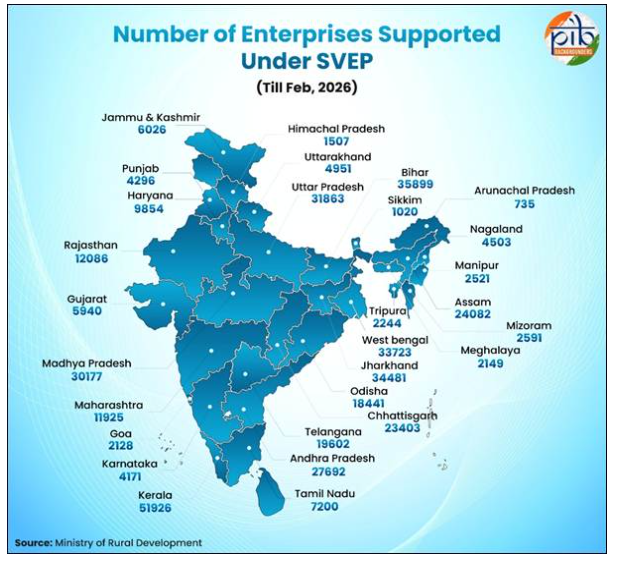
The Start-up Village Entrepreneurship Programme (SVEP) has emerged as an important grassroots model for poverty reduction, local employment generation and rural economic development. By June 2026, the programme had supported over 4.32 lakh rural enterprises across the country, with a strong focus on women and socially disadvantaged groups.
What is SVEP?
The Start-up Village Entrepreneurship Programme is a rural entrepreneurship initiative launched in 2016 as a sub-scheme of the Deendayal Antyodaya Yojana–National Rural Livelihoods Mission.
It supports Self-Help Groups and their family members in establishing small non-farm enterprises in rural areas.
SVEP provides:
- financial assistance
- institutional support
- business management training
- soft skill development
- mentoring
- business development services
- bank linkage support
The programme aims to promote sustainable livelihoods and self-employment in rural India.
Link with DAY-NRLM
- SVEP operates under DAY-NRLM, one of the world’s largest livelihood initiatives.
- DAY-NRLM mobilises rural poor households into Self-Help Groups, predominantly women. Its focus is on:
- sustainable livelihoods
- financial inclusion
- skill development
- institutional support
As of mid-June 2026, more than 10.29 crore rural households had been mobilised into SHGs under DAY-NRLM.
How SVEP Works
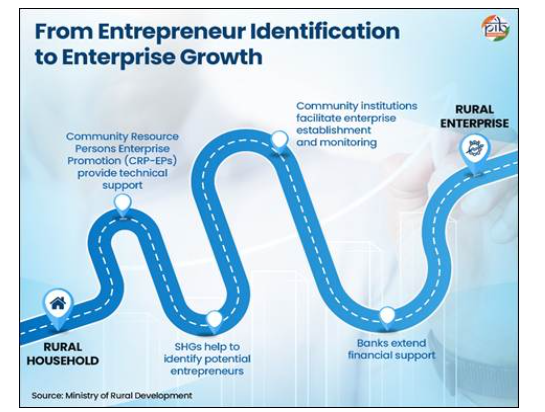
SVEP follows a community-led enterprise promotion model.
1. Identification of Entrepreneurs
Community institutions identify potential entrepreneurs based on:
- need
- poverty status
- entrepreneurial potential
2. Enterprise Viability Assessment
Before support is provided, the proposed enterprise is assessed for viability.
3. Training and Mentoring
Entrepreneurs receive business-related training and continuous handholding support.
4. Finance and Credit Support
Financial support is provided through community institutions, bank linkages and convergence with schemes such as Pradhan Mantri Mudra Yojana.
5. Monitoring and Tracking
Digital tools support business planning, loan appraisal and enterprise tracking.
Institutional Architecture
SVEP is implemented through State Rural Livelihoods Missions.
Block Resource Centres–Enterprise Promotion
- At the block level, BRC-EPs coordinate programme implementation.
Community Resource Persons–Enterprise Promotion
- CRP-EPs provide technical assistance, mentoring, training and credit facilitation support to entrepreneurs.
Important features of CRP-EPs:
- selected through testing, training and certification
- preference given to local residents
- many are selected from SHG households
- women form a major part of the cadre
- each CRP-EP mentors several enterprises
Community Enterprise Fund
Community institutions manage loans through the Community Enterprise Fund, enabling local decision-making and financial support.
Social Inclusion under SVEP
SVEP has adopted an inclusive approach by focusing on:
- women
- marginalised communities
- persons with disabilities
- individuals with limited educational attainment
- first-generation entrepreneurs
The programme mandates that at least 60% of beneficiaries are women, while ensuring representation of SC/ST/minority communities and persons with disabilities. Around 86% of entrepreneurs under the programme belong to SC, ST, Minority and OBC communities.
Impact on Rural Livelihoods
The Quality Council of India conducted a mid-term evaluation of SVEP for the Ministry of Rural Development. The findings indicated positive outcomes in enterprise development, income generation and social inclusion.
Key findings include:
- most SVEP-supported enterprises were profitable
- enterprises became a major source of household income
- women played a significant role in ownership and management
- entrepreneurs reported higher savings
- improved access to finance helped enterprises grow
- continuous mentoring improved business sustainability
The programme also improved confidence, livelihood security, financial skills and social standing among rural entrepreneurs.
Significance
1. Shift from Welfare to Enterprise-Led Development
SVEP shows that rural poverty reduction can be supported through entrepreneurship, not only through welfare transfers.
2. Strengthening Non-Farm Rural Economy
By supporting small enterprises outside agriculture, the programme diversifies income sources in villages.
3. Women-Led Economic Empowerment
The SHG-based model enables rural women to become entrepreneurs, mentors and community leaders.
4. Community-Based Implementation
Funding and enterprise decisions are rooted in local institutions, making the programme more responsive to rural needs.
5. Local Employment Generation
Small enterprises create livelihood opportunities within villages and reduce dependence on migration.
6. Inclusive Start-up Ecosystem
SVEP extends India’s start-up culture beyond urban centres and builds a rural entrepreneurship base.
Way Forward
SVEP should continue strengthening SHG federations, CRP-EP cadres, bank linkages and digital monitoring systems. Greater convergence with schemes such as MUDRA can improve access to credit. Rural entrepreneurs also need continued support in business planning, market linkages, product quality, financial literacy and enterprise scaling.
Conclusion
The Start-up Village Entrepreneurship Programme has shown that entrepreneurial talent exists in rural India and can grow when supported by community institutions, finance, training and mentoring. By empowering women, marginalised communities and first-generation entrepreneurs, SVEP is laying the foundation for a vibrant rural start-up ecosystem and contributing to the vision of a self-reliant and developed India