Why in News?
A draft Small River Rejuvenation (SRR) Framework has been unveiled under the National Mission for Clean Ganga. It seeks to revive small rivers through cost-effective, nature-based ecological solutions suited to local biodiversity and available natural resources.
The framework recognises that smaller rivers face different ecological and administrative challenges from large rivers and therefore require a distinct restoration strategy.
What Are Small Rivers?
Small rivers are natural watercourses that:
- generally extend between 50 and 150 km;
- usually flow within one or two districts; and
- may be seasonal or perennial.
Their limited geographical spread distinguishes them from large interstate river systems. However, their ecological and social importance can be substantial because they directly support local communities and often function as tributaries of larger rivers.
Why Do Small Rivers Require a Separate Strategy?
For several decades, India’s river-cleaning programmes concentrated mainly on large and medium rivers. Since 2019, the policy focus has gradually expanded to include smaller rivers.
Small rivers require distinct treatment because:
- their catchments are relatively localised;
- encroachment can quickly narrow their channels;
- untreated urban sewage can dominate their flow;
- reduced natural flow affects them more severely;
- restoration requires coordination among fewer districts but several local agencies;
- their ecological conditions differ from one region to another; and
- sustaining their flow is often more difficult than their initial restoration.
A single engineering-based model cannot adequately address these local variations.
Present Condition of Small Rivers
Increasing population, rapid urbanisation, pollution and changes in land use have disrupted the natural flow of many small rivers.
Major Forms of Degradation
- Encroachment of river channels and floodplains;
- narrowing of river width;
- discharge of untreated sewage;
- dumping of garbage and sludge;
- reduced seasonal and perennial flow;
- disconnection from wetlands and local water bodies;
- physical alteration of riverbanks; and
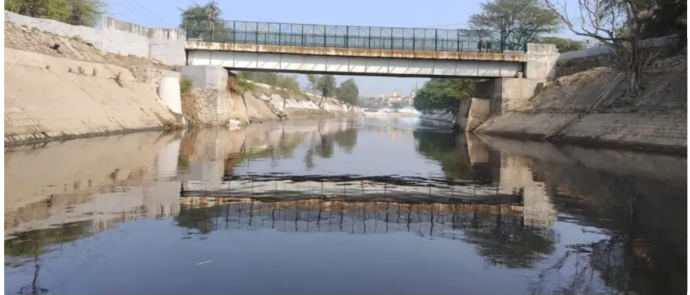
- conversion of rivers into urban drains.
Small rivers passing through cities are especially vulnerable because municipal and industrial waste often exceeds their natural capacity to dilute pollutants.
Examples of Degraded Small Rivers
Sahibi River
- It is a tributary of the Yamuna.
- It has suffered severe ecological degradation.
- In Delhi, it is now commonly associated with the Najafgarh drain.
Mithi River
- It begins at Vihar Lake and flows through Mumbai.
- Garbage and sludge have severely degraded it.
Musi River
- It flows through Hyderabad.
- It is a tributary of the Krishna River.
- It is also known as Muchukunda or Musunuru.
- The river has become highly polluted.
Cooum River
- It flows through Chennai.
- It was once described as the “Thames of South India”.
- It has become highly polluted and toxic.
Other degraded rivers include:
- Vrishabhavathi in Bengaluru;
- Bharalu and Bahini in Guwahati;
- Varuna and Assi in Varanasi; and
- Mula and Mutha in Pune.
Significance of Small Rivers
Small rivers provide ecosystem services that can be grouped into four broad categories.
Provisioning Services
They provide:
- water for drinking;
- irrigation;
- water for livestock; and
- support for wildlife.
Regulating Services
Small rivers help regulate:
- groundwater recharge;
- the hydrological cycle;
- floodplains;
- wetlands; and
- aquatic vegetation.
Supporting Services
They contribute to:
- nutrient cycling;
- soil and sediment transportation;
- habitat formation; and
- survival of aquatic species such as fish, prawns, turtles and gharials.
Cultural Services
Rivers are closely connected with:
- religious practices;
- local traditions;
- community identity; and
- cultural landscapes.
What Is River Rejuvenation?
River rejuvenation is the process of restoring the ecological health and natural functioning of a degraded river.
It is wider than river cleaning. Removing waste or treating sewage addresses pollution, but rejuvenation also requires:
- adequate and sustained flow;
- restoration of river channels;
- protection of floodplains;
- reconnection with wetlands and water bodies;
- revival of aquatic habitats; and
- prevention of future degradation.
About the Small River Rejuvenation Framework
The draft framework has been introduced under the National Mission for Clean Ganga.
Its main objective is to restore small rivers through nature-based and locally suitable interventions, instead of depending only on expensive engineering and technological solutions.
Core Principles
The framework emphasises:
- ecological restoration;
- cost-effective interventions;
- use of local natural resources;
- protection of local biodiversity;
- climate resilience;
- connectivity with water bodies;
- separate approaches for urban and rural rivers; and
- maintenance of river health after restoration.
Major Areas of Intervention
1. Pollution and Climate-Related Interventions
The framework seeks to:
- reduce contamination;
- address sewage and waste inflows;
- improve water quality; and
- build resilience against climate-related changes in river flow.
2. Connectivity Restoration
A healthy river must remain connected with its wider hydrological system. The framework proposes to reconnect rivers with:
- wetlands;
- ponds;
- lakes;
- floodplains;
- tributaries; and
- other local water bodies.
Such connectivity supports natural water storage, groundwater recharge and biodiversity.
3. Geomorphological Correction
River geomorphology refers to the physical form and processes of a river, including its channel, banks, sediment and flow pattern.
Geomorphological correction may address:
- narrowed or altered channels;
- damaged riverbanks;
- disturbed sediment movement;
- physical obstructions; and
- changes caused by encroachment or construction.
The objective is to restore the river’s natural physical functioning rather than merely improve its outward appearance.
Urban and Rural Rivers Require Different Approaches
The framework recognises that urban and rural small rivers face different problems.
Urban Rivers
They are more likely to experience:
- sewage discharge;
- solid-waste dumping;
- channel encroachment;
- concretisation;
- industrial pollution; and
- reduced floodplain space.
Rural Rivers
Their major concerns may include:
- reduced seasonal flow;
- catchment degradation;
- agricultural runoff;
- soil erosion;
- disconnection from ponds and wetlands; and
- excessive extraction of water.
Therefore, restoration measures must reflect the local land use, pollution sources and ecological conditions.
How Will Rivers Be Prioritised?
Small rivers will be selected for rejuvenation according to factors such as:
- extent of reduction in water flow;
- level of pollution;
- ecological importance;
- administrative feasibility; and
- local environmental conditions.
This approach allows limited resources to be directed towards rivers where intervention is both urgent and practically achievable.
Funding and Implementation
The framework proposes to use resources available under existing government programmes, including:
- VB-G RAM G Scheme;
- Swachh Bharat Mission; and
- Namami Gange.
Convergence of programmes can provide labour, sanitation infrastructure and river-cleaning resources without creating an entirely separate implementation system.
State-Led Initiatives
Uttar Pradesh
The One District–One River programme seeks to revive dying and polluted rivers.
Rivers covered by rejuvenation measures include:
- Noon;
- Sakarni;
- Ghurari;
- Manorama; and
- Tamsa.
Kerala
State initiatives have focused on the ecological restoration of:
- Chithari River; and
- Kammalamkudi River.
These programmes demonstrate that small-river restoration can be planned at the State and district levels.
Community-Led Initiatives
Local communities have participated in restoring rivers and streams such as:
- Sukhnag and Sandran, tributaries of the Jhelum in Jammu and Kashmir;
- Manganga and Kayadhu in Maharashtra;
- Lilagar in Chhattisgarh; and
- Rushikulya and Daya in Odisha.
Community participation is important because local residents possess knowledge about:
- historical river channels;
- seasonal flow;
- traditional water bodies;
- sources of pollution; and
- changes in land use.
How Do Small Rivers Affect Larger Rivers?
Small rivers, tributaries and streams are integral parts of larger river basins.
When a healthy tributary joins a major river, it contributes:
- freshwater;
- nutrients;
- sediments;
- aquatic organisms; and
- ecological connectivity.
A degraded tributary may instead carry:
- untreated sewage;
- industrial pollutants;
- garbage;
- sludge; and
- excessive sediment.
Therefore, cleaning only the main river cannot ensure basin-wide improvement if its tributaries continue to bring pollutants. Restoring small rivers complements programmes for larger rivers by addressing pollution and ecological degradation closer to their sources.
Small Rivers and Inland Water Transport
Rivers and canals can provide an energy-efficient mode of transport. However, navigation depends on the long-term ecological health of river systems.
Comparative Energy and Cost Advantages
According to the International Labour Organization, inland water transport:
- consumes three to six times less energy than road transport; and
- consumes up to two times less energy than rail transport.
The approximate freight costs are:
| Mode of transport | Cost per tonne-kilometre |
| Inland waterways | ₹1.06 |
| Railways | ₹1.36 |
| Roads | ₹2.50 |
Current Position
- Inland waterways carry approximately 2% of India’s freight.
- Railways carry around 18%.
- Roads carry about 71%.
- India has 111 National Waterways across 23 States and four Union Territories.
- Only 32 National Waterways are presently operational.
- The Union Budget 2026–27 proposes to operationalise 20 additional waterways over five years.
Small-river rejuvenation is primarily ecological, but restoring the wider river network supports the sustainable development of river-based activities.
Policy Framework for Inland Waterways
Inland Waterways Authority of India
- The IWAI was constituted under Section 3 of the Inland Waterways Authority of India Act, 1986.
- It develops and maintains infrastructure for inland water transport.
National Waterways Act, 2016
- It declared 111 waterways as National Waterways, consisting of five existing and 106 newly declared waterways.
Inland Vessels Act, 2021
- It seeks to provide harmonised regulation of inland vessels and enable their safe and seamless movement across States.
Coastal Shipping Act, 2025
- It identifies suitable coastal shipping routes and seeks better coordination between coastal shipping and inland water transport.
National Waterways Regulations, 2025
The regulations concerning the construction of jetties and terminals seek to:
- expand cargo and passenger networks; and
- encourage private investment.
River Cruise Tourism Roadmap 2047
- Launched in 2024, it provides a framework for developing river cruise tourism. Such activities require ecologically healthy rivers for long-term sustainability.
Implementation Challenges
Maintaining River Flow
- Restoring a river once is easier than maintaining adequate water flow over time. Continued extraction, altered land use and catchment degradation can reverse improvements.
Multiple Agencies
River restoration may involve:
- municipal bodies;
- rural local bodies;
- pollution-control authorities;
- irrigation departments;
- district administrations; and
- local communities.
Weak coordination can delay implementation.
Encroachment
- Removing long-standing encroachments from channels and floodplains can be legally and socially difficult.
Sewage Management
- A river cannot remain clean unless towns and cities prevent untreated wastewater from entering it.
Uniform Solutions
- The ecological conditions of rivers vary. A single technical model may be unsuitable for all river systems.
Monitoring Difficulties
- Long-term assessment must measure river flow, water quality, biodiversity, channel condition and connectivity—not merely the quantity of waste removed.
Way Forward
Adopt a River-Basin Approach
Small rivers should be managed as parts of larger river basins rather than as isolated water channels.
Ensure Ecological Flow
Restoration plans must protect sufficient natural flow to sustain aquatic ecosystems and dilute pollution.
Restore Local Connectivity
Rivers should be reconnected with ponds, wetlands, floodplains and groundwater systems.
Prevent Pollution at Source
Urban local bodies must control sewage, industrial discharge, garbage and sludge before they enter rivers.
Reduce Surface Runoff
Catchment treatment and nature-based measures should slow runoff, improve water infiltration and enhance groundwater recharge.
Develop Local Restoration Plans
Each river needs a plan based on:
- its biodiversity;
- flow conditions;
- land use;
- pollution sources;
- natural resources; and
- urban or rural setting.
Strengthen Community Participation
Local communities should participate in planning, implementation and monitoring to ensure that restored rivers are protected over time.
Measure Ecological Outcomes
Success should be assessed through:
- cleaner water;
- sustained flow;
- restored biodiversity;
- improved groundwater recharge;
- stable riverbanks; and
- renewed connection with local water bodies.
Conclusion
Small rivers are the connecting links of India’s larger river systems. Their degradation affects local water security, groundwater, biodiversity and the ecological condition of major rivers.
The draft SRR Framework marks a shift from isolated, engineering-heavy interventions towards local, nature-based restoration. Its success will depend on sustained flow, pollution prevention, institutional coordination and active community participation.