Why in News?
India became the world’s leading ship recycling nation in 2025, with its global market share rising from 30.1% in 2024 to 35.4% in 2025. Its ship recycling volume also increased from 1.86 million gross tons to 2.99 million gross tons, marking nearly 60% growth.
This achievement has been supported by regulatory reforms, Hong Kong Convention compliance, yard modernisation, worker training and stronger safety and environmental standards.
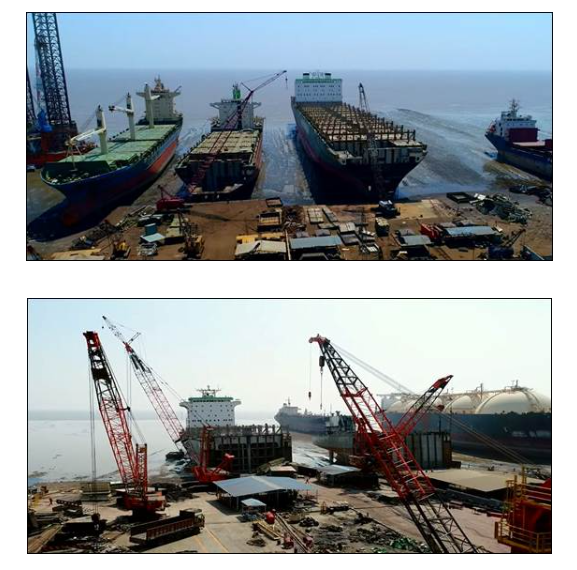
How India Became a Global Leader in Ship Recycling
- According to UNCTAD, India ranked first globally in ship recycling in 2025. The growth shows India’s rising competitiveness in handling end-of-life ships in a regulated and commercially viable manner.
- The achievement is also significant because India has met the Maritime India Vision 2030 target of becoming the world’s leading ship recycling nation five years ahead of schedule.
- India is now planning to nearly double its ship recycling capacity to around 9 million light displacement tons through the planned expansion of the Alang Ship Recycling Yard. This expansion is supported by a comprehensive master plan focused on infrastructure improvement and global competitiveness.
Alang-Sosiya Cluster: Backbone of India’s Ship Recycling Sector
The Alang-Sosiya ship recycling cluster in Gujarat is the centre of India’s ship recycling industry. It accounts for about 98% of India’s ship recycling activity and has an annual recycling capacity of around 6 million gross tons.
Alang produces nearly 3.50 million metric tonnes of steel annually through recycling. This reduces dependence on fresh extraction of natural resources and supports India’s circular economy.
The cluster is supported by:
- authorised ship recycling yards
- downstream steel re-rolling mills
- waste-management facilities
- allied industrial infrastructure
- safety and training institutions
The Safety Training and Labour Welfare Institute at Alang-Sosiya has cumulatively trained over 1.5 lakh workers in occupational safety, hazardous-material handling and emergency response.
Apart from Alang-Sosiya, India also has ship recycling facilities at Amar Iron Udyog in Kolkata and Steel Industrials Kerala Limited in Kerala.
Modernisation of Indian Ship Recycling Yards
Indian yards have been upgraded to meet higher safety and environmental standards.
Major improvements include:
- engineered and demarcated recycling plots
- impermeable working surfaces
- drainage systems
- mechanised material handling equipment
- segregated hazardous-waste storage
- authorised downstream waste treatment linkages
- structured safety, health and emergency response systems
These changes have helped India move from conventional dismantling practices towards a modern, internationally aligned ship recycling industry.
Regulatory and Compliance Framework
India has created a detailed legal and institutional framework for safe and environmentally sound ship recycling.
1. Ship Recycling Act, 2019
The Ship Recycling Act, 2019 is the principal law governing ship recycling in India. It designates the Directorate General of Shipping as the National Authority and provides for authorisation, certification, inspection and enforcement.
2. Ship Recycling Rules, 2021
The Rules operationalise the Act by laying down requirements for facility authorisation, ship recycling plans, hazardous-material management, worker safety, training and reporting.
3. Ship Recycling Regulations, 2026
The Regulations strengthen implementation through detailed operational, environmental and safety standards. They promote uniform compliance across recycling facilities.
Together, the Act, Rules and Regulations regulate the full lifecycle of ship recycling, from ship preparation and certification to yard authorisation and compliance monitoring.
Hong Kong Convention and India’s Alignment
- The Hong Kong International Convention for the Safe and Environmentally Sound Recycling of Ships is the principal global framework for ship recycling. It became legally binding on 26 June 2025.
- India has aligned its domestic framework with the Convention through the Ship Recycling Act, Rules and Regulations. This makes international safety and environmental standards part of India’s national regulatory system.
- The government has provided ₹53.5 crore for yard modernisation, helping 115 ship recycling facilities achieve compliance with Hong Kong Convention requirements.
- Further, 35 Alang ship recycling yards have applied for inclusion in the EU list of approved ship recycling facilities. Shree Ram Vessel Scrap and Y. S. Investments have been included in the draft 16th European List of Ship Recycling Facilities.
Inventory of Hazardous Materials
The Inventory of Hazardous Materials identifies hazardous substances present aboard ships. It supports safe handling throughout the ship lifecycle and before recycling.
IHM improves:
- traceability
- transparency
- hazardous-material risk management
- safety of workers
- environmental compliance
It is an important tool for preventing unsafe dismantling and reducing pollution risks.
Ship-breaking Credit Note Scheme
The Ship-breaking Credit Note Scheme has been introduced under the Ship Building Financial Assistance Scheme 2.0.
It encourages shipowners to recycle vessels at compliant Indian yards while also promoting shipbuilding in India.
Under the scheme:
- scrapping a ship generates a Credit Note equal to 40% of the recycled vessel’s scrap value;
- this Credit Note can be used for purchasing a new vessel built in India;
- it can cover up to 5% of the value of the new Indian-built vessel.
This links sustainable ship recycling with domestic shipbuilding, supporting both environmental responsibility and industrial growth.
| Ex-INS Viraat: Case Study in Responsible Recycling
Ex-INS Viraat is an important example of India’s ship recycling capability. It served the Royal Navy for 27 years and the Indian Navy for 30 years before being decommissioned in March 2017. The aircraft carrier reached Alang, Gujarat, in September 2020 for dismantling and recycling. During its service, Ex-INS Viraat recorded more than 22,622 flying hours, spent 2,252 days at sea, and sailed over 5.88 lakh nautical miles. Its recycling showed India’s ability to handle large and complex vessels, recover valuable materials safely, support employment and follow improved environmental and occupational-safety standards. |
Significance of Ship Recycling for India
1. Resource Security
Ship recycling provides ferrous scrap for the domestic steel industry and reduces dependence on imported raw materials.
2. Circular Economy
Steel and reusable materials recovered from ships reduce waste and support efficient resource use.
3. Environmental Benefits
Regulated recycling prevents unsafe disposal of end-of-life ships and reduces marine and coastal pollution.
4. Lower Energy Use
Recycled steel requires less energy than primary steel production and supports India’s decarbonisation goals.
5. Employment Generation
The sector supports workers engaged in dismantling, processing, material recovery, transport, re-rolling mills and waste management.
6. Industrial Ecosystem
Recovered steel and reusable components support Make in India and Atmanirbhar Bharat by strengthening domestic manufacturing.
Challenges
- Despite India’s progress, some issues require continuous attention.
- Indian yards must maintain global standards consistently as international scrutiny rises. Hazardous-material handling needs strict enforcement because ships may contain asbestos, heavy metals, oils and other risky materials. Worker safety must remain central, especially in physically demanding dismantling operations.
- The sector also needs better technology, stronger waste-management linkages, stable demand for recycled materials and transparent certification systems. India must also ensure that expansion of capacity does not weaken environmental safeguards.
Way Forward
1. Strengthen Green Compliance
All recycling yards should fully comply with the Hong Kong Convention and national safety standards.
2. Improve Worker Welfare
Training, protective equipment, health insurance, emergency response systems and labour welfare measures should be expanded.
3. Upgrade Technology
Mechanised dismantling, digital tracking, hazardous-material mapping and better waste-treatment systems should be promoted.
4. Expand Responsible Capacity
Alang’s expansion should be aligned with environmental safeguards and coastal-zone management.
5. Promote Global Recognition
India should support more yards in securing EU and international approvals.
6. Link Recycling with Shipbuilding
The Ship-breaking Credit Note Scheme should be used to connect recycling, steel recovery and domestic vessel construction.
7. Strengthen Circular Economy Markets
Recycled steel should be integrated into domestic manufacturing, infrastructure and industrial supply chains.
Conclusion
India’s rise as the world’s leading ship recycling nation in 2025 reflects the success of regulatory reform, yard modernisation and international compliance. The sector supports resource security, employment, circular economy and environmental sustainability. The Alang-Sosiya cluster remains the backbone of this progress, while the Hong Kong Convention-aligned framework has improved safety and credibility. Going forward, India must combine capacity expansion with green technologies, worker welfare and strict compliance. Sustainable ship recycling can become a major pillar of India’s maritime economy.