Why in News?
- The AP State Climate Change Cell (APSCCC) has suggested measures to reduce the impact of climate change on the energy sector.
- These measures are part of the Andhra Pradesh State Action Plan on Climate Change 2025–30.
- The Cell has found that the energy sector in many northern and central regions of Andhra Pradesh is highly vulnerable to climate change.
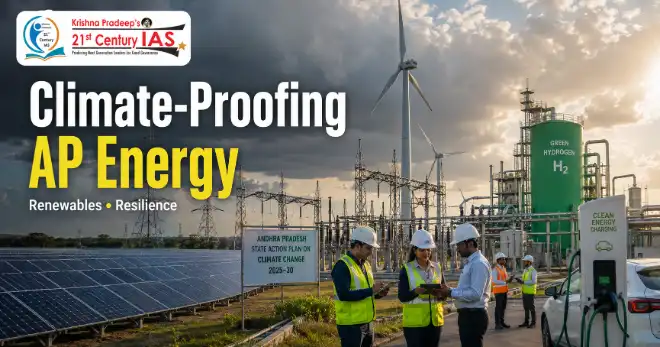
- The plan focuses on renewable energy, green hydrogen, electric vehicle charging, energy efficiency and resilient infrastructure.

Background
- Climate change is expected to affect both energy demand and energy supply.
- Rising temperatures may increase the demand for cooling and electricity.
- Extreme weather events may damage power plants, transmission lines and energy infrastructure.
- Sea-level rise may affect power plants located in coastal areas.
- The energy sector itself contributes to climate change through Greenhouse Gas emissions, mainly due to fossil fuel use.
Climate Change and the Energy Sector
Climate change affects the energy sector in two ways:
1. Impact on Energy Demand
- Rising temperatures increase electricity demand.
- More energy is needed for cooling systems such as fans, air conditioners and refrigeration.
- Heat stress may increase demand in domestic, commercial and industrial sectors.
2. Impact on Energy Supply
- Extreme weather events can damage power plants and transmission networks.
- Variable rainfall can affect hydroelectric power generation.
- Sea-level rise can threaten coastal energy infrastructure.
- Fossil fuel supply chains may also be disrupted.
Eight Adaptation Measures Suggested
1. Increase Renewable Energy Share
- Increase renewable energy generation to 40% of the total energy mix.
- Focus mainly on:
- Solar energy
- Wind energy
2. Establish Renewable Power Projects
- Establish 120 GW renewable power projects.
- This will reduce dependence on fossil fuels.
- It will help improve long-term energy security.
3. Develop Green Hydrogen Hubs
- Establish two environment-friendly hydrogen hubs.
- Combined capacity: 60 MW.
- Green hydrogen can support clean industrial growth.
4. Expand Electric Vehicle Charging Infrastructure
- Install one lakh fast and slow EV charging stations.
- This will support electric mobility.
- It will reduce fossil fuel use in the transport sector.
5. Retrofit Existing Buildings
- Implement energy efficiency measures in existing buildings.
- Retrofitting can reduce electricity consumption.
- It is important for urban climate resilience.
6. Promote Efficient Cooling Systems
- Create an enabling environment for market penetration of efficient cooling systems.
- This is important because rising temperatures will increase cooling demand.
7. Improve Energy Conservation Across Sectors
- Promote energy-efficient street lighting.
- Ensure 100% coverage of Energy Conservation Cells in:
- Commercial sector
- Industrial sector
- Agriculture sector
- Domestic sector
8. Improve Efficiency in Water Pumping and Lift Irrigation
- Increase energy efficiency in:
- Drinking water pumping systems
- Lift irrigation systems
- This is important for agriculture, water supply and rural infrastructure.
Significance of the Measures
1. Supports Clean Energy Transition
- More solar, wind and green hydrogen will reduce fossil fuel dependence.
- It will help lower Greenhouse Gas emissions.
2. Strengthens Energy Security
- Diversified energy sources make the State less vulnerable to supply shocks.
- Renewable energy can improve long-term energy stability.
3. Protects Infrastructure
- Climate-resilient planning can protect power plants, transmission lines and coastal energy assets.
4. Reduces Energy Demand Pressure
- Efficient buildings, cooling systems and street lighting can reduce electricity demand.
- This is important during heatwaves and peak summer months.
5. Promotes Sustainable Mobility
- EV charging infrastructure will support electric vehicles.
- It can reduce pollution and dependence on petrol and diesel.
6. Helps Agriculture and Water Supply
- Efficient pumping and lift irrigation systems reduce energy waste.
- This is important for farmers and drinking water supply.
7. Supports SDG 7
- The measures support UN Sustainable Development Goal 7: Affordable and Clean Energy.
Conclusion
The AP State Climate Change Cell’s recommendations show that climate change is no longer only an environmental issue. It directly affects energy security, infrastructure, agriculture, transport and economic development.For Andhra Pradesh, the energy sector faces both risks and responsibilities. It is vulnerable to rising temperatures, extreme weather events and sea-level rise, but it also has the potential to reduce Greenhouse Gas emissions through renewable energy, green hydrogen, electric mobility and energy efficiency.A climate-resilient and clean energy strategy is therefore essential for sustainable development in Andhra Pradesh.