Why in News?
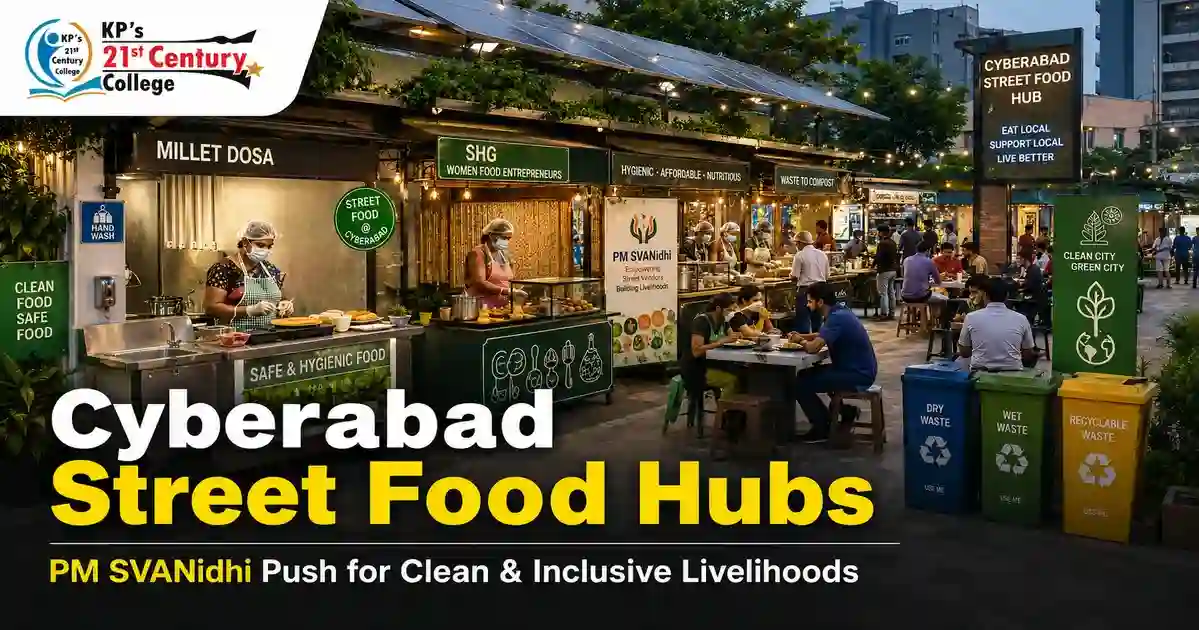
The Cyberabad Municipal Corporation (CMC) is preparing a proposal to establish dedicated Street Food Hubs under the PM SVANidhi scheme, including a proposed hub at Malkam Cheruvu.The initiative aims to provide hygienic, affordable and quality food while creating livelihood opportunities for street vendors and self-help group women.
What is the Proposed Initiative?
The proposd Street Food Hubs are envisaged as clean, organised and inclusive public spaces combining:
- Affordable food, Global standards of quality, Hygiene monitoring, Vendor livelihood support, Women’s participation, Waste treatment, Renewable energy, Public amenities, Cultural activities, Tourism connectivity
The hubs are expected to serve people across income groups, including autorickshaw drivers, workers, students and families.
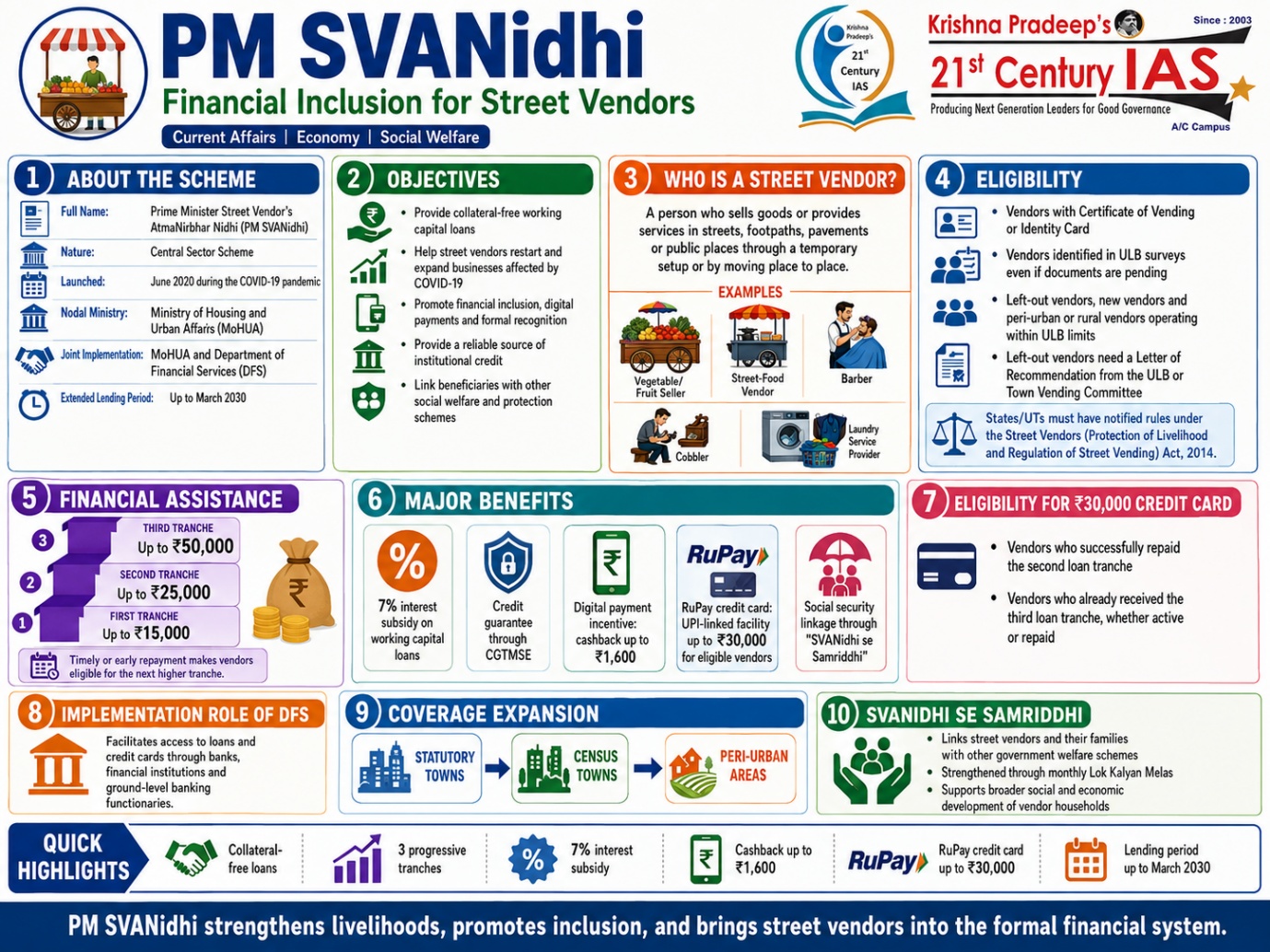
| PM SVANidhi: Financial Inclusion for Street Vendors
About the Scheme
|
What Facilities and Standards are Planned?
Food Quality and Affordability
- Food served at the hubs is expected to meet global quality standards, while prices would remain reasonable and accessible.
Hygiene Monitoring
- The proposal includes regular checks through “hygienic indices” to assess cleanliness and food-handling conditions.
Public Amenities
The hubs may include:
- Automatic smart toilets
- International-standard washing facilities
- Safe drinking-water facilities
- Designated waste bins
- Common seating and gathering spaces
Vendors would be required to follow prescribed waste-management rules and use designated bins.
How Will Vendors and SHG Women Benefit?
Street-Vendor Livelihoods
- The hubs would provide vendors with planned spaces, better public visibility and opportunities to serve a wider customer base.
SHG Women’s Participation
Self-help group women may participate in:
- Food vending
- Operation of the hubs
- Maintenance of common facilities
- Cleanliness and sanitation work
The proposal could therefore support local enterprise and expand women’s participation in urban economic activities.
How Will Environmental Sustainability be Ensured?
Waste Treatment
Waste generated at the hubs would be processed through:
- In-situ treatment systems
- External treatment facilities
Biogas Production
Biodegradable food waste may be converted into biogas, turning organic waste into a useful energy resource.
Solar Power
The hubs may use solar panels as part of the proposed net-zero model.
Sustainable Materials
Furniture and infrastructure are proposed to use:
- Bamboo, Stone, Granite, Recycled materials
Together, these measures seek to reduce waste, improve cleanliness and limit the environmental impact of the food hubs.
How Will Culture, Tourism and Accessibility be Integrated?
Cultural Programmes
Weekly cultural and entertainment activities may feature:
- Music
- Dance
- Traditional art forms
- Cuisines from different States
These programmes could transform the hubs into community gathering spaces rather than food outlets alone.
Tourism Linkages
- The visiting team inspected nearby tourist attractions to assess whether the hubs could be included in regular tourist itineraries.
Public Promotion
Promotional campaigns may involve:
- Celebrities, Social-media influencers, YouTubers,Sportspersons
These campaigns are intended to increase public awareness and attract visitors.
Transport Access
- For the proposed hub at Malkam Cheruvu, the CMC discussed introducing special bus services to improve visitor access.
How is the Proposal Being Planned?
Officials from the Union urban affairs ministry and the Centre of Excellence, Vijayawada:
- Held discussions with CMC officials
- Inspected potential sites
- Examined nearby tourist locations
- Consulted street vendors
- Interacted with SHG women
- Discussed transport access to Malkam Cheruvu
The planning process therefore combines municipal coordination, site assessment and stakeholder consultation.
Significance
Inclusive Urban Development
- The hubs are designed to serve citizens from different occupations and income groups within common public spaces.
Livelihood Protection
- Organised vending spaces can support street vendors while preserving their role in providing affordable urban food.
Women-Led Enterprise
- Participation in vending, operation and maintenance can create economic opportunities for SHG women.
Public Health and Hygiene
- Clean water, washing facilities, toilets, designated bins and hygiene checks can improve consumer confidence and food-safety conditions.
Circular Waste Use
- Converting biodegradable waste into biogas links urban food systems with resource recovery.
Better Urban Amenities
- The hubs can improve access to clean food, sanitation, seating, cultural activities and public transport.
Local Tourism
Food, culture and nearby attractions may be combined to create new visitor experiences.
Implementation Priorities
Based on the proposal, effective implementation would require:
- Maintaining affordable prices along with quality standards
- Ensuring regular hygiene checks
- Enforcing waste segregation and designated-bin use
- Operating biogas and waste-treatment systems effectively
- Maintaining toilets, washing and drinking-water facilities
- Ensuring genuine participation of vendors and SHG women
- Providing convenient access to Malkam Cheruvu
- Conducting cultural and promotional programmes regularly
- Achieving the proposed net-zero objective through solar power and sustainable materials
Conclusion
Cyberabad’s proposed Street Food Hubs seek to integrate affordable food, vendor livelihoods, women’s participation, hygiene and environmental sustainability within organised public spaces.
The Malkam Cheruvu proposal could become a citizen-friendly model if food quality remains affordable, vendors and SHG women receive meaningful opportunities, waste systems function effectively and public transport ensures easy access.