Why in News?
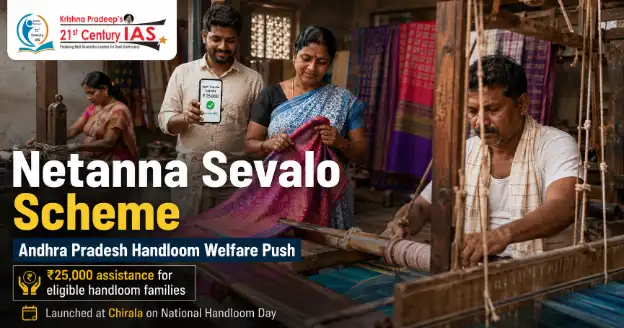
Andhra Pradesh launched the Netanna Sevalo scheme at Chirala in Bapatla district during the 12th National Handloom Day celebrations. Under the scheme, ₹179 crore was released to 71,536 eligible handloom families, with each family receiving ₹25,000 as financial assistance.
About Netanna Sevalo Scheme
Netanna Sevalo is a welfare scheme aimed at supporting handloom families in Andhra Pradesh through direct financial assistance.
| Feature | Details |
| Scheme | Netanna Sevalo |
| State | Andhra Pradesh |
| Launch Place | Chirala, Bapatla district |
| Total Assistance | ₹179 crore |
| Beneficiary Families | 71,536 |
| Assistance per Family | ₹25,000 |
The scheme is designed to provide immediate economic support to traditional weaving families and strengthen the livelihood base of the handloom sector.
Handloom Sector in Andhra Pradesh
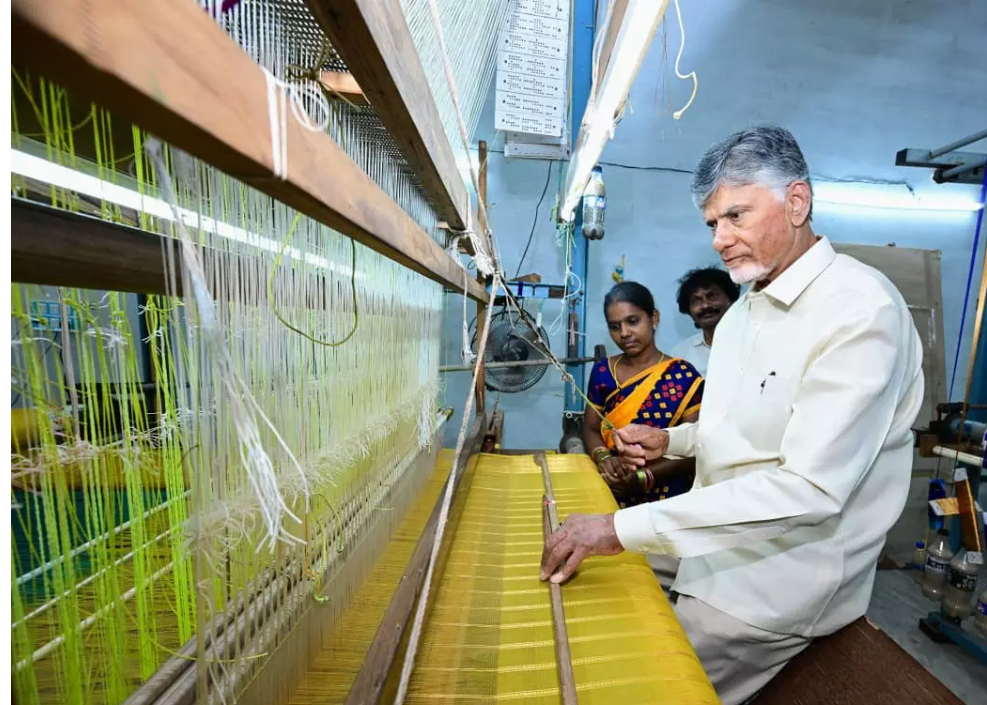
- Handloom is a major part of Andhra Pradesh’s cultural and rural economy. The State has several well-known weaving centres such as Chirala, Venkatagiri, Dharmavaram, Uppada, Mangalagiri, Ponduru, Pedana, Srikalahasti and Narasapuram.
- About 1.27 lakh people depend on the handloom sector in the State. These weaving traditions represent both living cultural heritage and rural non-farm employment.
Major Support Measures for Weavers
1. Power Subsidy
| Category | Benefit | Coverage |
| Handloom families | Free power up to 200 units/month | 62,541 families |
| Powerloom units | Free power up to 500 units/month | 10,032 units |
This reduces the production cost for weaving households and small textile units.
2. Pension Support
Under NTR Pension Bharosa, 85,000 weavers receive ₹4,000 per month. The pension support costs around ₹35 crore per month and ₹420 crore annually.
3. Cooperative Credit Support
The State extended ₹79 crore in cash-credit support to 109 primary handloom cooperative societies. This can improve access to working capital and reduce dependence on informal credit.
4. Cluster Development
Approval was given for 10 handloom clusters under the Small Cluster Development Programme at a cost of ₹10 crore. Cluster-based development can improve common facilities, production quality, skill upgradation and collective marketing.
Infrastructure and Market Initiatives
Several initiatives are being taken to strengthen the handloom ecosystem.
- Handloom Marketing Assistance Programme: To improve market access for handloom products.
- Special facilities at Uppada: To support a major weaving centre.
- Handloom Park at Mangalagiri: To promote production, training and design support.
- Handloom and Handicrafts Museum at Shakhamuru, Amaravati: To preserve and promote craft heritage.
- Sustainable Textile Recycling Unit in Visakhapatnam: Proposed with an investment of ₹4,200 crore, linking textiles with circular economy.
Agreements with organisations, including Fabindia, are expected to improve promotion and marketing of handloom products.
BC Welfare and Social Justice Linkages
The handloom sector is closely connected with many traditional occupational communities. The State has also outlined wider welfare measures for Backward Classes and occupational groups.
Major Measures
- Draft BC Protection Act prepared.
- ₹505 crore assistance over two years to 1.34 lakh fishing families during the fishing-ban period.
- Mining leases proposed for Vaddera communities.
- Excise shop opportunities for toddy tappers.
- Additional ₹20,000 rooftop solar subsidy for eligible BC beneficiaries.
- Universal health insurance cover of ₹2.5 lakh proposed for every citizen.
These measures reflect a broader link between occupational welfare, social justice and livelihood security.
Chirala Textile Economy and Tourism Push
- Chirala has historically been a major textile centre and was known as “Mini Mumbai” because of its textile activity.
- The Suryalanka–Bapatla–Chirala coastal belt is proposed to be developed as a tourism destination. A ₹97-crore tourism corridor from Suryalanka to Chirala under the Swadesh Darshan scheme can link textiles, coastal tourism and local employment.
- The launch of the Bay of Bapatla website, handbook and the Bapatla LEAPS youth skill programme also points to a wider local development strategy.
Conclusion
The Netanna Sevalo scheme is an important intervention for Andhra Pradesh’s handloom families. It provides immediate financial support while being part of a larger framework of power subsidy, pension support, cooperative credit, cluster development, market assistance and tourism linkage. However, the future of the handloom sector cannot depend on welfare alone. Sustainable revival requires better market access, design innovation, digital promotion, cooperative strengthening and youth participation. Andhra Pradesh’s handloom economy can remain culturally vibrant and economically viable only when traditional weaving is converted into a dignified, competitive and future-ready livelihood.