Table of Contents
Relevance: GS Paper III – Energy | Environment | Climate Change
For Prelims:
El Niño, ENSO, thermal power plants, solar capacity, peak electricity demand, coal stocks, renewable curtailment, base load power
For Mains:
energy security, renewable transition, climate variability, coal dependence, grid stability, storage infrastructure, sustainable development, energy mix diversification
Why in News?
- India is preparing to manage a sharp rise in electricity demand during the summer months.
- The India Meteorological Department has forecast the possibility of El Niño conditions during the monsoon season (June–September).
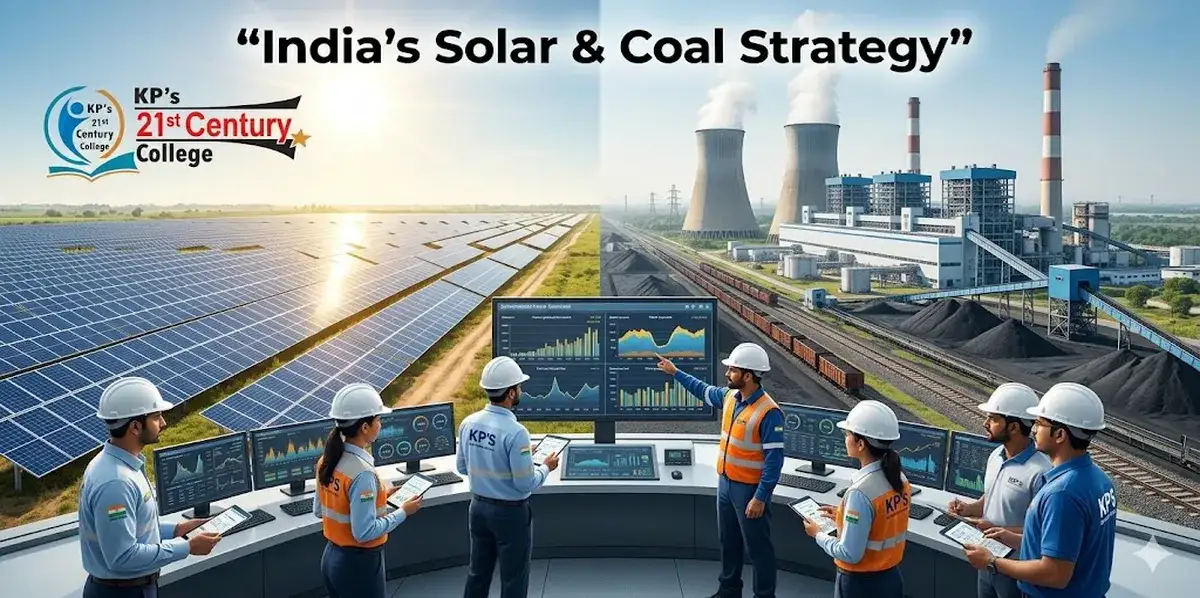
- To ensure uninterrupted power supply, India is relying on a dual strategy: expanding solar capacity and maintaining strong coal-based generation.
Key Highlights
- India’s peak electricity demand reached 256.1 gigawatts (GW) on April 25, reflecting rising consumption.
- Coal-based thermal power contributed 66.9% of electricity generation during peak demand.
- Solar energy contributed 21.5%, indicating increasing but still limited reliance on renewables.
- India added a record 44.61 GW of solar capacity in FY 2025–26, more than doubling the previous year’s addition.
- Coal reserves stand at approximately 200 million tonnes, sufficient for more than 83 days of operation.
- El Niño conditions may weaken the monsoon, increasing dependence on irrigation, cooling demand, and electricity usage.
What is El Niño?
- El Niño is a climatic phenomenon characterized by the abnormal warming of surface waters in the central and eastern equatorial Pacific Ocean and it forms a phase of the El Niño–Southern Oscillation.
- Under normal conditions, trade winds blow from east to west across the Pacific Ocean, causing warm water to accumulate near Indonesia and allowing cold water upwelling along the Peru coast.
- During El Niño, the trade winds weaken or reverse, leading to the eastward movement of warm water and the suppression of cold water upwelling in the eastern Pacific Ocean.
- The phenomenon results in an increase in sea surface temperatures and disrupts atmospheric circulation patterns, particularly the Walker Circulation.
- El Niño generally occurs at intervals of 2 to 7 years and usually lasts for about 9 to 12 months, although it may persist longer in some cases.
- It weakens the Indian southwest monsoon and often leads to drought conditions, adversely affecting agriculture and water availability.
- It causes heavy rainfall and flooding in parts of western South America while inducing drought conditions in regions such as India, Australia, and Indonesia.
- It contributes to a rise in global average temperatures and is often associated with some of the warmest years recorded globally.
- It leads to a decline in marine productivity due to reduced upwelling, affecting fisheries and causing ecological disturbances such as coral bleaching.
- The opposite phase of this phenomenon is La Niña, which is characterized by cooling of surface waters in the Pacific Ocean and generally has opposite climatic effects.
India’s Power Demand Scenario
- India’s electricity demand is rising due to:
– Increasing temperatures (cooling demand through air conditioners)
– Urbanization and industrial growth
– Agricultural irrigation requirements - Peak demand typically occurs during:
– Summer afternoons (cooling demand)
– Evening hours (lighting + domestic usage) - The challenge lies in meeting both daytime and nighttime demand efficiently.
India’s Energy Mix: Present Reality
- India’s power generation is dominated by coal-based thermal power.
- Renewable energy (solar, wind) is growing rapidly but remains supplementary.
Typical characteristics:
- Coal → Reliable, continuous (base load)
- Solar → Intermittent, daytime-only
- Wind → Seasonal and variable
This creates a structural dependency on coal despite renewable expansion.
Why Coal Remains Indispensable?
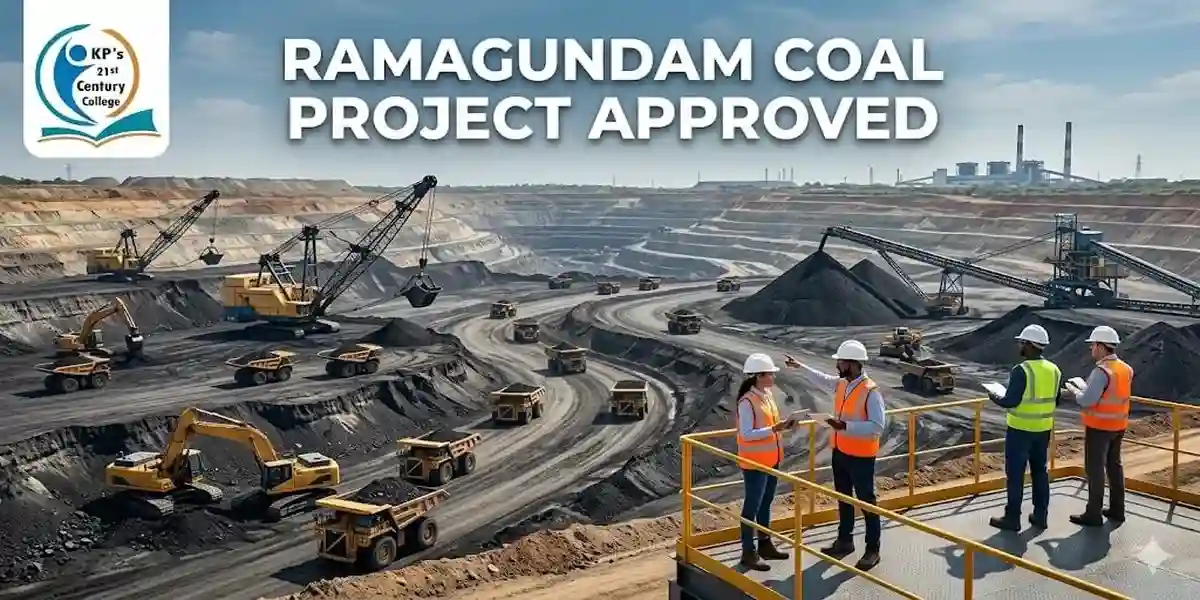
- Coal remains indispensable as it provides stable and continuous base-load power, which is essential for maintaining round-the-clock electricity supply in an economy.
- It is central to meeting the rapidly growing energy demand in countries such as India, where industrialization, urbanization, and rising living standards are increasing electricity consumption.
- The existing thermal power infrastructure is heavily dependent on coal, making it a practical and immediately available energy source without requiring major structural transitions.
- Coal contributes significantly to energy security due to the availability of large domestic reserves, reducing reliance on imported fuels and external uncertainties.
- It remains a cost-effective source of power generation, especially for large-scale electricity production compared to many alternatives.
- Coal is indispensable for core industries such as steel, cement, and power, which form the backbone of economic development and infrastructure growth.
- It provides the necessary grid stability and flexibility, as coal-based plants can be adjusted to meet fluctuations in electricity demand during peak periods.
- Renewable energy sources are constrained by intermittency and storage limitations, making coal essential as a dependable backup to ensure uninterrupted power supply.
- Coal plays a vital socio-economic role by supporting employment and livelihoods in mining, transportation, and allied sectors.
- During climatic disruptions such as El Niño, when hydropower output declines due to weak monsoon conditions, coal becomes crucial for ensuring energy availability and preventing power shortages.
Role of Solar Energy Expansion
- Solar energy is central to India’s clean energy transition.
Key contributions:
- Reduces dependence on fossil fuels
- Helps lower greenhouse gas emissions
- Meets daytime electricity demand efficiently
- Supports India’s climate commitments (non-fossil capacity targets)
- Record addition of 44.61 GW in one year reflects strong policy push.
However, solar alone cannot meet total demand due to its limitations.
Challenges in Renewable Energy Integration
- Intermittency: Solar power is only available during daylight hours.
- Storage limitation: Lack of large-scale battery storage reduces usability at night.
- Grid instability: Sudden fluctuations in solar output affect frequency balance.
- Transmission gaps: Renewable-rich areas are often far from demand centers.
- Seasonal variation: Solar and wind output vary across seasons.
These challenges prevent renewables from replacing coal completely at present.
Renewable Energy Curtailment
- Renewable curtailment refers to the reduction of electricity generation from renewable sources despite their availability.
- It occurs due to:
– Excess supply compared to demand
– Lack of transmission infrastructure
– Grid stability concerns - Example:
Even if solar panels generate high electricity during midday, part of it may be wasted because the grid cannot absorb it. - Curtailment highlights the need for:
– Storage systems
– Smart grid management
– Better transmission networks
Significance for India
- Ensures uninterrupted electricity supply during extreme weather conditions.
- Balances environmental goals with economic and energy needs.
- Reflects India’s pragmatic transition strategy rather than abrupt shift.
- Supports industrial growth and prevents power shortages.
- Strengthens resilience against climate variability like El Niño
Way Forward
- Develop large-scale battery energy storage systems (BESS) to store surplus solar energy.
- Strengthen transmission infrastructure under Green Energy Corridor projects.
- Promote hybrid systems (solar + wind + storage).
- Improve grid flexibility through smart technologies and forecasting tools.
- Gradually reduce coal dependence while ensuring energy security.
- Encourage demand-side management (e.g., shifting usage to solar hours).
Conclusion
India’s energy strategy reflects a careful balance between sustainability and reliability. While solar capacity is expanding rapidly, coal continues to play a crucial role in ensuring grid stability and meeting peak demand. The long-term transition depends on solving storage and infrastructure challenges so that renewable energy can become a dependable primary source without compromising energy security
CARE MCQ
Q.Which of the following statements regarding El Nino is/are correct?
- El Nino was first recognized by Spanish explorers as the warming of the coastal surface waters near Peru.
- It was named El Nino by Spanish immigrants, meaning “the little boy” in Spanish.
- El Nino follows a fixed and predictable cycle of occurrence.
Select the correct answer using the codes below:
a) 1 and 2 only
b) 2 only
c) 1 and 3 only
d) 1, 2, and 3
Ans: (b)
Explanation:
Statement 1 is incorrect: El Nino was first recognized by Peruvian fishermen, not Spanish explorers.
Statement 2 is correct: The term El Nino, meaning “the little boy” in Spanish, was given by Spanish immigrants.
Statement 3 is incorrect: El Nino is not a regular cycle; it occurs irregularly at intervals of two to seven years.
Q. Which of the following statements correctly describes a chemical property of Diammonium Phosphate (DAP)?
(a) It is highly insoluble in water, contributing to its slow-release characteristic.
(b) When dissolved in water, it typically forms a solution with a pH below 7.
(c) It primarily supplies nitrogen in the form of nitrates to plants.
(d) When dissolved in water, it typically forms a slightly alkaline solution.
Ans: (d)
When DAP dissolves in water, it releases ammonium ions, which can lead to the formation of a slightly alkaline solution (pH > 7) initially. This is a key chemical property of DAP.
Q.How does the Coriolis Force affect the movement of winds in the Northern Hemisphere?
a) It deflects winds to the right
b) It deflects winds to the left
c) It increases the wind speed
d) It decreases the wind speed
Ans: (a)
Explanation:
The Coriolis Force, resulting from the Earth’s rotation, causes moving air and water to turn to the right in the Northern Hemisphere and to the left in the Southern Hemisphere. This deflection is to the right in the Northern Hemisphere, affecting the direction of the winds.
FAQs
Q1. What is base load power?
Base load power refers to the continuous minimum level of electricity demand that must be met at all times, usually supplied by coal or nuclear plants.
Q2. Why is solar energy not sufficient alone?
Because it is intermittent and depends on sunlight, and current storage technology is not adequate for continuous supply.
Q3. How does El Niño affect India’s energy demand?
It leads to higher temperatures and weak monsoon, increasing electricity demand for cooling and irrigation.
Q4. What is renewable curtailment?
It is the reduction of renewable power output due to grid or demand limitations, even when generation is available.
Q5. Why is this topic important for UPSC?
It connects climate change, energy policy, economic growth, and sustainability—key themes in GS Paper III.