- Introduction to Defence Technology
- Organisation and Structure of the Indian Defence System
- Defence Innovation and Procurement
- Defence Research and Development Organisation (DRDO)
- Defence Research and Development Organisation (DRDO)
- Indian Missile system
- India’s Missile Defence System
- Aircrafts
- Naval Systems & Key Projects
- Modern Warfare Domains (Space, Cyber, and Biological)
- Strategic Deterrence and The Nuclear Triad
- Defence Technology Prelims Previous Year Questions
- Mains Previous Year Questions – Defence Technology
India's Missile Defence System
While having offensive missiles is crucial for deterrence, a nation must also be able to protect its cities and military bases from enemy attacks. This is achieved through a robust Missile Defence System.
1. What is a Missile Defence System?
A Missile Defence System is an integrated military network designed to detect, track, intercept, and destroy incoming enemy missiles before they can reach their intended targets. Its primary goal is to protect civilian populations, vital military installations, and critical national infrastructure.
These systems do not operate as a single weapon. Instead, they rely on a highly coordinated network of satellites, radars, command centres, and interceptor missiles that work together in real-time. Modern missile defence architecture is always layered, meaning the system gets multiple opportunities to shoot down an incoming missile at different altitudes and phases of its flight.
2. How Does an Interceptor Work?
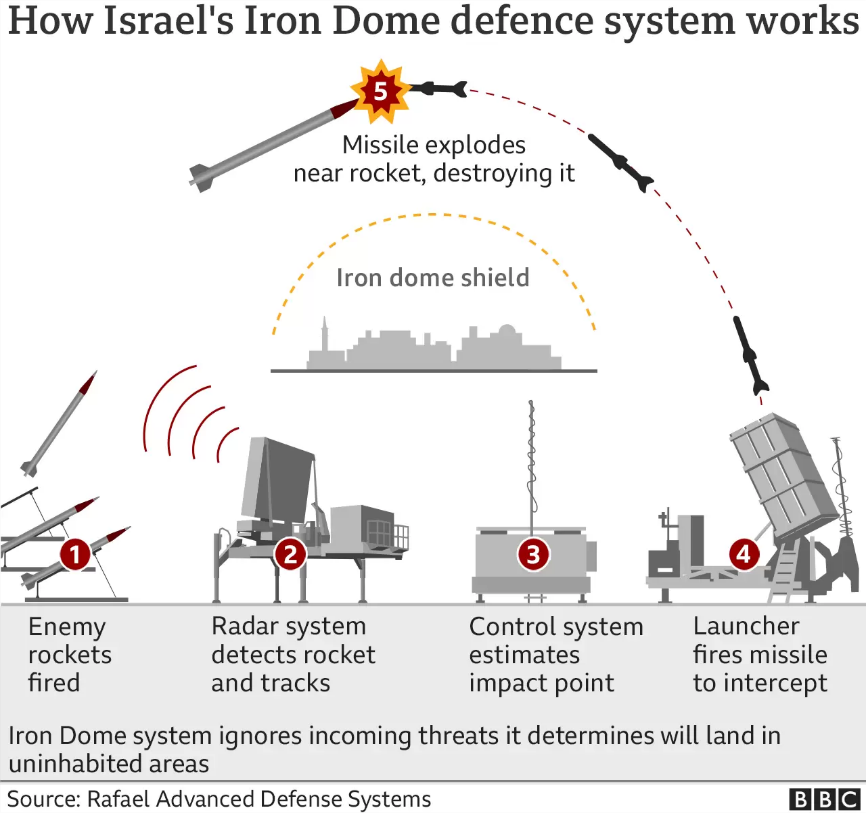
An interceptor is a defensive, anti-missile weapon launched specifically to destroy an incoming threat. The interception process happens in five rapid, coordinated steps:
- Detection and Tracking: Space-based satellites detect the heat from the enemy missile’s launch. Ground-based radars immediately take over to track the missile’s speed, direction, altitude, and projected target.
- Decision Making: This real-time data is sent to a command centre. High-speed computers analyse the threat and decide the exact moment to launch the interceptor.
- Launch and Guidance: The interceptor missile is fired. While in the air, it continuously receives radar updates from the ground to align its flight path with the fast-moving enemy missile.
- Destruction: The interceptor destroys the target using one of two methods:
- Proximity Fuse: It explodes very close to the enemy missile, destroying it with shrapnel and shockwaves.
- Hit-to-Kill: It directly collides with the enemy missile at extremely high speeds, destroying it purely through kinetic energy (like two bullets hitting each other).
- Assessment: Ground radars confirm whether the target was successfully destroyed. If not, additional backup interceptors are instantly launched.
3. India’s Air Defence Architecture
India faces complex security threats and has thus developed a multi-layered shield to protect its airspace.
i. The Ballistic Missile Defence (BMD) System
Developed indigenously by DRDO, this is a two-tiered system designed specifically to destroy massive, high-speed nuclear ballistic missiles.
- Prithvi Air Defence (PAD): Designed for exo-atmospheric interception. It destroys incoming missiles high up in space, at altitudes between 50 km to 180 km, before they re-enter the Earth’s atmosphere.
- Advanced Air Defence (AAD): Designed for endo-atmospheric interception. It acts as the second layer of defence, neutralising missiles that manage to slip past the PAD layer, intercepting them within the Earth’s atmosphere at altitudes up to 30 km.
ii. The Layered Tactical Air Defence Shield
For protection against cruise missiles, fighter jets, and drones, India uses a mix of indigenous and imported systems across different ranges:
- Long-Range: The S-400 Triumf. This is a highly advanced, mobile Surface-to-Air Missile (SAM) system procured from Russia. It acts as a massive shield, capable of destroying targets up to 400 km away.
- Medium-Range (70–100 km): The Barak-8 (MRSAM/LRSAM). Co-developed by India and Israel, it provides a 360-degree protective bubble for both land forces and naval warships.
- Short-Range (25–50 km): The indigenous Akash system and the SPYDER system (procured from Israel) are used to protect highly strategic points and mobile army units from low-flying threats.

iii. Future Vision: Mission Sudarshan Chakra
To keep pace with modern warfare, India has announced Mission Sudarshan Chakra, a comprehensive vision for the year 2035. Its goal is to integrate all these individual systems into a single, all-encompassing, AI-enabled national air defence shield.
4. Challenges in Modern Missile Defence
Despite advanced technology, missile defence systems face severe operational challenges:
- Cost Asymmetry: Missile interceptors are extremely expensive (often costing millions of dollars per unit). Firing a multi-million dollar interceptor to shoot down a cheap drone or a basic rocket creates a huge financial burden on the defending country.
- Saturation Attacks: If an enemy fires a massive “swarm” of hundreds of cheap missiles and drones simultaneously, the sheer numbers can easily overwhelm the radars and exhaust the limited supply of interceptor missiles.
- Hypersonic Weapons: Modern hypersonic glide vehicles travel at more than five times the speed of sound and can unpredictably change their direction in mid-air. Their extreme speed and manoeuvrability drastically reduce the probability of a successful interception.
Challenges Faced by DRDO
While DRDO has achieved massive success in many domains, it faces several persistent challenges that affect its overall efficiency:
- Delays in Projects: Complex defence projects often face severe time and cost overruns. For instance, the LCA Tejas took over three decades to complete. These delays are often caused by overambitious project scopes, changing military requirements, and technical hurdles.
- Dependence on Imports: Despite pushes for indigenisation, India still imports critical components for major projects like submarines and aircraft. There is a heavy reliance on foreign Original Equipment Manufacturers (OEMs) for critical design consultancies.
- Budget Constraints: Defence research requires sustained, long-term investments. Currently, DRDO’s budget hovers around 8% of the total defence budget, which limits its ability to create advanced infrastructure and retain top scientific talent.
- Critical Technology Gaps: * Jet Engines: India still struggles to master key aerospace technologies like single-crystal blades and advanced cooling systems. As a result, the LCA Tejas relies on imported GE-404 engines from the USA.
- Semiconductors: Because India lacks commercial-scale semiconductor fabrication facilities, DRDO must depend on imported microchips for its radars, avionics, and electronic warfare systems, which creates a strategic vulnerability.
Key Air-Defence Systems of the World
it is important to match famous air-defence systems with their respective countries:
Country/ Region | Key Missile Defence Systems |
Russia | S-400 Triumf, S-300VM, S-350 Vityaz, S-500 Prometheus |
USA | THAAD (Terminal High Altitude Area Defense), Patriot (PAC-3 MSE), Golden Dome (under development) |
Israel | Iron Dome (for short-range rockets), David’s Sling, Iron Beam (Laser-based defence) |
China | HQ-9, HQ-22, HQ-16 |
Europe | European Sky Shield Initiative (ESSI), Skyranger, IRIS-T SLM |