Why in News?
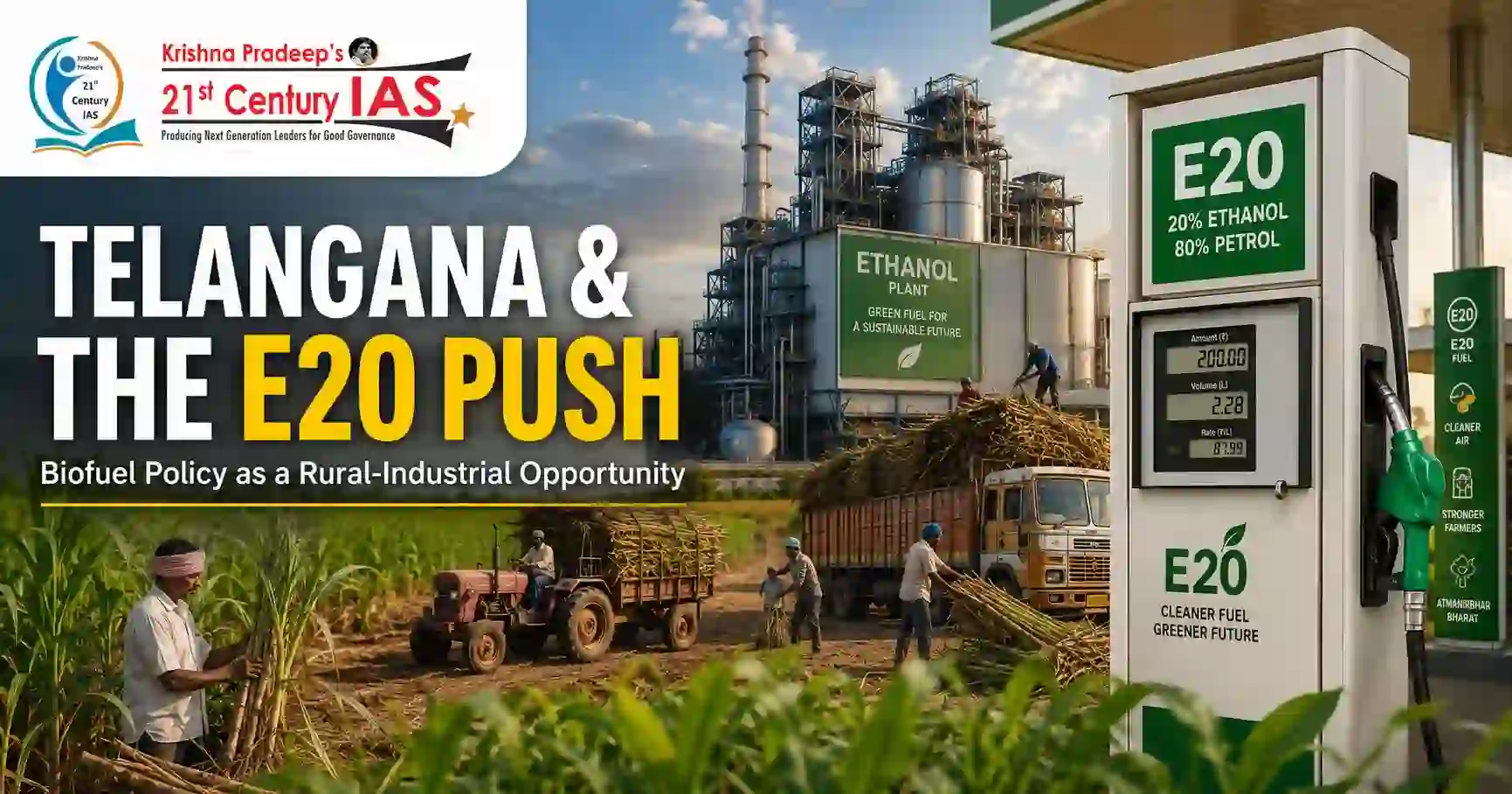
The Centre recently defended the use of E20 petrol, which involves blending 20% ethanol with petrol. It clarified that there is no proposal at present to raise ethanol blending beyond 20%. Any future increase will depend on scientific studies and consultations with automobile manufacturers, oil companies and research institutions. For Telangana, the E20 push is significant because ethanol production and farm-linked demand are expected to expand in districts such as Medak, Sangareddy, Nizamabad and Peddapalli.
What is E20 Petrol?
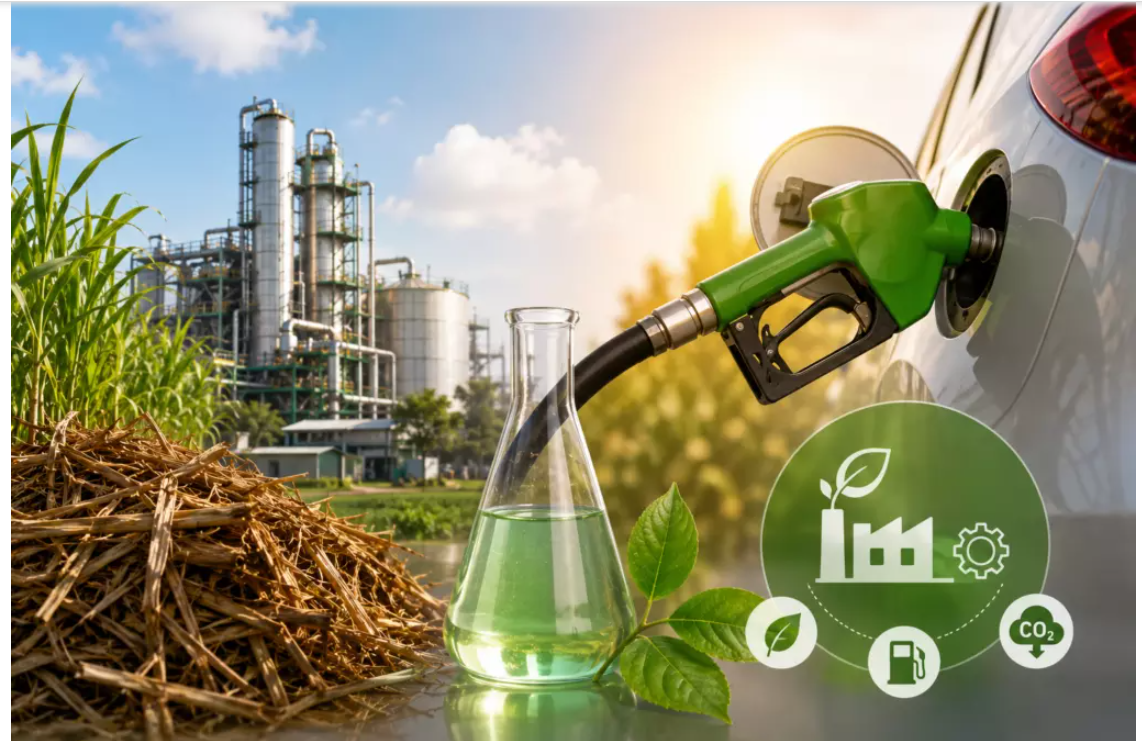
- E20 petrol refers to petrol blended with 20% ethanol. Ethanol is a biofuel that can be produced from agricultural feedstock such as maize, damaged grain and other biomass-based inputs.
- The objective of ethanol blending is to reduce dependence on conventional fossil fuel, promote cleaner combustion and support domestic biofuel production.
- The government has stated that E20 is a tested and safer fuel. It also offers higher octane, cleaner combustion and lower emissions.
Telangana’s Opportunity from E20
For Telangana, the E20 programme is not only an energy policy but also a potential rural-industrial development opportunity.
Ethanol production activity is already visible in parts of:
- Medak
- Sangareddy
- Nizamabad
- Peddapalli
These areas have grain-based distilleries and allied processing units that are becoming part of the biofuel supply chain.
If ethanol demand remains steady, these districts can benefit through:
- expansion of distillery capacity
- stronger demand for local agricultural produce
- better market linkages for farmers
- growth of storage and logistics services
- employment in agro-processing and transport
Thus, the E20 shift can create a link between energy security, agriculture and rural industry.
Industrial and Rural Linkages
1. Benefit to Ethanol Units
Grain-based distilleries and allied processing units can benefit from assured demand for ethanol. This can encourage new investment and capacity expansion in Telangana’s biofuel sector.
2. Farm-Linked Demand
Farmers supplying maize, damaged grain and other feedstock may gain from a stronger local market. This is especially relevant in regions where agriculture and agro-processing are already linked.
3. Support to Rural Economy
The policy can support rural income if procurement systems are efficient and payments are timely. Farmers can benefit only when the supply chain is transparent, predictable and remunerative.
4. Growth of Allied Services
Ethanol blending requires a supporting ecosystem. This can generate demand for:
- transporters
- storage operators
- quality-testing facilities
- logistics firms
- fuel movement and blending services
5. Biofuel Hub Potential
With proper coordination between feedstock procurement, distillery capacity and logistics, Telangana can emerge as an important biofuel hub.
Benefits of the E20 Push
1. Cleaner Fuel Transition
E20 supports cleaner combustion and can help reduce emissions compared to conventional petrol.
2. Reduced Crude Oil Dependence
Blending ethanol with petrol can reduce crude oil imports and save foreign exchange.
3. Support to Farmers
Ethanol demand creates an additional market for agricultural produce and damaged grains, improving farm-linked income opportunities.
4. Rural Industrialisation
Biofuel production can encourage decentralised industrial activity in non-metro districts.
5. Employment Generation
The ethanol value chain can create jobs in farming, procurement, distillation, testing, transport, storage and blending.
6. Value Addition in Agriculture
Instead of depending only on traditional crop markets, farmers can connect with industrial demand through biofuel feedstock.
Conclusion
The E20 push has opened a new opportunity for Telangana by connecting clean fuel policy with rural industrial growth. While consumer concerns about mileage and vehicle compatibility need clear communication, the policy can benefit ethanol producers, farmers, transporters and allied service providers. If implemented with efficient procurement, timely payments and scientific regulation, E20 can become a meaningful development lever for Telangana’s agriculture-linked industrial economy.