Menu

APPSC Current Affairs 7 October 2026 featuring INS Surya at Visakhapatnam, SME Growth Fund and climate pollutants
APPSC

Boost Your APPSC Group-1 Preparation - New Batch & Test Series 2026

Relevance: APPSC Defence Manufacturing

Important Keywords for Prelims and Mains
  • Prelims: INS Surya | Fleet Support Ship | Hindustan Shipyard Limited | Visakhapatnam | Slipway-4 | Goliath Crane | At-sea Replenishment | Indian Navy | Miniratna Category-I | Make in India | Eastern Naval Command
  • Mains: Defence Indigenisation | Maritime Security | Strategic Autonomy | Shipbuilding Ecosystem | Maritime Industrial Hub | MSME Integration | Supply-chain Resilience | Indian Ocean Region | Global Competitiveness

Why in News?

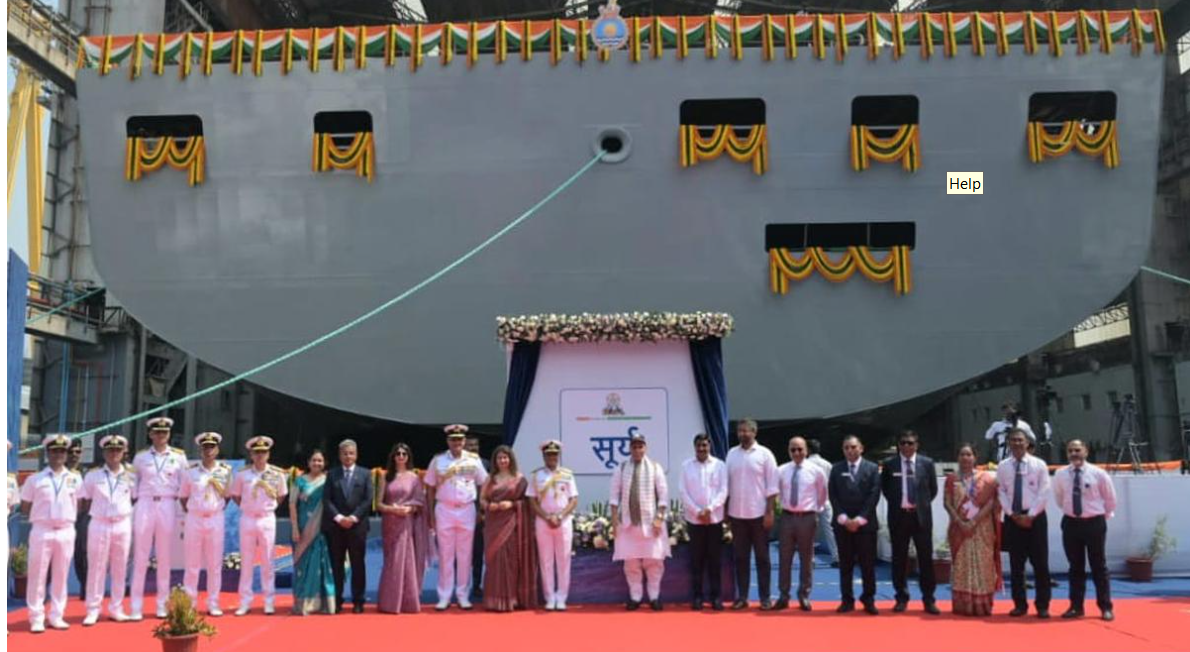
Defence Minister Rajnath Singh launched Surya, India’s first indigenously designed and built Fleet Support Ship (FSS-1), at Hindustan Shipyard Limited (HSL), Visakhapatnam, on 6 October 2026.He also laid the keel of the fifth Fleet Support Ship, FSS-5, and inaugurated the upgraded Slipway-4 and a 300-tonne Goliath Crane.

What are the Key Developments?

  • FSS-1 Surya was launched into the Bay of Bengal.
  • The keel of FSS-5 was laid, marking the formal commencement of its construction.
  • The upgraded Slipway-4 was inaugurated.
  • A new 300-tonne Goliath Crane was commissioned.
  • The new facilities will enable HSL to construct larger and more complex vessels.

What is Keel Laying?

  • The keel is the main structural base of a ship.
  • Keel laying marks the formal beginning of a ship’s physical construction.
  • It is an important milestone between the design stage and full-scale assembly.

What is a Fleet Support Ship?

A Fleet Support Ship is a large auxiliary naval vessel that supplies warships with fuel, ammunition, food, water, spare parts and other essential materials while they are operating at sea.

Its Main Functions Include

  • Refuelling naval vessels at sea
  • Supplying ammunition, food and fresh water
  • Carrying spare parts and essential stores
  • Providing maintenance support
  • Supporting helicopter operations
  • Extending the operational endurance of naval fleets

Fleet Support Ships allow warships to operate for longer periods without frequently returning to ports.

What are the Features of Surya?

The indigenously designed and built ship will have:

  • Enhanced capacity for carrying cargo and fluids
  • Facilities for at-sea replenishment
  • Onboard first-line maintenance workshops
  • A helicopter deck for Multi-Role Helicopter operations
  • Self-defence systems
  • Capability to provide sustained logistical support during distant naval operations

Why are Fleet Support Ships Important for the Indian Navy?

Extended Operational Reach

Fleet Support Ships allow Indian naval vessels to remain deployed for longer periods in distant maritime areas.

Greater Endurance

They provide continuous supplies of fuel, food, water and other materials without requiring warships to return to naval bases.

Indian Ocean Presence

They strengthen the Navy’s ability to maintain sustained operations across the Indian Ocean Region.

Maritime Security

Longer deployments improve India’s capacity to protect sea lanes, respond to emergencies and safeguard maritime interests.

Self-Reliance

The indigenous construction of Surya strengthens domestic shipbuilding and reduces dependence on foreign platforms.

What Infrastructure was Inaugurated at HSL?

Upgraded Slipway-4

  • The slipway has been extended and strengthened.
  • It can now support the construction and launching of ships weighing up to 45,000 Deadweight Tonnage (DWT).
  • It will enable HSL to undertake larger shipbuilding programmes.

300-Tonne Goliath Crane

  • The crane spans Slipways 3 and 4.
  • It was designed and manufactured by L&T Geostructure with Konecranes under Make in India.
  • It will support modern block-construction techniques, in which large sections of a ship are constructed separately and later assembled.

Technological Features

  • Programmable Logic Controller controls
  • Variable Frequency Drives
  • Tandem lifting capability
  • Remote diagnostics
  • Condition-monitoring systems
  • Faster and more precise handling of heavy ship blocks

About Hindustan Shipyard Limited

  • Location: Visakhapatnam, Andhra Pradesh
  • HSL has supported India’s maritime and defence requirements for more than eight decades.
  • The first ship built in independent India, Jala Usha, was launched at Visakhapatnam in 1948.
  • HSL functions under the Ministry of Defence.
  • It received Miniratna Category-I status in 2025.
  • It undertakes shipbuilding, ship repair and maritime engineering activities.

Visakhapatnam as a Maritime Industrial Hub

Visakhapatnam already possesses the major components required for an integrated maritime ecosystem:

  • Eastern Naval Command
  • Naval Dockyard
  • Hindustan Shipyard Limited
  • Visakhapatnam Port
  • Engineering and technical institutions
  • Skilled industrial workforce
  • Supporting port and logistics infrastructure

The proposed maritime industrial ecosystem can connect:

  • Indian Navy
  • HSL
  • Defence Research and Development Organisation
  • Andhra Pradesh-based MSMEs
  • Universities and research institutions
  • Technology companies
  • Maritime and defence startups

How Can Andhra Pradesh Benefit?

MSME Development

Local MSMEs can manufacture ship components, engineering equipment and specialised materials.

Research and Skill Development

Universities can contribute through maritime research, naval architecture, engineering education and workforce training.

Startup Opportunities

Startups can develop digital shipbuilding systems, sensors, automation, maritime software and maintenance technologies.

Employment Generation

Shipbuilding and associated industries can create skilled employment in manufacturing, logistics, maintenance and research.

Industrial Growth

A maritime manufacturing cluster around HSL can attract investment and strengthen Andhra Pradesh’s coastal economy.

Conclusion

The launch of Surya strengthens the Indian Navy’s logistical reach and demonstrates India’s growing indigenous shipbuilding capacity. The upgraded infrastructure at HSL can support larger and technologically advanced vessels. Developing Visakhapatnam as a maritime industrial hub can integrate defence institutions, industries, MSMEs, universities and startups while advancing both Andhra Pradesh’s industrial growth and India’s maritime security.

CARE MCQ

Q. Consider the following statements regarding the Fleet Support Ship Surya:

  1. It is India’s first indigenously designed and built Fleet Support Ship.
  2. It was launched by Hindustan Shipyard Limited at Visakhapatnam.
  3. It can support at-sea replenishment and Multi-Role Helicopter operations.
  4. Hindustan Shipyard Limited functions under the Ministry of Ports, Shipping and Waterways.

Which of the statements given above are correct?

(a) 1 and 2 only
(b) 1, 2 and 3 only
(c) 2, 3 and 4 only
(d) 1, 2, 3 and 4

Answer: (b) 1, 2 and 3 only

Explanation

  • Statement 1 is correct: Surya is the first Fleet Support Ship designed and built indigenously by HSL.
  • Statement 2 is correct: The vessel was launched at Hindustan Shipyard Limited in Visakhapatnam.
  • Statement 3 is correct: It will provide at-sea replenishment and has a helicopter deck for Multi-Role Helicopter operations.
  • Statement 4 is incorrect: Hindustan Shipyard Limited functions under the Ministry of Defence, not the Ministry of Ports, Shipping and Waterways.

FAQs

Q. What is Surya?
Surya is India’s first indigenously designed and built Fleet Support Ship.

Q. Where was Surya launched?
It was launched at Hindustan Shipyard Limited in Visakhapatnam.

Q.What is the purpose of a Fleet Support Ship?
It supplies fuel, food, ammunition, water and maintenance support to naval vessels at sea.

Q. What is the capacity of the upgraded Slipway-4?
It can support ships weighing up to 45,000 DWT.

Q. When did HSL receive Miniratna Category-I status?
HSL received the status in 2025.


Relevance: UPSC GS Paper III: Indian Economy, MSME Sector, Industrial Growth, Employment and Inclusive Development

Important Keywords for Prelims and Mains
  • Prelims: SME Growth Fund | ₹10,000 crore | Alternative Investment Fund | Patient Equity Capital | Udyam Registration | Udyam Assist Platform | MSME Classification | CGTMSE | PMEGP | PM Vishwakarma | RAMP | ZED | ASPIRE | MSME SAMBANDH
  • Mains: Growth-stage Financing | Equity Capital | Manufacturing Competitiveness | Global Value Chains | Industrial Clusters | Regional Industrialisation | Employment Generation | Export Competitiveness | Atmanirbhar Bharat | Viksit Bharat 2047

Why in News?

  • The Union Cabinet has approved the Government of India’s commitment of ₹10,000 crore for establishing the Small and Medium Enterprises Growth Fund.
  • Announced in the Union Budget 2026–27, the Fund will provide long-term equity capital to viable and scalable SMEs and help create globally competitive Indian enterprises.

What is the SME Growth Fund?

The SME Growth Fund (SGF) is a dedicated investment mechanism designed to provide patient growth equity capital to high-potential small and medium enterprises.

Major Features

  • Government commitment: ₹10,000 crore
  • Type of support: Direct equity investment
  • Operational form: Alternative Investment Fund
  • Target group: Viable and scalable small and medium enterprises
  • Major focus: Manufacturing-oriented SMEs
  • Geographical focus: Industrial clusters, including those in Tier-II and Tier-III cities
  • Policy origin: Union Budget 2026–27
  • Long-term objective: Development of Indian enterprises capable of becoming national and global sectoral champions

The Fund can support enterprises working in:

  • manufacturing;
  • services;
  • technology;
  • innovation-driven sectors; and
  • strategic value chains.

How are Small and Medium Enterprises Classified?

Enterprises are classified based on their investment in plant, machinery or equipment and their annual turnover.

The revised criteria became effective from April 2025.

EnterpriseMaximum investmentMaximum annual turnover
Small enterprise₹25 crore₹100 crore
Medium enterprise₹125 crore₹500 crore

An enterprise must remain within both the prescribed investment and turnover limits of its category.

What is an Alternative Investment Fund?

An Alternative Investment Fund (AIF) is a privately pooled investment vehicle established in India.

  • It collects money from investors.
  • The pooled capital is invested according to a defined investment policy.
  • Under the SGF framework, the AIF will make direct equity investments in selected SMEs.
  • The Government will provide an aggregate commitment of ₹10,000 crore to the AIF established under the Fund.

What is Patient Equity Capital?

Patient equity capital is long-term investment provided to an enterprise without demanding immediate repayment.

Unlike an ordinary loan:

  • it does not involve regular principal repayment;
  • the investor receives an ownership stake in the enterprise;
  • returns depend on the long-term growth of the business; and
  • the enterprise gets more time to expand, innovate and improve productivity.

Equity Capital and Debt Finance

Equity capitalDebt finance
Investor receives an ownership shareLender provides a loan
No fixed loan repaymentPrincipal and interest must be repaid
Returns depend on business growthInterest is generally predetermined
Suitable for long-term expansion and risk-takingSuitable for predictable financing needs
Shares business riskRepayment obligation remains with the enterprise

Why is a Dedicated SME Growth Fund Needed?

Growth-stage Financing Gap

  • Existing equity funds mainly support early-stage businesses and micro enterprises.
  • Small and medium enterprises seeking to expand face a shortage of long-term growth equity.

Excessive Dependence on Debt

  • SMEs often depend heavily on bank loans and other forms of debt.
  • High repayment obligations can restrict investment in capacity, technology and innovation.

Critical Growth Stage

SMEs require long-term capital when they reach important points in their growth journey, such as:

  • expanding manufacturing capacity;
  • entering new markets;
  • adopting advanced technology;
  • undertaking acquisitions;
  • making strategic investments; and
  • moving from a small enterprise to an industry leader.

Weak Global Integration

Many SMEs have limited integration with global value chains. Growth capital can help them improve quality, productivity and scale to meet international standards.

Creating Future Champions

India requires a stronger base of medium-sized enterprises that can compete with global firms and support smaller suppliers through domestic industrial networks.

What is the Operational Framework of the Fund?

The Government will commit ₹10,000 crore to an AIF created under the SGF framework.

The AIF will:

  1. identify SMEs with proven business viability;
  2. assess their potential for expansion and scalability;
  3. provide direct equity investment;
  4. support capacity expansion and technology adoption;
  5. help enterprises improve professional management; and
  6. enable them to become competitive sectoral leaders.

The Fund is therefore different from a general subsidy or conventional credit scheme. It will make selective equity investments in enterprises with high growth potential.

What is the Strategic Focus of the Fund?

Manufacturing at the Core

A major share of the Fund will be directed towards small and medium manufacturing enterprises.

The capital can help them:

  • expand manufacturing capacity;
  • purchase modern machinery;
  • adopt advanced technologies;
  • improve productivity;
  • upgrade product quality; and
  • strengthen export competitiveness.

Tier-II and Tier-III Industrial Clusters

The Fund will also consider SMEs located in industrial clusters outside major metropolitan centres.

This can:

  • promote balanced regional development;
  • strengthen local industrial networks;
  • support decentralised manufacturing;
  • reinforce local supply chains; and
  • create quality employment in smaller cities.

Innovation and Technology

The Fund can help SMEs invest in:

  • research and development;
  • digitalisation;
  • automation;
  • modern production processes; and
  • innovation-driven business models.

Global Value Chains

Supported enterprises can improve their scale and quality standards to supply products and components to large domestic and international companies.

What is the Current Position of India’s MSME Ecosystem?

Contribution to the Economy

According to the Economic Survey 2025–26, MSMEs account for:

  • 31.1% of India’s GDP
  • 35.4% of manufacturing output
  • 48.58% of exports

Formal Registration

As of 6 October 2026:

  • Total registrations under Udyam and the Udyam Assist Platform reached approximately 9.78 crore.
  • Registered enterprises reported around 43.28 crore employment opportunities.
  • Women-owned enterprises constituted 37.6% of registrations.

Sectoral Distribution

Economic activityApproximate registrations
Trading4.08 crore
Services3.77 crore
Manufacturing1.93 crore
Total9.78 crore

The figures demonstrate the wide presence of MSMEs across India’s trade, services and manufacturing sectors.

How Can Long-Term Capital Support SME Expansion?

The Fund can enable SMEs to:

  • scale up their operations;
  • invest in manufacturing capacity;
  • undertake acquisitions;
  • adopt advanced technologies;
  • promote innovation;
  • make strategic investments;
  • enter international markets;
  • integrate with global value chains; and
  • improve professional management.

What are the Expected Benefits?

Creation of Sectoral Champions

The Fund can create a pipeline of Indian enterprises with sufficient scale, innovation and competitiveness to become leaders in their respective sectors.

Employment Generation

Expansion of manufacturing capacity and industrial clusters can create direct and indirect employment.

Export Competitiveness

Technology adoption, higher productivity and improved product quality can help Indian SMEs compete in international markets.

Stronger Local Supply Chains

Growing SMEs can place larger and more regular orders with smaller suppliers. This can help micro enterprises invest in machinery, skills and quality improvement.

Higher Domestic Value Addition

Expansion of domestic manufacturing can reduce dependence on imported components and finished products.

Balanced Regional Development

Investment in Tier-II and Tier-III industrial clusters can distribute industrial growth beyond major metropolitan areas.

Deepening Domestic Capital Markets

The Fund can encourage institutional capital to flow towards growth-stage enterprises and expand the market for SME equity investment.

What is the Broader Support Ecosystem for MSMEs?

Focus areaMajor initiative
Credit and financeCredit Guarantee Fund Trust for Micro and Small Enterprises
Employment generationPrime Minister’s Employment Generation Programme
End-to-end supportPM Vishwakarma
Training and entrepreneurshipEntrepreneurship and Skill Development Programme and ASPIRE
Technology and competitivenessRAMP, Zero Defect Zero Effect Scheme, Tool Rooms and Technology Centres
Public procurementMSME SAMBANDH and National SC-ST Hub

The Union Budget 2026–27 also proposed a separate ₹2,000 crore additional allocation to the Self-Reliant India Fund to continue risk-capital support for micro enterprises.

What are the Major Implementation Challenges?

Transparent Enterprise Selection

Clear criteria are required to identify businesses that are genuinely viable, scalable and capable of using equity capital productively.

Regional Concentration

Investments should not remain concentrated in developed industrial centres. Eligible enterprises in Tier-II and Tier-III clusters must receive effective access.

Governance Standards

Enterprises receiving equity investment need proper accounting, disclosure, professional management and corporate governance systems.

Monitoring of Outcomes

The Fund must assess whether investments result in:

  • capacity expansion;
  • employment creation;
  • higher productivity;
  • technological improvement; and
  • export growth.

Balancing Commercial and Developmental Goals

The AIF must generate sustainable investment returns while also supporting regional development, manufacturing and employment.

Capacity Constraints

Capital alone may not be sufficient. Some SMEs may also require technology, market access, skills and professional management support.

Way Forward

  • Establish transparent and sector-specific selection criteria.
  • Give priority to enterprises with measurable technological and employment potential.
  • Develop a pipeline of investment-ready SMEs in Tier-II and Tier-III cities.
  • Combine equity investment with professional, technological and market-support services.
  • Promote partnerships between SMEs, research institutions and larger manufacturers.
  • Establish regular monitoring of productivity, exports, employment and domestic value addition.
  • Ensure professional and independent management of the AIF.
  • Encourage successful SMEs to integrate micro enterprises into their supply chains.
  • Develop clear and non-disruptive exit mechanisms for the Fund’s investments.

Conclusion

The ₹10,000 crore SME Growth Fund represents a shift from conventional debt-based assistance towards long-term growth equity. If supported by transparent selection, professional management and effective monitoring, it can help viable SMEs expand manufacturing, adopt technology and enter global value chains. The Fund can thereby promote innovation-led industrialisation, balanced regional development and quality employment while advancing Atmanirbhar Bharat and Viksit Bharat 2047.

CARE MCQ

Q. Consider the following statements regarding the SME Growth Fund:

  1. It was announced as part of the Union Budget 2026–27.
  2. It will provide direct equity investment through an Alternative Investment Fund framework.
  3. A major share of its allocation will be directed towards manufacturing-focused small and medium enterprises.
  4. It is exclusively meant for micro enterprises operating in metropolitan cities.

Which of the statements given above are correct?

(a) 1 and 2 only
(b) 1, 2 and 3 only
(c) 2, 3 and 4 only
(d) 1, 2, 3 and 4

Answer: (b) 1, 2 and 3 only

Explanation

  • Statement 1 is correct: The SME Growth Fund was announced under the Union Budget 2026–27.
  • Statement 2 is correct: The Government will commit ₹10,000 crore to an Alternative Investment Fund, which will make direct equity investments in selected SMEs.
  • Statement 3 is correct: A major portion of the Fund will support small and medium manufacturing-focused enterprises.
  • Statement 4 is incorrect: The Fund targets small and medium enterprises, not exclusively micro enterprises. It will also consider industrial clusters in Tier-II and Tier-III cities.

FAQs

Q. What is the size of the SME Growth Fund?
The Government has approved a commitment of ₹10,000 crore.

Q. What type of financial support will the Fund provide?
It will provide long-term or patient equity capital.

Q. Which enterprises will receive priority?
Manufacturing-focused, viable and scalable small and medium enterprises will receive major attention.

Q. How will the Fund operate?
It will operate through an Alternative Investment Fund established under the SGF framework.

Q. How will the Fund support balanced regional growth?
It will consider SMEs located in industrial clusters in Tier-II and Tier-III cities.

Relevance: UPSC GS Paper III: Climate Change, Air Pollution, Environment, Agriculture and Disaster Management

Important Keywords for Prelims and Mains
  • Prelims: Short-Lived Climate Pollutants | Short-Lived Climate Forcers | Black Carbon | Methane | Tropospheric Ozone | HFCs | HCFCs | Aerosols | Albedo | Kigali Amendment | Global Methane Pledge | CCAC | NCAP | NAAQS | GRAP
  • Mains: Near-term Climate Mitigation | Climate–Air Quality Co-benefits | Himalayan Cryosphere | Food Security | Clean Cooking | Methane Abatement | Sustainable Cooling | Survival Emissions | Climate Justice | Just Transition

Why in News?

  • Short-Lived Climate Pollutants (SLCPs) are responsible for up to 45% of present global warming and also contribute significantly to air pollution.
  • According to the IPCC, rapid reduction of SLCPs can potentially avoid up to 0.6°C of warming by 2050.
  • Reducing SLCP emissions can provide immediate benefits through cleaner air, improved public health, higher crop yields and slower Himalayan glacier loss. ipcc.ch

What are Short-Lived Climate Pollutants?

Short-Lived Climate Pollutants are atmospheric pollutants that remain in the atmosphere for a shorter period than carbon dioxide but have a strong influence on near-term global warming.

They are also called:

  • Super pollutants
  • Short-Lived Climate Forcers

While carbon dioxide can remain in the atmosphere for hundreds of years, many SLCPs remain for a few days to a few decades.

Major Warming SLCPs

  • Black carbon
  • Methane
  • Tropospheric ozone
  • Hydrofluorocarbons

Other short-lived climate forcers include aerosols such as sulphate, nitrate, ammonium, mineral dust and sea spray.

However, all short-lived climate forcers do not cause warming. For example:

  • Black carbon absorbs heat and causes warming.
  • Sulphate aerosols reflect sunlight and produce a temporary cooling effect.

Therefore, SLCP mitigation must be scientifically planned and combined with deep reductions in carbon dioxide emissions. ipcc.ch

How are SLCPs Different from Carbon Dioxide?

BasisCarbon dioxideShort-Lived Climate Pollutants
Atmospheric lifetimeHundreds of yearsDays to a few decades
Warming effectLower per unit but long-lastingOften much stronger in the short term
Climate response to reductionBenefits emerge over a longer periodBenefits can appear within years or decades
Other effectsMainly climate-relatedClimate, air quality, health and crop productivity
Policy roleEssential for long-term climate stabilityImportant for slowing near-term warming

SLCP reduction cannot replace decarbonisation. Both must be pursued together.

What are the Major SLCPs and Their Sources?

Black Carbon

Black carbon, commonly called soot, is produced through incomplete combustion.

Major Sources

  • Burning of biomass
  • Household cooking and heating with solid fuels
  • Diesel engines
  • Fossil-fuel combustion
  • Stubble burning
  • Open-waste burning
  • Brick kilns
  • Forest fires

Black carbon is not a greenhouse gas. It is a fine particle that absorbs solar radiation and warms the atmosphere.

Methane

Methane is a powerful greenhouse gas and the second-largest contributor to global warming after carbon dioxide.

Major Sources

  • Paddy cultivation
  • Livestock digestion
  • Animal manure
  • Landfills and waste disposal
  • Coal mining
  • Oil and gas extraction
  • Leakage during fossil-fuel processing and transport

Methane has approximately 80 times greater warming power than carbon dioxide during its first 20 years in the atmosphere.

It also contributes to the formation of tropospheric ozone.

Hydrofluorocarbons

HFCs are synthetic gases commonly used in:

  • refrigerators;
  • air conditioners;
  • cooling equipment;
  • insulating foams; and
  • fire-suppression systems.

Depending on the gas, HFCs can have hundreds or thousands of times greater warming potential than carbon dioxide.

Their emissions could rise rapidly with increasing cooling demand, particularly in subtropical countries such as India.

Tropospheric Ozone

Ozone is found in two major atmospheric layers.

TypeLocationRole
Stratospheric ozoneApproximately 10–50 km above EarthProtects life from harmful ultraviolet radiation
Tropospheric ozoneFrom the surface to around 10 kmActs as an air pollutant and greenhouse gas

Tropospheric ozone is not directly emitted. It is formed when pollutants such as:

  • methane;
  • nitrogen oxides; and
  • volatile organic compounds

react in the presence of sunlight.

How do SLCPs Affect the Climate?

Near-Term Global Warming

SLCPs have high warming potential over short periods. Their reduction can quickly slow the rate of global temperature increase.

Melting of Snow and Ice

When black carbon settles on snow or ice:

  • it darkens the surface;
  • surface reflectivity or albedo decreases;
  • more solar radiation is absorbed;
  • surface temperature increases; and
  • melting accelerates.

Impact on Himalayan Glaciers

Black carbon can accelerate the melting of snow and glaciers in the Hindu Kush–Himalayan region.

It can also affect:

  • cloud formation;
  • atmospheric circulation;
  • moisture transport; and
  • seasonal snowfall.

Climate Tipping Points

Rapid reduction of SLCPs can decrease the risk of triggering dangerous tipping points, including the release of carbon dioxide and methane from thawing Arctic permafrost.

How do SLCPs Affect Human Health?

  • Black carbon is a harmful component of PM2.5 air pollution.
  • Fine particles can enter deep into the lungs and may enter the bloodstream.

Long-term exposure is associated with:

  • asthma;
  • pneumonia;
  • chronic respiratory illness;
  • heart disease;
  • lung cancer; and
  • premature death.

Air pollution is associated with nearly 7 million premature deaths globally every year. Rapid action against SLCPs, including clean cooking and heating, can prevent millions of premature deaths.

How do SLCPs Affect Food Security?

Tropospheric Ozone

Ozone enters plants through leaf openings and damages plant tissues. It reduces photosynthesis and lowers agricultural productivity.

Major affected crops include:

  • wheat;
  • rice;
  • maize;
  • soybean; and
  • other staple crops.

Tropospheric ozone causes an estimated annual loss of nearly 110 million tonnes of major staple crops globally.

Black Carbon

Black carbon affects crops by:

  • reducing the sunlight reaching plants;
  • settling on leaf surfaces;
  • affecting photosynthesis;
  • disturbing rainfall patterns; and
  • altering local temperature conditions.

Climate-related Effects

SLCP-induced warming can increase:

  • droughts and floods;
  • heat stress;
  • pests and crop diseases;
  • water scarcity; and
  • instability in food supply.

Why are SLCPs Particularly Important for India?

Severe Air Pollution

India experiences high air-pollution levels, creating major public-health and economic costs.

A study estimated that air pollution contributed to:

  • 1.67 million deaths in India in 2019;
  • around 17.8% of all deaths in that year; and
  • economic losses of approximately US$36.8 billion, equivalent to 1.36% of GDP.

Indo-Gangetic Plain as a Black Carbon Hotspot

The Indo-Gangetic Plain has:

  • high population density;
  • extensive use of biomass fuels;
  • agricultural-residue burning;
  • dense transport networks;
  • industries and brick kilns; and
  • widespread combustion-related emissions.

Himalayan Water Security

More than one-fifth of India’s GDP is linked directly or indirectly to the Himalayan ecosystem.

Accelerated glacier loss threatens the river systems of:

  • Indus;
  • Ganga; and
  • Brahmaputra.

This makes black-carbon mitigation both a climate and water-security priority.

Residential Fuel Combustion

A 2025 assessment cited in the report estimated that residential fuel combustion produces nearly 60% of South Asia’s black-carbon emissions.

Women and children face greater exposure because they often spend more time near household cooking areas.

Methane Emissions

The cited Global Methane Status Report 2025 placed India among the world’s largest methane emitters.

According to India’s Third Biennial Update Report, its methane emissions in 2016 came mainly from:

  • Agriculture: 73.96%
  • Waste: 14.46%
  • Energy: 10.62%
  • Industrial processes: 0.96%

Agricultural methane is closely connected with paddy cultivation and livestock-based livelihoods.

Rising Cooling Demand

Rapid urbanisation, higher temperatures and rising incomes are increasing demand for refrigerators and air conditioners. Without low-global-warming alternatives, this could increase HFC emissions and electricity consumption.

What are the Major International Initiatives?

Montreal Protocol, 1987

  • It was adopted to protect the ozone layer by controlling ozone-depleting substances.
  • It initially focused on substances such as chlorofluorocarbons and hydrochlorofluorocarbons.

Kigali Amendment, 2016

  • It provides for the phased reduction of HFC production and consumption.
  • India ratified the amendment in September 2021.
  • India has committed to freezing HFC use by 2028 and reducing it by 85% by 2047.
  • A global HFC phase-down could avoid up to 0.5°C of warming by 2100.

Global Methane Pledge

The Global Methane Pledge was launched at COP26 in Glasgow in 2021.

It seeks to:

  • collectively reduce global methane emissions by at least 30% from 2020 levels by 2030;
  • improve methane measurement and reporting; and
  • promote action in agriculture, energy and waste.

It has 159 participating countries and the European Commission. The target is collective and global, not a uniform national reduction requirement.

India has not joined the Pledge. It has described much of its agricultural methane as survival emissions because paddy cultivation and livestock support food security and millions of livelihoods.

Climate and Clean Air Coalition

  • The Climate and Clean Air Coalition (CCAC) is a UNEP-led partnership focused on reducing SLCPs.
  • India joined the coalition in 2019.

What Measures has India Taken?

Air (Prevention and Control of Pollution) Act, 1981

The Act provides the legal framework for preventing, controlling and reducing air pollution.

National Ambient Air Quality Standards

The NAAQS, 2009 prescribe standards for 12 major pollutants, including:

  • PM10;
  • PM2.5; and
  • ozone.

National Air Quality Index

Launched in 2015, the index communicates air quality through easily understandable categories.

Graded Response Action Plan

Introduced in 2017 for Delhi-NCR, GRAP provides graded emergency measures based on the severity of air pollution.

National Clean Air Programme

The NCAP covers 130 cities across 24 States and Union Territories.

It seeks to:

  • improve city-level air-quality management;
  • reduce particulate pollution;
  • strengthen monitoring;
  • prepare clean-air action plans; and
  • provide performance-linked grants.

The programme follows an integrated and collaborative approach to controlling road dust, vehicles, construction, waste burning and other pollution sources.

Performance During 2025–26

  • 65 of the 130 NCAP cities maintained PM2.5 concentrations within the NAAQS limit of 40 µg/m³.
  • Delhi recorded a PM2.5 concentration of 102 µg/m³.
  • Only 14 cities met the PM10 standard of 60 µg/m³.

Pradhan Mantri Ujjwala Yojana

  • The scheme has provided more than 10.5 crore LPG connections.
  • It has expanded household access to cleaner cooking fuel.
  • However, affordable and sustained refilling remains a challenge.

GOBARdhan

The Galvanising Organic Bio-Agro Resources Dhan Scheme promotes:

  • scientific management of cattle dung and organic waste;
  • production of biogas and compressed biogas;
  • reduction of uncontrolled methane emissions; and
  • conversion of waste into useful resources.

Agricultural Measures

Methane-reduction practices include:

  • System of Rice Intensification;
  • Direct-Seeded Rice;
  • alternate wetting and drying;
  • crop diversification;
  • balanced livestock feed; and
  • improved manure management.

The government promotes these practices through the National Mission on Sustainable Agriculture, NICRA, Krishi Vigyan Kendras and the National Livestock Mission

What are the Major Challenges?

Dependence on Biomass Fuels

Many households continue using firewood, dung cakes and crop residue because clean fuels may be unaffordable or unavailable.

Agricultural Livelihoods

Paddy cultivation and livestock are important for food security and rural employment. Methane reduction policies must therefore protect farmers’ livelihoods.

Crop-residue Burning

Farmers often have a short period between harvesting paddy and sowing the next crop. Limited access to machinery and alternative residue markets encourages burning.

Rising Cooling Demand

Rapid expansion of cooling equipment could increase HFC emissions unless affordable low-GWP technologies become widely available.

Fragmented Governance

SLCP sources fall under several sectors, including:

  • agriculture;
  • energy;
  • transport;
  • housing;
  • industry;
  • waste management; and
  • urban development.

This requires strong coordination among Union, State and local governments.

Monitoring Gaps

India needs improved inventories, satellite monitoring and local-level data to identify sources and measure policy outcomes.

Warming and Cooling Aerosols

Some aerosols produce cooling by reflecting sunlight. Reducing air pollution without simultaneously reducing methane and carbon dioxide could temporarily reveal additional warming. Therefore, policies must follow an integrated scientific approach.

Way Forward

  • National SLCP Strategy: Set sector-wise targets for methane, black carbon, tropospheric ozone precursors and HFCs.
  • Clean Cooking: Ensure affordable LPG refills and promote electric and biogas-based cooking.
  • Crop-residue Management: Expand farm machinery, biomass markets and compressed-biogas production.
  • Agricultural Methane Reduction: Promote water-efficient rice cultivation, balanced livestock feed and scientific manure management while protecting farmers’ incomes.
  • Sustainable Cooling: Implement the Kigali Amendment, promote low-GWP refrigerants and improve appliance energy efficiency.
  • Black Carbon Control: Encourage cleaner fuels, improved brick kilns, stricter vehicle-emission standards and control open-waste burning.
  • Stronger NCAP: Expand monitoring, prepare source-specific city plans and link grants with verified outcomes.
  • Himalayan Protection: Strengthen black-carbon monitoring, glacier research and regional cooperation.
  • Continue Decarbonisation: SLCP reduction must complement renewable energy, clean transport, energy efficiency and industrial decarbonisation.

Conclusion

Reducing SLCPs offers India a rare opportunity to address climate change, air pollution, public health, food security and Himalayan water security together. Because these pollutants remain in the atmosphere for relatively short periods, targeted action can produce visible benefits within years. However, SLCP reduction cannot substitute for carbon-dioxide mitigation. An integrated strategy combining decarbonisation with clean cooking, sustainable agriculture, scientific waste management and low-emission cooling is necessary for climate-resilient and inclusive development.

CARE MCQ

Q. Consider the following statements regarding Short-Lived Climate Pollutants:

  1. Black carbon can accelerate the melting of snow by reducing surface albedo.
  2. Tropospheric ozone is directly emitted mainly from vehicles and industries.
  3. Methane contributes to the formation of tropospheric ozone.
  4. The Kigali Amendment provides for the phased reduction of hydrofluorocarbons.

Which of the statements given above are correct?

(a) 1 and 2 only
(b) 1, 3 and 4 only
(c) 2, 3 and 4 only
(d) 1, 2, 3 and 4

Answer: (b) 1, 3 and 4 only

Explanation

  • Statement 1 is correct: Black carbon darkens snow and ice, reduces albedo and increases the absorption of solar radiation.
  • Statement 2 is incorrect: Tropospheric ozone is not directly emitted. It forms when nitrogen oxides, volatile organic compounds and methane react in sunlight.
  • Statement 3 is correct: Methane is an important precursor in the formation of tropospheric ozone.
  • Statement 4 is correct: The Kigali Amendment to the Montreal Protocol provides for the phased reduction of HFC production and consumption.

FAQs

Q. What are SLCPs?
They are pollutants with short atmospheric lifetimes but strong near-term climate effects.

Q. Which are the major warming SLCPs?
Black carbon, methane, tropospheric ozone and HFCs are the principal warming SLCPs.

Q. Why is black carbon dangerous to Himalayan glaciers?
It settles on snow, lowers albedo and accelerates melting.

Q. Has India joined the Global Methane Pledge?
No, India has not joined the Pledge.

Q. Can SLCP reduction replace carbon-dioxide mitigation?
No, both SLCP reduction and deep carbon-dioxide cuts are necessary.

APPSC Current Affairs October 9th 2026
APPSC Current Affairs October 6th 2026

Enroll Now for Unlimited UPSC Utsav

Start Date

20/09/2026

Timings

08 AM – 4 PM

    Courses

    Scroll to Top