


Menu

UPSC Current Affairs 12 October 2026 featuring Nobel Prize Medicine optogenetics research and the World Development Report on artificial intelligence.

Relevance: UPSC GS Paper III: Science and Technology, biotechnology, healthcare

Important Keywords for Prelims and Mains

Prelims

Optogenetics, opsins, channelrhodopsin, Chlamydomonas, light-gated ion channels, neurons, engram, retinitis pigmentosa, optical fibre

Mains

Precision neuroscience, causal neural mapping, molecular light switch, gene-based intervention, neural interface, mental privacy, neuroethics

Why in News?

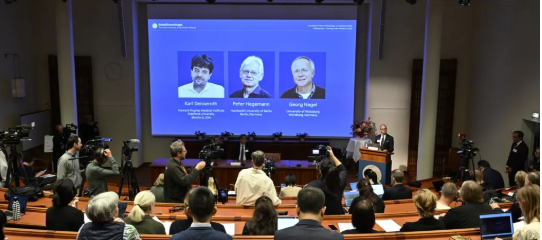
The 2026 Nobel Prize in Physiology or Medicine was jointly awarded to:

  • Karl Deisseroth of the United States
  • Peter Hegemann of Germany
  • Georg Nagel of Germany

They were honoured for discoveries concerning light-gated ion channels and optogenetics, which enable scientists to switch selected nerve cells in a living brain on or off using light.
What is Optogenetics?

The term optogenetics combines:

  • Opto: Light
  • Genetics: Introduction or expression of particular genes

It is a biological technique that uses light to control the electrical activity of selected cells, especially neurons, in living tissues.

The human brain contains approximately 90 billion neurons, organised into highly complex and interconnected circuits. Optogenetics allows scientists to target particular cell types within these circuits with millisecond-level precision.

Why Was a New Technique Needed?

Traditional methods such as drugs or electrical stimulation may affect broad areas containing several types of neurons. This makes it difficult to identify the exact cells responsible for a particular function or behaviour.

BasisConventional methodsOptogenetics
TargetMay affect a broad brain regionTargets genetically selected cells
TimingMay be relatively slow or less preciseMillisecond-level control
FunctionMainly stimulates or suppresses a regionSwitches specific circuits on or off
AnalysisAssociation may be establishedHelps establish cause and effect
LimitationLimited cellular precisionRequires genetic modification and light delivery

What are Light-gated Ion Channels?

Light-gated ion channels are proteins located in the cell membrane. They function like microscopic doors controlled by light.

When exposed to a particular wavelength:

  • the protein changes its shape;
  • the ion channel opens;
  • positively charged ions enter the cell; and
  • an electrical impulse is generated.

Channelrhodopsin-2 (ChR-2) is an important light-gated ion channel found through research on the green alga Chlamydomonas.

Because it combines light detection and ion-channel activity in a single protein, it acts as a molecular light switch for electrically active cells.

How Did Optogenetics Evolve?

Francis Crick’s Vision

  • In the 1970s, molecular biologist Francis Crick suggested that light could be an ideal tool for controlling neurons because nerve signals travel extremely rapidly.
  • However, neurons are not naturally activated by visible light. Scientists therefore needed to find a way to make selected nerve cells light-sensitive.

Study of Chlamydomonas

In the early 1990s, Peter Hegemann studied the single-celled alga Chlamydomonas, which swims towards light.

  • It detects light using a small orange structure called an eyespot.
  • Its response is much faster than that of the human eye.
  • Hegemann proposed that a single protein might both detect light and directly control the flow of ions.

Isolating this protein was initially difficult because it became unstable outside its natural cellular setting.

Discovery of Channelrhodopsins

After the genetic information of Chlamydomonas became available, two genes resembling those for light-sensitive proteins were identified.

Georg Nagel inserted these genes into frog egg cells. He found that they produced two light-sensitive ion channels:

  • Channelrhodopsin-1
  • Channelrhodopsin-2

ChR-2 opened within approximately 0.2 milliseconds of exposure to light, allowing positive ions to enter and generate an electrical signal.

Hegemann and Nagel subsequently made human and hamster kidney cells light-sensitive. Their results were published in 2003.

Application to Neurons

Karl Deisseroth inserted the ChR-2 gene into rat neurons grown in laboratory dishes.

  • Blue light generated a nerve signal.
  • The signal could be transmitted to connected neurons.
  • The breakthrough was published in 2005.
  • The technique was named optogenetics in 2006.

In 2007, Deisseroth’s group introduced the gene into selected neurons in the motor cortex of living mice. Blue light delivered through a thin optical fibre controlled the movement of the mice’s whiskers.

How Does Optogenetics Work?

  1. Selection: Scientists identify the type of neuron or cell to be studied.
  2. Gene delivery: The gene for a light-sensitive opsin is introduced into the selected cells.
  3. Protein expression: The targeted cells produce the opsin on their membranes.
  4. Light delivery: Light of a specific wavelength is delivered, often through an optical fibre.
  5. Cellular response: The ion channels open or close, activating or suppressing the selected neurons.
  6. Observation: Scientists examine changes in behaviour, memory, movement or bodily functions.

Contributions of the Laureates

Peter Hegemann

  • Studied the rapid light response of Chlamydomonas.
  • Helped identify channelrhodopsins as light-sensitive proteins.

Georg Nagel

  • Demonstrated that channelrhodopsins function as light-gated ion channels.
  • Showed that their genes could make other types of cells light-sensitive.

Karl Deisseroth

  • Inserted the ChR-2 gene into mammalian neurons.
  • Developed methods to deliver light into living brains.
  • Demonstrated precise control of neural circuits and behaviour.

Thus, Hegemann and Nagel identified the biological tool, while Deisseroth transformed it into a major neuroscience technique.

Nobel Prize

  • The Nobel Prize was established by the will of Alfred Nobel, the inventor of dynamite.
  • It is awarded to individuals who have conferred the greatest benefit to humankind during the preceding year.
  • The first Nobel Prizes were awarded in 1901.

2. Six Categories of the Nobel Prize

CategoryAwarding Institution
1. PhysicsRoyal Swedish Academy of Sciences
2. ChemistryRoyal Swedish Academy of Sciences
3. Physiology or MedicineThe Nobel Assembly at Karolinska Institutet
4. LiteratureThe Swedish Academy
5. PeaceNorwegian Nobel Committee
6. Economic SciencesRoyal Swedish Academy of Sciences

Note: The Prize in Economic Sciences was created in 1968 by Sweden’s Central Bank.

3. Important Facts about the Nobel Prize

  • Award Ceremony: Most Nobel Prize ceremonies are held in Stockholm, Sweden, in December every year.
  • Peace Prize Ceremony: The Nobel Peace Prize is presented annually in Oslo, Norway, on the same day as the Stockholm ceremonies.
  • Nobel Prize Award: Each Nobel laureate receives a gold medal, a diploma, and a monetary award.
  • Posthumous Awards: The Nobel Prize generally cannot be awarded posthumously (after death).
  • Number of Recipients: A Nobel Prize in a category can be shared by up to three people.

4. Indian Nobel Laureates Mentioned in the Image

  • Rabindranath Tagore (1913): First Indian Nobel laureate, awarded the Nobel Prize in Literature.

Mother Teresa (1979): First Indian woman Nobel laureate, awarded the Nobel Peace Prize.

What Has Optogenetics Revealed?

Movement

Activation of selected neurons in the mouse motor cortex produced whisker movements.

Sleep and Wakefulness

Stimulating a particular nerve-cell type caused sleeping mice to wake up, confirming its role in wakefulness.

Fear and Memory

In 2012, researchers activated an engram, which is the neural pattern formed when a memory is created.

Reactivating neurons involved in a fear memory made mice display fear even when they were safe. This helped identify the cells required for a specific memory.

Body–Brain Communication

Optogenetics has been used beyond the brain to study:

  • how increased heart activity may reinforce anxiety;
  • how gut cells influence preference for sugar; and
  • how the nervous system communicates with internal organs.

Significance of Optogenetics

Precise Brain Mapping

Scientists can selectively switch particular neurons on or off and map circuits responsible for:

  • memory;
  • emotion;
  • movement;
  • pain;
  • thirst;
  • food consumption;
  • reward;
  • social behaviour;
  • attention;
  • circadian rhythm; and
  • fever.

Establishing Cause and Effect

Earlier methods could show that a brain region was active during a behaviour. Optogenetics can test whether particular neurons directly caused that behaviour.

Understanding Neurological Disorders

It has improved understanding of:

  • Parkinson’s disease;
  • Alzheimer’s disease;
  • schizophrenia;
  • depression;
  • anxiety;
  • epilepsy; and
  • addiction.

Improving Neural Interfaces

Optogenetics may enable more precise stimulation of the auditory nerve than conventional electrical cochlear implants.

Restoring Vision

Clinical trials are studying its use against retinitis pigmentosa, which damages the eye’s rods and cones.

A channelrhodopsin-like protein can be introduced into surviving retinal cells. Special light-emitting glasses then stimulate these cells. In an experimental case, a visually impaired participant was able to locate and grasp objects.

Challenges and Human Application

Genetic Modification

Neurons must generally be genetically modified to produce microbial light-sensitive proteins. This requires safe and reliable gene-delivery methods.

Invasive Light Delivery

Visible light cannot easily pass through the scalp and skull. Reaching deep brain regions may require surgically implanted optical fibres.

Limited Light Penetration

Biological tissues scatter visible light, reducing the precision of non-invasive delivery.

Animal-to-Human Translation

Most optogenetic experiments have been conducted on laboratory animals. The human brain is significantly more complex.

Long-term Safety

Further research is required on:

  • immune reactions;
  • effects of microbial proteins;
  • repeated light exposure; and
  • long-term gene expression.

Limited Ability to Control Behaviour

Changing the activity of a small group of neurons does not provide complete control over a person’s thoughts or actions. Human behaviour emerges from highly complex neural networks.

Ethical Issues

Human application raises concerns relating to:

  • informed consent;
  • mental privacy;
  • cognitive autonomy;
  • manipulation of memory or emotions;
  • possible military or surveillance misuse; and
  • unequal access to expensive treatments.

Conclusion

Optogenetics has transformed neuroscience from merely observing brain activity to precisely manipulating selected neural circuits. It demonstrates how research on a simple alga can produce major advances in understanding memory, emotion, behaviour and disease. However, its clinical application must advance cautiously through rigorous safety testing, responsible gene therapy and strong neuroethical safeguards.


CARE MCQ

Q.Consider the following statements regarding optogenetics:

  1. It uses genetically expressed light-sensitive proteins to control selected cells.
  2. Channelrhodopsin-2 acts as a light-gated ion channel.
  3. It provides millisecond-level control over specific neural circuits.
  4. It can control the complete thoughts and actions of a person without genetic intervention.

Which of the statements given above are correct?

(a) 1 and 2 only
(b) 1, 2 and 3 only
(c) 2, 3 and 4 only
(d) 1, 2, 3 and 4

Answer: (b) 1, 2 and 3 only

Explanation

  • Statement 1 is correct: Targeted cells are genetically modified to express light-sensitive proteins known as opsins.
  • Statement 2 is correct: ChR-2 opens in response to light and allows charged ions to flow through the cell membrane.
  • Statement 3 is correct: Light enables very rapid and precise control of selected neural circuits.
  • Statement 4 is incorrect: Optogenetics requires genetic intervention and precise light delivery. Activating selected neurons does not provide complete control over complex human thoughts or actions.

FAQs

Q. What is optogenetics?
It is a technique that uses light to control genetically targeted cells.

Q. What is channelrhodopsin?
It is a light-sensitive ion channel discovered through research on algae.

Q. Who received the 2026 Nobel Prize in Medicine?
Karl Deisseroth, Peter Hegemann and Georg Nagel.

Q. What is an engram?
It is a pattern of neural connections associated with a particular memory.

Q. Is optogenetics currently a routine treatment?
No. It remains mainly a research technique with limited clinical trials.

Relevance: UPSC GS Paper III: Artificial Intelligence, digital economy, employment, inclusive growth

Important Keywords for Prelims and Mains

Prelims

World Development Report 2026, World Bank Group, General-Purpose Technology, IndiaAI Mission, AIKosh, Small AI, Digital Public Infrastructure, Compute-as-a-Service

Mains

Adopt–Adapt–Advance, Capabilities–Concentration–Complements, AI sovereignty, algorithmic accountability, digital divide, responsible AI, evidence-based scaling, human-centred AI

Why in News?

  • The Union Minister for Electronics and Information Technology launched the World Bank Group’s World Development Report 2026: The Promise of Artificial Intelligence in New Delhi.
  • The India launch was jointly organised by the IndiaAI Mission, MeitY and the World Bank Group.
  • The report was first released globally on 4th August 2026 and presents the Adopt–Adapt–Advance framework for developing economies.

What is the World Development Report 2026?

The report examines how Artificial Intelligence can address developmental challenges affecting approximately 5.6 billion people in low- and middle-income countries.

Its central message is that developing countries do not need to immediately build expensive frontier AI systems. They can gain more by:

  • adopting available tools;
  • adapting them to local conditions; and
  • gradually advancing domestic AI capabilities.

However, AI-led development requires reliable electricity, connectivity, computing infrastructure, quality data, skills and capable institutions.

AI as a General-Purpose Technology

A General-Purpose Technology (GPT) is a technology that can transform several economic sectors and generate widespread productivity gains.

Examples include:

  • steam engine;
  • electricity;
  • internet; and
  • Artificial Intelligence.

Rapid Diffusion of AI

AI is spreading much faster than previous general-purpose technologies:

  • Steam engine took approximately 80 years to reach lower-income economies.
  • Electricity took around 40 years.
  • Internet took nearly 20 years.
  • Middle-income countries generated half of ChatGPT’s global traffic within six months of its launch.

The Continuing AI Adoption Gap

Despite rapid diffusion, access remains unequal.

By April 2025, ChatGPT was being used by approximately:

  • 24% of internet users in high-income economies;
  • 5.8% in upper-middle-income economies;
  • 4.7% in lower-middle-income economies; and
  • 0.7% in low-income economies.

Thus, rapid diffusion has not eliminated the global digital divide.

What are the Three Cs of AI-led Development?

1. Capabilities

AI can undertake or support cognitive tasks that normally require human expertise.

Potential applications include:

  • medical diagnosis;
  • weather forecasting;
  • agricultural advisories;
  • personalised education;
  • administrative decision-making; and
  • translation into local languages.

It can help developing countries overcome shortages of doctors, teachers, agricultural experts and trained administrators.

2. Concentration

Advanced AI infrastructure is concentrated among a few countries and companies.

Concentration exists in:

  • advanced semiconductor production;
  • computing infrastructure;
  • data centres;
  • frontier AI models;
  • training datasets; and
  • specialised research talent.

This has two consequences:

  • developing countries can access advanced pre-trained models without building them from the beginning; but
  • dependence on a few foreign providers can weaken technological autonomy and bargaining power.

Capital expenditure by major technology companies on AI infrastructure was projected to exceed USD 750 billion in 2026, illustrating the high cost of developing frontier systems.

3. Complements

AI can produce benefits only when supporting conditions are available.

Important complements include:

  • reliable electricity;
  • affordable internet;
  • quality education;
  • digital literacy;
  • local-language data;
  • computing capacity;
  • access to finance; and
  • capable institutions.

Nearly one-third of rural schools in Sub-Saharan Africa lack reliable electricity, while over two-thirds lack dependable internet access. Further, nearly 89% of 10-year-olds in the region struggle to read and understand a simple text. These gaps restrict meaningful AI adoption.

What is “Small AI”?

Small AI refers to compact, affordable and locally adapted AI applications that require limited computing power.

Such solutions can operate through:

  • basic mobile phones;
  • text messages;
  • voice calls;
  • offline smartphone applications; and
  • low-bandwidth networks.

Unlike expensive frontier models, Small AI addresses a clearly defined local problem.

Examples

  • In Ghana, the Rori mathematics tutor delivered nearly one year of learning gains at a cost of approximately USD 5 per student.
  • In Bangladesh, AI-supported medical imaging increased daily screening for diabetic retinopathy by approximately 39.5%.
  • In India, an offline smartphone application analyses cough sounds and symptoms to identify persons who may require further tuberculosis testing.

Economic and Employment Impact

Lower Immediate Automation Risk

Generative AI is estimated to place:

  • 4.5% of jobs in developing economies at risk of automation; and
  • 14.2% of jobs in high-income economies at risk.

The lower exposure in developing economies is partly because a larger share of workers performs manual rather than cognitive tasks.

Productivity Potential

AI could meaningfully improve productivity in:

  • 16.2% of jobs in developing economies; and
  • 18.7% of jobs in high-income economies.

Therefore, the immediate opportunity for developing countries lies more in augmenting workers than replacing them.

Uneven Labour-market Impact

Knowledge-intensive services such as business-process outsourcing, data processing and routine digital work may experience early disruption.

At the same time, AI can create demand for:

  • AI engineers;
  • domain experts;
  • data specialists;
  • cybersecurity professionals;
  • AI auditors; and
  • local-language content developers.

AI and Public-Service Delivery

AI can support governments at two levels:

Back-end Administration

  • tax enforcement;
  • fraud detection;
  • weather forecasting;
  • allocation of court cases;
  • document processing; and
  • welfare-data analysis.

Citizen-facing Services

  • medical screening;
  • personalised learning;
  • agricultural extension;
  • social-protection delivery; and
  • multilingual public information.

However, poorly designed systems can reproduce data errors, exclude genuine beneficiaries and weaken public trust. Governments must therefore evaluate effectiveness before scaling pilots.

AI Applications in India

Agriculture in Baramati

AI advisories using satellite, Internet of Things and weather data reportedly:

  • increased sugarcane yields by 40%;
  • reduced water and fertiliser use by 30%; and
  • lowered labour costs.

Farmers accessed the service through voice-based mobile communication.

Weather Forecasting

India combined open-access AI weather models and delivered monsoon information through text, voice and digital advisories.

In 2025:

  • AI-based local monsoon forecasts were sent to approximately 3.8 crore farmers;
  • farmers in 13 States received the forecasts;
  • advisories were provided in five regional languages; and
  • surveys showed that 31–52% of farmers adjusted planting decisions. pib.gov.in

A study in Telangana found that AI-based weather information enabled some small farmers to alter investment decisions and achieve substantial savings.

Healthcare

  • AI-supported tools increased tuberculosis detection by approximately 35%.
  • AI is also being used for cervical-cancer screening and animal-health services.

AgriStack and Animal Health

  • Gujarat’s AgriStack is being used by approximately 5 lakh farmers.
  • AI-based animal-health services through Sarlaben are benefiting around 3 crore cattle and their farmers. pib.gov.in

State AI Showcase

Navachetana—Andhra Pradesh

  • AI-enabled screening for children aged 0–6 years.
  • Helps identify developmental delays at an early stage.

MahaVISTAAR AI—Maharashtra

  • Provides personalised farm advisories.
  • Connects farmers with digital services and information.

EdskGrid—Meghalaya

  • A GeoAI-based governance intelligence system for education.
  • Supports geographical planning and school-system monitoring.

Vyuhaa-Cerviai

  • AI-supported cervical-cancer screening.
  • Designed for point-of-care use.

What is the IndiaAI Mission?

The IndiaAI Mission seeks to build a comprehensive, inclusive and responsible AI ecosystem suited to India’s diversity and multilingual requirements.

Seven Pillars

  1. IndiaAI Compute Capacity
  2. IndiaAI Innovation Centre
  3. IndiaAI Datasets Platform—AIKosh
  4. IndiaAI Application Development Initiative
  5. IndiaAI FutureSkills
  6. IndiaAI Startup Financing
  7. Safe & Trusted AI

Under Safe & Trusted AI, India is supporting:

  • bias mitigation;
  • algorithm auditing;
  • explainable AI;
  • privacy-preserving AI; and
  • deepfake detection

Global AI Preparedness Gap

  • More than 80 countries had developed national AI strategies by mid-2026. However, only one of the world’s 25 low-income countries had published such a strategy.
  • Thus, countries that could gain the most from AI are often the least prepared in terms of infrastructure, skills and governance.

Key Challenges

  • Digital Divide: Unequal access to electricity, broadband, devices and computing infrastructure may exclude rural and vulnerable communities.
  • Skill Gaps: Shortage of AI professionals, weak digital literacy and poor foundational education constrain effective adoption.
  • Limited Local Data: Inadequate local-language and representative datasets can produce inaccurate or unsuitable outcomes.
  • Technological Concentration: Advanced chips, computing capacity and frontier models remain concentrated in a few countries and companies.
  • Bias and Reliability: AI systems may reproduce social, gender, regional and economic discrimination.
  • Employment Disruption: Automation may affect routine jobs, particularly in BPO and knowledge-based services, requiring large-scale reskilling.
  • Privacy and Cyber Risks: Data misuse, surveillance, identity theft, deepfakes and AI-enabled fraud threaten citizens and institutions.
  • Pilot-to-Scale Gap: Many AI projects fail to expand because of weak evaluation, funding, interoperability and institutional capacity.
  • Regulatory Gaps: Lack of clear accountability, auditing and grievance-redressal mechanisms creates governance challenges.
  • Environmental Costs: Data centres consume substantial electricity and water, increasing pressure on local resources.
  • Growing Inequality: AI benefits may remain concentrated among advanced economies, large firms and highly skilled workers.

Conclusion

The World Development Report 2026 presents AI as a major developmental opportunity, but not an automatic solution. Developing countries should adopt available technologies, adapt them to local realities and advance selectively. For India, combining the IndiaAI Mission, Digital Public Infrastructure, skilled human resources and responsible governance can ensure that AI supports inclusive growth, effective public services and the vision of Viksit Bharat 2047.

CARE MCQ

Q. Consider the following statements regarding the World Development Report 2026:

  1. It examines AI-led development through capabilities, concentration and complements.
  2. It recommends that developing countries begin by building frontier AI systems from scratch.
  3. It identifies governments as enablers, users and regulators of AI.
  4. The share of jobs exposed to generative-AI automation is estimated to be higher in high-income economies than in developing economies.

Which of the statements given above are correct?

(a) 1 and 2 only
(b) 1, 3 and 4 only
(c) 2, 3 and 4 only
(d) 1, 2, 3 and 4

Answer: (b) 1, 3 and 4 only

Explanation

  • Statement 1 is correct: The report uses the three Cs—Capabilities, Concentration and Complements—to examine AI’s developmental value.
  • Statement 2 is incorrect: It recommends beginning with existing tools, adapting them locally and advancing gradually. Frontier systems are extremely expensive.
  • Statement 3 is correct: Governments must create foundations, deploy AI in public services and regulate associated risks.
  • Statement 4 is correct: Estimated automation exposure is 14.2% in high-income economies, compared with 4.5% in developing economies.

FAQs

Q. What is the theme of WDR 2026?
It examines the promise, risks and developmental implications of Artificial Intelligence.

Q. What are the Three Cs of AI development?
Capabilities, Concentration and Complements.

Q. What is the report’s main policy framework?
Adopt, Adapt and Advance.

Q. What is Small AI?
It refers to affordable, low-compute AI designed for specific local problems.

Q. What role should governments play?
Governments should act as enablers, users and regulators of AI.

UPSC Current Affairs October 9th 2026

Enroll Now for Unlimited UPSC Utsav

Start Date

20/09/2026

Timings

08 AM – 4 PM

    Courses

    Scroll to Top