
Why in News?
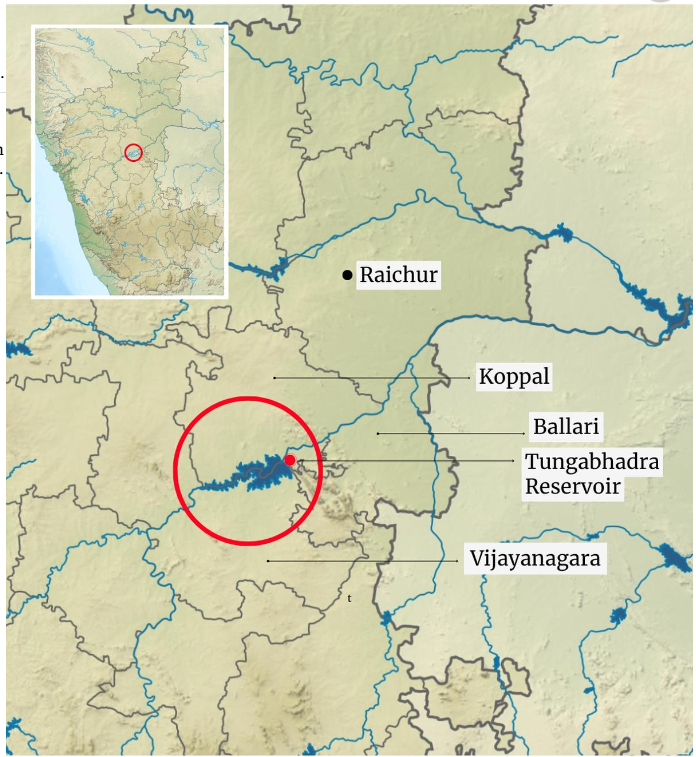
All 33 crest gates of the Tungabhadra dam near Hosapete in Karnataka were replaced and dedicated to the public on June 25, 2026.The replacement followed the washout of Gate No. 19 during the 2024 monsoon, which exposed vulnerabilities in the ageing dam system.
Origin and Course
- The Tungabhadra is formed by the confluence of:
- Tunga River
- Bhadra River
- Both originate in the Western Ghats and meet near Shivamogga in Karnataka.
- The river flows for about 531 km and joins the Krishna at Sangamaleshwaram in Andhra Pradesh. The Krishna later enters the Bay of Bengal at Hamsaladeevi.
- The Tungabhadra depends mainly on the south-west monsoon.

Tungabhadra Dam Project
- The dam was constructed near Hosapete in Karnataka’s Vijayanagara district and commissioned in the early 1950s.
It is an inter-State project serving:
- Karnataka
- Andhra Pradesh
- Telangana
The reservoir irrigates more than 16 lakh acres through the Left Bank and Right Bank canal systems. It also supports:
- Drinking-water supply
- Hydroelectric power
- Fisheries
- Tourism
- Rural livelihoods
The project is a lifeline for drought-prone areas of northern Karnataka and Rayalaseema.
Tungabhadra Board
- The Tungabhadra Board manages the common inter-State project.
Major Functions
- Regulates water releases, implements tribunal directions, Maintains the dam and reservoir, Records water flows and losses, Regulates the Right Bank canals, Supports irrigation and power generation
The Board has helped prevent frequent disputes through institutional regulation.
Water-Sharing Arrangement
- The Krishna Water Disputes Tribunal, constituted in 1969, fixed the broad sharing arrangement in 1976.
Broad Ratio
- Karnataka: 65%
- Undivided Andhra Pradesh: 35%
Major Allocations
- Karnataka: 151.49 tmcft
- Undivided Andhra Pradesh: 78.51 tmcft
- Telangana’s share: 15.9 tmcft
- Andhra Pradesh’s assured allocation from the dam: 32 tmcft
- The Tribunal supported the continuation of the Tungabhadra Board until an alternative institutional mechanism is created.
Emerging Water-Sharing Disputes
Upper Bhadra Project
- Karnataka’s Upper Bhadra lift-irrigation project is located upstream of the reservoir.
- Andhra Pradesh argues that it may intercept water before it reaches the dam and affect irrigation supplies to:
- Anantapur
- Kadapa
- Kurnool
- Andhra Pradesh approached the Supreme Court in 2023 challenging the project and its clearances.
Telangana’s Concern
- Telangana claims that it is not receiving its full allocation of 15.9 tmcft and faces a shortfall of about 5–6 tmcft.
- It has also argued that excess withdrawals may reduce downstream flows into the Srisailam reservoir.
Significance of the Tungabhadra Project
- Supports agriculture across three States
- Provides drinking water
- Strengthens drought resilience
- Supports hydroelectricity and fisheries
- Influences downstream Krishna-basin reservoirs
- Demonstrates tribunal-based inter-State water governance
Conclusion
The Tungabhadra reservoir is a vital inter-State lifeline for Karnataka, Andhra Pradesh and Telangana. Its long-term sustainability depends on safe infrastructure, transparent water accounting, respect for tribunal allocations and effective cooperation among the riparian States.
Why in News?
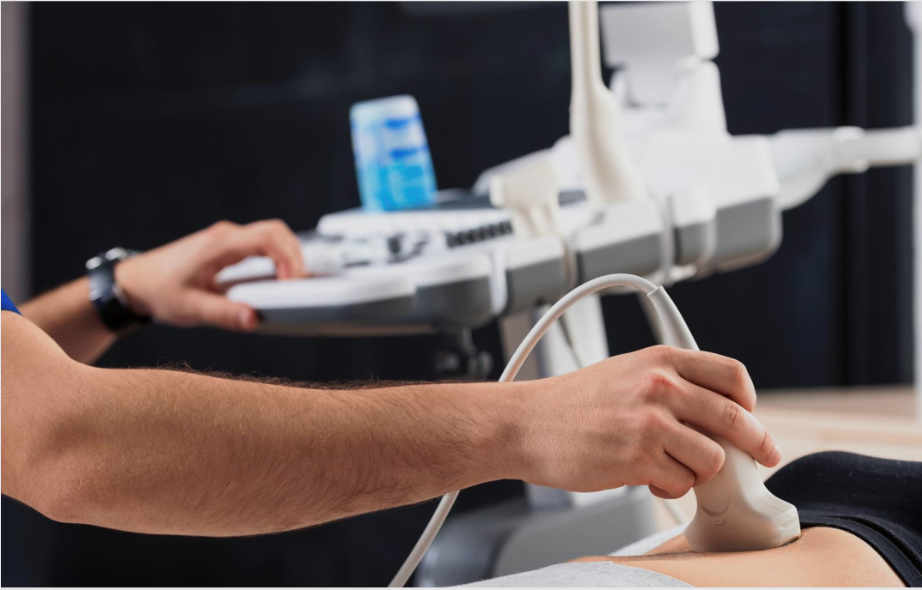
Advances in portable ultrasound and AI have renewed debate over the PCPNDT Act. While the law restricts ultrasound use to prevent prenatal sex determination, it also limits community-based cancer diagnosis in rural areas. The key issue is whether regulation should distinguish foetal-imaging devices from high-frequency probes used for superficial conditions such as breast lumps.
Why Was the PCPNDT Act Enacted?
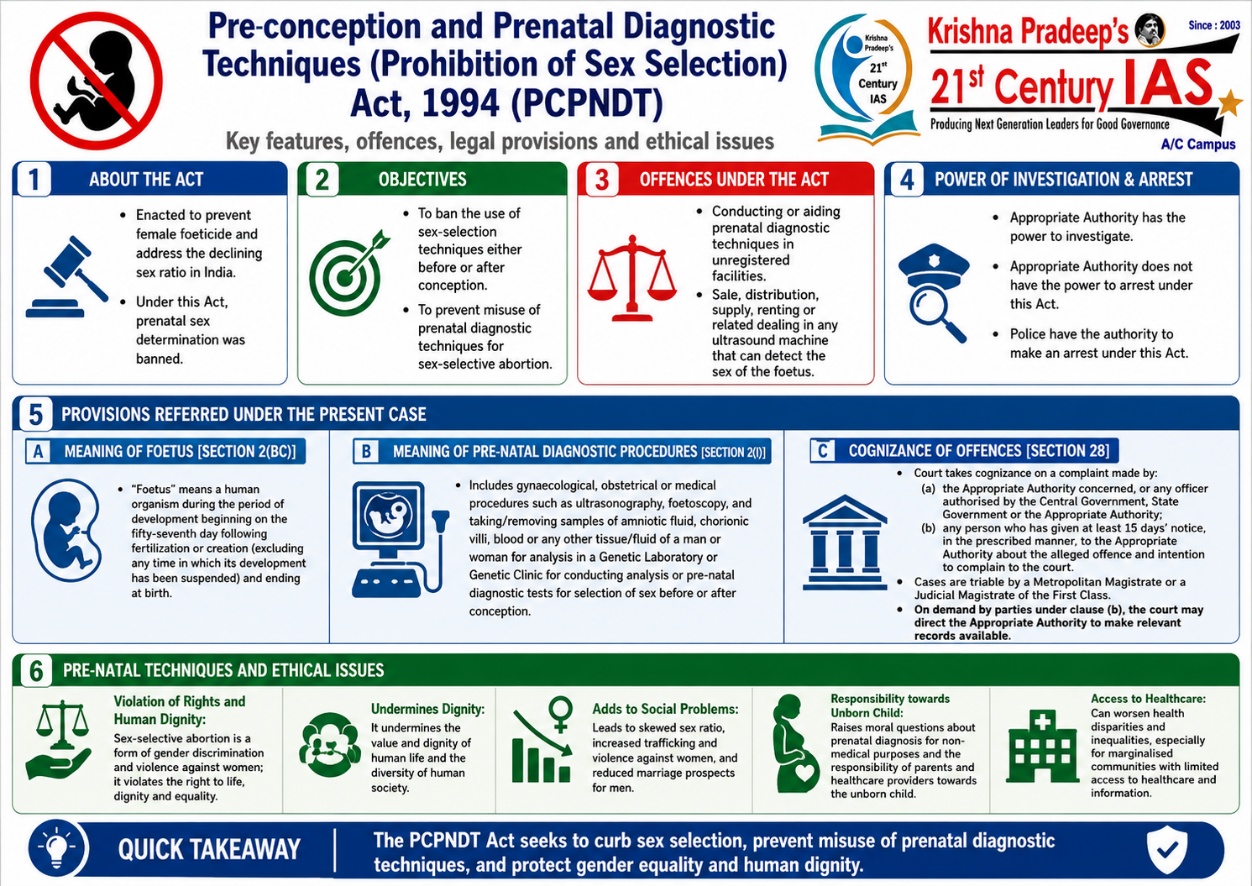
- The PCPNDT Act was introduced in 1994 amid a sharp decline in India’s child sex ratio.
- The growing availability of ultrasonography from the 1980s enabled prenatal sex determination, which was followed in some cases by sex-selective abortion of female foetuses.
The legislation sought to:
- Prevent misuse of diagnostic technology
- Prohibit prenatal sex determination
- Stop disclosure of the sex of the foetus
- Address gender discrimination and son preference
- Regulate genetic clinics, laboratories and ultrasound centres
Thus, the law combines medical regulation with the wider objective of protecting the girl child.
What are its Major Provisions?
Mandatory Registration
- All genetic clinics, ultrasound centres and laboratories must be registered with the district authorities.
Regulation of Machines
- A clinic must obtain registration before purchasing an ultrasound machine.
Manufacturers and dealers must:
- Verify the buyer’s registration
- Obtain an undertaking against sex determination
- Match invoices with the registered centre
- Report the transaction to authorities
Location Restriction
- Once installed, the machine must remain at the approved location. Moving it outside the registered facility can attract serious legal penalties.
Record-Keeping
- Registered centres must maintain detailed records for every ultrasound examination.
Prohibition on Sex Disclosure
- Communication or disclosure of the sex of the foetus is strictly prohibited.
What Has Been the Impact of the Law?
Improvement in Sex Ratio
- India’s sex ratio at birth has gradually improved after the law’s introduction. However, this improvement cannot be conclusively attributed to the PCPNDT Act alone.
Continuing Illegal Practices
Sex-selective practices have not disappeared. Illegal networks continue to operate outside formal healthcare systems using:
- Portable ultrasound devices
- Informal providers
- Covert arrangements
- Unregistered locations
The discovery of an illegal prenatal sex-determination network in Karnataka in 2025 highlighted the persistence of such practices.
Unintended Social Consequences
Evidence cited in the article suggests that restricting prenatal sex selection did not automatically remove son preference.
Some families with a firstborn girl:
- Had additional children in the hope of having a son
- Reduced investment in girls’ health and education
- Experienced higher mortality among firstborn girls
- Faced greater dilution of household resources
These effects were reportedly stronger among poorer rural households unable to access illegal sex-selection services.
The experience shows that legal prohibition alone cannot eliminate deeply rooted gender discrimination.
Why is the Existing Framework Being Questioned?
Uniform Treatment of Different Technologies
- The law regulates ultrasound machines largely as a single category, even though modern probes have different technical capabilities and medical uses.
Restrictions on Portability
- Portable devices cannot ordinarily be taken into communities because ultrasound machines must remain at their registered locations.
Chilling Effect on Healthcare
- Fear of prosecution and extensive compliance requirements may discourage doctors and institutions from offering ultrasound-based services in underserved areas.
Technological Change
- The law was framed when ultrasound machines were large, facility-based systems. Today, handheld devices can connect to smartphones or tablets and be used close to a patient’s home.
- The regulatory framework has not fully adapted to this technological shift.
How Can Portable Ultrasound Improve Cancer Care?
Patients in rural areas often face:
- Long travel distances
- Limited access to specialists
- High travel costs
- Lack of family support
- Delayed diagnosis and treatment
Portable ultrasound can bring services such as:
- Breast imaging
- Assessment of superficial lumps
- Ultrasound-guided biopsies
- Early referral of suspicious cases
closer to the community.
- This is particularly relevant in India, where nearly 70% of the population lives in rural areas and specialist radiologists and imaging facilities are unevenly distributed.
- Early diagnosis can prevent patients with treatable breast lumps from reaching hospitals only after the disease has advanced.
Why are High-Frequency Linear Probes Important?
High-frequency linear probes are commonly used to examine superficial body structures such as:
- Breast tissue
- Thyroid
- Muscles
- Tendons
- Soft-tissue swellings
The article argues that such probes cannot be used for foetal sex determination but remain subject to the same restrictions as conventional ultrasound equipment.
Allowing their controlled community use could therefore improve cancer diagnosis without undermining the central objective of the PCPNDT Act.
What Role Can Artificial Intelligence Play?
AI-enabled ultrasound systems can assist with:
- Image acquisition
- Identification of suspicious lesions
- Pattern recognition
- Automated interpretation
- Generation of preliminary reports
- Referral decisions
A pilot study cited in the article combined portable ultrasound scans performed by minimally trained individuals with AI analysis. The system reportedly identified suspicious breast lesions with high accuracy and flagged all confirmed cancer cases.
Potential Role of Frontline Workers
With suitable training and safeguards, frontline health workers could:
- Scan patients presenting with breast lumps
- Identify cases requiring urgent referral
- Reassure patients with apparently benign findings
- Reduce delays in reaching specialist facilities
AI can help address shortages of trained radiologists, but it should assist rather than replace qualified medical decision-making.
What Reforms Have Been Suggested?
Distinguish Between Use Cases
The law should differentiate between:
- Obstetric ultrasound capable of foetal imaging
- Superficial diagnostic ultrasound used for cancer and other conditions
Permit Community-Based Screening
Community use of approved high-frequency linear probes could be legalised under controlled conditions.
Regulate by Capability
Regulation should be based on what a device can technically do rather than treating every ultrasound machine identically.
Recognise AI-Enabled Systems
The Act should address emerging systems that:
- Restrict foetal imaging
- Prevent sex determination or disclosure
- Generate purpose-specific reports
- Maintain secure digital audit trails
Create Purpose-Specific Registration
Separate registration may be introduced for devices used exclusively for community-based cancer diagnosis.
What Safeguards are Necessary?
Reform should not weaken protection against sex-selective practices.
Necessary safeguards include:
- Certification of approved probes and devices
- Geofencing of portable equipment
- Secure digital registration of every scan
- Restricted software configurations
- Prohibition of obstetric imaging in community devices
- Regular audits and inspections
- Operator training and accreditation
- Data privacy protections
- Clear referral protocols
- Strict penalties for unauthorised use
Technology can also enable automatic logging of the operator, location, time and purpose of every scan.
Way Forward
Adopt Risk-Based Regulation
Restrictions should correspond to the actual risk of misuse associated with each device and clinical purpose.
Pilot Community Programmes
Controlled pilots can assess the safety and effectiveness of portable ultrasound for breast-cancer diagnosis.
Strengthen Gender Interventions
Legal regulation must be supported by:
- Girls’ education
- Social-security measures
- Gender-sensitisation campaigns
- Action against dowry and discrimination
- Improved investment in girls’ health
Ensure Human Oversight
AI-generated findings should be reviewed through an appropriate medical referral system.
Consult Stakeholders
Reform should involve radiologists, oncologists, public-health specialists, women’s groups, engineers and legal experts.
Conclusion
The PCPNDT Act remains essential for preventing the misuse of medical technology for prenatal sex determination. However, a law designed around older ultrasound systems should not unintentionally restrict technologies that can improve early cancer diagnosis.
A carefully designed amendment can permit community-based use of high-frequency probes and safeguarded AI systems while retaining strict controls against sex selection. The objective should be to protect both the girl child and women’s access to timely healthcare.
Q. Sex ratio, in a population, is defined as the number of (CISF 2017)
A. females for every thousand males
B. females for every hundred males
C. males for every hundred females
D. males for every ten thousand females
Answer: A
Explanation:
In India, the sex ratio is defined as the number of females per 1,000 males in a population.
It is calculated as: 
Sex ratio is an important demographic indicator used to understand the gender balance in a population. It also reflects the social status of women, access to healthcare, mortality differences, migration patterns and the impact of gender discrimination.
Additional Information:
The international convention often expresses sex ratio as the number of males per 100 females. However, the Census of India expresses it as the number of females per 1,000 males.
Why in News?
Recent incidents have highlighted India’s dependence on foreign-controlled digital infrastructure.
- In April 2026, Indian CCTV networks were reportedly compromised through the Chinese software platform EseeCloud, raising concerns about access to information related to strategic defence assets.
- In 2025, Nayara Energy reportedly lost access to corporate email, collaboration tools and cloud data after Microsoft enforced sanctions linked to the company’s Russian ownership.
These incidents have renewed calls for strengthening India’s control over critical data, software, cloud platforms and digital networks.

What is Digital Sovereignty?
Digital sovereignty refers to a country’s ability to independently control its:
- Digital infrastructure
- Data and communication networks
- Cloud and computing systems
- Critical software and algorithms
- Hardware and semiconductor supply chains
It has three major dimensions:
- Data sovereignty: Control over the storage, processing and transfer of data.
- Computational sovereignty: Control over cloud, AI and high-performance computing infrastructure.
- Technological autonomy: Domestic capability in hardware, software and critical technologies.
Digital sovereignty does not mean technological isolation. It means reducing strategic vulnerabilities while maintaining trusted international cooperation.
Why Does India Need Digital Sovereignty?
National Security
- Modern defence systems—including fighter aircraft, missiles and radars—depend heavily on embedded software. Foreign manufacturers may retain control over upgrades, source codes and system configurations.
- The denial of precise GPS assistance during the 1999 Kargil conflict demonstrated the risks of dependence on external technology.
Continuity of Government and Commerce
Foreign providers can suspend cloud, email, payment or authentication services due to sanctions, legal orders or geopolitical disputes. Such disruption could affect:
- Government administration
- Banking and trade
- Manufacturing
- Energy infrastructure
- Defence preparedness
Data Jurisdiction
- Storing data physically in India does not always guarantee Indian control. Foreign technology companies may remain subject to their home-country laws and could be required to provide data to foreign governments.
Algorithmic Sovereignty
Dependence on foreign AI systems may expose India to:
- External cultural and political biases
- Non-transparent algorithms
- Foreign control over strategic intelligence
- Limited access to proprietary source codes
Economic Competitiveness
- India’s dependence on imported chips, cloud systems and software results in royalty payments, supply-chain vulnerability and transfer of valuable data and intellectual property abroad.
What Risks Arise from Foreign Digital Dependence?
Software-Defined Warfare
Foreign-controlled software could theoretically limit operational range, targeting accuracy or access to battlefield intelligence during conflict.
Cloud and Platform Dependence
Indian entities may lose access to their own digital operations when foreign corporations comply with sanctions or government directions.
Semiconductor Vulnerability
Dependence on imported semiconductors exposes India to:
- Export restrictions
- Supply-chain disruptions
- Hardware manipulation
- Geopolitical pressure
Proprietary Black Boxes
India may not be able to inspect the source code of foreign software used in critical sectors such as power, banking, aviation and defence.
Cybersecurity Threats
Foreign digital systems may contain vulnerabilities, backdoors or compromised software components that can be exploited by hostile entities.
What Steps Has India Taken?
Digital Public Infrastructure
India has developed indigenous and interoperable platforms such as:
- UPI
- RuPay
- Aadhaar
- DigiLocker
- ONDC
UPI and RuPay demonstrate that India can build large-scale alternatives to foreign-controlled financial platforms.
Semiconductor Ecosystem
- The India Semiconductor Mission seeks to promote domestic semiconductor manufacturing, assembly, testing and packaging.
- Commercial production at Micron Technology’s ATMP facility in Gujarat reflects growing international cooperation in semiconductor manufacturing.
Sovereign Cloud and Software
- The government’s MeghRaj GI Cloud aims to provide domestic cloud infrastructure for public services.
- The migration of email systems of some Union government departments to the Indian Zoho platform reflects efforts to reduce dependence on foreign productivity software.
Artificial Intelligence
The IndiaAI Mission, Bhashini and BharatGen seek to create domestic computing infrastructure, language technologies and indigenous AI models.
Navigation and Defence Technology
India developed its own satellite navigation capability after experiencing foreign dependence during the Kargil conflict.
Programmes such as BrahMos and the private-sector participation model for the Advanced Medium Combat Aircraft demonstrate alternative approaches to technological self-reliance.
Legal and Cybersecurity Framework
The Digital Personal Data Protection Act, the National Critical Information Infrastructure Protection Centre and cybersecurity mechanisms seek to strengthen data protection and critical infrastructure security.
What are the Major Challenges?
Low Research and Development Spending
- India’s gross expenditure on R&D averaged about 0.74% of GDP between 2000 and 2020, compared with a global average of around 2.07%.
- Low investment limits innovation in semiconductors, AI, quantum technology and defence systems.
Dependence on Advanced Foreign Technology
India continues to depend on foreign:
- Semiconductor fabrication equipment
- Precision chemicals
- Cloud platforms
- AI computing infrastructure
- Software products
- Standard-essential patents
Shortage of Patient Capital
Deep-tech projects require long-term investment and involve high risks. Indian private investment often favours consumer technology with quicker returns.
Talent and Intellectual-Property Loss
Highly skilled researchers frequently move abroad, while foreign venture funding may result in Indian intellectual property being registered outside the country.
Global Standard-Setting Gap
Limited participation in global technology-standard institutions may force India to adopt foreign-designed telecom and digital architectures.
Public-Sector Limitations
Excessive reliance on public-sector production has not always delivered advanced technologies within required timelines.
What Strategy Should India Adopt?
Build Indigenous Core Infrastructure
India should expand domestic capabilities in:
- Semiconductors
- Cloud computing
- Operating systems
- Cybersecurity tools
- AI foundation models
- Telecommunications
- Defence electronics
Adopt Sovereign Cloud Infrastructure
Critical government and strategic workloads should be hosted on infrastructure operating under Indian jurisdiction.
Encourage Private-Sector Innovation
The government can provide research funding, assured procurement and long-term contracts to private firms developing strategic technologies.
This can create a cycle of innovation, production and national-security alignment.
Expand Trusted Partnerships
India need not adopt technological isolation. Joint development with trusted countries can create mutual dependence and reduce the risk of unilateral denial.
The BrahMos programme and India-U.S. semiconductor cooperation illustrate this approach.
Protect Critical Data
Data localisation must be supplemented by:
- Indian legal control
- Source-code audits
- Encryption standards
- Secure cloud architecture
- Restrictions on unauthorised foreign access
Strengthen Digital Public Infrastructure
Open and interoperable platforms such as UPI and ONDC should be extended to cloud services, e-commerce, health, education and authentication.
Raise R&D Investment
Public and private R&D expenditure must rise significantly to support long-term technological capability.
Way Forward
- Identify critical digital infrastructure requiring sovereign control.
- Reduce dependence on a small number of foreign technology companies.
- Expand sovereign cloud and domestic data centres.
- Build a trusted semiconductor supply chain.
- Promote indigenous AI and regional-language datasets.
Conclusion
Digital infrastructure now determines economic competitiveness, governance capacity and military preparedness. Dependence on foreign-controlled platforms can expose India to surveillance, sanctions, service denial and technological coercion.
India’s achievements in UPI, RuPay and digital public infrastructure show that indigenous alternatives can operate at scale. However, comprehensive digital sovereignty requires greater R&D investment, domestic hardware and software capabilities, private-sector participation and trusted international cooperation.
For India, digital sovereignty is not merely a technological objective; it is essential for national security, economic resilience and strategic autonomy.