UPSC Current Affairs April 3rd 2026
Relevance: GS Paper III – Agriculture (Animal Husbandry, Livestock Management, Climate Impact on Agriculture)
For Prelims:
- Animal Husbandry, Heat Stress in Livestock, Mineral Supplements, Fodder Management, Mobile Veterinary Services, Livestock Productivity
For Mains:
- Livestock Health Management, Climate Change and Agriculture, Heatwave Impact on Livestock, Farmer Income Enhancement, Veterinary Extension Services
Why in News?
The Director of Animal Husbandry in Andhra Pradesh issued seasonal guidelines advising farmers to protect cattle from heat stress during summer and improve livestock productivity.
Background
• Rising temperatures and heatwaves in many parts of India affect livestock health and productivity.
• Livestock are vulnerable to heat stress, which can reduce milk yield, growth rate, and immunity.
• To address this, the Animal Husbandry Department issued an advisory for farmers to adopt season-specific livestock management practices.
Key Highlights of the Advisory
• Farmers should provide clean drinking water throughout the day for cattle.
• Community water troughs should be established in villages.
• Fodder should be chopped and fed during cooler hours of the day.
• Animals should receive 30–50 grams of mineral supplements to improve digestion and immunity.
• Grazing should be limited to morning and evening hours to avoid heat exposure.
• Cattle should be housed in cool and well-ventilated sheds.
• Early morning milking is recommended to reduce stress and increase milk yield.
• Sheds should be constructed in an east–west orientation to minimise heat exposure.
• Crossbred cattle should be provided with fans and water sprinklers during extreme heat.
• Wet gunny bags may be hung around sheds to create a cooling effect.
Heat Stress in Livestock
| Aspect | Details |
| Meaning | Physiological stress experienced by animals due to excessive heat and humidity |
| Major Causes | Heatwaves, high temperatures, lack of shade, inadequate water supply |
| Common Symptoms | Rapid breathing, excessive salivation, reduced appetite, decreased milk production |
| Vulnerable Animals | Crossbred cattle and high-yield dairy animals |
| Preventive Measures | Adequate water, ventilated sheds, shade, mineral supplements, reduced daytime grazing |
| Veterinary Support | Mobile veterinary services and emergency treatment |
| Economic Impact | Reduced milk yield and productivity affecting farmer incomes |
Significance
• Protects livestock from heat-related health problems.
• Helps maintain milk production and livestock productivity.
• Supports farmer income stability in the livestock sector.
• Strengthens veterinary extension services and awareness among farmers.
Issues and Challenges
• Limited awareness among farmers about heat stress management.
• Inadequate veterinary infrastructure in rural areas.
• Water scarcity during summer months.
• Increasing frequency of heatwaves due to climate change.
Way Forward
• Strengthen extension services and farmer awareness programmes.
• Expand mobile veterinary services in rural areas.
• Promote climate-resilient livestock management practices.
• Improve rural water infrastructure for livestock.
• Encourage adoption of scientific shed design and cooling systems.
Conclusion
Seasonal livestock management is essential to safeguard cattle health and sustain productivity. Adoption of simple practices such as proper hydration, ventilation, and heat stress management can significantly improve livestock welfare and farmer incomes.
UPSC PYQ
Q. What are the challenges to India’s energy security? Suggest measures to address them. (GS Paper III).
CARE MCQ
Q. With reference to heat stress in livestock, consider the following statements:
- Heat stress can reduce milk production and growth rates in cattle.
- Crossbred cattle are generally more vulnerable to heat stress than indigenous breeds.
- Heat stress occurs only due to lack of drinking water.
Q. Consider the following statements about cattle in India:
- India has the largest cattle population in the world.
- Indigenous cattle breeds are generally more resistant to tropical diseases.
- Crossbreeding is mainly done to improve milk productivity.
Select the correct answer using the code below:
A. 1 and 2 only
B. 2 and 3 only
C. 1 and 3 only
D. 1, 2 and 3
Answer: D. 1, 2 and 3
Explanation:
- Statement 1: Correct. India possesses the largest cattle population globally according to the Livestock Census of India.
- Statement 2: Correct. Indigenous cattle are well adapted to tropical climate and have higher resistance to diseases and heat stress.
- Statement 3: Correct. Crossbreeding indigenous cattle with exotic breeds improves milk yield and dairy productivity.
MAINS QUESTION
Q. Discuss the impact of heatwaves on livestock productivity in India and examine the role of scientific livestock management practices in mitigating these impacts. (250 words)
Relevance: GS Paper III – Economy (Energy Security, Inflation, Geopolitics, Global Supply Chains)
For Prelims:
- OPEC, Oil Embargo, Yom Kippur War, Petrodollar, Strait of Hormuz, Energy Crisis, Supply Shock
For Mains:
- Energy Security, Geopolitics of Oil, Petrodollar System, Inflation, Strategic Reserves, Global Supply Chains, Resource Politics
Why in News?
- The ongoing conflict in West Asia has disrupted oil flows through the Strait of Hormuz.
- It carries a significant share of global crude oil supply.
- This disruption has raised fears of a global energy crisis and has drawn comparisons with the 1973 Oil Price Crisis, which had transformed global economic and geopolitical dynamics.
Background and Context
- The global economy during the early 1970s was highly dependent on oil imports, particularly from West Asian countries.
- Industrialised nations were experiencing rapid economic expansion, leading to increased energy demand.
- At the same time, oil production was concentrated in a few OPEC countries, making the global system highly vulnerable to supply shocks and geopolitical developments.
Concept of Oil Crisis
- An oil crisis refers to a sudden disruption in oil supply that leads to a sharp increase in prices and widespread economic instability.
- Such crises are usually triggered by geopolitical conflicts, production cuts, or embargoes and tend to have cascading effects on inflation, economic growth, and global trade.
Key Features of 1973 Crisis
- The 1973 oil crisis was triggered when Arab members of OPEC imposed an oil embargo on countries supporting Israel during the Yom Kippur War.
- This marked the first major instance of oil being used as a geopolitical weapon.
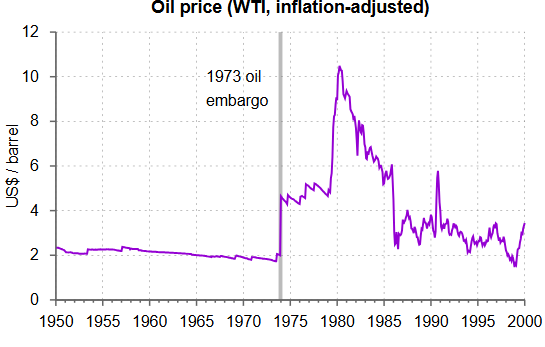
- As a result, global oil prices increased nearly fourfold within a short period, leading to severe shortages and economic disruptions across the world.
Nature and Characteristics
The crisis was geopolitical in origin but had global economic consequences. It spread rapidly across international markets and resulted in stagflation, characterised by high inflation and low growth. The crisis highlighted the deep dependence of industrial economies on external energy sources and demonstrated the systemic risks associated with supply disruptions.
Data and Trends
Oil prices rose by nearly 400 percent between 1973 and 1974, which severely affected both developed and developing economies. Many countries experienced fuel shortages and introduced rationing measures, while global inflation reached double-digit levels during this period.
Core Issues Involved
- A major issue highlighted by the crisis was the excessive dependence on a single region for energy supply.
- The absence of diversified energy sources and inadequate strategic reserves further aggravated the situation.
- Additionally, the crisis underscored the growing importance of resource geopolitics and the vulnerability of global supply chains to external shocks.
Causes / Reasons
- The immediate cause of the crisis was the support provided by the United States and its allies to Israel during the Yom Kippur War of 1973.
- Arab countries also sought to exert pressure for the recovery of territories lost in the 1967 war.
- The crisis was further influenced by dissatisfaction with US monetary policy following the end of the gold standard in 1971.
- Moreover, OPEC countries aimed to assert greater control over oil production and pricing.
Implications
- Human and Economic Implications
The crisis resulted in sharp increases in fuel prices, which led to inflation, reduced purchasing power, and economic slowdown across countries. - Geopolitical Implications
The crisis shifted global power in favour of oil-producing countries and demonstrated the strategic importance of energy resources in international relations. - Implications for India
India faced a steep rise in its oil import bill, which contributed to inflation and economic stress. The crisis also led to labour unrest and increased dependence on external financial assistance, influencing domestic political developments.
Post-Crisis Developments
The crisis led to the emergence of the petrodollar system, under which oil trade was conducted in US dollars, thereby strengthening the global dominance of the US currency. It also encouraged countries to invest in alternative energy sources, improve energy efficiency, and develop strategic petroleum reserves.
Comparison with Present Crisis
- While the 1973 crisis was driven by a political embargo, the current situation is characterised by a physical disruption of supply routes due to conflict.
- The scale of the present disruption is significantly larger, and given the higher level of global economic interdependence
- Its impact on supply chains and inflation could be more severe.
Challenges / Criticisms
- The global economy continues to remain heavily dependent on fossil fuels, making it vulnerable to geopolitical shocks.
- Strategic chokepoints such as the Strait of Hormuz remain critical vulnerabilities.
- In addition, there is a lack of effective global coordination in energy governance, and the transition to renewable energy has been slower than required.
Way Forward
- There is a need to accelerate the transition towards renewable energy sources in order to reduce dependence on fossil fuels.
- Countries must strengthen their strategic petroleum reserves and diversify their energy import sources.
- Greater international cooperation and diplomatic engagement are essential to ensure stability in global energy markets and prevent future crises.
Conclusion
- The 1973 Oil Crisis demonstrated that energy can be used as a powerful geopolitical tool capable of reshaping the global economic order.
- The current crisis highlights that similar vulnerabilities persist today, making it essential to focus on diversification, sustainability, and global cooperation
- It helps to ensure long-term energy security.
UPSC PYQ
Q. What are the challenges to India’s energy security? Suggest measures to address them. (GS Paper III).
CARE MCQ
Q. With reference to the 1973 Oil Crisis, consider the following statements:
- It was triggered by an oil embargo imposed by Arab members of OPEC against countries supporting Israel.
- It contributed to the strengthening of the petrodollar system in global trade.
- It led to a complete and immediate shift of major economies away from fossil fuels towards renewable energy.
Which of the above statements are correct?
A. 1 and 2 only
B. 2 and 3 only
C. 1 and 3 only
D. 1, 2 and 3
Answer: A
Explanation:
Statement 1 – Correct:
The 1973 Oil Crisis began when Arab members of OPEC imposed an oil embargo on countries such as the United States that supported Israel during the Yom Kippur War. This led to a sharp reduction in oil supply and a surge in global oil prices.
Statement 2 – Correct:
The crisis resulted in massive revenue accumulation by oil-exporting countries, which was largely recycled through Western financial systems in US dollars. This strengthened the petrodollar system, where global oil trade became increasingly denominated in US dollars.
Statement 3 – Incorrect:
Although the crisis encouraged efforts toward energy diversification and efficiency, it did not lead to an immediate or complete shift away from fossil fuels. Oil continued to remain a dominant energy source globally, and renewable energy transitions occurred gradually over decades.
Q.Consider the following statements regarding the Oil Crises of the 1970s:
- The 1973 Oil Crisis was primarily triggered by an embargo imposed by Arab members of OPEC against countries perceived as supporting Israel during the Yom Kippur War.
- Both the 1973 and 1979 oil crises resulted in stagflation in several developed economies.
- The 1979 Oil Crisis was mainly caused by coordinated production cuts by OPEC to stabilise falling oil prices.
- The oil crises directly contributed to the creation of strategic petroleum reserves and institutions like the International Energy Agency (IEA).
Relevance: GS Paper II – Polity and Governance (NGOs, Regulation, Fundamental Rights, Transparency, National Security)
For Prelims:
- FCRA 2010, Foreign Contribution, Designated Authority, Consolidated Fund of India, Registration Cancellation, Prohibited Categories
For Mains:
- NGO Regulation, Foreign Funding, National Security, Civil Society, State Control, Transparency and Accountability, Minority Institutions
Why in News?
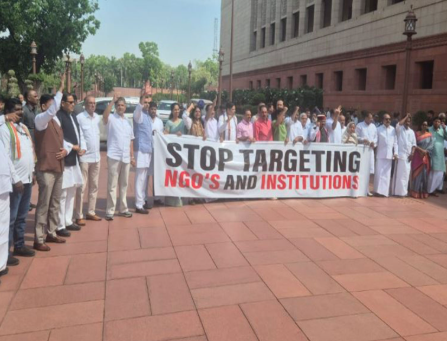
The Union government has deferred discussions on the FCRA Amendment Bill, 2026, following strong opposition and concerns that the proposed provisions may adversely affect minority-led institutions and civil society organisations.
Background and Context
- The Foreign Contribution (Regulation) Act, 2010 regulates the acceptance and utilisation of foreign funds by individuals and organisations in India.
- Over time, concerns have emerged regarding misuse of foreign contributions and their potential impact on national security
- It is leading to tighter regulatory measures. The 2026 Amendment Bill seeks to further strengthen this framework.
Concept of FCRA
- The FCRA is a regulatory mechanism designed to ensure that foreign contributions do not adversely affect the sovereignty, integrity, public order, or strategic interests of India.
- It mandates registration, reporting, and compliance requirements for entities receiving foreign funds and enables government oversight over such inflows.
Key Provisions of the Bill
- The Bill introduces a Designated Authority empowered to take over and manage foreign contributions and assets of organisations whose FCRA registration is cancelled, surrendered, or has expired.
- It expands the scope of “ceased registration” to include not only cancellation but also cases where renewal is not applied for or is denied.
- It provides for provisional and permanent vesting of assets, depending on the legal and operational status of the organisation.
- The Bill allows disposal of assets through transfer to government entities or sale, with proceeds credited to the Consolidated Fund of India.
- It widens restrictions on foreign contributions, especially targeting individuals involved in news production or broadcasting, and introduces changes in penalties and approval mechanisms.
Dimensions of the Amendment
1. Governance and Regulatory Dimension
The Bill significantly strengthens government control over foreign-funded entities by introducing a Designated Authority with powers to manage and dispose of assets. This reflects a shift towards a more centralised and interventionist regulatory framework.
2. National Security Dimension
The amendment is justified on the grounds of safeguarding national interest by preventing misuse of foreign funds. By expanding the categories of prohibited recipients and enhancing oversight, the Bill seeks to address concerns related to foreign influence in sensitive sectors.
3. Civil Society and NGO Autonomy Dimension
The provisions raise concerns regarding the autonomy of civil society organisations, as increased state control over funds and assets may restrict operational independence. This could impact the functioning of NGOs, especially those working in advocacy and rights-based sectors.
4. Minority Institutions Dimension
The Bill has generated debate over its potential disproportionate impact on minority-led institutions that rely on foreign funding. Critics argue that stricter regulations may affect their financial sustainability and limit their activities.
5. Legal and Administrative Dimension
The introduction of appellate mechanisms and reduction in penalties reflects an attempt to balance regulation with procedural fairness. However, the requirement of prior government approval for investigations may raise concerns about transparency and accountability.
6. Financial and Accountability Dimension
- The provision for vesting and disposal of assets, along with routing proceeds to the Consolidated Fund of India, enhances financial accountability.
- At the same time, it raises questions regarding ownership rights and the extent of state intervention in private organisational assets.
Implications
- The Bill is likely to strengthen regulatory oversight over foreign funding and improve transparency in its utilisation.
- However, it may also lead to reduced inflow of foreign contributions and affect the functioning of NGOs and civil society organisations.
- The balance between national security and democratic freedoms is likely to remain a key concern.
Challenges / Criticisms
1. Excessive State Control
The Bill is criticised for expanding government oversight over organisations, which may undermine the autonomy and independent functioning of civil society institutions.
2. Risk of Misuse and Selective Targeting
There are concerns that the provisions could be used selectively against certain organisations, raising fears of political or administrative misuse.
3. Asset Takeover Provisions
The possibility of state control over organisational assets is viewed as intrusive and raises questions about fairness and due process.
4. Concerns over Constitutional Freedoms
Restrictions on funding and operational freedom may violate principles of proportionality and potentially affect fundamental rights such as freedom of association.
Way Forward
There is a need to strike a balance between ensuring national security and protecting the autonomy of civil society organisations. The regulatory framework should be transparent, predictable, and non-discriminatory. Strengthening compliance mechanisms while ensuring procedural safeguards and stakeholder consultation will be essential for effective implementation.
Conclusion
- The FCRA Amendment Bill, 2026 represents an attempt to tighten the regulatory framework governing foreign contributions in India.
- While it aims to enhance accountability and safeguard national interests, its success will depend on maintaining a balance between regulation and democratic freedoms.
UPSC PYQ
Q. Examine the role of NGOs in India’s development process. How can transparency and accountability in their functioning be ensured? (GS Paper II)
CARE MCQ
Q. With reference to the FCRA Amendment Bill, 2026, consider the following statements:
- It proposes the creation of a Designated Authority to manage assets of organisations whose registration ceases.
- It allows permanently vested assets to be transferred to the Consolidated Fund of India.
- It completely removes restrictions on individuals involved in news broadcasting from receiving foreign funds.
Which of the above statements are correct?
A. 1 and 2 only
B. 2 and 3 only
C. 1 and 3 only
D. 1, 2 and 3
Answer: A
Explanation:
Statement 1 is correct because the Bill introduces a Designated Authority for asset management. Statement 2 is correct as proceeds from asset disposal are credited to the Consolidated Fund of India. Statement 3 is incorrect because the Bill expands, rather than removes, restrictions on such individuals.