Why in News?
Anantapur district in Andhra Pradesh was awarded “Best Swachha District – 2025” under the Swachha Andhra Awards for exemplary achievements in cleanliness and sanitation.
Introduction
- On October 5, 2025, Anantapur district of Andhra Pradesh was awarded the Best Swachha District Award-2025 under the Swachha Andhra Awards.
- The awards will be presented by Chief Minister N. Chandrababu Naidu in Vijayawada.
Key Highlights
- Best Swachha District:
- Anantapur secured the State’s top award for maintaining cleanliness, waste management, and community participation.
- District Collector O. Anand emphasized that the award reflects the collective efforts of people, officials, sanitation workers, NGOs, and elected representatives.
- Other Awardees:
- Tadipatri Municipality (Anantapur district): Won in the 1–3 lakh population category of Swachha Municipalities.
- SS Palm Tree Villas Association (Kurnool): Won Swachha Colonies award for its community-led clean and green initiatives.
- Mana Ooru, Mana Gudi, Mana Bhadyatha NGO (Nandyal): Won the Best Swachha NGO Award for cleaning temples and temple ponds across Andhra Pradesh.
Why Important?
- Model for Community Participation: Anantapur shows how people’s cooperation with administration creates sustainable cleanliness.
- Integration of Urban & Rural Efforts: Awards span districts, municipalities, colonies, and NGOs, reflecting multi-tier governance.
- Cultural Dimension: NGOs like Mana Ooru, Mana Gudi, Mana Bhadyatha link sanitation with temple traditions, blending Swachh Bharat Abhiyan with local cultural ethos.

(Image Source: PIB)
Swachha Andhra Awards 2025
- The Swachha Andhra Awards are state-level awards instituted by the Government of Andhra Pradesh to recognise outstanding efforts in cleanliness, sanitation, and solid waste management.
- They aim to promote the objectives of the Swachh Bharat Mission (SBM) at the state level by encouraging districts, municipalities, NGOs, and communities to adopt sustainable sanitation practices.
- Awards are given across categories such as:
- Best Swachha District
- Swachha Municipalities (by population size)
- Swachha Colonies / RWAs
- Best Swachha NGO
National and State-Level Relevance
- Swachh Bharat Mission (SBM): Flagship program of Government of India aiming for Open Defecation Free (ODF) India and scientific solid waste management.
- Swachha Andhra Awards: State-level awards aligned with SBM to incentivize districts, municipalities, NGOs for sanitation efforts.
- Economic & Tourism Benefits: Clean districts attract investment, tourism, and improve public health outcomes.
CARE MCQ
Q1. Consider the following pairs regarding Swachha Andhra Awards 2025:
| Award Category | Winner |
| 1. Best Swachha District | Anantapur |
| 2. Swachha Municipality (1–3 lakh population) | Tadipatri |
| 3. Best Swachha NGO | Mana Ooru, Mana Gudi, Mana Bhadyatha |
| 4. Swachha Colonies Award | SS Palm Tree Villas Association |
Which of the pairs given above is/are correctly matched?
A. 1, 2 and 3 only
B. 2 and 4 only
C. 1, 2, 3 and 4
D. 1 and 3 only
Answer 1- C
Explanation
- Statement 1 is correct: The Best Swachha District Award – 2025 was given to Anantapur for its outstanding performance in overall cleanliness and waste management across the district.
- Statement 2 is correct: In the Swachha Municipality (1–3 lakh population) category, Tadipatri Municipality from Anantapur district received the award for its effective urban sanitation efforts.
- Statement 3 is correct: ‘Mana Ooru, Mana Gudi, Mana Bhadyatha’ NGO based in Nandyal won the Best Swachha NGO Award for its initiative to clean temples, temple ponds, and public spaces.
- Statement 4 is correct: The Swachha Colonies Award was conferred upon SS Palm Tree Villas Association in Kurnool district for its exemplary colony-level cleanliness practices.
- Therefore, option C is the correct answer.
Why in News?
MEPMA won four State-level honours at the Swachh Andhra Awards 2025, including the Best Social Media Management Award, for its grassroots urban sanitation initiatives and digital outreach.
Introduction
- The Mission for Elimination of Poverty in Municipal Areas (MEPMA), a flagship programme of the Andhra Pradesh Government aimed at empowering urban poor communities, has won four State-level honours at the Swachh Andhra Awards 2025.
- The recognition highlights MEPMA’s role in urban sanitation, grassroots participation, and innovative digital communication strategies that contribute to the objectives of the Swachh Andhra Mission, aligned with the Swachh Bharat Mission (Urban) at the national level.

(Image Source: New Indian Express)
Key Highlights of the Awards
- Best Social Media Management Award:
- MEPMA stood out among 19 competing government departments for its:
- Engaging campaigns and creative content
- Consistent postings on cleanliness-related themes
- Effective promotion of Swachh Andhra themes
- This award recognizes MEPMA’s digital outreach and behavioural change communication, crucial for urban sanitation initiatives.
- Grassroots Achievements:
- Three Slum Level Federations (SLFs) affiliated with MEPMA received awards:
- Prakasam district SLF – Terrace Garden category
- Srikakulam district SLF – Home Compost category
- Visakhapatnam district SLF – Home Compost category
- These awards highlight the community-driven urban environmental practices promoted by MEPMA.
Award Presentation
- The award ceremony is scheduled for October 6, 2025, at Tummalapalli Kalakshetram, Vijayawada.
- Chief Minister N. Chandrababu Naidu will confer the awards.
- The Best Social Media Management Award will be received by N. Tej Bharath, MEPMA’s Mission Director.
Leadership and Acknowledgements
- MEPMA Director N. Tej Bharath credited:
- The guidance of Minister for Municipal Administration and Urban Development P. Narayana
- The supervision of Principal Secretary S. Suresh Kumar
- He dedicated the awards to the MEPMA team and thousands of Urban Self-Help Groups (SHGs) for their contribution to the mission.
About MEPMA
- Launched: 2007 (by the then Government of Andhra Pradesh)
- Objective: To organise urban poor women into Self-Help Groups (SHGs) and Slum Level Federations (SLFs) to improve:
- Livelihood opportunities
- Access to credit and micro-enterprises
- Sanitation, waste management, and environmental sustainability
- Role in Swachh Andhra: MEPMA leverages its extensive network of SHGs and SLFs to:
- Promote segregation of waste at source
- Support terrace gardening for urban food security and greening
- Encourage home composting for reducing landfill waste
CARE MCQ
Q2. Consider the following statements about the Mission for Elimination of Poverty in Municipal Areas (MEPMA):
- MEPMA was established to organize urban poor women into Self-Help Groups (SHGs) for improving livelihoods and urban sanitation.
- At the Swachh Andhra Awards 2025, MEPMA received the Best Social Media Management Award for its digital communication promoting cleanliness.
- MEPMA’s Slum Level Federations (SLFs) from Prakasam, Srikakulam, and Visakhapatnam districts were recognized for terrace gardening and home compost initiatives.
- The awards were conferred by the Union Ministry of Housing and Urban Affairs under the Swachh Bharat Mission (Urban).
Which of the statements given above is/are correct?
(a) 1 and 2 only
(b) 1, 2 and 3 only
(c) 2, 3 and 4 only
(d) 1, 2, 3 and 4
Answer 2-B
Explanation
- Statement 1 is correct: MEPMA aims to organize urban poor women into SHGs to improve livelihoods and urban sanitation.
- Statement 2 is correct: It received the Best Social Media Management Award at the Swachh Andhra Awards 2025.
- Statement 3 is correct: SLFs from Prakasam, Srikakulam, and Visakhapatnam districts were recognized for terrace garden and home compost initiatives.
- Statement 4 is incorrect: The awards were conferred at the State level by the Government of Andhra Pradesh, not by the Union Ministry of Housing and Urban Affairs.
- Therefore, option B is the correct answer.
Why in News?
The Government of India launched the nationwide campaign “Your Capital, Your Right” to help citizens trace and reclaim unclaimed financial assets, enhancing financial inclusion and empowerment.
Introduction
- India’s Union Finance Minister Smt. Nirmala Sitharaman on October 4, 2025, launched the nationwide financial awareness campaign “Your Capital, Your Right” in Gandhinagar, Gujarat.
- The initiative reflects the government’s commitment to ensuring that the hard-earned savings of citizens are rightfully returned to them or their families, thereby strengthening financial inclusion, trust, and empowerment.
Context and Rationale
- India has a significant volume of unclaimed financial assets — including bank deposits, unpaid dividends, unclaimed insurance proceeds, mutual fund balances, and pensions. Many of these remain inaccessible due to lack of awareness, incomplete KYC, or procedural hurdles.
According to the Department of Financial Services (DFS) (August 2025):
- Over ₹75,000 crore of unclaimed deposits transferred to the RBI’s Depositor Education and Awareness (DEA) Fund
- ₹13,800 crore in unclaimed insurance proceeds
- ₹3,000 crore in unclaimed mutual fund balances
- Over ₹9,000 crore in unpaid dividends
- Nearly 172 crore shares moved to the Investor Education and Protection Fund (IEPF)
- These unclaimed savings could otherwise support families’ education, healthcare, and financial security.
Objectives of the Campaign
- The campaign carries the core message that “every rupee saved by citizens must return to them or their families.” Its key objectives include:
- Tracing and Returning Unclaimed Assets: Helping beneficiaries reclaim what rightfully belongs to them.
- Financial Awareness: Educating citizens about how to identify and claim dormant assets.
- Bridging Trust Gaps: Strengthening the relationship between citizens and financial institutions.
- Citizen-Centric Governance: Ensuring financial inclusion is transparent and accessible.
The 3A’s Strategy: Awareness, Accessibility, Action
- The Finance Minister underlined the “3 A’s Strategy” as the guiding principle:
- Awareness: Informing citizens and communities about tracing unclaimed financial assets.
- Accessibility: Providing simplified digital platforms, helpdesks, and district-level outreach to ease access.
- Action: Ensuring time-bound, transparent, and hassle-free settlement of claims so that citizens can receive their savings with dignity and confidence.

(Image Source: SMFG India Credit)
Implementation Framework
- Duration: October – December 2025
- Coverage: All States and Union Territories
- Coordination: Led by DFS, Ministry of Finance, in partnership with:
- RBI – Depositor Education & Awareness Fund
- SEBI – Investor protection initiatives
- IRDAI – Unclaimed insurance proceeds
- PFRDA – Pension claims
- IEPFA, banks, mutual funds, and insurance companies
- Digital demonstrations and helpdesks will support citizens in identifying and claiming their assets. Regional Rural Banks like Gujarat Gramin Bank, which have played a proactive role in KYC/re-KYC campaigns, are key partners in this drive.
Significance and Interlinkages
(a) Financial Inclusion and Empowerment
- The campaign builds on flagship initiatives such as:
- Pradhan Mantri Jan Dhan Yojana (PMJDY) – expanding access to banking
- UPI and DBT – improving digital transactions and transparency
- KYC/Re-KYC drives – maintaining active citizen-bank links
- It ensures that inclusion does not end with access to financial services but extends to reclaiming dormant wealth.
(b) Economic and Social Impact
- Unlocking over ₹1 lakh crore of unclaimed wealth for households
- Supporting education, healthcare, and small-scale entrepreneurship
- Boosting trust in financial institutions and encouraging formal savings
(c) Good Governance and Ease of Living
- By prioritizing digital tools, citizen awareness, and transparent processes, the campaign reflects citizen-centric governance and contributes to India’s Ease of Living Index.
Challenges Ahead
- Awareness gaps in rural and semi-urban areas
- Digital literacy barriers for elderly and marginalised groups
- Coordination across agencies for seamless claim processing
- Fraud prevention while ensuring quick access
Way Forward
- Strengthening digital infrastructure with secure, multilingual platforms
- Capacity building of bank and outreach staff
- Simplifying legal and documentation processes
- Conducting periodic awareness drives to avoid future build-up of unclaimed assets
- Integrating Aadhaar, PAN, and financial accounts to improve traceability
Conclusion
- The “Your Capital, Your Right” campaign marks a transformative step in India’s financial inclusion journey.
- By returning dormant savings to their rightful owners, the initiative enhances household resilience, strengthens public trust in institutions, and aligns with the vision of inclusive growth.
- Through its 3A’s approach — Awareness, Accessibility, and Action — the campaign bridges the gap between citizens and financial systems, reinforcing transparent and citizen-focused governance.
CARE MCQ
Q1. Consider the following statements about the “Your Capital, Your Right” campaign launched by the Government of India:
- The campaign aims to help citizens trace and reclaim unclaimed financial assets such as deposits, insurance proceeds, dividends, and pensions.
- The campaign primarily focuses on providing credit to small and medium enterprises (SMEs).
Which of the statements given above is/are correct?
(a) 1 only
(b) 2 only
(c) Both 1 and 2
(d) Neither 1 nor 2
Answer 1- A
Explanation
- Statement 1 is correct: The “Your Capital, Your Right” campaign is intended to help citizens trace and reclaim unclaimed financial assets, including deposits, insurance proceeds, dividends, mutual fund balances, and pensions.
- Statement 2 is incorrect: The campaign does not focus on providing credit to SMEs; its main objective is financial awareness and reclaiming dormant personal savings.
- Therefore, option A is the correct answer.
UPSC PYQ
Q. With reference to India, consider the following: (2010)
1. Nationalization of Banks
2. Formation of Regional Rural Banks
3. Adoption of village by Bank Branches
Which of the above can be considered as steps taken to achieve the “financial inclusion” in India?
(a) 1 and 2 only
(b) 2 and 3 only
(c) 3 only
(d) 1, 2, and 3
Ans: (d)
Why in News?
India’s obesity crisis is driven by high carbohydrate consumption and low protein intake, contributing to rising non-communicable diseases despite economic growth.
Introduction
- India is facing a paradox: a country long burdened by malnutrition and undernourishment is now witnessing a rapid rise in obesity and diet-related non-communicable diseases (NCDs).
- The ICMR-INDIAB survey (2025) conducted with 1,21,077 adults across 36 States/UTs highlights that 62% of the daily calories for most Indians come from carbohydrates, mainly white rice, milled grains, and added sugars.
- Simultaneously, protein intake remains sub-optimal, deepening the crisis of being “overfed yet under-nourished.”
- This trend has wide-ranging implications for public health, social equity, economic productivity, and food policy.
Historical Context: From Malnutrition to Double Burden of Malnutrition
- India’s nutritional challenges have traditionally been defined by undernutrition, stunting, and wasting. With rising incomes and urbanisation, diets have changed — yet caloric sufficiency has not translated into nutrient sufficiency.
- Today, India faces a “double burden of malnutrition”:
- Undernutrition persists in vulnerable groups.
- Overweight and obesity are increasing in both urban and rural populations.
- This shift underscores that economic growth alone cannot guarantee healthier diets unless macronutrient balance and dietary diversity are addressed.
The Core Dietary Imbalance: High Carbs, Low Proteins
Carbohydrate Dominance
- Average Indian meals are grain-centric — rice, wheat, roti, and rice-based dishes often constitute the bulk of the plate.
- Refined carbohydrates (polished rice, refined wheat, added sugars) dominate, providing quick calories but poor satiety and nutrient density.
Protein Deficiency
Per-capita protein intake in many states remains below the recommended dietary allowance (RDA).
- Socio-cultural and political choices — e.g., exclusion of eggs from midday meals in some states — worsen the gap.
- Protein-rich foods like pulses, eggs, and dairy are often costlier or culturally restricted, leading to a heavy reliance on grains.
Public Health Implications
- Rising Obesity and NCDs:
- India already has over 100 million adults living with diabetes (ICMR, 2023).
- Obesity is increasingly prevalent in both urban and rural populations.
- Childhood obesity is alarming — more than 12 million children were grossly overweight in 2022, compared to 0.4 million in 1990 (Lancet).
- Hypertension and Cardiovascular Diseases: High carbohydrate intake, especially refined carbs, contributes to insulin resistance, belly fat, and hypertension, aggravating the NCD burden.
- Hidden Hunger: Despite adequate calories, micronutrient and protein deficiencies persist, leading to low immunity, fatigue, and poor cognitive development in children.

(Image Sources: Times of India)
Socio-Economic Dimensions
- Healthcare Costs: The growing NCD burden increases public and private health expenditure, straining households and the health system.
- Economic Productivity: Malnourished yet overweight adults face reduced work capacity, affecting labour-intensive sectors.
- Food Security Paradigm: The Public Distribution System (PDS) historically prioritised rice and wheat for caloric security, inadvertently encouraging high-carb consumption and sidelining coarse grains, pulses, and proteins.
Policy and Programme Challenges
- Existing Measures
- Promotion of Millets: Declared ‘International Year of Millets 2023’, with government incentives for millet production and inclusion in schemes like PDS and ICDS.
- School-Level Initiatives: The CBSE’s directive for “sugar boards” to reduce sugar consumption in schools.
- Front-of-Pack Labelling (FoPL) proposals by FSSAI to alert consumers to excess salt, sugar, and fat in processed foods.
- Limitations
- Focus on Single Foods: Promotion of millets alone does not address overall macronutrient imbalance.
- Cultural and Political Barriers: Resistance to including eggs in midday meals limits affordable protein access for children.
- Weak Nutrition Literacy: Most public health campaigns focus on calories rather than protein–carbohydrate balance and food diversity.
Way Forward:
Reorienting Food Subsidy Policies:
- Diversify PDS to include pulses, millets, fortified legumes, and eggs/dairy vouchers.
Child-Focused Interventions:
- Ensure protein-rich meals (including eggs and pulses) in midday meals and anganwadi nutrition programmes.
Behavioural Change and Awareness:
- Nationwide campaigns on balanced meals and portion control, highlighting the role of protein and fibre.
- Nutrition education should be part of school curricula.
Regulation of Processed Foods:
- Stricter marketing controls on sugar-laden and ultra-processed foods, especially targeting children.
Community and Healthcare Integration:
- Use primary health centres, ASHA workers, and digital tools to screen, counsel, and guide families about diet-related risks.
Conclusion
- India’s obesity crisis is not merely about excess calories but about a structural imbalance in diets, dominated by refined carbohydrates and deficient in proteins and micronutrients.
- To reverse this trajectory, nutrition science must guide policy — from the PDS basket to school meals — and be supported by public awareness, healthcare integration, and equitable food access.
CARE MCQ
Q2. Consider the following statements regarding India’s dietary trends and obesity crisis:
- Average Indian diets derive nearly two-thirds of daily calories from carbohydrates.
- Low protein intake among Indians contributes to the “double burden” of malnutrition.
- Government initiatives like promoting millets and school sugar boards fully address the macronutrient imbalance in diets.
Which of the statements given above is/are correct?
a) 1 only
b) 1 and 2 only
c) 2 and 3 only
d) 1, 2, and 3
Answer 2- B
Explanation
- Statement 1 is correct: The ICMR-INDIAB survey (2025) found that carbohydrates contribute around 62% of daily calories for most Indians.
- Statement 2 is correct: Low protein intake in Indian diets contributes to the double burden of malnutrition, where individuals are simultaneously overweight and undernourished.
- Statement 3 is incorrect: While initiatives like millet promotion and school sugar boards exist, they do not fully resolve the underlying macronutrient imbalance, especially protein deficiency and excessive refined carbohydrate consumption.
- Therefore, option B is the correct answer.
UPSC PYQ
Q With reference to the provisions made under the National Food Security Act, 2013, consider the following statements: (2018)
- The families coming under the category of ‘below poverty line (BPL)’ only are eligible to receive subsidised food grains.
- The eldest woman in a household, of age 18 years or above, shall be the head of the household for the purpose of issuance of a ration card.
- Pregnant women and lactating mothers are entitled to a ‘take-home ration’ of 1600 calories per day during pregnancy and for six months thereafter.
Which of the statements given above is/are correct?
(a) 1 and 2 only
(b) 2 only
(c) 1 and 3 only
(d) 3 only
Ans: (b)
Why in News?
Nearly 15% of forest rights claims under the Forest Rights Act (FRA), 2006 remain pending, prompting the Centre to urge states to expedite implementation through schemes like DA-JGUA.
Background: The Forest Rights Act, 2006
- Scheduled Tribes and Other Traditional Forest Dwellers (Recognition of Forest Rights) Act, 2006 – commonly called the Forest Rights Act (FRA) – was enacted to correct historical injustice faced by forest-dwelling Scheduled Tribes (FDST) and Other Traditional Forest Dwellers (OTFD).
- It recognises individual rights: habitation, self-cultivation of forest land for livelihood.
- It recognises community rights: grazing, collection of minor forest produce (MFP), fishing, access to water bodies, and Community Forest Resource Rights (CFRR) – empowering Gram Sabhas to manage, protect, and regenerate forest resources.
- The Act is implemented by state governments / UT administrations, while the Ministry of Tribal Affairs (MoTA) is the nodal authority at the Centre.
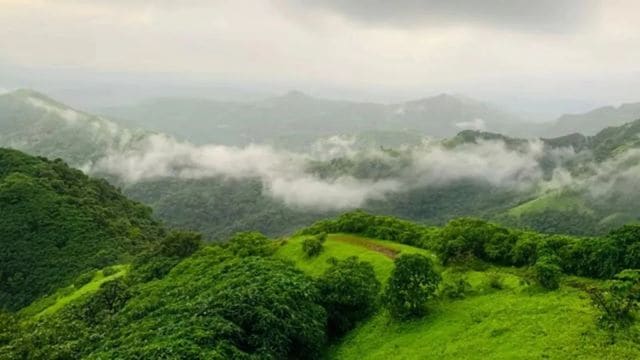
(Image Source: Indian Express)
The Current Issue: 15% Claims Still Pending
- According to a recent MoTA letter to states/UTs (October 2025):
- Out of 51.23 lakh individual and community claims received,
- 25.11 lakh titles (49.02%) have been distributed,
- 7.49 lakh claims (≈15%) remain pending,
- 18.62 lakh (36.35%) have been rejected.
- High-pendency states (as on May 31, 2025):
- Telangana – 3.29 lakh pending (≈50% of its total claims)
- Odisha – 1.20 lakh
- Assam – 96,000 (≈62% of claims)
- Gujarat – 84,000 (≈44%)
- Maharashtra – 28,000
- Some smaller states show even higher proportional pendency:
- Goa – 87%, Himachal Pradesh – 84.5% of claims pending.
- This backlog prompted MoTA to urge states to “clear the FRA pendency and review implementation”.
Key Interventions to Accelerate Implementation
(a) Dharti Aaba Janjatiya Gram Utkarsh Abhiyan (DA-JGUA)
- Launched October 2024, named after tribal freedom leader Birsa Munda (Dharti Aaba).
- Umbrella tribal-welfare programme aimed at “saturation delivery” of schemes through 17 line ministries.
- FRA-related interventions under DA-JGUA include:
- FRA cells at state & sub-divisional levels for compliance and monitoring.
- Mapping of potential forest areas for CFR recognition – some states like Madhya Pradesh, Tamil Nadu, Chhattisgarh have finished this and published an FRA Atlas.
- FRA online portals to facilitate claims & transparency.
- Financial aid to Gram Sabhas: ₹15,000 / hectare to prepare Community Forest Resource Management Plans (CFRMPs) – covering sustainable use of forests, ecological protection, and livelihood generation.
- A target of 1,000 CFRMPs over the next two years.
- Note: Funds have been approved for all FRA-implementing states except West Bengal; some FRA cells are already functional in Karnataka, Tamil Nadu, Andhra Pradesh, Odisha.
(b) Adi Karmayogi Abhiyan (September 2025)
- Focuses on capacity-building and grassroots tribal leadership in 1 lakh villages.
- Discussed alongside FRA during the national conference on tribal development and flagship schemes.
Structural Challenges Highlighted by Experts
- Incomplete process: In some districts like Dima Hasao and Karbi Anglong (Assam), the FRA process reportedly has not even begun despite autonomous councils.
- Partial recognition & modifications: According to Milind Thatte (TEER Foundation), partial rejection/modification of rights and neglect of community forest resource rights (CFRR) are key gaps.
- Data vs. reality: High title-distribution numbers may be misleading if crucial community rights remain unrecognised.
- Community Rights Neglect: While states such as Maharashtra, Odisha, Chhattisgarh have performed better in recognising CFRR, many others have lagged behind.
Significance of Clearing the Backlog
- Livelihood Security: Recognised forest rights provide legal access to land, forest produce, and sustainable livelihoods.
- Decentralised Forest Governance: CFRR empowers Gram Sabhas as stewards of local forests, aiding biodiversity conservation.
- Climate & Ecological Benefits: Local stewardship helps in forest regeneration, soil-water conservation, carbon sequestration.
- Inclusive Development: Supports the government’s tribal welfare goals under DA-JGUA, ensuring no community is left behind.
- Legal & Social Justice: Timely recognition aligns with the constitutional promise of equity and addresses historical marginalisation.
Way Forward
- Expedite pending claims through well-resourced FRA cells and grievance redressal mechanisms.
- Standardise data reporting for better monitoring of individual vs. community rights.
- Capacity-building of Gram Sabhas to prepare and implement CFRMPs effectively.
- Strengthen convergence of FRA with schemes for MFP-based enterprises, eco-tourism, and climate-resilient livelihoods.
- Periodic joint reviews by MoTA, State Tribal & Forest Departments, and district-level committees to identify bottlenecks.
- Awareness & legal aid for tribal communities to file claims correctly and appeal against unjust rejections.
Conclusion
- The Forest Rights Act is central to tribal empowerment and sustainable forest governance in India. Yet, backlogs, procedural delays, and neglect of community forest resource rights undermine its potential.
CARE MCQ
Q4. Consider the following statements regarding the Forest Rights Act (FRA), 2006 and related interventions:
- FRA recognises both individual and community forest rights, including Community Forest Resource Rights (CFRR).
- Implementation of FRA is the sole responsibility of the Central Government.
- The Dharti Aaba Janjatiya Gram Utkarsh Abhiyan (DA-JGUA) provides financial and technical support for FRA implementation, including preparation of Community Forest Resource Management Plans (CFRMPs).
Which of the above statements is/are correct?
a) 1 only
b) 1 and 2 only
c) 1 and 3 only
d) 1, 2, and 3
Answer 4- C
Explanation
- Statement 1 is correct: FRA recognises individual rights (e.g., habitation, cultivation) and community rights, including Community Forest Resource Rights (CFRR), allowing local communities to manage and conserve forests.
- Statement 2 is incorrect: FRA implementation is primarily the responsibility of state governments and Union Territories, while the Centre provides guidance, oversight, and funding.
- Statement 3 is correct: The DA-JGUA scheme supports FRA implementation, including setting up FRA cells, facilitating claims, mapping forest areas, and providing financial aid for Community Forest Resource Management Plans (CFRMPs).
- Therefore, option C is the correct answer.
UPSC PYQ
Q. At the national level, which ministry is the nodal agency to ensure effective implementation of the Scheduled Tribes and Other Traditional Forest Dwellers (Recognition of Forest Rights) Act, 2006?
(a) Ministry of Environment, Forest and Climate Change
(b) Ministry of Panchayati Raj
(c) Ministry of Rural Development
(d) Ministry of Tribal Affairs
Ans: (d)
Why in News?
Investment in clean indoor air is crucial for preventing respiratory infections, improving productivity, and preparing for future pandemics and climate emergencies.
Introduction
- India’s Air is fundamental to life, yet its quality—particularly indoor air quality (IAQ)—remains overlooked in public health and climate policies.
- The COVID-19 pandemic exposed how indoor spaces can accelerate the spread of infectious diseases, while worsening air pollution and climate-driven disasters like wildfires have made clean indoor air a pressing need.
- A landmark step in this direction was taken at the 80th UN General Assembly (2025), where indoor air experts, led by the Australian Academy of Science and the Burnet Institute, launched the Global Pledge for Healthy Indoor Air.
- Recognising clean indoor air as a universal health protection—akin to clean drinking water-
- This pledge underscores the urgent need for strategic investment in IAQ as a cornerstone of pandemic preparedness, climate adaptation, and human productivity.
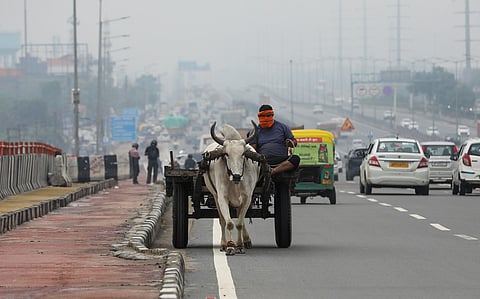
(Image Source: Down To earth)
Importance of Clean Indoor Air
- Human Health and Productivity
- We breathe more than 7,000 litres of air every day, most of it indoors—at home, workplaces, schools, and hospitals.
- Poor IAQ contributes to respiratory infections (influenza, COVID-19), asthma, cancers, cardiovascular diseases, and cognitive fatigue.
- Evidence shows that better ventilation and filtration improve alertness, concentration, and productivity at workplaces and schools.
- Economic Impact of Inaction
- The annual economic burden of influenza in the US alone is estimated at US$11.2 billion, while other respiratory infections cost US$40 billion.
- Lost working days due to illness lower national productivity, amplifying economic vulnerabilities—especially during pandemics.
- Pandemic Preparedness
- Future pandemics are highly likely to be airborne.
- Clean indoor air acts as a non-pharmaceutical intervention, reducing transmission in public spaces like hospitals, classrooms, and offices.
- Every COVID wave and seasonal flu surge highlights our continued vulnerability to unclean indoor air.
- Climate Change Linkages
- Wildfires, rising temperatures, and urban air pollution increasingly degrade outdoor air quality, pushing populations indoors.
- Without robust IAQ systems, indoor spaces fail to serve as refuges during climate-related air crises.
- Hence, IAQ investment is also part of climate adaptation strategies.
Lessons from History: Clean Air as Clean Water
Public health history offers a compelling analogy:
- In the 19th century, cholera epidemics plagued major cities like London.
- The solution lay in separating drinking water from wastewater, a reform that made waterborne epidemics nearly extinct in high-income nations.
- Similarly, investing in ventilation, filtration, and IAQ standards today could make airborne epidemics preventable in the future.
- This historical parallel highlights that air quality management should be viewed as basic public health infrastructure rather than an optional luxury.
Strategic Pathways for Action
The authors outline three principles to operationalise evidence into policy and practice:
1. Government-led Strategic Approach
- Prioritisation: Begin with high-density, high-risk spaces such as schools, workplaces, hospitals, and public transport hubs.
- Planning and Investment: Allocate resources with clear timelines and measurable targets to ensure sustained IAQ improvements.
2. Recognition as a Human Right
- IAQ must be enshrined as a human right and population-level health protection, not merely an advisory guideline.
- Establish mandatory indoor air standards for ventilation, filtration, humidity, and pollutant thresholds in buildings.
- Create dedicated national IAQ agencies for enforcement, monitoring, and research.
3. Community and Institutional Leadership
- Empower schools, workplaces, and local communities as frontline actors in clean air initiatives.
- Promote citizen science projects to monitor IAQ at the grassroots level.
- Encourage “clean air champions”, particularly among youth, to drive awareness and behavioural change.
Global Pledge for Healthy Indoor Air: A Landmark Initiative
- Over 150 organisations worldwide have endorsed this pledge to push for global IAQ standards.
- It reflects the shift from reactive health responses to preventive infrastructure investment.
- Countries like Australia are leading by example, while others such as New Zealand still lack national IAQ strategies or agencies—revealing the uneven global preparedness landscape.
Challenges to Implementation
- Despite growing recognition, several barriers persist:
- Financial Constraints: Upfront costs of installing or upgrading IAQ systems often deter investment, despite long-term savings.
- Lack of Awareness: Public and political understanding of IAQ’s role in preventing disease remains limited.
- Weak Governance: Absence of mandatory standards, monitoring mechanisms, and accountability slows progress.
- Equity Concerns: Vulnerable populations in low-income regions face disproportionately high exposure to poor IAQ due to substandard housing and infrastructure.
Way Forward
To mainstream IAQ investment as part of pandemic preparedness and climate resilience, countries must:
- Integrate IAQ targets into National Pandemic Preparedness Plans and Climate Adaptation Strategies.
- Foster public-private partnerships for cost-effective technology deployment in ventilation, filtration, and sensor-based monitoring.
- Incentivise green building standards that prioritise IAQ alongside energy efficiency.
- Enhance international cooperation to share best practices, research, and financing models.
Conclusion
- Clean indoor air is no longer a matter of comfort—it is a non-negotiable determinant of health, economic stability, and social resilience.
- The lesson from history is clear: just as 19th-century investment in clean water eradicated cholera, 21st-century investment in clean indoor air can protect humanity from future airborne pandemics and climate emergencies.
CARE MCQ
Q5. Consider the following statements regarding clean indoor air:
- Clean indoor air is recognized as a universal health protection, similar to clean drinking water.
- Investment in indoor air quality is primarily a technological concern, with little relevance to public health policy.
- High-quality indoor air can reduce the spread of airborne respiratory infections and improve human productivity.
- National-level agencies and mandatory indoor air standards are recommended to ensure clean indoor air.
Which of the statements given above are correct?
a) 1 and 2 only
b) 1, 3, and 4 only
c) 2 and 3 only
d) 1, 2, 3, and 4
Answer 5-B
Explanation
- Statement 1 is correct: Clean indoor air is increasingly recognized as a universal health protection, similar to clean drinking water, essential for preventing respiratory infections.
- Statement 2 is incorrect: Investment in indoor air quality is not merely a technological issue; it is a critical public health and policy priority, requiring government strategies, community involvement, and standards.
- Statement 3 is correct: High-quality indoor air helps reduce the spread of airborne infections such as influenza and COVID-19, and improves alertness and productivity in schools, workplaces, and healthcare settings.
- Statement 4 is correct: To ensure clean indoor air, the establishment of national-level agencies and mandatory indoor air standards for buildings, housing, and workplaces is recommended.
- Therefore, option B is the correct answer.
UPSC PYQ
Q. In the cities of our country, which among the following atmospheric gases are normally considered in calculating the value of Air Quality Index? (2016)
- Carbon dioxide
- Carbon monoxide
- Nitrogen dioxide
- Sulfur dioxide
- Methane
Select the correct answer using the code given below:
(a) 1, 2 and 3 only
(b) 2, 3 and 4 only
(c) 1, 4 and 5 only
(d) 1, 2, 3, 4 and 5
Ans: (b)
Why in News?
Darjeeling’s 2025 floods and landslides highlight the combined impact of climate change, unsustainable hill development, and weak institutional disaster management on human lives, livelihoods, and national security.
Introduction
- Darjeeling — often called the Queen of Hills — has once again suffered a severe disaster due to exceptionally heavy rainfall in early October 2025.
- The Dudhia bridge over the Balason River was washed away, cutting off connectivity between Siliguri and Mirik, and disrupting national and state highways.
- The event underscores how unsustainable development, altered rainfall patterns due to climate change, and weak institutional response have made the Himalayan hills more disaster-prone.
- This crisis highlights the intersection of environment, society, economy, and national security, making it a vital case study for disaster management and sustainable development in fragile mountain ecosystems.
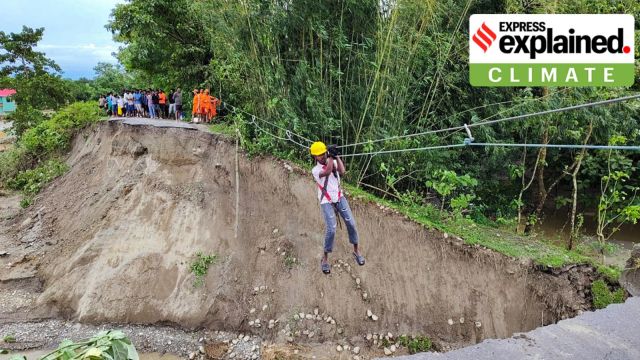
(Image Source: Indian Express)
Historical Vulnerability of Darjeeling
Darjeeling has a long history of natural disasters:
- Major landslides recorded in 1899, 1934, 1950, 1968, 1975, 1980, 1991, 2011, 2015.
- The 1968 floods alone killed over a thousand people.
- Nine cloudburst events in the Teesta Valley (1902-1978) documented by the Centre for Science and Environment (1991).
- Leila Seth’s memoir On Balance (2003) captures the devastation of the 1950 landslides.
- Key Insight: Natural disasters are not new to the region, but their frequency, intensity, and impact have increased due to anthropogenic pressures and climate variability.
Drivers of the Present Crisis
1. Climate Change-Induced Rainfall Shift
- Traditional ‘sawnaay jhari’ (gentle, prolonged monsoon showers) has been replaced by ‘mushaldhare varsha’ (short, intense cloudbursts).
- Concentrated downpours lead to flash floods, slope failures, and river course changes.
- Similar patterns have been observed in the 2023 Lhonak Lake GLOF in Sikkim.
2. Unsustainable Development in Fragile Hills
- Hydropower, railways, hotels, and unregulated construction have exceeded the carrying capacity of the hills.
- Encroachment on riverbeds, jhoras (streams), and floodplains has obstructed natural drainage, amplifying floods and landslides.
- Quarrying and deforestation for infrastructure projects weaken slopes.
3. Demographic Pressure and Land Use Change
- Significant in-migration from the plains and neighbouring countries over recent decades.
- Land-property boom in the last 30 years has driven construction on unstable slopes.
4. Hydrological and Geomorphological Instability
- Rivers and streams in the Teesta basin have shown unprecedented course changes, intruding into habitations and farms.
Institutional and Governance Deficits
Weak Local Capacity
- Municipalities and panchayats, once reputed for strong governance in the colonial era (1860s), now lack even basic solid waste management systems, adding to urban flooding risks.
- The Gorkhaland Territorial Administration (GTA) and local bodies lack technical expertise, funds, technology, and manpower for disaster mitigation.
Limited Disaster-Specific Institutions
- District Collector–centric response is inadequate for complex mountain hazards.
- Absence of specialised mountain disaster management units and climate change research centres for Eastern Himalayas.
- Proposals such as converting the Forest Rangers College, Kurseong into a Climate Change Studies and Management Centre remain unimplemented.
Scientific Warnings Ignored
- ISRO’s Landslide Atlas 2023: Darjeeling ranks 35th among 147 most landslide-exposed districts in India.
- NGOs like “Save the Hills” (Col Praful Rao) have repeatedly flagged the risks through awareness campaigns.
- The Sikkim Human Development Report 2001 had predicted the GLOF risk that materialised in 2023, causing damages worth ₹25,000 crore (≈60 % of Sikkim’s 2022-23 GDP) and downstream destruction in Darjeeling and Jalpaiguri.
- Lesson: Lack of preventive action despite clear scientific evidence aggravates disaster losses.
Economic and Livelihood Impacts
- Darjeeling Tea, a Geographical Indication product and a major foreign-exchange earner, faces soil erosion, erratic rainfall, and transport disruptions.
- Traditional sectors — tourism, cinchona & quinine cultivation, horticulture, and education hubs — are under stress.
- Damage to infrastructure (roads, bridges, hydropower) hampers local and regional economies.
National Security Dimensions
- Darjeeling lies near the Siliguri Corridor (the “Chicken’s Neck”), a narrow strip linking mainland India to the Northeast.
- Disasters disrupt troop movement, supply chains, and border logistics in this strategically sensitive zone adjoining Nepal, Bhutan, Bangladesh, and China-occupied Tibet.
- The 2023 GLOF also destroyed military installations and hydropower assets, highlighting climate-security linkages.
- Therefore, Darjeeling’s stability is not merely a state issue but a strategic national priority under India’s Act East Policy.
Lessons and Way Forward
1. Integrated Mountain-Specific Disaster Management
- Establish a National Himalayan Disaster Risk Reduction Authority with regional centres (e.g., Eastern Himalaya hub in Kurseong).
- Early Warning Systems: Strengthen IMD forecasts, community-level alerts, and hydrological monitoring of rivers and glacial lakes.
2. Climate-Resilient Planning
- Conduct carrying-capacity studies before approving hydropower, tourism, and urban projects.
- Promote eco-friendly infrastructure (bio-engineering for slope stabilisation, green roofs, permeable pavements).
3. Strengthen Local Institutions
- Capacity-building for GTA, municipalities, and panchayats in solid-waste management, drainage planning, and emergency response.
- Enhance State Disaster Response Forces (SDRFs) and link them with NDRF and Army units.
4. Sustainable Livelihoods
- Climate-resilient agriculture and tea cultivation, diversification into horticulture, medicinal plants, eco-tourism.
5. Regional and International Cooperation
- Collaborate with Nepal, Bhutan, Bangladesh, Myanmar, and China-Tibet for transboundary river management, GLOF monitoring, and mountain research.
Conclusion
- The Darjeeling disaster illustrates how ecological fragility, climate change, and human negligence can combine to magnify hazards into humanitarian and strategic crises.
- A paradigm shift is needed — from reactive relief to proactive resilience-building, backed by science-led planning, empowered local governance, and national-level prioritisation of the Himalayas as critical for both environmental sustainability and national security.
CARE MCQ
Q6. Consider the following statements:
Assertion (A): The 2025 Darjeeling disaster was triggered by concentrated short-duration rainfall.
Reason (R): Climate change has altered traditional monsoon patterns, replacing steady showers (sawnaay jhari) with intense cloudbursts (mushaldhare varsha), increasing landslide and flood risks.
Options:
a. Both A and R are true, and R is the correct explanation of A
b. Both A and R are true, but R is not the correct explanation of A
c. A is true, but R is false
d. A is false, but R is true
Answer: A
Explanation
- Assertion (A) is true: The disaster was triggered by intense, short-duration rainfall, which caused landslides and floods.
- Reason (R) is true and explains A: Climate change has changed rainfall patterns in Darjeeling from traditional steady monsoon showers to concentrated cloudbursts, increasing disaster vulnerability.
- Therefore, option A is the correct answer.
UPSC PYQ
Q. Consider the following statements: (2024)
Statement-I: Rainfall is one of the reasons for weathering of rocks.
Statement-II: Rain water contains carbon dioxide in solution.
Statement-III: Rain water contains atmospheric oxygen.
Which one of the following is correct in respect of the above statements?
(a) Both Statement-II and Statement-III are correct and both of them explain Statement-I
(b) Both Statement-II and Statement-III are correct, but only one of them explains Statement-I
(c) Only one of the Statements II and III is correct and that explains Statement-I
(d) Neither Statement-II nor Statement-III is correct
Ans: (a)