
Why in News?
The 129th birth anniversary of Alluri Sitarama Raju was celebrated at his birthplace, Pandrangi village in Padmanabham mandal of Visakhapatnam district, Andhra Pradesh.
The celebrations began at Veerula Udyanavanam, where public representatives paid floral tributes to his statue. A patriotic rally carrying the National Flag was taken out from his ancestral house to the main venue.Traditional folk performances and cultural programmes depicting his life, ideals and sacrifices were also organised as part of the celebrations.
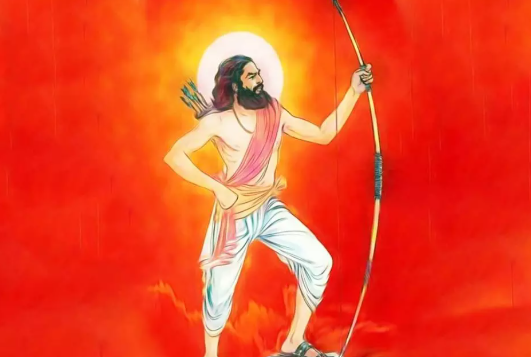
Who was Alluri Sitarama Raju?
- Alluri Sitarama Raju was an Indian revolutionary who fought against British colonial rule in the forested hill tracts of present-day Andhra Pradesh.
- He is popularly known as Manyam Veerudu, meaning the “Hero of the Jungle,” for mobilising tribal communities against oppressive colonial policies.
- His struggle was rooted in the lived realities of tribal people who faced restrictions on their traditional rights, livelihood practices and access to forest resources.
Early Life and Background
- Alluri Sitarama Raju was born in Pandrangi village in Visakhapatnam district. His birth is commonly associated with 4 July 1897, though some accounts place it in 1898.
- He belonged to a Telugu-speaking Kshatriya family. Over time, he came into close contact with tribal communities living in the Eastern Ghats region.
- His understanding of their hardships shaped his political consciousness and later guided his resistance against British authority.
Rampa Rebellion / Manyam Rebellion
- The Rampa Rebellion, also known as the Manyam Rebellion, took place between 1922 and 1924.
- Alluri Sitarama Raju led the rebellion in the Eastern Ghats region, mobilising tribal people against British forest policies and administrative oppression.
- The rebellion was not merely a violent outburst. It was a response to the disruption of tribal life caused by colonial control over forests, land and labour.
The movement aimed to:
- Resist oppressive British forest laws
- Defend tribal livelihood practices
- Protect access to forest produce
- Challenge forced labour and exploitation
- Drive British authority out of the hill region
Why Tribal People Resisted British Rule
- The tribal communities of the Eastern Ghats traditionally practised podu, or shifting cultivation.
- Under this system, patches of forest land were cleared for cultivation and later left fallow as communities moved to another area. It was closely linked with their food security, livelihood and cultural identity.
- The Madras Forest Act, 1882 imposed restrictions on tribal movement and limited their access to forests. It also affected their ability to collect minor forest produce.
- As a result, many tribal people were pushed into low-wage labour for the forest department or contractors.
- The colonial state treated forests as revenue-generating resources, while tribal communities viewed them as a source of livelihood, identity and survival. This conflict became the foundation of the rebellion.
Guerrilla Campaign against the British
- Alluri Sitarama Raju organised tribal fighters into a guerrilla force.
- Instead of fighting the British through conventional battlefield methods, he used guerrilla warfare, which involved:
- Ambushes
- Sudden raids
- Hit-and-run tactics
- Sabotage
- Mobility through forest terrain
- Attacks on police stations and outposts
- His knowledge of the hilly and forested landscape gave the rebellion a tactical advantage.
- The guerrilla campaign challenged British authority and exposed the limits of colonial power in forest regions where local support was strong.
Death and Legacy
- Alluri Sitarama Raju was captured and killed by British forces at Koyyuru village on 7 May 1924.
- His death marked the end of the Rampa Rebellion, but his legacy continued to inspire generations.
He is remembered as a symbol of:
- Courage
- Sacrifice
- Tribal resistance
- Anti-colonial struggle
- Social unity
- Justice for forest communities
- His life reflected the idea of unity beyond caste and class divisions.
- The Government of India issued a postal stamp in 1986 in his honour. A biographical film titled Alluri Seetharama Raju was released in 1974, further popularising his role in the freedom struggle.
Relevance for India’s Freedom Struggle
- Alluri Sitarama Raju’s movement shows that India’s freedom struggle was not limited to urban centres or mainstream political platforms.
It also included:
- Tribal uprisings
- Peasant resistance
- Forest-based struggles
- Regional movements
- Localised armed resistance
- His struggle highlights the relationship between colonialism and control over natural resources.
- It also reminds us that forest rights, livelihood security and dignity of tribal communities were central issues even during the freedom movement.
Conclusion
Alluri Sitarama Raju remains one of the most inspiring figures of India’s freedom struggle.
As Manyam Veerudu, he mobilised tribal communities against oppressive forest laws and British exploitation. His leadership during the Rampa Rebellion demonstrated courage, sacrifice and deep commitment to justice.
The celebration of his 129th birth anniversary at Pandrangi is not only a tribute to a revolutionary hero but also a reminder of the vital role played by tribal communities in India’s struggle for freedom.