Relevance:GS Paper III – Environment | Biodiversity | Wetlands | Ecology
For Prelims:
Chilika Lake, Mangalajodi, Ramsar Site, Brackish Water Lagoon, Central Asian Flyway, Nalabana Bird Sanctuary, Irrawaddy Dolphin, Bar-headed Goose, Migratory Birds
For Mains:
Chilika Lake, Mangalajodi, Ramsar Site, Brackish Water Lagoon, Central Asian Flyway, Nalabana Bird Sanctuary, Irrawaddy Dolphin, Bar-headed Goose, Migratory Birds
Why in News?
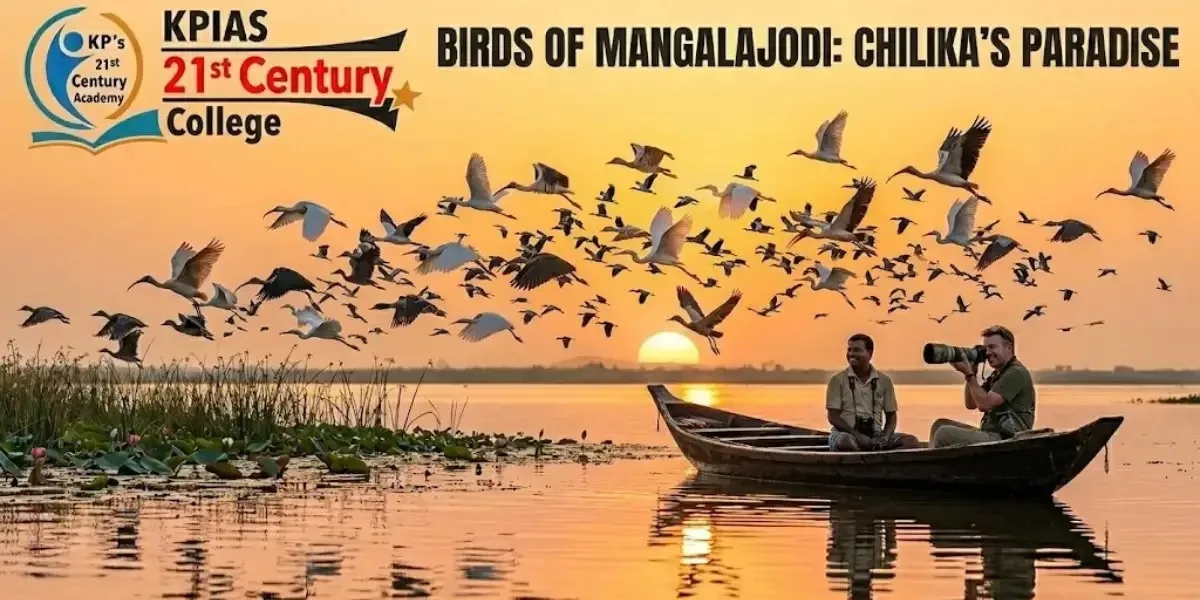
A coffee table book titled Birds of Mangalajodi – A Visitor’s Guide to the Bird Paradise of Chilika Lake was released in Hyderabad, bringing renewed attention to the ecological richness of Mangalajodi, located on the northern fringe of Chilika Lake.
Chilika Lake: Location, Type and International Recognition
Location and Type
- Chilika Lake is situated in the state of Odisha along the eastern coastline of India, adjoining the Bay of Bengal.
- It lies to the south-west of the Mahanadi delta and extends across the districts of Puri, Khordha, and Ganjam.
- The lake is connected to the Bay of Bengal through a sea mouth, the maintenance of which is crucial for regulating salinity and sustaining ecological balance.
- A key development in recent decades has been the opening of a new sea mouth in 2000, which significantly improved water exchange, enhanced fish production, and restored the lagoon’s ecological health.
- Chilika Lake is a brackish water coastal lagoon, formed by the mixing of freshwater inflows from rivers such as Daya and Bhargavi with saline seawater.
- It is the largest brackish water lagoon in India and one of the largest in the world.
- The lake exhibits a clear ecological zonation, with freshwater conditions dominating the northern sector, brackish conditions in the central region, and marine influence in the southern part.
- This gradient supports high biodiversity, including fisheries and species such as the Irrawaddy dolphin, making it ecologically and economically significant.
International Recognition
- Chilika Lake has been recognized as a wetland of global importance under the Ramsar Convention since 1981.
- Its inclusion highlights its ecological significance, particularly as a habitat for migratory birds along the Central Asian Flyway and for its rich aquatic biodiversity.
- A major point of importance in current affairs is its association with the Montreux Record.
- Chilika was the first Indian wetland to be placed on the Montreux Record due to ecological degradation caused by siltation, reduced salinity, and declining biodiversity.
- However, through targeted restoration measures, including hydrological interventions and community-based management, the lake witnessed substantial ecological recovery.
- As a result, it became the first wetland in Asia to be removed from the Montreux Record, a globally acknowledged success in wetland restoration.
Mangalajodi: Freshwater Marsh Zone of Chilika
- Mangalajodi is located on the northern fringe of Chilika Lake in Odisha.
- It represents the freshwater marsh zone of Chilika, unlike the lagoon’s brackish and marine-influenced sectors.
- The area receives freshwater mainly from distributaries of the Mahanadi River.
- It consists of shallow wetlands, mudflats, and marshy vegetation, not deep open water.
- Water depth is generally very shallow (often <1 metre), suitable for wading birds.
- It supports large congregations of migratory birds during winter season.
- It lies along the Central Asian Flyway, an important migratory route.
- It is known for hosting lakhs of birds annually, especially waterfowl species.
- Common bird groups include ducks, geese, herons, egrets, and waders.
- It is recognized as one of the major birding hotspots in India.
- It is often called the “Bird Paradise of Chilika”.
- It differs from the southern part of Chilika which is marine-influenced due to proximity to the Bay of Bengal.
- It is associated with community-led conservation model (local villagers involved in bird protection).
- It forms part of the Chilika Ramsar Wetland system under the Ramsar Convention.
Central Asian Flyway and Migratory Bird Movement
- Mangalajodi lies on the Central Asian Flyway, which is one of the world’s major migratory bird routes.
- This flyway connects the breeding grounds of birds in Siberia, Arctic regions, Central Asia and Northern Eurasia with wintering grounds in India and South Asia.
- Every year between October and March, nearly two lakh migratory birds arrive in Mangalajodi.
- These birds migrate mainly due to harsh winters in northern regions and search for warmer climate, food-rich wetlands and safe breeding conditions.
Important Migratory Birds
- Northern Pintail (Anas acuta) is one of the most dominant and abundant migratory duck species.
- Bar-headed Goose (Anser indicus) is notable for its high-altitude migration across the Himalayas.
- Gadwall, Northern Shoveler, and Common Teal are common dabbling ducks found in large numbers.
- Black-tailed Godwit and other waders (sandpipers, plovers) are common in shallow marsh zones like Mangalajodi.
- Bird population monitoring is conducted annually by the Chilika Development Authority.
Nalabana Bird Sanctuary inside Chilika
- Nalabana Bird Sanctuary is the core protected bird habitat located inside Chilika Lake.
- The word Nalabana means “weed-covered island.”
- It remains seasonally submerged during the monsoon and reappears during the dry season, making it a unique wetland island ecosystem.
- It was declared a bird sanctuary in 1987 and serves as one of the most important nesting and resting sites for migratory birds visiting Chilika.
- Nalabana is also the principal site for annual bird census operations and is one of the most protected avian habitats in eastern India.
- Its location inside Chilika is a very common prelims question.
Irrawaddy Dolphin and Other Important Fauna
- Chilika Lake is internationally famous for the presence of the Irrawaddy Dolphin.
- This species is mainly found in coastal, estuarine and brackish water ecosystems and is different from the Gangetic river dolphin.
- In India, Chilika is one of the most well-known habitats of the Irrawaddy Dolphin, especially near the outer channel and sea mouth region.
- The species is listed as Endangered by the IUCN.
- Apart from dolphins and birds, Chilika also supports fish species, crustaceans, prawns, amphibians and seagrass ecosystems, making it one of India’s most productive wetland systems.
CARE MCQ
Q. Consider the following statements regarding Chilika Lake:
- It is the largest brackish water lagoon in India.
- Nalabana Bird Sanctuary is located within Chilika Lake.
- Chilika is famous for the Gangetic Dolphin population.
Which of the statements given above are correct?
(a) 1 and 2 only
(b) 2 and 3 only
(c) 1 and 3 only
(d) 1, 2 and 3
Answer: (a) 1 and 2 only
Explanation
Statement 1 is correct because Chilika is the largest brackish water lagoon in India.
Statement 2 is correct because Nalabana Bird Sanctuary lies within Chilika Lake and serves as the core bird habitat.
Statement 3 is incorrect because Chilika is famous for the Irrawaddy Dolphin and not for the Gangetic Dolphin.
Therefore, the correct answer is (a).
Q. Which one of the following migratory bird species recorded at Chilika is known for crossing the Himalayas at very high altitudes during migration?
(a) Northern Pintail
(b) Gadwall
(c) Bar-headed Goose
(d) Common Teal
Answer: (c) Bar-headed Goose
Explanation:
The Bar-headed Goose is famous for its ability to fly over the Himalayas at extremely high altitudes (often above 7,000 m). Other options like Northern Pintail, Gadwall, and Common Teal are migratory ducks but do not exhibit such extreme high-altitude migration.
Q.Among the following birds observed at Chilika Lake, which one is correctly matched with its feeding behaviour?
(a) Northern Shoveler – Diving duck
(b) Gadwall – Dabbling duck
(c) Bar-headed Goose – Wader
(d) Black-tailed Godwit – Raptor
Answer: (b) Gadwall – Dabbling duck
Explanation:
- Gadwall is a dabbling duck (feeds on the water surface).
- Northern Shoveler is also a dabbling duck (not diving).
- Bar-headed Goose is a grazer (not a wader).
- Black-tailed Godwit is a wader, not a raptor.
Q.Which of the following bird groups at Mangalajodi are most closely associated with shallow marshy feeding habitats?
(a) Raptors
(b) Diving ducks
(c) Waders
(d) Pelagic birds
Answer: (c) Waders
Explanation:
Waders (e.g., sandpipers, plovers, Black-tailed Godwit) are adapted to shallow water and mudflats, which are characteristic of Mangalajodi marshes. Raptors are predators, diving ducks prefer deeper water, and pelagic birds are marine.
Q.Which one of the following pairs of species represents dabbling ducks commonly found at Chilika Lake?
(a) Northern Pintail and Gadwall
(b) Bar-headed Goose and Greylag Goose
(c) Black-tailed Godwit and Sandpiper
(d) Harrier and Eagle
Answer: (a) Northern Pintail and Gadwall
Explanation:
Both Northern Pintail and Gadwall are dabbling ducks, feeding at or near the surface.
- Geese are grazers
- Godwit and sandpiper are waders
- Harrier and eagle are raptors
Q.With reference to migratory birds at Chilika Lake, consider the following statements:
- Northern Pintail is among the most abundant species recorded.
- Black-tailed Godwit is a long-distance migratory wader.
- All migratory birds visiting Chilika are diving ducks.
Which of the statements given above is/are correct?
(a) 1 and 2 only
(b) 2 and 3 only
(c) 1 only
(d) 1, 2 and 3
Answer: (a) 1 and 2 only
Explanation:
- Statement 1 is correct: Northern Pintail is one of the most abundant migratory ducks at Chilika.
- Statement 2 is correct: Black-tailed Godwit is a long-distance migratory wader.
- Statement 3 is incorrect: Chilika hosts diverse bird groups (dabbling ducks, waders, geese, raptors), not only diving ducks.
TGPSC Mains Question
Q. Wetlands like Chilika play an important role in biodiversity conservation as well as livelihood security. Discuss with suitable examples.
(250 words)
FAQs
Q.Why is Chilika Lake important for prelims?
Ans: Because it is India’s largest brackish water lagoon, a Ramsar Site and a major migratory bird habitat.
Q.Why is Mangalajodi called Bird Paradise?
Ans: Because nearly two lakh migratory birds visit it every year during winter.
Q.Which migratory route passes through Mangalajodi?
Ans: The Central Asian Flyway.
Q.Which sanctuary is located inside Chilika Lake?
Ans: Nalabana Bird Sanctuary.
Q.Which dolphin is famous in Chilika Lake?
Ans: Irrawaddy Dolphin.
Relevance: GS Paper II – Polity | Parliament | Anti-Defection Law | Constitutional Provisions
For Prelims:
Anti-Defection Law, Tenth Schedule, 52nd Constitutional Amendment Act, 1985, 91st Constitutional Amendment Act, 2003, Rajya Sabha Chairman, Merger Provision, Disqualification Petition, Kihoto Hollohan Case, Voluntarily Giving Up Membership, Party Whip
For Mains:
party discipline, legislative stability, judicial review, constitutional morality, political defections, parliamentary ethics, Speaker’s discretion, democratic accountability, federal politics, institutional neutrality
Why in News?
party discipline, legislative stability, judicial review, constitutional morality, political defections, parliamentary ethics, Speaker’s discretion, democratic accountability, federal politics, institutional neutrality
What Happened in the Rajya Sabha
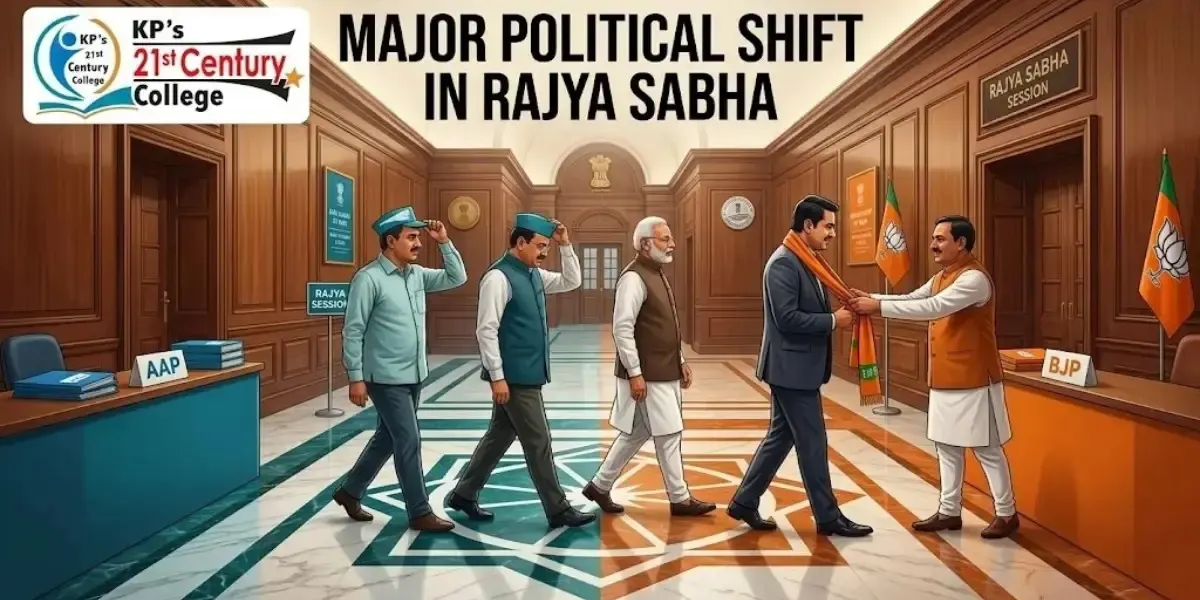
- The seven MPs publicly announced that they were merging with the BJP and claimed protection under the merger provision of the Anti-Defection Law.
- Under the Tenth Schedule, if at least two-thirds of the members of a legislature party agree to merge with another political party, they are protected from disqualification.
- Since seven out of ten MPs satisfy the two-thirds requirement, legal experts suggest that the Rajya Sabha Chairman may accept the merger claim, similar to the precedent seen in the Telugu Desam Party (TDP) Rajya Sabha case.
- However, opposition parties may file a disqualification petition challenging the legitimacy of the merger and questioning whether it reflects a genuine party merger or only individual defections.
- Until the Chairman gives a final decision, the defecting MPs technically remain AAP members.
Anti-Defection Law: Constitutional Basis
- The Anti-Defection Law was introduced through the 52nd Constitutional Amendment Act, 1985, which added the Tenth Schedule to the Constitution.
- Its primary aim is to prevent political defections motivated by personal gain and to ensure stability in governments.
- The law applies to both Parliament and State Legislatures.
It was further strengthened by the 91st Constitutional Amendment Act, 2003, which removed the provision of “split” (1/3rd members) and retained only the “merger” provision.
Grounds for Disqualification
- A Member of Parliament or State Legislature can be disqualified under the Anti-Defection Law on several grounds.
- If an elected member voluntarily gives up membership of the political party on whose ticket they were elected, they can be disqualified. This does not require formal resignation; even conduct indicating disloyalty may be enough.
- If a member votes or abstains from voting against the party whip without prior permission and the action is not condoned by the party within 15 days, disqualification can follow.
- An independent member who joins any political party after election is also disqualified.
- A nominated member can join a political party only within six months of taking their seat. After that, joining a party leads to disqualification.
Merger Exception under the Tenth Schedule
- The most important exception under the Anti-Defection Law is the merger provision.
- If not less than two-thirds of the members of a legislature party agree to merge with another political party, they are protected from disqualification.
- This provision was retained after the 91st Amendment, while the earlier “split” exception for one-third members was removed.
- In this case, seven out of ten AAP Rajya Sabha MPs constitute exactly two-thirds, which gives them a legal basis to claim merger protection.
- However, the controversy lies in determining whether this is a genuine political merger of the party or merely a strategic defection of MPs.
- This interpretation becomes crucial for the Chairman’s decision.
Supreme Court’s Stance
- Kihoto Hollohan v. Zachillhu (1992)
- Speaker’s decision is subject to judicial review on limited grounds.
- Ravi S. Naik v. Union of India (1994)
- Defection can be inferred from conduct; resignation is not necessary.
- Keisham Meghachandra Singh v. Speaker, Manipur Assembly (2020)
- Speaker should decide cases within 3 months.
- Suggested creation of an independent tribunal.
- Padi Kaushik Reddy v. State of Telangana (2025)
- Supreme Court called for reforms to ensure timely and impartial decisions.
- Re-examined the role of the Speaker.
Powers and Functions of Rajya Sabha Chairman
Area | Power / Function | Key Prelims Fact |
Constitutional Position | Ex-officio Chairman | Vice-President acts as Chairman (Art. 64, 89) |
Presiding Function | Conducts proceedings | Maintains order, decides speaking order |
Discipline | Maintains decorum | Can suspend members for disorderly conduct |
Rules Interpretation | Final authority on procedure | Decisions on rules are binding |
Points of Order | Decides points raised by members | Ensures proceedings follow rules |
Voting Power | Casting vote only | No vote in first instance; votes only in tie |
Adjournment Power | Adjourns/suspends House | In case of disorder or lack of quorum |
Committee Role | Nominates members | Important in committee functioning |
Administrative Role | Controls Secretariat | Supervises Rajya Sabha Secretariat |
Anti-Defection | Decides disqualification | Acts under Tenth Schedule |
Judicial Review | Decisions reviewable | Subject to court review |
Money Bill Role | No final authority | Speaker of Lok Sabha decides Money Bill |
Removal | Cannot be removed by RS alone | Removed as Vice-President by Parliament |
Way Forward
The Anti-Defection Law should be reformed to balance party discipline with democratic debate. The law should be limited mainly to votes affecting government stability such as no-confidence motions, money bills, and confidence votes, rather than every legislative issue.
The power to decide disqualification should be shifted from the Speaker or Chairman to an independent tribunal or the Election Commission to improve neutrality. A strict constitutional time limit should be introduced for deciding disqualification petitions.
The merger provision should also be reviewed carefully so that it protects genuine political restructuring rather than encouraging strategic defections
Conclusion
The defection of seven AAP Rajya Sabha MPs to the BJP is not merely a party issue; it is a major constitutional test for the Anti-Defection Law.
The case highlights the continuing tension between political strategy and constitutional ethics. Whether the Chairman treats this as a legitimate merger or an unlawful defection will shape the future interpretation of the Tenth Schedule.
Ultimately, the strength of parliamentary democracy depends not only on legal provisions but also on the political morality of those who operate within them.
CARE MCQ
Q. Consider the following statements regarding disqualification of a Member of Parliament on grounds of defection:
- A member can be disqualified if he or she votes against the party whip in the House without prior permission, even when the party is part of a ruling coalition.
- The Speaker of the House decides questions of disqualification under the Anti-Defection Law, and such decisions are completely immune from judicial review.
- The Anti-Defection Law applies to both elected and nominated members of Parliament.
Which of the statements given above is/are correct?
(a) 1 and 2 only
(b) 2 and 3 only
(c) 1 and 3 only
(d) 1, 2 and 3
Ans: (c) 1 and 3 only
Explanation:
Statement 1 is correct:Under the Tenth Schedule of the Constitution, a member may be disqualified if he votes or abstains from voting contrary to the direction issued by his political party, commonly known as the party whip, without obtaining prior permission. This rule applies irrespective of whether the party is in government, opposition, or part of a coalition. Therefore, even in a coalition government, defying the party whip can lead to disqualification.
Statement 2 is incorrect: The Speaker of the Lok Sabha or the Chairman of the Rajya Sabha has the authority to decide questions of disqualification under the Anti-Defection Law. However, their decision is not beyond challenge. In Kihoto Hollohan v. Zachillhu (1992), the Supreme Court held that the Speaker’s decision is subject to judicial review, especially on grounds of mala fide action, violation of constitutional provisions, or procedural irregularity. Therefore, the statement is incorrect.
Statement 3 is correct: The Anti-Defection Law applies to both elected and nominated members of Parliament. A nominated member can also be disqualified if he joins a political party after six months from the date of taking his seat in the House. Thus, the law covers both categories of members. Hence, this statement is correct.
Q. Consider the following statements regarding the Anti-Defection Law in India:
- A member of a political party is disqualified from being a member of the House if he voluntarily gives up the membership of his political party.
- A political party may merge with another party without attracting disqualification if not less than two-thirds of its legislators agree to the merger.
- The decision on disqualification under the Anti-Defection Law is taken by the President of India on the advice of the Election Commission.
- A legislator is not disqualified if his original political party merges with another party but he and some other members choose not to join the merged party and function as a separate group.
Which of the statements given above are correct?
(a) 1 and 2 only
(b) 2 and 4 only
(c) 1, 2 and 3 only
(d) 1, 2 and 4 only
Ans: (d) 1, 2 and 4 only
Explanation:
Statement 1 is correct: One of the main grounds of disqualification under the Tenth Schedule is when a member voluntarily gives up the membership of his political party. This does not require a formal resignation; even conduct indicating abandonment of party loyalty may be treated as voluntarily giving up membership. Therefore, this statement is correct.
Statement 2 is correct: The law provides an exception in case of a merger of political parties. If at least two-thirds of the legislators of a legislative party agree to merge with another party, such members are protected from disqualification. This provision replaced the earlier split exception, which was removed by the 91st Constitutional Amendment. Hence, this statement is correct.
Statement 3 is incorrect: The decision on disqualification is not taken by the President. It is decided by the Speaker of the Lok Sabha or the Chairman of the Rajya Sabha in the case of Parliament, and by the Speaker/Chairman in State Legislatures. The President and Election Commission are involved in disqualification under other provisions like office of profit, but not under the Anti-Defection Law. Therefore, this statement is incorrect.
Statement 4 is correct: When a merger takes place, legislators who choose not to join the merged party and prefer to continue as a separate group are also protected from disqualification. The law recognizes both those who accept the merger and those who refuse it, provided the merger satisfies the two-thirds requirement. Hence, this statement is correct.
Q. Which of the following Supreme Court cases is related to the judicial review of the Speaker’s decision on disqualification under the Tenth Schedule?
(a) Kihoto Hollohan vs Zachillhu And Others
(b) Golaknath vs State of Punjab
(c) Kesavananda Bharati vs State of Kerala
(d) Indira Nehru Gandhi vs Raj Narain
Answer: (a) Kihoto Hollohan vs Zachillhu And Others
Explanation:
The Supreme Court in Kihoto Hollohan vs Zachillhu And Others upheld the constitutional validity of the Tenth Schedule (Anti-Defection Law) while ruling that the Speaker’s decision is subject to judicial review. This ensured that the Speaker’s powers are not absolute and can be challenged in courts on grounds such as mala fides or violation of constitutional mandates.
Q. Regarding the Anti-Defection Law in India, which of the following statements is correct?
(a) It applies only to the members of the Lok Sabha.
(b) It is mentioned under Article 102 of the Constitution.
(c) It was introduced by the 52nd Amendment Act, 1985.
(d) It allows a member to change parties if there’s a merger of two-thirds of the members.
Answer: (c) It was introduced by the 52nd Amendment Act, 1985.
Explanation:
The Anti-Defection Law was introduced through the 52nd Constitutional Amendment Act, which added the Tenth Schedule to the Constitution.
FAQs
Q1. What is the Anti-Defection Law?
It is a constitutional law under the Tenth Schedule that prevents legislators from changing political parties for personal or political gain.
Q2. Which amendment introduced the Anti-Defection Law?
The 52nd Constitutional Amendment Act, 1985 introduced it.
Q3. What is the merger exception?
If at least two-thirds of members of a legislature party join another party, they are protected from disqualification.
Q4. Who decides disqualification in Rajya Sabha cases?
The Chairman of the Rajya Sabha decides such cases.
Q5. Why is the Anti-Defection Law criticized?
It suppresses dissent, allows misuse of the merger clause, and gives excessive discretion to presiding officers.
Relevance:GS Paper III – Agriculture | Crop Protection | Agri Reforms | Food Security
For Prelims:
Pesticides Management Bill, Insecticides Act 1968, Protection of Regulatory Data (PRD), Data Exclusivity, Registration Committee, Central Pesticides Board, CropLife India, Crop Protection Chemicals, Integrated Pest Management (IPM), Resistance Management
For Mains:
Agricultural productivity, innovation gap, farmer welfare, food security, regulatory reforms, sustainable agriculture, agrochemical governance, pesticide safety, crop resilience, technology access
Why in News?
- CropLife India, an industry body representing major crop protection companies, has urged the Union Agriculture Ministry to make targeted changes in the draft Pesticides Management Bill before it is introduced in Parliament.
- The industry argues that the current draft does not adequately address the innovation gap in India’s pesticide sector and may delay farmers’ access to safer and more effective crop protection technologies.
- Union Agriculture Minister Shivraj Singh Chouhan has announced that an amended Seeds and Pesticide Management Bill will be introduced in the upcoming parliamentary session.
What is the Pesticides Management Bill?
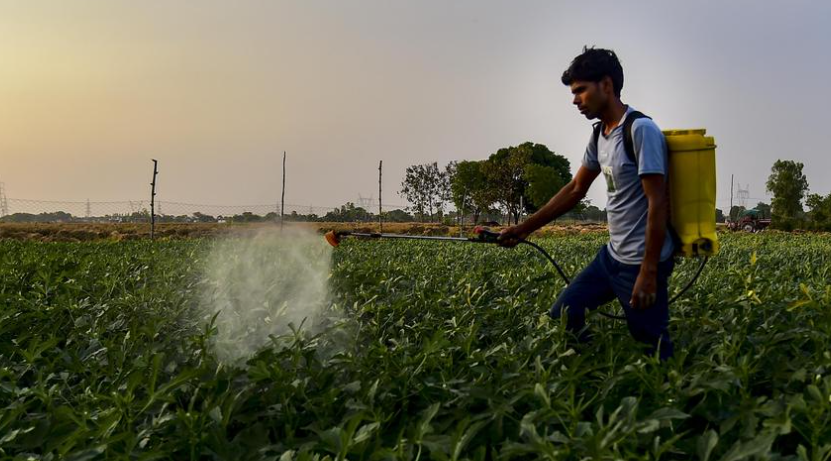
- The Pesticides Management Bill, 2025 is proposed to replace the Insecticides Act, 1968 and the Insecticides Rules, 1971, which currently regulate pesticides in India.
- The objective is to create a modern legal framework for regulating pesticides from manufacture to final disposal and to address issues such as fake pesticides, weak monitoring, and lack of digital traceability.
- The Bill covers the manufacture, import, export, transport, storage, sale, distribution, use, and disposal of pesticides.
- It provides that no pesticide can be manufactured, imported, or sold unless it is registered under the law.
- For this purpose, it establishes a Central Pesticides Board as the apex scientific and advisory body and a Registration Committee responsible for registration, review, suspension, and cancellation of pesticides.
Why the Existing Law Needs Replacement
- The Insecticides Act of 1968 was framed when India’s agricultural and technological realities were very different.
- It primarily focused on regulating insecticides and did not fully account for modern crop protection chemicals, new pest threats, digital traceability, or environmental concerns.
- Over the years, agriculture has become more complex due to climate change, pest resistance, changing cropping patterns, and export-linked food safety standards. The old law is not fully equipped to deal with these realities.
- Farmers today require faster access to newer molecules that are lower-dose, more targeted, and environmentally safer.
- Therefore, replacing the 1968 law has become necessary for both agricultural productivity and sustainable farming.
Industry Concerns Regarding the Draft Bill
- CropLife India has stated that while the proposed Bill is a positive reform, the current draft still leaves major policy gaps that discourage innovation.
- The industry argues that India faces a serious innovation lag because new crop protection technologies take too long to enter the market. This pushes farmers toward excessive use of older pesticides that are less efficient and often more harmful.
- According to the industry, the absence of a clear incentive structure for innovation discourages companies from introducing advanced molecules in India quickly.
This affects:
- pest resistance management
• residue control for exports
• environmental sustainability
• farmer productivity
• long-term crop resilience
The industry is therefore demanding a more predictable and time-bound regulatory framework.
Protection of Regulatory Data (PRD) Debate
The most important issue raised by CropLife India is the need for Protection of Regulatory Data (PRD), also known as Data Exclusivity.
- When a company develops a new pesticide molecule, it spends large amounts of money on safety studies, toxicity testing, field trials, and environmental impact assessments. This proprietary data is submitted to the regulator for market approval.
- PRD prevents competitors from immediately using that same data to obtain approval for generic versions of the product for a limited period.
- The industry has proposed a five-year PRD period from the date of first registration. This would allow innovators temporary protection while still permitting competition later.
- Without PRD, companies fear “free-riding,” where competitors benefit from expensive research without making the same investment. This reduces incentives for innovation.
PRD vs Patent: Important Difference
- A patent protects the invention itself, such as a chemical compound or manufacturing process. It generally lasts for 20 years.
- Protection of Regulatory Data protects only the test data submitted for regulatory approval, not the invention itself. It usually lasts for 5–10 years depending on the country.
- Even if a patent expires, PRD may still provide temporary market exclusivity because competitors cannot rely on the innovator’s safety and efficacy data.
- Thus, PRD acts as a second layer of innovation protection, especially in pharmaceuticals and agrochemicals.
Importance of Faster Access to New Crop Protection Technologies
Modern crop protection technologies are far more advanced than older pesticide formulations. They are often:
- lower-dose
• more targeted
• safer for beneficial insects
• less harmful for soil and water
• better for export residue compliance
• more effective against resistant pests
Delayed access to such technologies forces Indian farmers to overuse outdated chemicals, increasing production costs and pest resistance.
This is especially important in high-value crops like fruits, vegetables, cotton, and export-oriented agriculture where international residue standards are strict.
Faster access to newer solutions improves both productivity and competitiveness.
Key Features of the Draft Pesticides Management Bill
- The Bill proposes the creation of a Central Pesticides Board to provide scientific advice and policy guidance.
- A Registration Committee will act as the executive authority for approving, suspending, or cancelling pesticide registrations.
- Digital licensing and a national registry are proposed to improve monitoring and reduce fake pesticide sales.
- Specific timelines of around 12 to 18 months are proposed for registration decisions so that approval delays can be reduced.
- The Bill also introduces stronger penalties for manufacturing or selling unregistered and spurious pesticides.
- It improves safety standards related to labeling, packaging, protective equipment, and worker training.
- These provisions aim to improve accountability across the pesticide supply chain.
Challenges in India’s Pesticide Regulation
- India faces multiple problems in pesticide governance.
- Spurious and counterfeit pesticides remain a major issue, harming both farmers and crop productivity.
- Regulatory approvals are often slow and unpredictable, discouraging innovation and reducing investor confidence.
- Awareness among farmers regarding safe pesticide use, dosage, and protective gear remains limited, leading to health risks.
- Overuse of chemical pesticides has created environmental problems such as soil degradation, water contamination, and biodiversity loss.
- Balancing innovation incentives with affordability for farmers remains a major policy challenge. Too much exclusivity can raise prices, while too little protection can discourage new technologies.
Way Forward
India needs a balanced Pesticides Management Bill that protects both farmer interests and innovation incentives.
A limited and time-bound PRD framework should be considered so that companies are encouraged to introduce safer technologies while competition is still ensured after the exclusivity period ends.
Regulatory approvals must be faster, transparent, and science-based to reduce delays in introducing modern crop protection solutions. Integrated Pest Management (IPM) should be promoted so that pesticide use remains efficient and environmentally sustainable rather than excessive. Farmer education on safe pesticide usage, protective equipment, and resistance management must be strengthened through extension systems.
The final law should support productivity without compromising environmental and health safeguards.
Conclusion
The debate over the Pesticides Management Bill is not only about industry interests—it is about the future of Indian agriculture. Farmers need access to safer and more effective technologies, but this must be balanced with affordability, public health, and environmental sustainability.
A modern law replacing the outdated Insecticides Act, 1968 is necessary, but its success will depend on how well it balances innovation with regulation. If designed properly, the Bill can strengthen food security, export competitiveness, and sustainable agricultural growth.
CARE MCQ
Q. With reference to Protection of Regulatory Data (PRD), consider the following statements:
- PRD protects the proprietary safety and efficacy data submitted for regulatory approval.
- PRD and patents are exactly the same forms of intellectual property protection.
- PRD is often demanded in sectors such as pharmaceuticals and agrochemicals.
Which of the statements given above are correct?
A. 1 and 3 only
B. 2 and 3 only
C. 1 and 2 only
D. 1, 2 and 3
Ans: (a)
Explanation:
Statement 1 is correct : PRD protects the regulatory data generated by innovators for product approval.
Statement 2 is incorrect : PRD protects regulatory data, while patents protect the invention itself. They are different legal mechanisms.
Statement 3 is correct : PRD is commonly debated in pharmaceuticals and agrochemicals where R&D costs are very high.
Q. With reference to the Pesticides Management Bill, 2025, consider the following statements:
- It seeks to replace the Insecticides Act, 1968.
- It establishes a Central Pesticides Board as the apex advisory body.
- It is administered by the Ministry of Chemicals and Fertilizers.
- It includes regulation of bio-pesticides.
Which of the statements given above are correct?
(a) 1, 2 and 4 only
(b) 1 and 3 only
(c) 2, 3 and 4 only
(d) 1, 2, 3 and 4
Ans: (a)
Explanation:
Statement 1 is correct: The Pesticides Management Bill, 2025 seeks to replace the old Insecticides Act, 1968 and the Insecticides Rules, 1971.
Statement 2 is correct: The Bill provides for the establishment of the Central Pesticides Board as the apex scientific and advisory body for pesticide regulation.
Statement 3 is incorrect: The Bill comes under the Ministry of Agriculture and Farmers Welfare, not the Ministry of Chemicals and Fertilizers.
Statement 4 is correct: The Bill also includes provisions for regulating bio-pesticides and newer crop protection technologies.
Q.Consider the following statements regarding Pesticide Residue Monitoring:
- It primarily aims to ensure food safety by verifying compliance with Maximum Residue Limits (MRLs).
- Advanced analytical techniques such as Gas Chromatography–Mass Spectrometry (GC-MS) are commonly used for detection and quantification of pesticide residues.
- The scope of monitoring is generally restricted only to fresh fruits and vegetables and does not include processed food products.
- Maximum Residue Limits (MRLs) are fixed only on the basis of acute toxicity of pesticides without considering long-term exposure risks.
Which of the statements given above is/are correct?
(a) 1 and 2 only
(b) 1, 3 and 4 only
(c) 2, 3 and 4 only
(d) 1, 2, 3 and 4
Ans: (a)
Explanation:
Statement 1 is correct: Pesticide residue monitoring is mainly aimed at ensuring food safety by checking whether pesticide residues in food remain within the prescribed Maximum Residue Limits (MRLs). These limits are fixed to protect consumers from harmful exposure and to ensure that agricultural produce remains safe for domestic use as well as exports.
Statement 2 is correct: Advanced techniques such as Gas Chromatography–Mass Spectrometry (GC-MS) and Liquid Chromatography–Mass Spectrometry (LC-MS/MS) are commonly used for accurate detection and measurement of pesticide residues. These methods are highly sensitive and can detect even trace amounts of chemicals in food samples.
Statement 3 is incorrect: Pesticide residue monitoring is not limited only to fresh produce like fruits and vegetables. It also extends to processed foods, cereals, pulses, beverages, milk, meat products, and even environmental samples like soil and water. This broader scope helps in understanding total exposure and contamination risks.
Statement 4 is incorrect: MRLs are not fixed only on the basis of acute toxicity. They are determined after considering both acute and chronic toxicity, Acceptable Daily Intake (ADI), long-term health risks, dietary exposure, and Good Agricultural Practices (GAP). Therefore, long-term safety is an important factor in setting MRLs.
Q. Consider the following statements regarding pesticide regulation in India:
- The Central Insecticides Board and Registration Committee (CIBRC) functions under the Ministry of Agriculture and Farmers Welfare to regulate the manufacture, import, sale, and use of pesticides in India.
- The Insecticides Act, 1968 classifies pesticides into four toxicity categories based on their acute oral and dermal LD50 values.
- The Pesticide Management Bill, 2020 introduces provisions for mandatory compensation to farmers for losses caused by poor quality or misleading claims of pesticides.
- Maximum Residue Limits (MRLs) for pesticides in food products are determined and enforced by the Central Insecticides Board and Registration Committee (CIBRC).
How many of the statements given above are correct?
(a) Only one
(b) Only two
(c) Only three
(d) All four
Ans: (c)
Explanation:
Statement 1 is correct: The Central Insecticides Board and Registration Committee (CIBRC) functions under the Ministry of Agriculture and Farmers Welfare. It is responsible for advising the government on technical matters related to pesticides and for registering insecticides after evaluating their safety, efficacy, and suitability for use in India.
Statement 2 is correct: Under the Insecticides Act, 1968, pesticides are classified into four toxicity categories (Class I to Class IV) based on their acute oral and dermal LD50 values. This helps determine safety precautions, warning labels, and restrictions for handling and use.
Statement 3 is correct: The Pesticide Management Bill, 2020, proposed to replace the Insecticides Act, includes provisions for mandatory compensation to farmers if pesticides are found to be sub-standard, adulterated, or if misleading claims lead to crop losses. This strengthens farmer protection and accountability of manufacturers.
Statement 4 is incorrect: Maximum Residue Limits (MRLs) for pesticides in food are not fixed by CIBRC. They are determined and enforced by the Food Safety and Standards Authority of India (FSSAI) under the Ministry of Health and Family Welfare. CIBRC deals with pesticide registration, while FSSAI regulates food safety standards.
FAQs
Q1. What is the Pesticides Management Bill?
It is a proposed law to replace the Insecticides Act, 1968 and modernize pesticide regulation in India.
Q2. What is PRD?
PRD stands for Protection of Regulatory Data. It prevents competitors from immediately using an innovator’s test data for regulatory approval.
Q3. Why is PRD controversial?
Because it must balance innovation incentives with affordable access for farmers and competition in the market.
Q4. What is the main demand of CropLife India?
The main demand is a time-bound PRD framework of about five years for new pesticide molecules and uses.
Q5. Why are newer crop protection technologies important?
They are safer, lower-dose, more targeted, reduce resistance, and improve export competitiveness through better residue management.