Why in News?
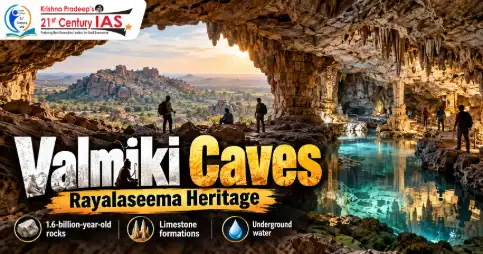
The Valmiki Caves near Gooty in Andhra Pradesh have drawn attention for their 1.6-billion-year-old rocks, unique limestone formations, underground water bodies and evidence of past climatic changes.
Location and Geological Profile
- Located near Gooty Fort and the Gooty–Mantralayam Road.
- Surrounded by the Erramala hills, small forests and agricultural fields.
- Formed within ancient dolomite and limestone rocks.
- Considered among the oldest exposed geological formations in Rayalaseema.
- The rocks contain evidence of ancient blue-green algae, providing clues about early environmental conditions.
- The caves are believed to be among the deepest cave systems in South India.
Major Cave Formations
Mineral-rich water created several natural structures over thousands of years:
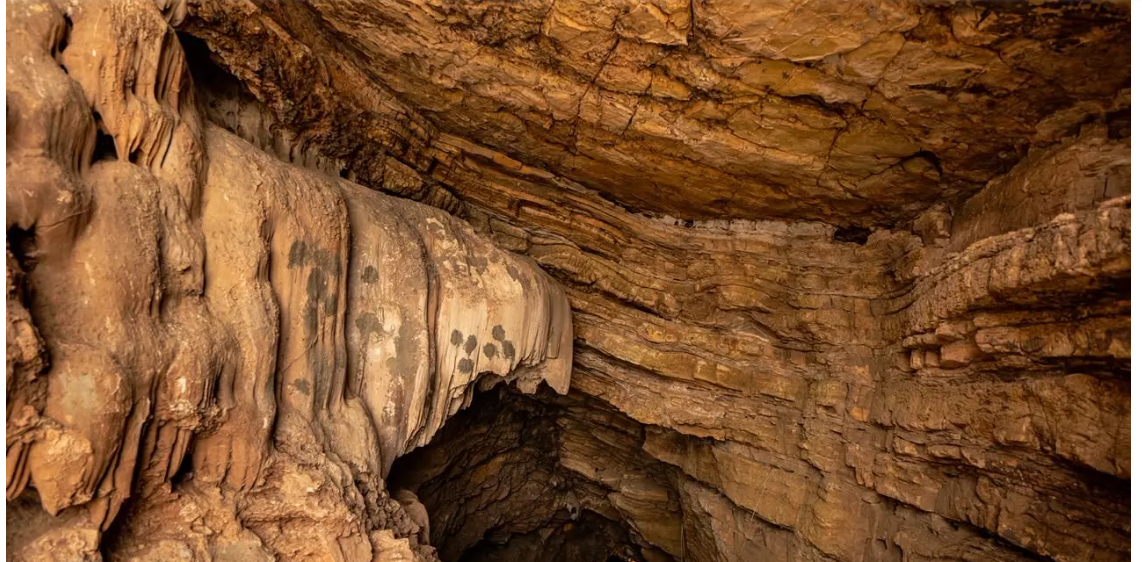
- Stalactites: Grow downward from the cave roof.
- Stalagmites: Grow upward from the cave floor.
- Other formations: Flowstones, calcite pillars, curtains and honeycomb structures.
Some limestone formations produce sounds resembling a tabla or bell when gently tapped. Visitors have been advised not to strike them because they are fragile.
Palaeoclimatic Importance
- Oxygen-isotope ratios preserved in stalagmites help reconstruct past rainfall and climatic conditions.
- Studies indicate major changes after the end of the last Ice Age, around 11,700 years ago.
- These included stronger monsoons and increased rainfall.
- The evidence of a wetter past contrasts with present-day water stress and falling groundwater levels in Rayalaseema.
Underground Water Bodies
- The caves contain clear underground water bodies known as Edu Bavulu or Gundalu.
- During good rainfall, some cave sections remain submerged.
- Reduced rainfall exposes normally submerged areas.
- These changes assist the study of rainfall, groundwater and regional climate history.
Cultural Importance
- Local belief associates the caves with Sage Valmiki, who is believed to have composed the Ramayana there.
- Natural formations resembling Nandi and Shiva Lingam are worshipped by local communities.
- Special prayers are traditionally conducted during Maha Shivaratri.
Exploration and Accessibility
- Surveys led by H.D. Gebauer during the 1980s documented the caves’ considerable depth.
- A group of German tourists reportedly explored the caves in 1993, bringing them wider attention.
- Earlier explorers used ropes and torchlight to enter the caves.
- More than 300 steps have now been constructed, although access still involves rugged terrain and a steep descent.
Conservation Requirements
- Regulate visitor entry to prevent damage to fragile formations.
- Prohibit touching or striking resonant limestone structures.
- Protect underground water bodies and palaeoclimate deposits.
- Provide safe pathways, lighting, information boards and trained guides.
- Promote tourism without disturbing the geological and cultural character of the site.
Conclusion
The Valmiki Caves preserve Rayalaseema’s geological, climatic and cultural history. Scientific conservation, regulated tourism and community participation are necessary to protect this fragile natural heritage.